Organic seeds

Les jardins de l'écoumène

Capsicum annuum ‘Choricero’

Cultivated for a long time for its dark red elongated fruits, it seduces less by the fire of the spice than by the richness of its aromas, with a sweet, slightly sweet and subtly smoky flavour. In the garden, its elegant and productive plants offer a harvest as decorative as well as tasty, particularly interesting for lovers of authentic cuisine. Its growth requires warmth, light and patience, but it largely rewards the gardener with abundant fruits that slowly ripen towards an intense and velvety hue. Its delicate flowers also attract pollinators, adding life around summer crops. Very appreciated for drying, it allows to extend the harvest by transforming the fruits into homemade paprika or an ingredient of choice for sauces and stews.
Sold as 20 seeds

Available

4 49 $
Pay in 4 interest-free payments withSezzle

Delivery and pickup: view conditions

Product information
Québec product
Secure payment
Share

Discover the plant

Common nameChoricero Pepper
FamilyNightshades
GenusBell Pepper
Speciesannum
CultivarChorizo
TypeVegetable
Botanical nameCapsicum annuum
Reproducible seedsYes
Heirloom varietyYes

Capsicum annuum ‘Choricero’ — Choricero Pepper. Cultivated for a long time for its dark red elongated fruits, it seduces less by the fire of the spice than by the richness of its aromas, with a sweet, slightly sweet and subtly smoky flavour. In the garden, its elegant and productive plants offer a harvest as decorative as well as tasty, particularly interesting for lovers of authentic cuisine. Its growth requires warmth, light and patience, but it largely rewards the gardener with abundant fruits that slowly ripen towards an intense and velvety hue. Its delicate flowers also attract pollinators, adding life around summer crops.

Sowing pepper seeds: 8 to 10 weeks before the last frost. The depth to be respected is 0.5 to 1 cm (0.2 to 0.4 in). Germination usually takes 7 to 10 days. For germination, keep the soil at 26 to 30°C (79 to 86°F). Young peppers and peppers enjoy stable heat and abundant light after emergence. Pot up the plants before the roots become crowded at the bottom of the cells, handling the root ball without pulling on the stem. Gradually acclimatize the plants in the sun and wind.

Very appreciated for drying, it allows to extend the harvest by transforming the fruits into homemade paprika or an ingredient of choice for sauces and stews. Place this warm season crop in a sheltered part of the vegetable garden. An easily accessible row lets you watch the fruit change colour without having to move the stems roughly out of the way. Match it with moderate-sized vegetables that won't shade it. The plants can also grow beside a sunny patio, where their proximity makes it easier to gather small amounts for use in the kitchen. In the garden, its elegant and productive plants offer a harvest as decorative as well as tasty, particularly interesting for lovers of authentic cuisine.

In the garden

Exposure
Full sun
Life cycle
Annual

Sowing guide

Sowing & germination

Sowing depth

0.5 to 1 cm (0.2 to 0.4 in.)

Germination temperature

26 to 30°C (79 to 86°F)

Germination time

7 to 10 days

Sowing period

8 to 10 weeks before the last gel

Propagation

From seed

Growing method

Recommended seeding period: 8 to 10 weeks before the last frost. The depth to be respected is 0.5 to 1 cm (0.2 to 0.4 in). Germination usually takes 7 to 10 days. For germination, keep the soil at 26 to 30°C (79 to 86°F). Young peppers and peppers enjoy stable heat and abundant light after emergence. Pot up the plants before the roots become crowded at the bottom of the cells, handling the root ball without pulling on the stem. Gradually acclimatize the plants in the sun and wind. A drop in temperature slows their recovery: wait for favorable external conditions instead of installing them in a still cold soil. The weight of the fruit can push the branches of sweet or hot pepper plants apart as the crop develops. Putting a small support in place early helps limit breakage without making it necessary to cut back the plant. Watch the underside of the leaves during watering and remove damaged fruit. For picking, cut the peduncle to the pruner: pulling on the fruit may take away an entire branch. Hot peppers are handled with gloves during cutting. The colour of the fruit evolves with its maturity, but a bright colour is not enough to know its vigour.

Soil and care

Soil & care

Watering

Water at the base of the plant when the soil surface begins to dry, moistening the root zone rather than only the first millimetres. Keep regular applications during flowering and fruit development. In a container, check the soil more often in hot weather and ensure a free flow through drainage holes. Avoid repeated alternations of marked drought and saturation. Adapt the frequency to the rain and plant size.

Soil type

Prepare a rich, well drained and warmed soil. Young peppers and peppers enjoy stable heat and abundant light after emergence. Pot up the plants before the roots become crowded at the bottom of the cells, handling the root ball without pulling on the stem. Gradually acclimatize the plants in the sun and wind. A drop in temperature slows their recovery: wait for favorable external conditions instead of installing them in a still cold soil.

Fertilization

Fertilization supports growth and should take into account the nutrients already present in the soil or potting mix. Use mature compost or a fertilizer suitable for the crop, following the recommended application rate. Avoid combining too many products, especially in a container where the roots have a limited volume of growing medium. Water as needed after applying nutrients, and observe foliage growth before deciding whether another fertilizer application is necessary.

Moisture

Keep the growing mix moist during germination, without standing water; then adjust to the crop

Seasonal care

In the garden, its elegant and productive plants offer a harvest as decorative as well as tasty, particularly interesting for lovers of authentic cuisine. Young peppers and peppers enjoy stable heat and abundant light after emergence. Pot up the plants before the roots become crowded at the bottom of the cells, handling the root ball without pulling on the stem. Gradually acclimatize the plants in the sun and wind. A drop in temperature slows their recovery: wait for favorable external conditions instead of installing them in a still cold soil. The weight of the fruit can push the branches of sweet or hot pepper plants apart as the crop develops. Putting a small support in place early helps limit breakage without making it necessary to cut back the plant. Watch the underside of the leaves during watering and remove damaged fruit. For picking, cut the peduncle to the pruner: pulling on the fruit may take away an entire branch. Hot peppers are handled with gloves during cutting. The colour of the fruit evolves with its maturity, but a bright colour is not enough to know its vigour. Keep the peppers identified during harvest and preparation. Cut the fruit with a clean tool to preserve the branches. Add a small amount of hot pepper gradually, tasting the mixture before adding more. Cultivated for a long time for its dark red elongated fruits, it seduces less by the fire of the spice than by the richness of its aromas, with a sweet, slightly sweet and subtly smoky flavour.

Container growing

Container growing

Suitable for containers

Yes

Recommended pot size

A stable container with drainage holes, enough width for the plant’s spread and sufficient depth for its roots
Choose a location in full sun. Reserve this spread around the plant: 40 cm (16 in.). In a container, leave room between the root ball and the rim so that you can water slowly without overflowing. The saucer is used to collect the flow, but it must not keep the roots in the water. A place protected from the bourrasques is better suited for fruit-laden branches. Move the container while the plant is still small; once the fruit is formed, avoid moving the stems. Cultivated for a long time for its dark red elongated fruits, it seduces less by the fire of the spice than by the richness of its aromas, with a sweet, slightly sweet and subtly smoky flavour. In the garden, its elegant and productive plants offer a harvest as decorative as well as tasty, particularly interesting for lovers of authentic cuisine. Its growth requires warmth, light and patience, but it largely rewards the gardener with abundant fruits that slowly ripen towards an intense and velvety hue. Its delicate flowers also attract pollinators, adding life around summer crops. Very appreciated for drying, it allows to extend the harvest by transforming the fruits into homemade paprika or an ingredient of choice for sauces and stews.
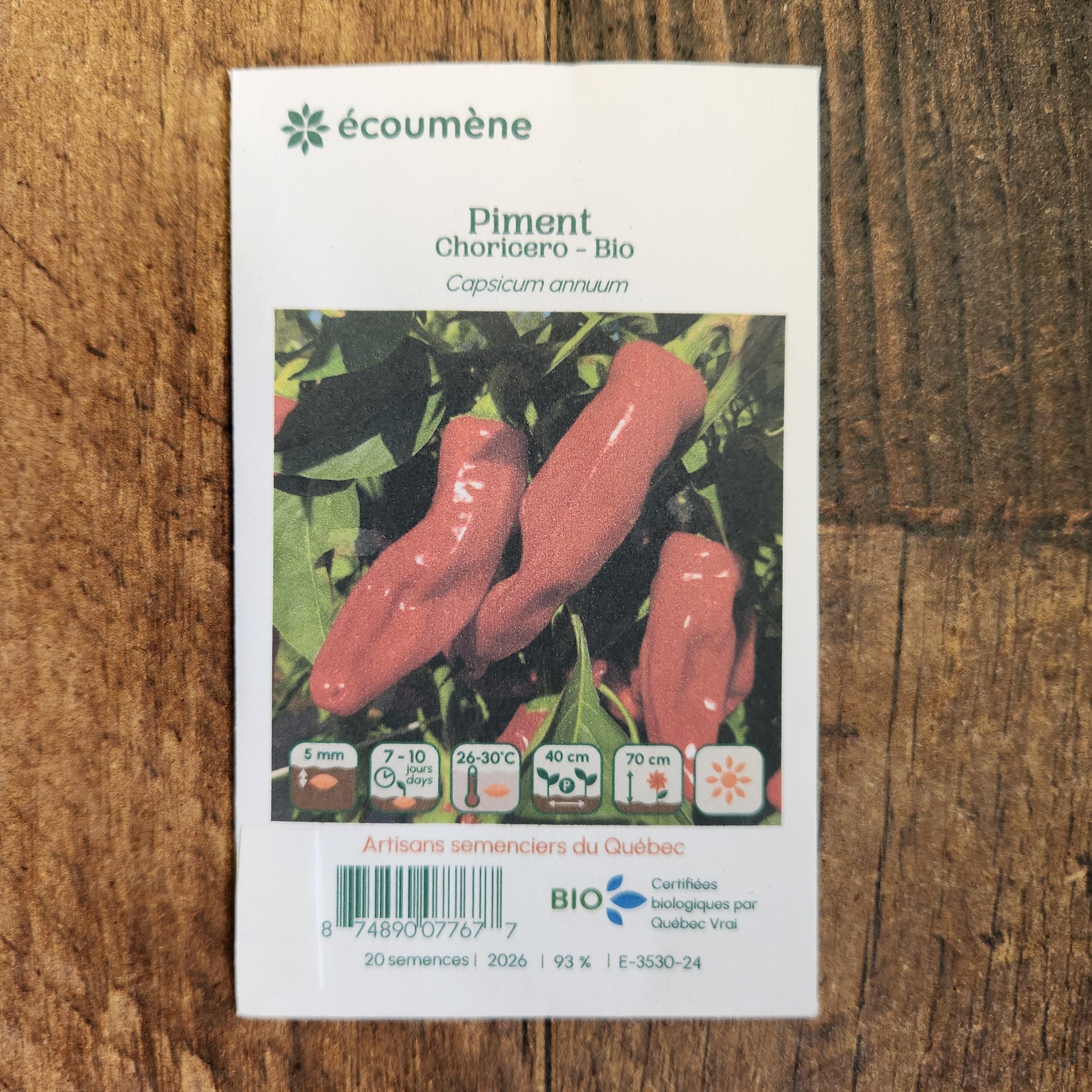
Sachet de semences Piment fort Choricero. Emballage blanc photographié de face sur un fond de bois brun. Une image du végétal occupe la partie centrale, sous le nom imprimé. De petits pictogrammes et un code-barres apparaissent au bas du sachet. La marque Écoumène figure dans la partie supérieure de cette présentation.

Bloom and dimensions

Size, flowering & harvest

Mature height

70 cm (28 in)

Width / spread

40 cm (16 in)

Foliage type

Seasonal foliage

Growth habit

Upright

Bloom period

Flowering usually occurs in this period: summer. Its delicate flowers also attract pollinators, adding life around summer crops. Leave the flowers and developing young fruit on the plants when your aim is to bring the crop through to harvest. The actual flowering date varies with the time of sowing, the warmth available and how well the plants have become established. Maintain regular moisture at the base of the plant without soaking the soil, then observe the fruit formation before intervening.

Fruiting

Cultivated for a long time for its dark red elongated fruits, it seduces less by the fire of the spice than by the richness of its aromas, with a sweet, slightly sweet and subtly smoky flavour. In the garden, its elegant and productive plants offer a harvest as decorative as well as tasty, particularly interesting for lovers of authentic cuisine. Very appreciated for drying, it allows to extend the harvest by transforming the fruits into homemade paprika or an ingredient of choice for sauces and stews.

Harvest

85 days after sowing
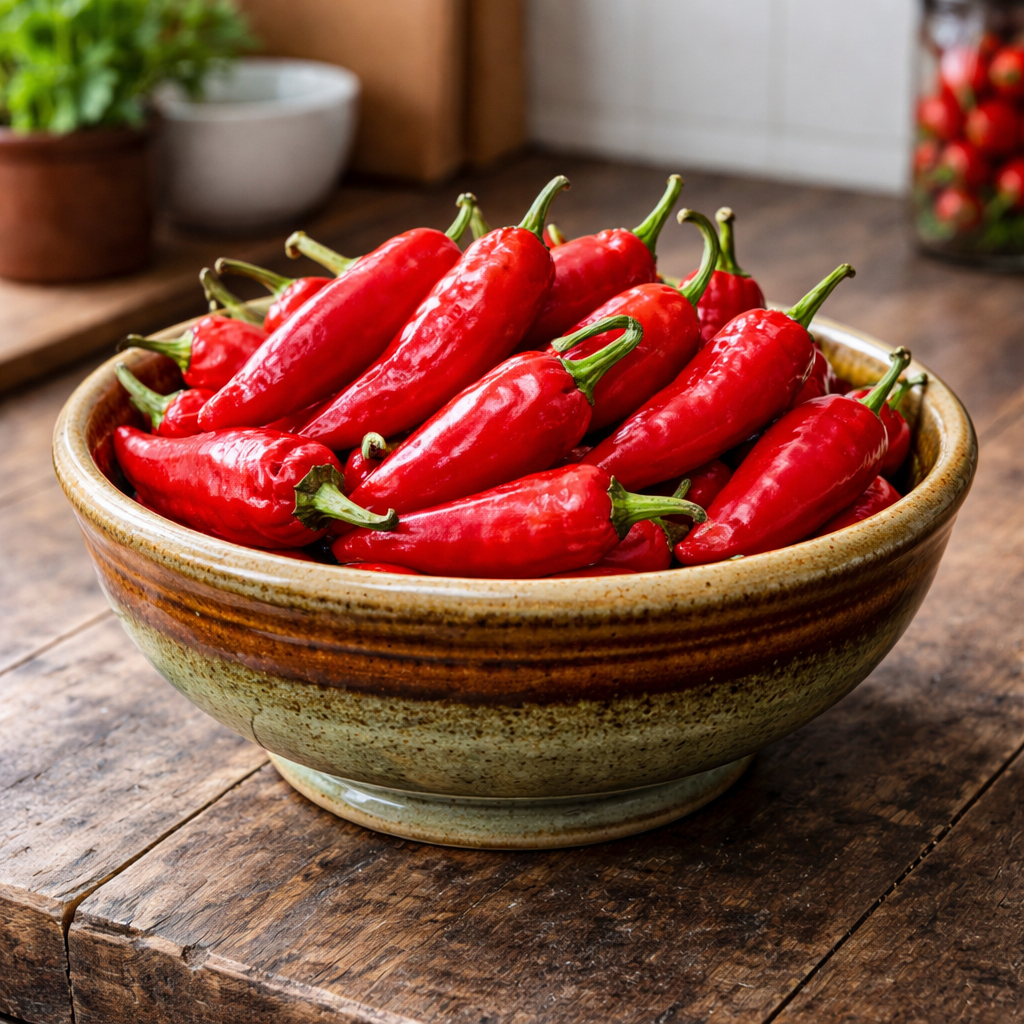
Piment fort Choricero. Piments rouges allongés disposés dans un bol. Le cadrage permet de voir les formes, les couleurs et les détails du sujet représenté. Les contours se détachent du fond de l’image, avec des différences de teinte et de texture visibles sur les surfaces. Cette vue accompagne la présentation du produit dans la boutique.

Garden associations

Companion plants & uses

Companion plants

In a mixed planting, you can reserve sections close to these plants: basil, onion, carrot, tomato. The association is used here to organize space and crops. Allow for the height, light requirements and water needs of each plant, leaving enough room between the foliage. Keep a path clear for watering and harvesting, then remove finished crops to make room for the next planting. This arrangement makes maintenance easier without promising protection against garden pests. Place this warm season crop in a sheltered part of the vegetable garden.

Garden use

Cultivated for a long time for its dark red elongated fruits, it seduces less by the fire of the spice than by the richness of its aromas, with a sweet, slightly sweet and subtly smoky flavour. In the garden, its elegant and productive plants offer a harvest as decorative as well as tasty, particularly interesting for lovers of authentic cuisine. Very appreciated for drying, it allows to extend the harvest by transforming the fruits into homemade paprika or an ingredient of choice for sauces and stews.

Recipe idea

From garden to table

Edible parts

Mature fruit
Recipe idea using Choricero Pepper: fresh spicy sauce for four servings. Chop 300 g of ripe tomatoes, half an onion, 15 ml of fresh coriander and 15 ml of lime juice. First add a very small portion of the harvested pepper, finely chopped, and then taste before adding any more. Wear gloves to cut the hot peppers and avoid touching your eyes. Slightly salt and let stand for 10 minutes. Serve in small quantities with cooked vegetables, rice or tacos. Prepare the ingredients with clean utensils and adapt the cut to the size of your harvest. This recipe highlights freshly picked parts: remove damaged pieces before preparation. If you double the quantities, keep enough space in the dish to mix or cook evenly. Quickly place leftovers in the refrigerator in a closed container and consume them within two days. To prepare a smaller meal for two people, use half of every ingredient quantity given in this recipe.
Piment fort Choricero. Piments rouges allongés disposés dans un bol. Le cadrage permet de voir les formes, les couleurs et les détails du sujet représenté. Les contours se détachent du fond de l’image, avec des différences de teinte et de texture visibles sur les surfaces. Cette vue accompagne la présentation du produit dans la boutique.

Frequently asked questions

Frequently asked questions

How do I grow Choricero Pepper from seed?
Recommended seeding period: 8 to 10 weeks before the last frost. The depth to be respected is 0.5 to 1 cm (0.2 to 0.4 in). Germination usually takes 7 to 10 days. For germination, keep the soil at 26 to 30°C (79 to 86°F). Young peppers and peppers enjoy stable heat and abundant light after emergence. Pot up the plants before the roots become crowded at the bottom of the cells, handling the root ball without pulling on the stem. Gradually acclimatize the plants in the sun and wind. A drop in temperature slows their recovery: wait for favorable external conditions instead of installing them in a still cold soil.
Can I grow Choricero Pepper in a container?
Choose a location in full sun. Reserve this spread around the plant: 40 cm (16 in.). In a container, leave room between the root ball and the rim so that you can water slowly without overflowing. The saucer is used to collect the flow, but it must not keep the roots in the water. A place protected from the bourrasques is better suited for fruit-laden branches. Move the container while the plant is still small; once the fruit is formed, avoid moving the stems. Cultivated for a long time for its dark red elongated fruits, it seduces less by the fire of the spice than by the richness of its aromas, with a sweet, slightly sweet and subtly smoky flavour.
When can I harvest Choricero Pepper?
Cultivated for a long time for its dark red elongated fruits, it seduces less by the fire of the spice than by the richness of its aromas, with a sweet, slightly sweet and subtly smoky flavour. In the garden, its elegant and productive plants offer a harvest as decorative as well as tasty, particularly interesting for lovers of authentic cuisine. Very appreciated for drying, it allows to extend the harvest by transforming the fruits into homemade paprika or an ingredient of choice for sauces and stews. The colour of the fruit evolves with its maturity, but a bright colour is not enough to know its vigour.
What makes Choricero Pepper distinctive in the garden?
Cultivated for a long time for its dark red elongated fruits, it seduces less by the fire of the spice than by the richness of its aromas, with a sweet, slightly sweet and subtly smoky flavour. In the garden, its elegant and productive plants offer a harvest as decorative as well as tasty, particularly interesting for lovers of authentic cuisine. Its growth requires warmth, light and patience, but it largely rewards the gardener with abundant fruits that slowly ripen towards an intense and velvety hue. Its delicate flowers also attract pollinators, adding life around summer crops. Very appreciated for drying, it allows to extend the harvest by transforming the fruits into homemade paprika or an ingredient of choice for sauces and stews.
How do I arrange a planting of Choricero Pepper?
Place this warm season crop in a sheltered part of the vegetable garden. An easily accessible row lets you watch the fruit change colour without having to move the stems roughly out of the way. Match it with moderate-sized vegetables that won't shade it. The plants can also grow beside a sunny patio, where their proximity makes it easier to gather small amounts for use in the kitchen. The weight of the fruit can push the branches of sweet or hot pepper plants apart as the crop develops. Putting a small support in place early helps limit breakage without making it necessary to cut back the plant. Watch the underside of the leaves during watering and remove damaged fruit.

Seed-starting essentials