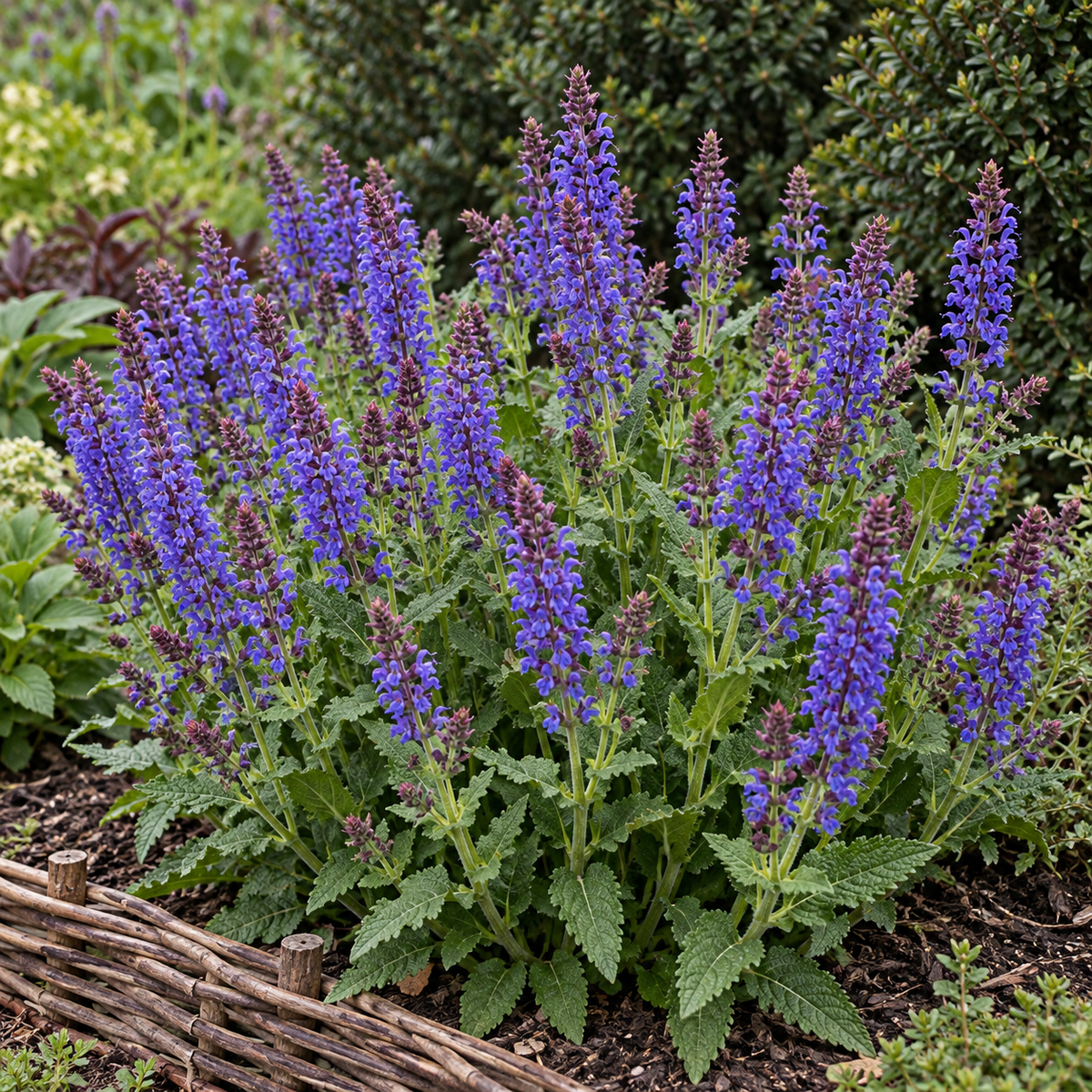
Sallyrosa™ April Night Wood Sage (Salvia × sylvestris ‘DSALRS203’)

Sallyrosa™ April Night Wood Sage (<em>Salvia × sylvestris</em> ‘DSALRS203’)
PÉPINIÈRE.CA

Sallyrosa™ April Night Wood Sage (<em>Salvia × sylvestris</em> ‘DSALRS203’)

BACK-IN-STOCK ALERT

Don’t miss its return.

Leave your email and receive an alert when this product is available again.

An alert for this product only. No newsletter signup. Privacy

Early perennial sages for pollinators

Pépinière.ca

Format

Sold out

Delivery and pickup: view conditions

Product information
Advice adapted to Canada
Secure payment
Share
Common nameSallyrosa™ April Night wood sage
FamilyLamiaceae
GenusSalvia
Species× sylvestris
CultivarDSALRS203
Plant typePerennial
Botanical nameSalvia × sylvestris ‘DSALRS203’

Sallyrosa™ April Night Wood Sage (Salvia × sylvestris ‘DSALRS203’) is a compact perennial bred by Danziger for exceptionally early flowering. Short spikes carry large violet-purple flowers above green foliage that becomes lightly aromatic when rubbed. The upright, strongly branched clump reaches approximately 25 to 30 cm tall and 30 to 35 cm wide. It can flower in its first year without a cold treatment and begins about one month earlier than several traditional woodland sages, bringing colour to the garden near the start of the perennial season. April Night salvia provides an immediate, tidy display.

Grow Sallyrosa April Night in full sun or light partial shade in average, sandy or loamy soil that drains quickly. Water regularly while roots establish, then let the surface dry slightly between applications. A thin layer of compost in spring is usually sufficient. Hardy in Zones 4 to 9, this sage tolerates short dry periods once established, but its crown is vulnerable to standing water, especially during winter thaws. A warm, freely draining position improves performance in colder regions and helps the stems remain compact. Salvia April Night also flowers most densely with abundant light.

Use this very early sage at the front of a border, in a rock garden, container or pollinator planting. Tubular flowers attract bees, butterflies and hummingbirds, while aromatic foliage is seldom browsed by deer. When the first display finishes, cut spikes back to basal foliage to encourage a summer repeat. Sallyrosa April Night is an ornamental plant rather than a culinary sage. Its compact size allows several plants to be repeated without hiding neighbouring perennials, and the upright flower spikes add a clear vertical accent. It also edges a path or small patio easily.

In the garden

Exposure
Full sun
Life cycle
Perennial
Hardiness
Zones 4 to 9

Planting guide

Planting & establishment

Spacing / density

Approximately 45 cm between centers, to be adjusted according to the actual development of the clump.

Planting period

Spring or early fall

Propagation

Authorized vegetative propagation only; patented cultivar PP26,520

Growing method

Plant Sallyrosa April Night in spring or early fall in full sun or light partial shade. Dig a hole slightly wider than the root ball and keep the crown level with the surrounding soil. Space plants 30 to 35 cm apart to create a continuous border while preserving air movement. Water deeply after planting and maintain regular moisture while roots establish. Afterwards, let the surface dry slightly. Add a thin compost layer in spring without covering the crown. When the first wave has faded, cut every spike back to basal foliage with clean tools. This treatment stimulates repeat bloom and preserves the compact shape. Avoid high-nitrogen fertilizer, wet mulch against the base and locations where water collects during winter. Protecting drainage is more important than heavy winter covering. For best results, choose a bright site where excess water drains quickly. Cutting back after the first bloom keeps the clump tidy and encourages another wave. This sage suits easy-care gardens designed to welcome pollinators. Once established, it prefers deep, spaced watering to constant moisture. For best results, choose a bright site where excess water drains quickly. Cutting back after the first bloom keeps the clump tidy and encourages another wave.

Soil and care

Soil & care

Soil pH

Approximately 6.0 to 7.5; slightly acidic to slightly alkaline

Moisture

Low to average

Care level

Easy

Drought tolerance

Yes

Watering

After planting Salvia ‘DSALRS203’, water enough to thoroughly moisten the root ball. Once established, let the surface dry between waterings and prioritize good drainage, especially during thaws.

Soil type

Well-draining, rather light; avoid water pockets around the collar.

Fertilization

In spring, apply a thin layer of mature compost or a modest amount of balanced slow-release fertilizer. Ordinary soil is generally sufficient. Avoid high-nitrogen products because they encourage long, soft stems instead of compact flowering. After the first wave, cutting back and deep watering support repeat bloom more effectively than heavy feeding. In containers, use only diluted fertilizer during active growth and stop late applications before winter dormancy.

Seasonal care

In spring, remove dry stems before new shoots hide the crown. Add a thin compost layer without covering the centre of the clump, then water if the soil is dry. The first spikes can appear very early, often about one month before several familiar woodland sages. Once most flowers have faded, cut stems back to basal foliage with clean shears. Cutting the whole group together encourages a summer repeat and prevents the clump from opening. Continue watering only when the surface dries, especially in containers. Watch for aphids, powdery mildew and signs of rot when air movement is poor or soil remains wet. In fall, retain healthy basal foliage until hard frost. Afterwards, remove only growth that is completely dry. Light mulch can be applied after the ground freezes in cold regions, but keep it away from the crown. Check drainage during thaws. Divide older clumps in spring only if their centres thin. Because ‘DSALRS203’ is patented, do not propagate plants for sale without authorization. For best results, choose a bright site where excess water drains quickly. Cutting back after the first bloom keeps the clump tidy and encourages another wave. This sage suits easy-care gardens designed to welcome pollinators. Once established, it prefers deep, spaced watering to constant moisture. For best results, choose a bright site where excess water drains quickly.

Container growing

Container growing

Recommended pot size

At least 30 cm (12 in) in diameter
Sallyrosa April Night performs well in containers because of its compact habit. Choose a pot at least 30 cm wide with several drainage holes and fill it with an airy perennial potting mix. Keep the crown level with the surface and place the pot in sun. Water deeply, then let the top few centimetres dry slightly before watering again. Add a modest amount of slow-release fertilizer in spring. Cut spikes back after the first wave to encourage fresh flowers. In winter, move the container beside a sheltered wall, group it with other pots or insulate its sides. Drainage holes must remain open during thaws. A larger soil volume protects roots from rapid temperature changes. Avoid decorative covers without drainage and empty any saucer that traps water. Do not keep the crown constantly wet. For best results, choose a bright site where excess water drains quickly. Cutting back after the first bloom keeps the clump tidy and encourages another wave. This sage suits easy-care gardens designed to welcome pollinators. Once established, it prefers deep, spaced watering to constant moisture. For best results, choose a bright site where excess water drains quickly.
Sallyrosa™ April Night Wood Sage (Salvia × sylvestris ‘DSALRS203’)

Size, flowering & harvest

Mature height

15.75 in

Width / spread

17.7 inches

Flower color

Deep violet-purple

Foliage color

Medium green

Foliage type

Deciduous to semi-evergreen basal rosette depending on climate

Growth rate

Moderate to fast

Growth habit

Compact, upright, radial and strongly branched

Fragrance

Light sage fragrance; aromatic foliage when rubbed

Bloom period

Large single violet-purple flowers are grouped on short upright spikes. The patent records a natural April-to-September season under cool conditions and a start about one month before ‘May Night’. In cold Canadian gardens, the first wave generally appears during later spring or early summer depending on the site. Cutting stems back to basal foliage encourages a summer repeat rather than guaranteeing uninterrupted bloom. Individual flowers have a delicate sage-like fragrance.

Fruiting

Small dark brown to black nutlets with little ornamental value
Sallyrosa™ April Night Wood Sage (Salvia × sylvestris ‘DSALRS203’)

Garden associations

Companion plants & uses

Companion plants

Combine Sallyrosa April Night with yarrows, coneflowers, coreopsis, catmints, dianthus, sedums, creeping thyme, lamb’s ear and small ornamental grasses. These plants share a preference for sun and drained soil while providing complementary heights and textures. Position taller companions behind the sage. These combinations reflect compatible growing conditions and visual value; they do not guarantee automatic protection from pests. Preserve enough spacing for air movement around every crown. For best results, choose a bright site where excess water drains quickly. Cutting back after the first bloom keeps the clump tidy and encourages another wave.

Plants to avoid

Avoid invasive plants, moisture-trapping companions and sites where water collects.

Garden use

In a sunny border, plant Sallyrosa April Night in groups of three to five to form a violet-purple line at the front. Its low habit leaves yarrows, coneflowers, daisies and small ornamental grasses visible behind it. In a rock garden, combine it with sedums, dianthus and thymes that also appreciate rapid drainage. Near a patio, a container at least 30 cm wide brings flowers close to visitors and pollinators. Leave enough space around crowns for air to circulate. Cut the whole group back after the first wave to obtain a more even repeat. Avoid wet depressions and vigorous companions that could hide this compact sage. Silver foliage such as artemisia or lamb’s ear makes the dark flowers stand out. The exceptionally early display also creates a visual link between spring bulbs and summer perennials. For best results, choose a bright site where excess water drains quickly. Cutting back after the first bloom keeps the clump tidy and encourages another wave. This sage suits easy-care gardens designed to welcome pollinators. Once established, it prefers deep, spaced watering to constant moisture. For best results, choose a bright site where excess water drains quickly.

Garden inspiration

Picture a low border where five Sallyrosa April Night sages form a violet-purple band in front of soft yellow yarrows and pink coneflowers. Several silver lamb’s ears brighten the flowers, while a small ornamental grass adds movement without hiding the spikes. Flat stones near the crowns improve drainage and suggest a rock garden. The first wave appears early enough to accompany the final spring bulbs and attract early bees near the patio. After cutting back, clumps regain a tidy form and prepare summer flowers. A nearby container repeats the same sage with trailing thyme and sedum. This repetition links patio and garden without complicating care. Water deeply only when the surface dries and keep crowns free of wet mulch. In fall, allow healthy basal foliage to protect the centre of every clump naturally until hard frost. For best results, choose a bright site where excess water drains quickly. Cutting back after the first bloom keeps the clump tidy and encourages another wave. This sage suits easy-care gardens designed to welcome pollinators.

Frequently asked questions

Frequently asked questions

Why does Sallyrosa April Night bloom so early?
The cultivar ‘DSALRS203’ was selected by Danziger for exceptionally early flowering. Its patent states that it begins about one month before ‘May Night’ sage while producing shorter flower stems and a more compact habit. It can also flower in its first year without a cold treatment. In cold Canadian gardens, the exact date varies with region, exposure and spring weather. A sunny planting in soil that warms and drains quickly supports an early start. The first wave is not guaranteed to continue all summer, so cut finished spikes back to basal foliage to encourage a repeat. For best results, choose a bright site where excess water drains quickly.
What is the correct Latin name for Sallyrosa April Night?
Sallyrosa™ April Night is the trade name for the patented cultivar ‘DSALRS203’. U.S. Plant Patent PP26,520, the RHS and NC State classify it as Salvia × sylvestris ‘DSALRS203’. Some Danziger pages still list it under Salvia nemorosa, a common horticultural treatment because modern woodland sages can be difficult to separate from their hybrids. This product page uses the patent denomination in the title for precise identification. In the garden, grow it like other compact woodland sages: provide sun, rapid drainage and a cutback after flowering. For best results, choose a bright site where excess water drains quickly. Cutting back after the first bloom keeps the clump tidy and encourages another wave.
How large does this sage become?
Sallyrosa April Night generally forms a clump 25 to 30 cm tall and 30 to 35 cm wide. The patent describes plants approximately 25 to 30 cm in both directions, while recent commercial information gives about 30 cm in height and 35 cm in width. These normal differences depend on climate, soil and plant age. Space plants 30 to 35 cm apart to create a continuous border while preserving air around the crowns. Overly rich soil or excessive shade can lengthen stems. Cutting back after the first display restores the low, tidy outline. For best results, choose a bright site where excess water drains quickly.
How can I encourage a second bloom?
Once most flowers have faded, cut every spike back to basal foliage with clean shears. Do not cut into the crown. Water deeply if the soil is dry, then let the surface dry slightly. The plant can then produce fresh stems and bloom again during summer. Heavy fertilizer is unnecessary, and excess nitrogen is more likely to create soft growth. Full sun, moderate moisture after cutting and reliable drainage provide the best results. The length and intensity of repeat bloom vary with weather and establishment, so the plant should not be described as flowering continuously without interruption. For best results, choose a bright site where excess water drains quickly.
Is Sallyrosa April Night safe around pets?
The ASPCA includes Salvia sages among plants considered non-toxic to dogs and cats, so Sallyrosa April Night can suit a garden visited by pets. Non-toxic does not mean edible or guaranteed to cause no discomfort, and chewing a large amount of plant material may upset digestion. This sage remains ornamental and is not a substitute for culinary sage. Keep fertilizers and garden treatments out of reach as well. If a pet eats a substantial amount or develops symptoms, contact a veterinarian. Normal supervision remains appropriate for curious young animals. For best results, choose a bright site where excess water drains quickly.

Wildlife and pets

Wildlife & precautions

Supporting wildlife

Violet-purple tubular flowers provide nectar and pollen for bees, butterflies and hummingbirds. Exceptionally early bloom adds a resource near the start of the season, and cutting back can produce another wave. Avoid insecticides on open flowers and combine this sage with plants that bloom before and after it. A shallow water source further supports visiting wildlife.

Complete your purchase

Click a product to build your selection.

Your selection

Total