Sale
Sold out

Flower seeds
Amaranthaceae
Organic seeds
Celosia mix organic
Celosia cristata
Product code : TOURNE-0078
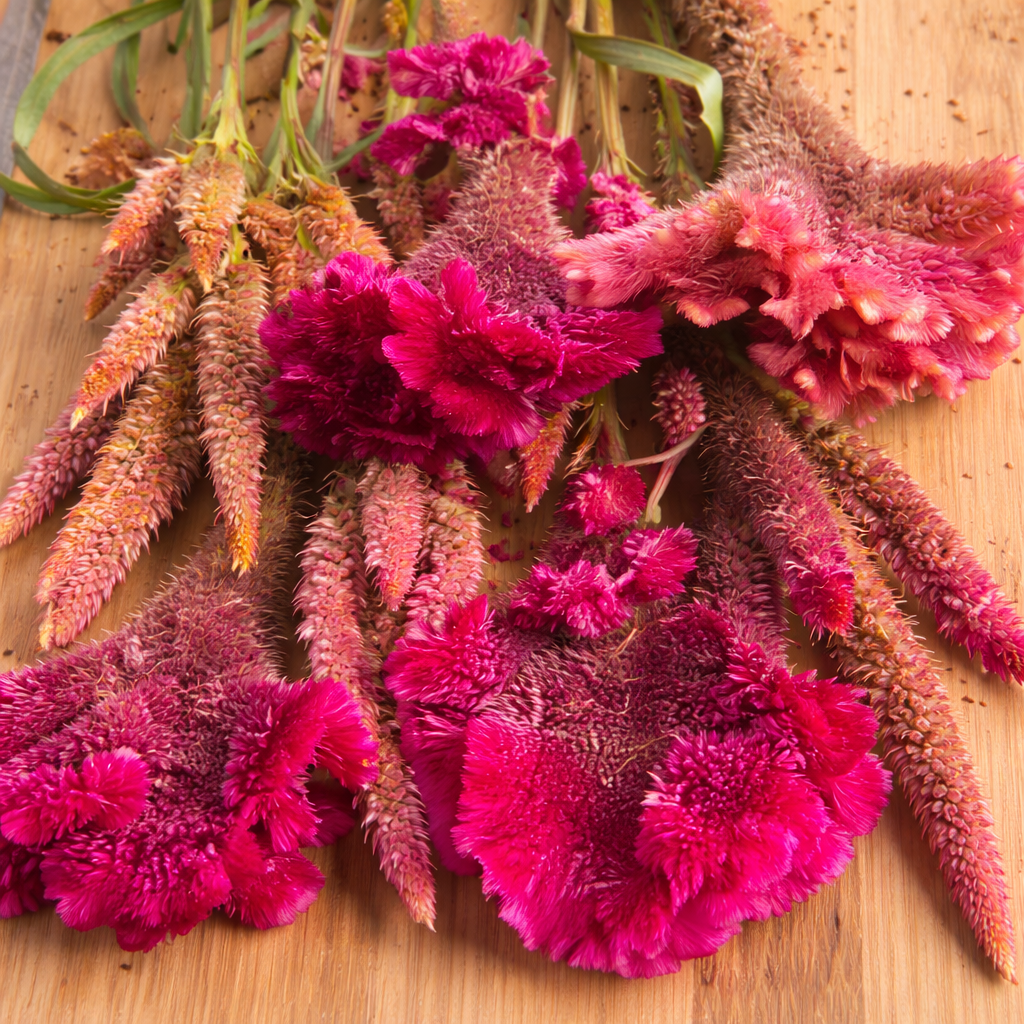
This organic celosia mix produces flower plumes in varied sizes, widths, and textures, mainly pink with touches of yellow. The packet contains 100 seeds of Celosia cristata, a warm-season annual listed at about 90 days to maturity. It prefers full sun, fertile sharply drained soil, and consistent moisture without saturation. Seeds may be started indoors or sown outside after the last frost. Successive sowings every two to four weeks extend the display and cut-flower harvest. Colourful upright stems suit garden beds, fresh bouquets, and dried arrangements, bringing lasting texture to summer designs. Every plant reveals its own flower shape and proportions.
- Quantity
- 100 seeds
- Exposure
- Full sun
- Life cycle
- Annual
Discover the plant
Common nameCelosia mix
FamilyAmaranthaceae
GenusCelosia
Speciescristata
TypeFlower seeds
Botanical nameCelosia cristata
Reproducible seedsYes
Celosia mix organic (Celosia cristata) combines flower plumes of varied sizes, widths, and textures. Pink dominates the mixture, with touches of yellow adding dimension to garden beds and bouquets. Ferme Tourne-Sol supplies 100 organic seeds of this annual member of the Amaranthaceae family. Listed maturity is about 90 days. Well suited to summer heat, celosia grows best in full sun and fertile, organic-rich, sharply drained soil. It can brighten borders, mass plantings, and roomy containers while also providing stems for fresh arrangements or dried crafts. Each seed-grown plant may contribute a different plume, so the display develops as a lively coordinated mixture rather than a single uniform colour.
Start seeds indoors or sow directly after frost danger has passed and the soil has warmed. The tiny seeds can be surface sown or covered only very lightly in a medium kept evenly moist. A temperature around 21 to 27°C supports germination, commonly within 7 to 14 days when conditions remain steady. Young celosia roots dislike disturbance, so use individual cells, transplant promptly, and preserve each root ball. Space plants about 20 to 30 cm apart. To extend flowering and the supply of cut stems, Tourne-Sol recommends sowing every two to four weeks. Give seedlings bright light immediately after emergence so stems remain compact and strong.
After planting, water at soil level whenever the surface begins to dry, but never leave roots in saturated soil. Celosia has moderate drought tolerance once established, although steady moisture supports balanced growth and well-shaped plumes. Avoid wetting foliage late in the day and preserve good air circulation because persistent moisture can favour leaf spots or flower rot. For fresh bouquets, cut stems once flower heads are well coloured. For dried arrangements, hang small bundles in a dark, dry, ventilated place. The plants are frost tender and finish their outdoor cycle with the first freezing weather. ASPCA lists Celosia cristata as non-toxic to dogs and cats, though pets should still be discouraged from chewing garden plants.

Sowing guide
It all startswith a seed.
Sowing depth
Surface sow or cover very lightly; press gently
Spacing / density
20 to 30 cm (8 to 12 in) between plants
Germination temperature
21 to 27°C (70 to 80°F)
Germination time
7 to 14 days
Sowing period
Indoors 6 to 8 weeks before the last frost, or outdoors after frost in warmed soil
Propagation
Seed
Growing method
Sow the tiny celosia seeds on the surface of individual cells filled with fine, free-draining medium six to eight weeks before the last frost. Press them gently and cover only very lightly. Maintain 21 to 27°C and even moisture without saturating the mix. Emergence commonly takes 7 to 14 days. Give seedlings bright light immediately and gentle airflow so stems remain compact. Transplant only after frost danger has passed and nights are reliably mild. Harden plants gradually and handle each root ball rather than disturbing sensitive roots. Place plants in full sun, 20 to 30 cm apart, in compost-enriched, sharply drained soil. Water at soil level after planting. Direct sowing is also possible in a prepared warm bed after frost. To renew the flower supply, make small sowings every two to four weeks. Watch for slugs, aphids, thrips, and signs of rot, especially during persistently damp weather. Avoid holding seedlings too long in small cells because interrupted growth or cool stress can trigger premature flowering. Once plants are established, let the surface dry slightly between waterings and keep water off the flower heads. Cut stems when plumes are fully coloured but before they shed abundant seed. Remove damaged foliage promptly with clean tools and never leave containers standing in drainage water.
Soil and care
The right care,at the right time.
Care level
Easy to moderate
Watering
Keep the medium evenly moist during germination with a fine mist that does not displace the seeds. Once plants are established, water deeply at soil level when the top few centimetres begin to dry. Let surplus water drain and never keep roots saturated. Morning watering allows foliage to dry quickly. Containers need more frequent checks during hot, windy weather, but they should not remain in standing water.
Soil type
Celosia prefers fertile, organic-rich, sharply drained soil. A loose texture supports steady rooting while allowing surplus water to leave the root zone quickly. Work mature compost into poor soil before planting. Avoid low spots that stay saturated after rain because prolonged moisture around the roots increases the risk of rot. A slightly acidic to neutral pH around 6.0 to 6.5 is suitable. Keep mulch clear of the crown so the stem base remains visible and dry.
Fertilization
Before planting, mix a moderate amount of mature compost into the soil. In already fertile ground, this is often enough for the season. Weak growth may receive a low dose of balanced fertilizer according to its label. Avoid excess nitrogen and concentrated applications, which promote soft foliage instead of sturdy stems. In containers, fertilize lightly after watering and watch for salt buildup or scorched leaf margins.
Seasonal care
In spring, start seeds in warm individual cells or prepare a finely levelled outdoor bed for sowing after frost. Keep seeds moist without saturation and place seedlings under bright light immediately after emergence. Harden young plants gradually over several days, then transplant when nights are mild. Preserve each root ball and water immediately. Through summer, weed gently, check moisture below the surface, and water at soil level in the morning. A thin mulch can slow drying without touching the stems. Maintain enough space for air to move among the plumes. Inspect leaf undersides regularly for aphids or thrips, and watch for slugs, leaf spots, or soft rotting tissue. Remove affected material with clean tools. To encourage several stems on plume or crested types, pinch the first bud only while plants are growing strongly; leave a plant intact when one large central stem is preferred. Harvest fully coloured flower heads before they shed abundant seed. Repeat small sowings every two to four weeks when an extended cutting season is wanted. In autumn, cut the last stems before frost for drying, then remove frost-killed plants and clean containers and tools. Record sowing and flowering dates to refine next year’s schedule. Never keep mouldy or softened heads for drying. Select only sound stems and hang them in small, well-spaced bundles so moisture escapes quickly. Check the drying area every few days, remove any affected material, and place paper underneath to collect seeds that fall from mature heads.
Container growing
A garden,within reach.
Recommended pot size
10 to 20 L (2.5 to 5 gal) container with good drainage
Grow this mix in a stable container with several drainage holes. Because Tourne-Sol gives neither a minimum pot volume nor a uniform mature height for this mixture, choose a roomy pot that allows roughly 20 to 30 cm between plants, or grow one plant in a container proportioned to its root ball. Fill it with aerated potting mix moderately amended with compost, then place it in the warmest full-sun location on the balcony. Surface sow or transplant after the last frost without breaking apart the roots. Check moisture daily during hot spells; water thoroughly, allow complete drainage, and empty the saucer. Rotate the pot cautiously for balanced light. Good airflow helps prevent problems as flower plumes become dense. Harvest stems regularly to reduce wind resistance and stabilize the container when needed. Before the first frost, cut flowers intended for drying. This frost-tender annual does not overwinter outdoors in Canadian cold climates. Keep foliage away from hot reflective glass during sudden heat waves and avoid crowding several plants in a small decorative pot. At the end of each day, check that leaves and plumes are dry. Remove any softened or spotted tissue promptly, and keep the potting surface free of wet debris. Do not allow neighbouring containers to block airflow around the developing flower heads.

Bloom and dimensions
Its place,in your garden.
Mature height
About 40 to 70 cm
Flower color
Mainly pink, with yellow
Foliage color
Green
Foliage type
Annual herbaceous foliage
Growth rate
Fast in warm weather
Growth habit
Upright, branching, and floriferous
Bloom period
Flowering begins in summer and continues until frost while warmth, sun, and moisture remain favourable. Plumes vary in size, width, and texture, with plenty of pink and some yellow according to Tourne-Sol. Sowing every two to four weeks staggers the arrival of usable stems. Regular cutting before abundant seed develops keeps bouquets clean and may allow branching plants to form secondary stems. Protect the heads from prolonged wetness and harvest only clean, healthy stems for indoor use.
Days to maturity
90 days
Garden associations
In goodcompany.
Companion plants
Celosia mix can be paired with plants that require comparable light, soil, and watering. Groupings are easier to maintain when each plant keeps enough space and receives sufficient light. Suggested companions are primarily planning tools; undocumented incompatibilities should not be treated as absolute rules. The information on this page helps gardeners plan each stage according to the actual conditions in their garden. Regular observation of the soil, foliage, and overall growth makes it easier to adjust care throughout the season. For best results, choose a suitable location and keep moisture steady while the plants become established.
Frequently asked questions
Your questions,answered.
How should Celosia mix be sown?
Surface sow the tiny seeds or cover them only very lightly in individual cells six to eight weeks before the last frost. Press gently and keep the medium moist, never saturated, at about 21 to 27°C. Germination commonly takes 7 to 14 days. Supply bright light immediately after emergence and gentle airflow. Harden plants gradually, then transplant after all frost danger has passed and nights are mild. Preserve each root ball and space plants 20 to 30 cm apart. Direct sowing is possible after frost in warm, finely prepared soil. Keep the seedbed evenly moist until seedlings are established. Avoid holding seedlings too long in small cells or exposing them to cold.
Why sow celosia every two to four weeks?
Ferme Tourne-Sol recommends successive plantings every two to four weeks. Each group then reaches flowering and cutting stage at a different time, preventing every stem from becoming ready at once. This approach is especially useful for maintaining a regular supply for fresh bouquets. Begin after frost in warmed soil and stop early enough to leave the final sowing sufficient warm weather before autumn cold. Label every sowing date, keep young rows evenly moist, and compare their development. Weather can shorten or extend the official 90-day maturity reference, so harvest according to flower condition rather than the calendar alone. Keep every new seedbed clearly labelled so the intervals remain easy to compare.
How should celosia flowers be harvested and dried?
For a fresh bouquet, cut a stem once its plume is well developed and coloured but before it releases abundant seed. Work in the morning after dew has dried with a clean tool, then place the stem promptly in clean water. For drying, remove lower leaves and bundle only a few stems so air can circulate. Hang them upside down in a dark, dry, ventilated location for one to two weeks or until all tissues feel dry. Place paper underneath to catch any falling seed and inspect regularly for mould. Discard any stem that softens, smells musty, or develops visible decay.
Can this celosia mix be grown in a container?
Yes. Use a stable, freely drained container placed in full sun after the last frost. Tourne-Sol gives neither a minimum volume nor one uniform mature height for this mix, so choose a roomy pot that allows about 20 to 30 cm between plants instead of a small cachepot. Use aerated potting mix moderately enriched with compost. Check moisture daily in hot weather, water until surplus drains, and empty the saucer. Never leave roots standing in water. Maintain space between stems for airflow, secure the pot against wind, and harvest well-coloured plumes before abundant seed develops. The plants are frost tender and will not overwinter outdoors.
Is celosia safe around dogs and cats?
ASPCA lists Celosia cristata as non-toxic to dogs and cats. The pet-friendly field is therefore true and the toxicity field false in this profile. Non-toxic does not mean intended for eating: swallowed plant material can still cause digestive discomfort in a sensitive animal. Position pots and bouquets to discourage chewing, collect cut stems, and watch for unusual behaviour. If a pet eats a large amount or develops symptoms, contact a veterinarian and provide the botanical name Celosia cristata. This product profile presents the mix as an ornamental flower crop, not as food for people or animals. Even a non-toxic plant should be kept away from food bowls and litter areas, and dropped leaves should be collected during routine care.
Wildlife and pets
Life,around your plants.
Supporting wildlife
Celosia flowers may be visited by bees, butterflies, and other insects exploring floral resources. Combine them with species having complementary flower shapes and bloom periods to provide a steadier succession. Avoid insecticides on open flowers. Exact wildlife value varies with the forms present and local conditions. Leave a few accessible clusters while harvesting other stems, and observe visits without assuming every plume provides equal resources.
For a great start to your seeds
The right extras.Right here.
Seed Starting Soil
Shop the collectionSeed starting supplies
Shop the collection