


Sale
Sold out

Seeds
Ranunculaceae
Organic seeds
Black cumin organic
Nigella sativa
Product code : TOURNE-0104
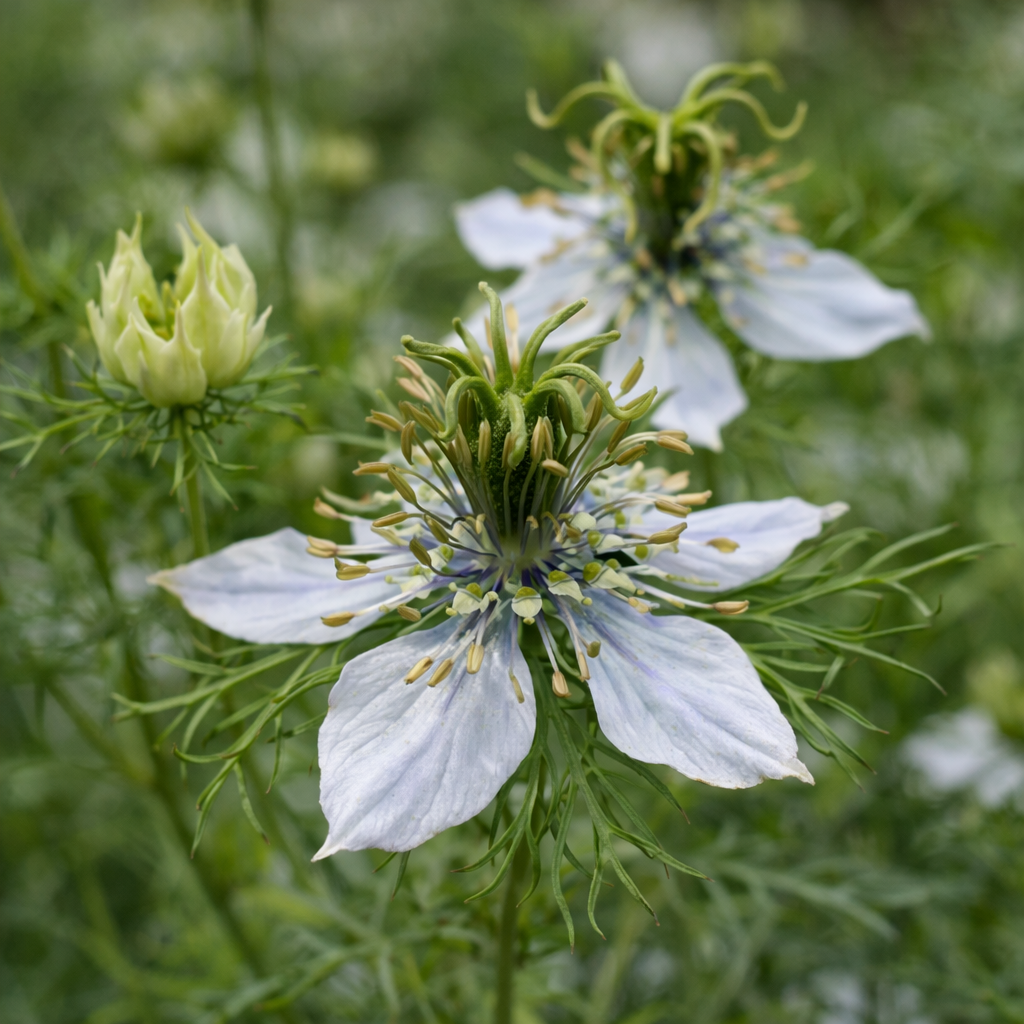
Black cumin produces fine, pale blue-tinged flowers followed by pods filled with aromatic black seeds known as kalonji. This organic, open-pollinated annual grows in full sun and well-drained soil. Ferme Tourne-Sol lists approximately 90 days to maturity and supplies 150 seeds per packet. Mature seed contributes a peppery, slightly bitter flavour to breads, curries, vegetables, and cheeses. Repeat sowings every two to four weeks to spread flowering and harvest dates. Clearly separate seed intended for cooking from seed saved for planting. Its compact habit also suits containers when moisture remains steady during germination and the pods are allowed to dry fully before harvest.
- Quantity
- 150 seeds
- Exposure
- Full sun
- Life cycle
- Annual
Discover the plant
Common nameBlack cumin
FamilyRanunculaceae
GenusNigella
Speciessativa
TypeSeeds
Botanical nameNigella sativa
Reproducible seedsYes
Black cumin organic (Nigella sativa) is an organic, open-pollinated annual that combines delicate flowers with a valued culinary spice. Blue-tinged white blooms are followed by inflated pods containing many aromatic black seeds, also known as kalonji. Their peppery, slightly bitter, onion-like flavour seasons breads, curries, vegetables, and cheeses. Each packet contains approximately 150 seeds. Ferme Tourne-Sol lists about 90 days to maturity, a useful planning guide for Canadian gardens that may shift with sowing date, summer warmth, soil moisture, and the point at which the seed pods are harvested.
For best results, direct sow in spring as soon as the soil can be worked, or start a few plants indoors where the growing season is short. Cover seeds lightly, maintain even moisture, and allow approximately 10 to 15 days for emergence. Thin seedlings to 15 or 20 cm apart. Choose full sun and fertile, loose, well-drained soil. Young plants tolerate cool weather and light frost. Repeat sowings every two to four weeks if a longer flowering and pod-ripening period is desired. Avoid permanently wet soil and excessive nitrogen, which can encourage soft foliage instead of sturdy seed-bearing stems.
Harvest when the capsules turn dry and brown, before they open and scatter their seed. Cut stems during dry weather, place them in a paper bag, and finish drying them in an airy location. Rub the pods gently to release the seeds, then remove the remaining plant material. Store thoroughly dry seed in an airtight container away from heat, moisture, and direct light. Culinary seeds may be used whole or lightly toasted. Begin with a small quantity while learning their assertive flavour, and clearly label seed kept for cooking separately from seed reserved for planting the following season.

Sowing guide
It all startswith a seed.
Sowing depth
3 to 6 mm (1/8 to 1/4 in)
Spacing / density
15 to 20 cm (6 to 8 in) between plants
Germination temperature
15 to 20°C
Germination time
10 to 15 days
Sowing period
Spring; tolerates cool weather and light frost
Propagation
Direct sowing
Growing method
Sow black cumin in spring in loosened soil as soon as the bed can be worked. Direct sowing limits root disturbance, although indoor starting is possible in areas with a short season. Place seed in a furrow 3 to 6 mm deep, cover lightly, and firm gently to ensure good soil contact. Keep the surface moist until emergence, normally within 10 to 15 days. Thin seedlings to 15 or 20 cm apart. Grow plants in full sun and fertile, well-drained soil. Water deeply when the surface dries, but never allow water to stand. A small amount of mature compost is sufficient; avoid excess nitrogen. Repeat sowings every two to four weeks to spread harvest dates. Begin watching pods at approximately 90 days. When they turn brown and dry, cut stems before the pods open, place them in a paper bag, and finish drying away from moisture. Label the row at sowing time to prevent confusion with ornamental Nigella. A position sheltered from strong wind helps stems bearing mature pods remain upright. Check soil moisture with a finger before watering again, especially in heavier ground. Remove competing weeds while they are still small.
Soil and care
The right care,at the right time.
Care level
Easy
Watering
Keep the seedbed evenly moist until emergence. Once plants are established, water deeply when the top few centimetres of soil become dry. Reduce irrigation as pods begin turning brown so they can dry properly. Water at soil level in the morning and avoid saturation because roots and ripening seed perform poorly in constantly wet conditions. A very thin mulch can slow evaporation without trapping excess moisture around stem bases.
Soil type
Black cumin prefers fertile, loose, well-drained soil with steady moisture during emergence. Loam enriched with a modest amount of mature compost works well. Avoid permanently wet ground and excessive nitrogen. A fine, level, lightly firmed seedbed improves contact between the small seeds and available moisture while allowing young roots to penetrate easily. In containers, select an airy mix and keep every drainage hole fully open.
Fertilization
Incorporate a modest amount of mature compost before sowing when soil is poor. Average fertility is normally sufficient for this annual crop. Avoid nitrogen-rich fertilizers because they encourage soft foliage at the expense of pods and may delay seed maturity. In containers, use only a half-strength balanced feed if growth becomes noticeably pale. Always observe leaf colour and plant vigour before adding any supplementary nutrients. Healthy green growth normally needs no additional feeding.
Seasonal care
In spring, prepare a fine seedbed and sow as soon as the soil can be worked. Keep the surface moist until emergence, then thin plants to 15 or 20 cm apart. If seedlings are started indoors, transplant them while young and handle roots gently. Repeat small sowings every two to four weeks to distribute harvest dates. During growth, weed shallowly and water deeply in dry weather. A very thin mulch can stabilize moisture, but keep stem bases uncovered. As the crop approaches 90 days, observe pod colour and texture. Reduce watering when capsules begin drying. Harvest during dry weather before pods open, and finish drying stems inside a paper bag in a ventilated place. Clean the seed, then immediately separate the portion intended for cooking from seed reserved for planting. Label every container with the botanical name and harvest year. In fall, remove healthy residue or compost it after collecting all desired pods. During prolonged wet weather, confirm that the soil drains promptly and delay additional watering. If stems lean, add a discreet support without crowding the foliage. Clean and dry every tray, bag, and tool before it touches harvested seed. This simple precaution keeps the crop clean, easier to sort, and ready for dependable storage. Keep harvested batches separate until each one is completely dry. Inspect stored jars after several days and remove any seed showing condensation. A clearly dated label makes it easier to use older seed first and compare germination from one season to the next.
Container growing
A garden,within reach.
Recommended pot size
10 to 15 L (2.5 to 4 gal) or larger, with drainage
Black cumin grows well in a container when the pot is wide enough for several plants and drains effectively. Choose a volume of at least 10 to 15 L and fill it with a light mix amended with a little compost. Direct sow 3 to 6 mm deep, then keep the surface moist until emergence. Thin seedlings to about 15 cm apart for sturdy stems and good air movement. Place the container in full sun. Check moisture daily during hot or windy weather, water until excess drains, and empty the saucer. Light feeding is enough because excessive nitrogen can delay pod development. Rotate the pot regularly if light comes mainly from one direction. As maturity approaches, reduce watering slightly and protect drying capsules from prolonged rain. Harvest once they are dry and brown but before they open. Finish drying them in a paper bag and label cleaned seed carefully. A heavy or securely stabilized pot is less likely to tip when stems carry mature capsules. Add a durable plant label, particularly when other Nigella species grow nearby, and keep enough space around the container for air circulation. Raise the pot slightly so excess water can drain freely.

Bloom and dimensions
Its place,in your garden.
Mature height
20 to 30 cm
Flower color
White tinged with blue
Foliage color
Medium green
Foliage type
Herbaceous, finely divided
Growth rate
Fast
Growth habit
Upright and branching
Bloom period
Pale white flowers tinged with blue appear in summer on upright stems. They precede the pods that will contain the culinary spice. Timing varies with sowing date and warmth. Sowings spaced two to four weeks apart extend this period. Avoid cutting every flower when the main goal is to harvest mature culinary seed. Visiting insects can benefit from this delicate bloom when several plants are grouped together.
Days to maturity
90 days
Garden associations
In goodcompany.
Companion plants
Pair black cumin with plants that prefer sun, effective drainage, and moderate watering. Coriander, dill, lettuce, carrots, and brassicas can share the same area when each crop keeps enough space. Position taller crops to the north so they do not block sunlight. These combinations mainly simplify garden organization; they do not replace crop rotation, regular observation, or good air movement. Visible labels distinguish this crop from ornamental Nigella and simplify harvest. Avoid highly vigorous neighbours that could shade the plants or compete strongly with their roots. Mulch lightly only after seedlings are established.
Frequently asked questions
Your questions,answered.
How and when should black cumin be sown?
Sow in spring directly into loosened soil as soon as the bed can be worked. Plants tolerate cool weather and light frost. Cover seeds with 3 to 6 mm of soil, firm gently, and keep the surface moist. Emergence generally occurs within 10 to 15 days. Thin seedlings to 15 or 20 cm apart. Indoor starting is possible in areas with a short season, but transplant young plants gently. Repeat small sowings every two to four weeks to distribute flowering and harvest dates. Label the row immediately and favour a location protected from strong wind as stems develop. Keep the surface evenly moist until every seedling is established.
When should black cumin seed be harvested?
Ferme Tourne-Sol lists approximately 90 days to maturity. Harvest when pods change from green to brown, feel dry, and begin to open, ideally before they scatter their seed. Choose a rain-free day. Cut stems, place them upside down in a paper bag, and let them finish drying in an airy location. Rub the pods to release the seed, remove plant debris, and wait until the harvest is thoroughly dry before transferring it to a clearly labelled airtight container. Check regularly for any remaining moisture during the first few days of storage. A dated label then makes it easier to rotate stored batches and use older seed first.
How can black cumin seed be used in cooking?
Mature Nigella sativa seed, known as kalonji, can be used whole or lightly toasted. Its peppery, bitter, onion-like flavour suits breads, curries, roasted vegetables, pulses, and cheeses. Warm the seed briefly in a dry skillet to release its aroma, then remove it before it scorches. Begin with a small pinch because the flavour is assertive. Use only clean, thoroughly dried seed from correctly identified plants; other Nigella species do not necessarily share the same culinary use. Keep the seed whole and crush it only when needed to preserve its aroma more effectively. Store the remaining whole seed in a cool, dark cupboard inside an airtight jar.
Can black cumin be grown in a container?
Yes. Choose a wide container holding at least 10 to 15 L with drainage holes and fill it with a light mix amended with a little compost. Direct sow 3 to 6 mm deep, maintain moisture until emergence, then thin seedlings to about 15 cm apart. Place the container in full sun and water deeply when the surface begins to dry. As maturity approaches, reduce watering slightly and protect pods from prolonged rain so they can dry correctly before harvest. A stable container also protects stems from tipping as the ripening pods become heavier. A durable label also prevents confusion with an ornamental species growing nearby.
Are these seeds organic and open-pollinated?
Yes. Ferme Tourne-Sol presents this Nigella sativa seed lot as organic and open-pollinated. To save seed, let pods mature fully, harvest them before they open, and finish drying them in a paper bag. Clean the seed, then keep the portion reserved for planting in a dated envelope in a cool, dry, dark location. Separate it clearly from culinary seed. Labelling it with the botanical name reduces the chance of confusion with ornamental Nigella species growing nearby. Inspect stored seed periodically and discard any batch that develops moisture or an unusual odour. Correct identification remains essential, especially when ornamental Nigella grows nearby.
Wildlife and pets
Life,around your plants.
Supporting wildlife
Flowers can provide pollen and nectar for bees and other visiting insects. Activity varies with region, weather, and neighbouring plantings. To support biodiversity for a longer period, combine black cumin with flowers that bloom both before and after its own display. Avoid treatments while plants are flowering, and allow visitors to move freely around the planting. Provide nearby water and varied blooms when practical.
For a great start to your seeds
The right extras.Right here.
Seed Starting Soil
Shop the collectionSeed starting supplies
Shop the collection




