Organic seeds

Tourne-sol

Purple tomatillo organic

Physalis ixocarpa

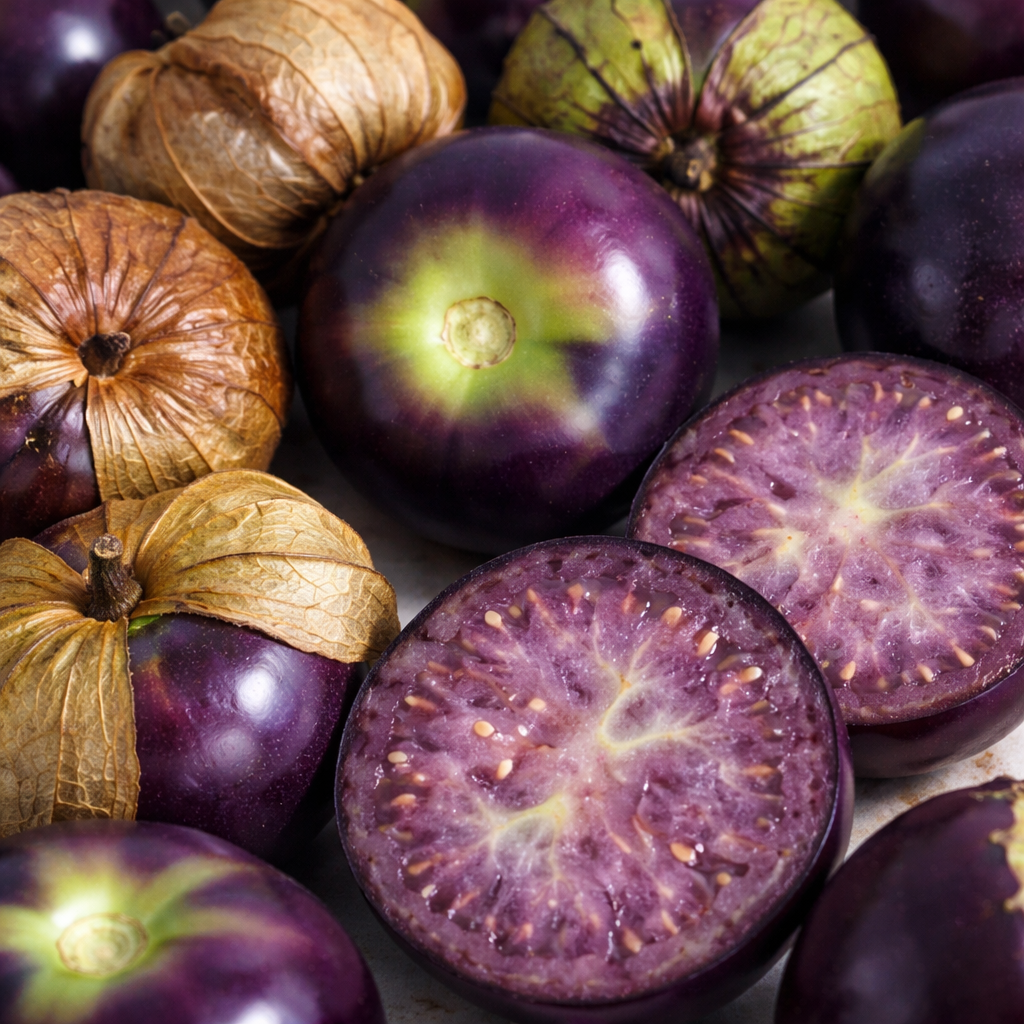
Purple tomatillo forms firm fruit that changes from green to purple while filling its papery husk. Tourne-Sol supplies 50 organic, open-pollinated seeds, lists approximately 75 days from transplanting, and recommends a six-week indoor start. Grow at least two plants in full sun for better pollination, with 60 to 90 cm spacing and a cage or stakes. Harvest when fruit fills the husk, remove it, and wash away the sticky coating. Its flavour is especially well suited to fresh or roasted salsa, sauces, and tacos. Harvests continue until frost while warmth, water, and pollination remain favourable. Keep the two plants close enough for visiting insects and inspect husks for actual fruit development.
Sold as 50 seeds
4 49 $

Sold out

Pay in 4 interest-free payments withSezzle

Delivery and pickup: view conditions

Product information
Advice adapted to Canada
Secure payment
Share

Discover the plant

Common namePurple tomatillo
FamilySolanaceae
GenusPhysalis
Speciesixocarpa
TypeSeeds
Botanical namePhysalis ixocarpa
Reproducible seedsYes

Purple tomatillo organic (Physalis ixocarpa) bears purple fruit enclosed in a papery husk. Ferme Tourne-Sol describes its flavour as a sure choice for excellent salsa and notes that tomatillo is a traditional ingredient in Mexican cooking. Packet SL504-a contains 50 organic, open-pollinated seeds. Official maturity is approximately 75 days from transplanting. Indeterminate stems continue flowering and fruiting until frost while conditions remain favourable. For better fruit set, grow at least two tomatillo plants near one another so insects can transfer pollen between their flowers. A single plant may form empty husks when suitable pollen does not reach its blooms.

Sow indoors 6 mm deep approximately six weeks before planting. Keep the starting mix evenly moist and warm, around 24 to 27°C, until emergence. Then place seedlings under bright light for 14 to 16 hours daily. Pot them individually after the first true leaves appear, and harden them gradually to sun and wind for one week. Transplant outdoors only after the last frost into warmed, freely drained soil in full sun. Space plants approximately 60 to 90 cm apart and install a cage or stakes to keep long stems and developing fruit off the ground. Water every root ball thoroughly after planting and keep both plants clearly labelled.

Water deeply at soil level, then allow the surface to dry slightly before watering again without letting roots dry out. Mulch after the soil warms to stabilize moisture and reduce splashing. Harvest when firm fruit fills its papery husk and changes from green to purple; soft fruit is overripe. Remove the husk and wash away the sticky coating thoroughly before cooking. Use ripe fruit in fresh or roasted salsa, sauces, stews, or taco toppings. Keep the husk around unwashed fruit during refrigerated storage and inspect it regularly. Discard mouldy or badly damaged fruit, and refrigerate cut preparations promptly.

In the garden

Exposure
Full sun
Life cycle
Frost-tender annual in Canada

Sowing guide

Sowing & germination

Sowing depth

6 mm (1/4 in)

Spacing / density

60 to 90 cm between plants; grow at least two plants

Germination temperature

24 to 27°C

Germination time

Approximately 7 to 14 days

Sowing period

Start indoors 6 weeks before planting; transplant after the last frost

Propagation

Seed

Growing method

Sow one seed per cell 6 mm deep approximately six weeks before planting. Keep the mix moist but not saturated and maintain 24 to 27°C until emergence. Remove the dome when seedlings appear, then provide bright light for 14 to 16 hours daily. Pot on after the first true leaves and feed lightly only if plants become pale. Harden seedlings gradually for one week. After the last frost, transplant into warmed, freely drained soil in full sun, spacing plants 60 to 90 cm apart. Grow at least two tomatillo plants to support pollination. Install cages or stakes, water every root ball, and mulch after the soil warms. Guide sprawling stems, watch flowers, and check whether husks actually contain fruit. Harvest when firm fruit fills its husk and turns purple. After fruit set, monitor moisture without overapplying nitrogen fertilizer. Loosen ties that press into stems and add support beneath any loaded branch. Remove fallen or damaged fruit, avoid working among wet foliage, and clean tools after handling a diseased plant. Before frost, gather developed fruit and allow it to finish ripening inside its husk. Check stored fruit regularly and discard anything mouldy. Keep plant labels visible if seed will be saved because nearby tomatillo varieties can cross.

Soil and care

Soil & care

Care level

Intermediate; two plants and supports recommended

Watering

Keep starting mix evenly moist during germination. After transplanting, water deeply at soil level when the upper few centimetres begin to dry. Avoid shallow sprinklings and constantly saturated soil. Drip irrigation or a soaker hose keeps foliage drier. Mulch warm soil, empty saucers, and check large containers daily during hot or windy periods. Adjust frequency to rainfall rather than following a fixed calendar.

Soil type

This crop prefers loose, freely drained soil in full sun. Incorporate a thin layer of mature compost before planting where soil needs organic matter. Avoid heavy areas where water remains after rain; a raised bed is more suitable there. In containers, use vegetable potting mix that remains aerated after repeated watering. Apply mulch only after the soil has warmed. Keep mulch away from stems and check drainage after prolonged rain.

Fertilization

Base applications on a soil test where possible. Incorporate mature compost before planting, then use balanced vegetable fertilizer according to its label if growth requires it. Avoid excess nitrogen, which favours stems and leaves over fruit set. Water after feeding and never place concentrated fertilizer against the stem. Container plants need smaller, regular doses because nutrients leave through drainage water. Reduce feeding late in the season.

Seasonal care

Six weeks before planting, start seeds in warm mix and move them under bright light after emergence. Pot seedlings on when true leaves develop, then harden them to sun and wind for one week. After the last frost, plant at least two tomatillos in full sun and immediately install cages or stakes. Through summer, water deeply at soil level, keep mulch away from stems, and guide spreading branches. Inspect flowers because an empty husk can indicate insufficient pollination. Maintain varied blooms near the vegetable garden and avoid insecticides on open flowers. Harvest purple fruit that fills its husk, including sound fallen fruit that continues ripening. Before frost, gather developed fruit. Remove overlooked fruit to limit volunteer seedlings the following spring, then clean supports and keep diseased remains out of home compost. When the first husks appear, confirm they contain fruit and observe insect visits between both plants. If stems spread across the ground, lift them before they root and add soft ties. After heavy rain, check drainage, loosen ties, and remove only damaged growth. Do not automatically add fertilizer when a husk remains empty because pollination may be the cause. Keep harvested fruit in its husk under refrigeration and wash away the sticky coating only before cooking. Record the first flower, first filled husk, and first purple fruit dates to refine local timing next season.

Container growing

Container growing

Recommended pot size

30 to 40 L per plant; grow at least two plants
Grow two plants in separate stable 30 to 40 L containers, or in one very large planter that leaves at least 60 cm between them. Each pot should be approximately 40 cm deep with several large holes. Fill it with vegetable potting mix amended with a little mature compost, then install a cage or stake before planting. Place containers together in full sun, sheltered from strong wind, so insects can visit both plants. Water deeply when the surface begins drying and always empty saucers. Feed according to the label after establishment without excess nitrogen. Secure sprawling stems with soft ties, harvest often, and check drainage after heavy rain. A supported large pot becomes heavy, so choose its final position before filling it. Keep stems off the potting mix to limit rooting where they touch the surface. Check ties, cage stability, and open drainage holes every week. During flowering, allow insects access to both plants and avoid treating open blooms. Inspect husks because those remaining empty can indicate inadequate pollination. Before frost, harvest developed fruit instead of moving pots that have become heavy and unstable. Keep husks around unwashed fruit during refrigerated storage, and remove fallen fruit from the container surface to prevent volunteer seedlings.
Purple tomatillo organic

Bloom and dimensions

Size, flowering & harvest

Foliage color

Green

Foliage type

Herbaceous

Growth rate

Fast in warm weather

Growth habit

Indeterminate, branching, and sprawling

Fruiting

Fruit forms after pollen moves between plants and enlarges inside a papery husk. Grow at least two tomatillos nearby for better fruit set. Tourne-Sol lists approximately 75 days from transplanting. Ripe fruit remains firm, fills its husk, and changes from green to purple; soft texture indicates over-ripeness. Pick regularly, keep stems supported, and gather sound fallen fruit. Empty husks may indicate inadequate pollination.

Days to maturity

Approximately 75 days from transplanting

Harvest

Approximately 75 days; firm purple fruit filling its husk
Purple tomatillo organic

Garden associations

Companion plants & uses

Companion plants

The essential companion is a second tomatillo plant positioned close enough for insects to visit both flower displays. Low herbs such as cilantro or basil may share the area when they retain adequate light and space, but they do not replace the second tomatillo. Avoid crowding other nightshade crops against sprawling stems. Companion choices mainly help organize watering, sunlight, and pathways; they do not guarantee yield or pest protection. Maintain airflow around every plant. Keep support, irrigation, and harvesting access clear for both plants. Nearby varied blooms can encourage insect activity during tomatillo flowering.

Garden use

Remove the papery husk, then thoroughly wash away the sticky coating before preparing ripe fruit. Chop it raw into salsa with tomato, onion, cilantro, and lime, or roast it for a deeper sauce. It also suits tacos, stews, and grilled dishes. Refrigerate cut preparations promptly. For room-temperature canning, use only a tested recipe and follow its acidification and processing directions exactly. Never improvise canning times or ingredient ratios. Keep unwashed fruit in its husk until cooking time and inspect it regularly during storage. Discard soft, mouldy, or badly damaged fruit rather than adding it to a preparation.

Recipe idea

From garden to table

Edible parts

Ripe fruit only; husk, leaves, and stems are not intended for eating
Roasted purple tomatillo salsa: remove the husks from 500 g ripe fruit and wash away the sticky coating thoroughly. Halve the fruit with one small onion and one seeded hot pepper. Place everything on a baking sheet, add 15 mL oil, and roast at 220°C for 15 to 20 minutes until tender. Cool briefly, then blend with 15 mL lime juice, a handful of cilantro, and a pinch of salt. Refrigerate for at least 30 minutes before serving. Keep salsa cold, refrigerate leftovers within two hours, and use them within three or four days. This refrigerated recipe is not intended for room-temperature canning. Use a tested canning recipe for shelf-stable salsa. For a more rustic texture, pulse only a few times and leave small pieces. Taste before adding more hot pepper because heat levels vary. Serve with corn chips, tacos, or grilled vegetables. Use a clean board and wash hands after handling the pepper. Label the container with its preparation date and discard salsa with an unusual smell or appearance. Use clean utensils for every serving and return the container to refrigeration promptly.
Purple tomatillo organic

Frequently asked questions

Frequently asked questions

When and how should purple tomatillo be sown?
Start seeds indoors approximately six weeks before planting. Sow one seed per cell 6 mm deep in sterile, lightly moist mix. Maintain approximately 24 to 27°C until emergence, generally in 7 to 14 days, then remove the dome and provide bright light for 14 to 16 hours daily. Pot seedlings on after the first true leaves appear. Harden plants gradually for one week and transplant only after the last frost into warmed soil in full sun. Grow at least two tomatillos and install their supports immediately. Water each root ball thoroughly. Keep both plants close enough for insects to visit their flowers during the same period, while preserving the recommended spacing.
Why should at least two tomatillo plants be grown?
Tomatillo fruit set depends on pollen moving between compatible plants. A single plant may flower and form husks without producing much fruit. Grow at least two tomatillos from separate seedlings nearby, with adequate spacing and blooms accessible to insects. Plants of the same variety may work when they grew from different seeds. Maintain varied flowers around the vegetable garden and avoid insecticides on open blooms. Empty husks despite healthy growth can indicate inadequate pollination, although extreme heat or drought may also interfere with fruit set. Keep both plants watered and flowering together. Confirm both plants flower at the same time and that their blooms remain accessible rather than buried inside excessively dense foliage.
How can a ripe purple tomatillo be recognized?
Tourne-Sol lists approximately 75 days from transplanting. Observe the fruit as well: it should fill its papery husk, remain firm, and change from green to purple. The husk may split as fruit enlarges. Soft fruit is overripe. Gather sound fallen fruit and allow it to finish colouring in its husk when needed. Remove the husk only before use, then wash away the sticky coating thoroughly. Warmth, light, and watering can advance or delay the actual harvest date in your garden. Keep picked fruit in a shallow container to prevent bruising. Inspect stored fruit regularly and immediately remove anything that begins deteriorating. Refrigerate cut fruit or salsa promptly after preparation.
Can purple tomatillo be grown in a container?
Yes, provided at least two plants are grown for better pollination. Use two stable 30 to 40 L containers approximately 40 cm deep, or one very large planter providing 60 cm between plants. Several drainage holes are essential. Install a cage or stake before planting, then place pots together in full sun sheltered from strong wind. Water deeply when the surface begins drying, empty saucers, and feed according to the label without excess nitrogen. A supported large container becomes heavy, so select its final position before filling it. Check moisture daily during hot or windy weather. Position both pots close enough for insects to move between their flowers while leaving adequate airflow and harvesting access.
Are these purple tomatillo seeds organic and open-pollinated?
Yes. Tourne-Sol presents this packet of 50 seeds as organic and open-pollinated. To save seed, choose several fully mature, healthy fruit from several vigorous plants. Tomatillos can cross with other varieties of the same species, so manage isolation when varietal fidelity matters. Label plants and record other flowering tomatillos nearby. Extract seed from ripe fruit, rinse it thoroughly, and allow it to dry completely before storing in cool, dry, dark conditions. Mark every envelope with the name, year, and SL504-a source. Keep seed from diseased fruit out of the saved lot. Test a few seeds before the next sowing and discard any stored lot showing mould, moisture, or an unusual odour.

Seed-starting essentials

Click a product to build your selection.

Your selection

Total