Organic seeds

Radish ‘Malaga’

Raphanus sativus

Product code : TOURNE-0132

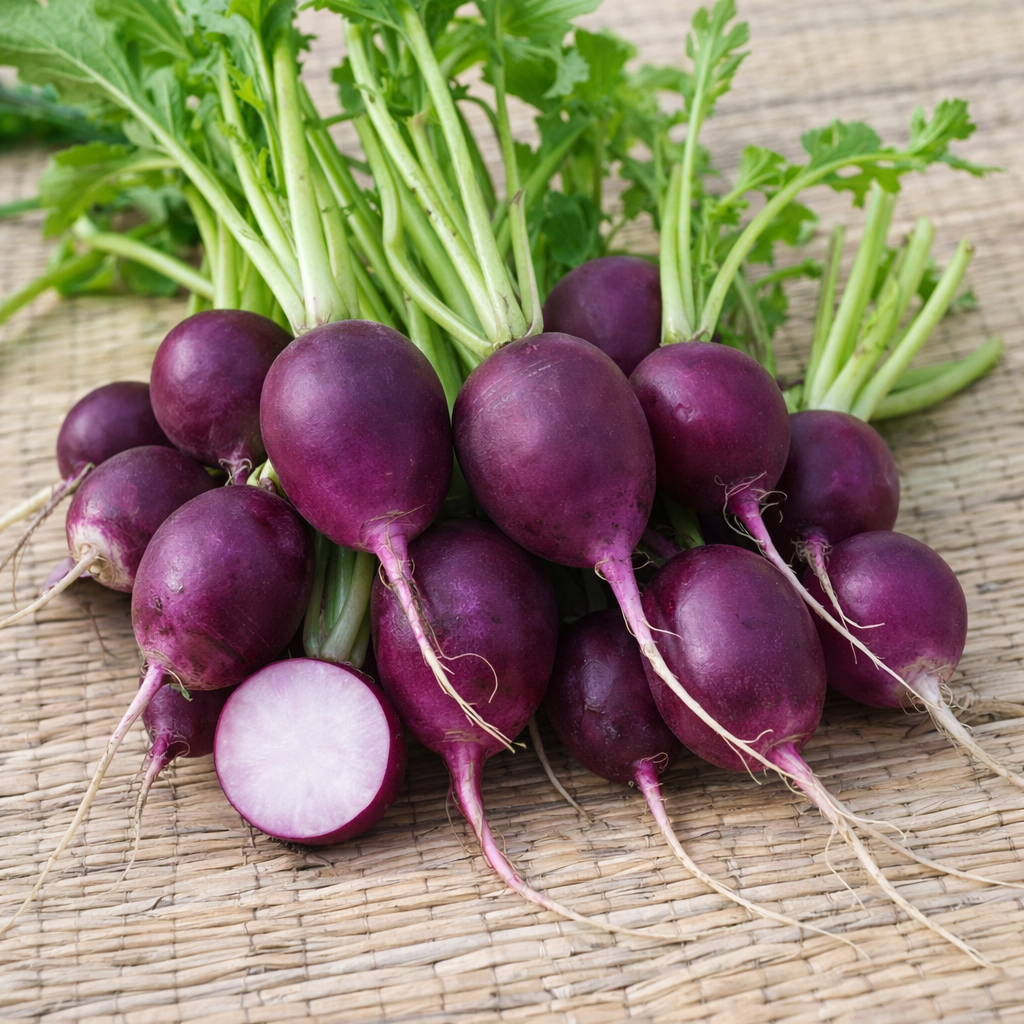
Radish ‘Malaga’ is a Polish variety that forms round roots with dark-purple skin and crisp, juicy white flesh. Its mild, lightly peppery flavour remains pleasant when soil moisture stays even and roots are harvested promptly. The packet contains 250 organic, open-pollinated seeds suitable for seed saving. Direct sow outdoors during cool weather, then repeat small sowings every 1 to 2 weeks. The colourful roots slice neatly for salads, raw vegetable plates, and sandwiches. This fast cool-season crop fits kitchen gardens, raised beds, and containers with enough depth for unrestricted root growth. Its purple skin adds an appealing contrast from harvest through serving.
4 49 $
Pay in 4 interest-free payments with Sezzle
Detailed plant guide
Advice adapted to Canada
Secure payment
Share
Quantity
250 seeds
Exposure
Full sun
Life cycle
Annual

Discover the plant

Common nameRadish ‘Malaga’
FamilyBrassicaceae
GenusRaphanus
Speciessativus
CultivarMalaga
TypeSeeds
Botanical nameRaphanus sativus
Reproducible seedsYes

Radish ‘Malaga’ (Raphanus sativus) produces round roots with dark-purple skin and crisp, juicy white flesh. The flavour remains pleasantly mild with a lightly peppery note that does not become strong too quickly when the soil stays evenly moist and roots are harvested promptly. Ferme Tourne-Sol offers 250 organic, open-pollinated seeds suitable for seed saving. This Polish variety makes colourful bunches and creates a striking contrast when sliced for salads, raw vegetable plates, or a fresh side served beside a lunchtime sandwich or on a colourful raw vegetable plate.

Direct sow outdoors during cool weather because radishes tolerate frost and perform best under moderate temperatures. Place seeds about 1.3 cm (1/2 in) deep in loose, fertile, well-drained soil, then thin seedlings to roughly 2.5 to 7.5 cm (1 to 3 in) apart. Germination generally takes 5 to 10 days when soil temperatures are near 13 to 24°C (55 to 75°F). Keep moisture uniform to support evenly shaped roots and prevent an excessively strong flavour. Avoid heavy, compacted ground that restricts smooth root development or causes distinctly irregular root shapes.

Make small sowings every 10 days or every 1 to 2 weeks to spread the harvest over the season. Pull roots as soon as they reach the preferred size while they remain firm; radishes held too long or exposed to heat may become fibrous or develop flower stalks. ‘Malaga’ suits kitchen gardens, raised beds, and sufficiently deep containers. Slice the roots for sandwiches, salads, and vegetable plates. Tender leaves are also edible after thorough washing, and flowering plants reserved for seed require cross-pollination with another radish plant to develop viable seed pods.

Packet of 250 organic Radish ‘Malaga’ (Raphanus sativus) seeds from Ferme Tourne-Sol, shown with round roots that have dark-purple skin and white flesh. The image identifies this crisp Polish variety with a mild, lightly peppery flavour, intended for successive direct sowings in kitchen gardens, raised beds, or containers during cool weather.

Sowing guide

It all startswith a seed.

Sowing depth

1.3 cm (1/2 in)

Spacing / density

2.5 to 7.5 cm (1 to 3 in) after thinning

Germination temperature

13 to 24°C (55 to 75°F)

Germination time

5 to 10 days

Sowing period

Direct sow outdoors during cool weather; tolerates frost

Propagation

Seed

Growing method

Direct sow Radish ‘Malaga’ outdoors as soon as the soil can be worked, then continue through cool periods. Prepare loose, clod-free soil so the roots can develop an even round shape. Make a furrow about 1.3 cm (1/2 in) deep, space the seeds, cover lightly, and water with a fine spray. A soil temperature near 13 to 24°C (55 to 75°F) generally supports emergence in 5 to 10 days. Keep the surface moist without waterlogging it. After emergence, thin seedlings to 2.5 to 7.5 cm (1 to 3 in), depending on the root size you want. Do not try to transplant removed seedlings because radishes develop best without root disturbance. Sow small amounts every 10 days or every 1 to 2 weeks. Use lightweight row cover if flea beetles or root maggots are a concern, but remove it from plants retained for flowering. Harvest promptly when roots are firm and well sized. The official cultivar page does not provide a days-to-maturity figure, so assess actual root size instead of relying on a fixed date. Label each series with its sowing date and keep weeds from competing with young seedlings during establishment.

Soil and care

The right care,at the right time.

Care level

Easy

Watering

Maintain uniform moisture from sowing through root development. Use a fine spray until emergence so the seeds are not displaced, then water more deeply when the surface begins to dry. Alternating drought and excess water can reduce root texture and uniformity. During warm weather or in containers, check the mix daily without leaving standing water. Consistent irrigation also helps keep the flavour mild and the white flesh crisp.

Soil type

Radish ‘Malaga’ prefers loose, deep, fertile, well-drained soil enriched with finished organic matter. Sandy or loamy texture supports smooth, round root development. Improve heavy ground with mature compost and remove stones or large clods before sowing. The soil should hold uniform moisture without remaining saturated because drought stress strengthens the flavour and reduces texture quality. Avoid fresh manure and excessive compaction around the developing roots.

Fertilization

Incorporate mature compost before sowing when the soil lacks organic matter. A soil test can determine whether additional nutrients are needed. Avoid excess nitrogen, which promotes foliage instead of roots, and do not use fresh manure. For this quick crop, fertile, balanced soil is usually sufficient. In containers, begin with a lightly enriched potting mix and avoid repeated heavy feeding during the short harvest cycle.

Moisture

Even soil moisture

Seasonal care

In spring, sow as soon as the soil is workable and loose. Protect early rows with lightweight cover if flea beetles are active, then monitor emergence and thin promptly to prevent competition. Maintain uniform moisture, especially as the roots begin to swell. In summer, favour cooler periods and light afternoon protection if the garden becomes intensely hot. High temperatures can speed flower-stalk development and reduce root tenderness, so harvest promptly. Replace the cleared row with another crop or make another small sowing when conditions are suitable. Resume sowing in late summer for an autumn harvest; radishes tolerate light frost. Remove damaged roots and diseased debris, then rotate with a different botanical family the following year. To save seed, allow several healthy plants to flower and produce pods. Radish requires pollination between plants, so isolate ‘Malaga’ from other flowering radish varieties when maintaining the cultivar. During winter, clean containers, record successful sowing dates, and store fully dried seed in a cool, dark, dry location. Review notes before planning the next series of ten-day or one-to-two-week sowings. A light cover of shredded leaves or compost can protect the soil surface between crop cycles, but keep it away from a newly seeded line. Check that tools, boxes, and labels are clean before spring returns. When planning the rotation, avoid placing the next radish crop immediately where another Brassicaceae crop recently grew, especially if root disease or insect pressure was observed.

Container growing

A garden,within reach.

Recommended pot size

At least 15 to 20 cm (6 to 8 in) deep
Radish ‘Malaga’ grows well in a container when the mix is deep enough for the root and remains loose. Choose a box at least 15 to 20 cm (6 to 8 in) deep with plenty of drainage holes. Fill it with a light soilless mix enriched with a small amount of mature compost; straight garden soil compacts too easily in a pot. Sow 1.3 cm (1/2 in) deep and thin seedlings to 2.5 to 7.5 cm (1 to 3 in). Place the container in full sun during cool weather. Water with a fine spray until emergence, then keep the mix uniformly moist without leaving water in a saucer. Small pots dry quickly, so check daily during windy or warm periods. Avoid repeated applications of high-nitrogen fertilizer. Make several small sowings instead of filling the entire box on one day to spread the harvest. Pull roots as soon as they reach the preferred size, renew tired mix when needed, and remove plants that develop flower stalks unless they are intentionally reserved for seed production. Label every section with its sowing date and rotate the box if light reaches it mainly from one side.
Radish ‘Malaga’ (Raphanus sativus)

Bloom and dimensions

Its place,in your garden.

Foliage color

Green

Foliage type

Annual deciduous foliage

Growth rate

Fast

Growth habit

Leaf rosette above a round root

Bloom period

Radish is normally harvested before flowering. Under heat or when retained for seed, it develops a stalk bearing four-petalled flowers typical of the Brassicaceae family. These blooms require pollen from another radish plant to form seed. Allow several healthy plants to flower, avoid applying insecticides to open blooms, and isolate them from other radish varieties when maintaining ‘Malaga’ true to type is important.

Fruiting

After cross-pollination between plants, the flowers produce pods containing seed. Allow pods to mature and dry on several healthy plants before harvesting them in dry weather. Finish drying away from moisture, then separate seed from the debris. Isolate ‘Malaga’ from other flowering radish varieties to limit crossing, and label saved seed with the cultivar name and harvest year before cool, dry storage.

Harvest

Harvest when roots are firm and have reached the preferred size
Packet of 250 organic Radish ‘Malaga’ (Raphanus sativus) seeds from Ferme Tourne-Sol, shown with round roots that have dark-purple skin and white flesh. The image identifies this crisp Polish variety with a mild, lightly peppery flavour, intended for successive direct sowings in kitchen gardens, raised beds, or containers during cool weather.

Garden associations

In goodcompany.

Companion plants

Pair Radish ‘Malaga’ with cool-season crops that appreciate loose soil and even moisture, such as lettuce, spinach, peas, or carrots. Radishes can temporarily occupy space between slower rows because they are harvested quickly. Preserve enough light and air, then remove roots promptly to prevent competition. These combinations mainly use space efficiently; they do not replace Brassicaceae crop rotation or monitoring for flea beetles and root maggots. Avoid placing the radish beneath dense mature foliage that would reduce light or interfere with regular watering and harvest checks.

Recipe idea

From the gardento your plate.

Edible parts

Roots and tender young leaves
Prepare a crisp Radish ‘Malaga’ salad for four. Thinly slice 10 to 12 washed radishes and combine them with 1 cucumber cut into half-moons, 30 ml (2 tbsp) chopped chives, and 15 ml (1 tbsp) sunflower seeds. Whisk together 30 ml (2 tbsp) oil, 15 ml (1 tbsp) lemon juice, 5 ml (1 tsp) honey, a pinch of salt, and pepper. Add the dressing just before serving to preserve the crisp texture and dark-purple colour. Serve beside sandwiches, grain dishes, or grilled vegetables. Healthy tender leaves can be washed, chopped, and added in a small amount. Store undressed radishes separately in the refrigerator for several days; dressed salad softens more quickly. Remove any damaged portions before preparation and wash all garden produce thoroughly under clean running water. For a milder variation, add diced apple or replace part of the lemon juice with cider vinegar. Serve the salad immediately after dressing.

Frequently asked questions

Your questions,answered.

How should Radish ‘Malaga’ be sown?
Direct sow outdoors in loose soil as soon as the ground can be worked and throughout cool periods. Make a furrow about 1.3 cm (1/2 in) deep, place the seeds, cover lightly, and water with a fine spray. A soil temperature of 13 to 24°C (55 to 75°F) generally supports emergence in 5 to 10 days. Keep the surface moist without waterlogging it. When seedlings are large enough to handle, thin them to 2.5 to 7.5 cm (1 to 3 in). Avoid transplanting removed seedlings because disturbing the taproot can affect its shape. Repeat small sowings every 10 days or every 1 to 2 weeks for a longer harvest.
How can the roots remain mild and crisp?
Grow Radish ‘Malaga’ during cool periods and maintain uniform moisture. Soil that dries completely can strengthen the peppery flavour and reduce texture quality, while prolonged saturation limits oxygen around the roots. Water with a fine spray after sowing, then provide deeper irrigation when the surface begins to dry. Thin plants to 2.5 to 7.5 cm (1 to 3 in) so roots have room to form, and harvest them while firm rather than letting them age in the ground. Heat encourages flower-stalk development; pause and sow again in late summer if conditions become too warm. Remove the leaves before refrigerating harvested roots to help them retain moisture and crispness.
When should Radish ‘Malaga’ be harvested?
The official product page does not provide a days-to-maturity figure for ‘Malaga’. Instead, begin checking roots when their purple shoulders become visible at the soil line. Pull one to assess diameter, firmness, and texture, then harvest the others when they match the size you want. Regular picking prevents roots from becoming oversized, fibrous, or excessively peppery. Water the previous day if the ground is very dry, then grasp the foliage close to the crown for easier pulling. Remove the tops before placing clean, dry roots in the refrigerator. Staggered sowings create several small harvest windows instead of one large supply that must be used immediately.
Can Radish ‘Malaga’ be grown in a container?
Yes. Use a box at least 15 to 20 cm (6 to 8 in) deep with several drainage holes. Fill it with a light, aerated soilless mix instead of compact garden soil. Sow 1.3 cm (1/2 in) deep, thin seedlings to 2.5 to 7.5 cm (1 to 3 in), and place the box in full sun during cool weather. Keep the mix uniformly moist because containers dry quickly, but empty any saucer that holds water. Avoid high-nitrogen fertilizer and harvest roots as soon as they reach the preferred size. To extend the harvest, reserve small sections for sowings made on different dates rather than planting the whole container at once.
Are Radish ‘Malaga’ seeds organic and open-pollinated?
Yes. Ferme Tourne-Sol offers this packet of 250 seeds as an organic product certified by Ecocert Canada. The farm also describes its seeds as open-pollinated and suitable for seed saving. To maintain ‘Malaga’, allow several healthy plants to flower and form pods because radish seed develops after pollination between plants. Isolate them from other flowering radish varieties to limit crossing. Harvest pods when mature and dry, finish drying them away from moisture, then separate the seeds from debris. Label the envelope with the cultivar and harvest year, and store fully dried seed in a cool, dark, dry place until the next sowing season.

Wildlife and pets

Life,around your plants.

Supporting wildlife

Plants harvested for their roots do not usually flower. Those allowed to bolt produce blooms visited by insect pollinators, which are required for radish seed formation. Keep several plants, avoid insecticides on open flowers, and provide other blooms nearby. Activity varies with weather and habitat. Mature pods can later be collected for seed when cultivar isolation has been maintained.