Organic seeds

Tourne-sol

Kaleidoscopic long radish mix organic

Raphanus sativus

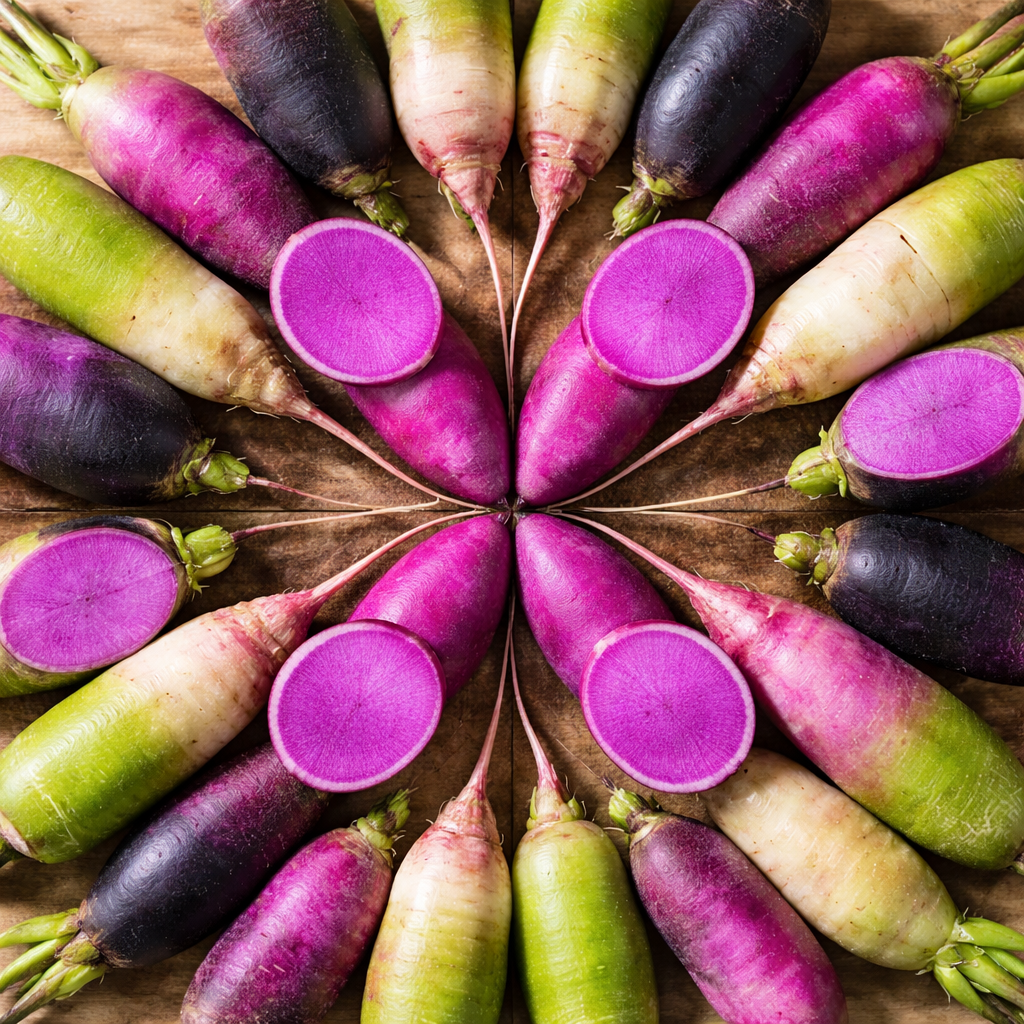
Kaleidoscopic long radish mix produces cylindrical pink, purple, red, black, green, and white roots. This original Tourne-Sol variety creates a diverse harvest for salads, raw vegetable plates, and pickles. The packet contains 150 organic, open-pollinated seeds. Direct sow after mid-July in deep, loose soil, then thin to let roots extend. This mix tolerates frost and matures in about 60 days. Even moisture preserves crisp texture, while gradual harvest makes it possible to discover and compare every colour at its best stage. The late sowing also fills garden space opened after an early vegetable crop. This diversity makes every autumn harvest especially engaging and colourful.
Sold as 150 seeds
4 49 $

Sold out

Pay in 4 interest-free payments withSezzle

Delivery and pickup: view conditions

Product information
Advice adapted to Canada
Secure payment
Share

Discover the plant

Common nameKaleidoscopic long radish mix
FamilyBrassicaceae
GenusRaphanus
Speciessativus
TypeSeeds
Botanical nameRaphanus sativus
Reproducible seedsYes

Kaleidoscopic long radish mix organic (Raphanus sativus) produces long cylindrical roots in pink, purple, red, black, green, and white. This original Ferme Tourne-Sol variety turns every harvest into a colourful assortment for salads, raw vegetable plates, and quick pickles. The packet contains 150 organic, open-pollinated seeds. Different colours appear through the harvest, making every root interesting to slice, compare, and serve in a fresh seasonal meal. One clearly labelled garden row therefore offers several different natural appearances without requiring separate packets for every radish colour represented in the mix.

Direct sow outdoors only after mid-July, following the Tourne-Sol product page. Place seeds about 1.3 cm deep in loose, deep, well-drained soil. Thin to 8 or 10 cm so the long roots can extend without competition. Keep the soil evenly moist and weed shallowly. This mix tolerates frost and benefits from the cooler temperatures of late summer and autumn to develop crisp texture. Avoid transplanting because disturbed roots may become irregular. Fine insect-exclusion cover installed immediately after sowing can protect all the tender young leaves from common garden flea beetles.

Maturity is listed at about 60 days. Pull one sample first to assess its length, firmness, and colour, then harvest gradually. Do not wait until roots become fibrous, hollow, or split. Remove the tops to reduce moisture loss and refrigerate clean roots. This mix suits kitchen gardens, raised beds, and deep containers, where its range of colours becomes an autumn crop that is as decorative as it is useful. Prepare split roots first and keep intact ones cool. Wash roots only before use so stored vegetables retain firmness and surface quality for later meals.

In the garden

Exposure
Full sun to partial shade
Life cycle
Annual

Sowing guide

Sowing & germination

Sowing depth

1.3 cm (1/2 in)

Spacing / density

8 to 10 cm (3 to 4 in) after thinning

Germination temperature

7 to 24°C (45 to 75°F)

Germination time

3 to 10 days

Sowing period

Direct sow outdoors after mid-July; tolerates frost

Propagation

Seed

Growing method

Direct sow around mid-July in soil loosened to at least 20 cm. Make a furrow about 1.3 cm deep, place seeds separately, cover lightly, and water with a fine spray. Keep the surface moist until emergence, generally within 3 to 10 days when soil remains cool to moderately warm. Thin early to 8 or 10 cm so every root can reach a useful length without competition. Space rows 25 to 30 cm apart and avoid transplanting removed seedlings. Maintain even moisture, weed shallowly, and protect young foliage from flea beetles with insect-exclusion cover when needed. This radish tolerates frost and benefits from cool autumn temperatures. Begin checking shoulders at about 55 days, then harvest around 60 days. Pull one sample to confirm size, firmness, and crisp flesh before lifting the remainder. One mid-July planting follows the official Tourne-Sol recommendation. Remove row cover only if plants are intentionally retained for flowering and seed production. Water at soil level in the morning and avoid working waterlogged ground. After thinning, remove weeds by hand so tools do not damage the expanding roots. Check moisture below the surface rather than relying only on its appearance.

Soil and care

Soil & care

Care level

Easy

Watering

Keep the soil evenly moist from sowing through harvest. Use a fine spray before emergence, then water more deeply when the top few centimetres begin to dry. Drought may produce stronger or fibrous flesh, while heavy watering after a dry period encourages splitting. Check containers and sandy soils more often, especially during hot July and August weather. Water at soil level in the morning and never leave pots standing in water.

Soil type

Kaleidoscopic long radish mix prefers deep, loose, well-drained soil without stones or large clods. Loamy or sandy texture helps the long roots remain long and smooth. Incorporate a moderate amount of mature compost before sowing and avoid fresh manure. Soil should retain even moisture without becoming waterlogged; in heavy ground, a raised bed improves drainage and makes harvest easier. Avoid walking on the prepared row because compaction restricts root expansion.

Fertilization

Before sowing, incorporate a small amount of mature compost if the soil is poor. Extra fertilizer is rarely needed during the 60-day cycle in balanced ground. Avoid nitrogen-rich fertilizer and fresh manure, which favour foliage instead of roots. If a soil test identifies a deficiency, apply a low dose of balanced vegetable fertilizer according to its label, keeping concentrated product away from seeds and young roots.

Seasonal care

Around mid-July, open a bed after an early crop, remove residue, and loosen the soil without working it while waterlogged. Sow 1.3 cm deep, water gently, and label the date. After emergence, thin to 8 or 10 cm and install insect-exclusion cover if flea beetles are active. During August, maintain even moisture while roots expand and hand weed to avoid damaging the shoulders. In September, check diameter without completely uncovering roots. Tourne-Sol lists 60 days, so begin pulling a sample near that point. Harvest gradually when roots measure a useful length, remain firm, and reveal crisp flesh. Light frost is tolerated, but harvest before the ground freezes deeply. Remove tops, brush away soil, and refrigerate the roots. Clear brassica residue afterward and rotate the bed the following season to limit the buildup of soil-borne pests. Wash reusable row cover before storing it for another crop. During warm spells, check every morning that the surface has not formed a dry crust, and loosen it gently between rows. After thinning, inspect foliage for the small holes caused by flea beetles. Refasten row cover if an edge lifts, and prevent weeds from shading young plants. Record the date and diameter of the first harvested root for comparison next season. Use damaged roots first, and compost only healthy residue that shows no sign of pest or disease. Clean tools and containers before storing them at the end of the crop.

Container growing

Container growing

Recommended pot size

10 to 20 L (2.5 to 5 gal) container at least 25 to 30 cm (10 to 12 in) deep
Choose a container holding at least 15 to 20 L and measuring 25 to 30 cm deep, with several drainage holes. Fill it with loose, stone-free mix, then sow around mid-July at 1.3 cm deep. Thin to 8 or 10 cm; a large planter generally supports several roots rather than one dense row. Place the pot in sun, with light afternoon shade during intense heat. Keep the mix evenly moist and always empty the saucer. Fine mesh supported by small hoops protects leaves from flea beetles. Rotate the container weekly for even light. From about 55 days, inspect the shoulders and harvest near 60 days when roots are firm and well formed. After harvest, remove the tops, use roots promptly, and refresh part of the mix before another crop. The generous volume stabilizes moisture and provides enough room for long roots. Move the planter to shelter if an early hard freeze threatens the crop. Raise the container slightly so excess water drains freely. Very thin mulch between plants reduces evaporation without covering the shoulders. Label the sowing date and number of retained seedlings, then keep the planter accessible for frequent moisture checks. Label the sowing date clearly.
Kaleidoscopic long radish mix organic

Bloom and dimensions

Size, flowering & harvest

Foliage color

Green

Foliage type

Herbaceous

Growth rate

Fast

Growth habit

Herbaceous rosette

Fruiting

The harvested portion is a long cylindrical root rather than a botanical fruit. Pink, purple, red, black, green, and white distinguish the roots, while their flesh remains crisp and pleasantly peppery. Even moisture, 8 to 10 cm spacing, and cool temperatures support quality. Harvest at about 60 days before roots become hollow, fibrous, or split. Remove the leafy tops promptly to slow moisture loss.

Days to maturity

60 days

Harvest

At about 60 days, when long roots are firm, colourful, and crisp
Kaleidoscopic long radish mix organic

Garden associations

Companion plants & uses

Companion plants

Kaleidoscopic long radish mix can follow peas, lettuce, or other early crops that open a bed around mid-July. While growing, it may share space with fall lettuce or carrots if every crop retains adequate room, light, and water. Do not crowd the roots with other bulky vegetables. Grouping brassicas beneath insect-exclusion cover simplifies flea beetle protection but makes crop rotation even more important. These combinations organize space and do not guarantee special pest protection. Keep neighbouring roots undisturbed when thinning or harvesting the radishes.

Garden use

Slice kaleidoscopic long radish mix thinly to reveal its crisp flesh in salads, sandwiches, grain bowls, and raw vegetable plates. Its fresh, characteristically peppery flavour pairs well with mild dressing, citrus, herbs, or soft cheese. Roots can also be quick-pickled or briefly roasted. Remove the tops before storage and refrigerate roots in a closed container. Wash thoroughly just before use and discard any root that becomes slimy or mouldy. Thin slices can also decorate appetizers or accompany a colourful autumn family meal.

Recipe idea

From garden to table

Edible parts

Roots and healthy young leaves
Prepare quick-pickled kaleidoscopic long radish mixes with two firm roots, 125 mL mild vinegar, 125 mL water, one tablespoon sugar, and half a teaspoon salt. Wash the roots, remove the tops, and slice very thinly to display their crisp flesh. Warm the water, vinegar, sugar, and salt only until dissolved, then let the liquid cool slightly. Place slices in a clean jar, pour in the brine, and refrigerate for at least thirty minutes. Serve in a sandwich, salad, or grain bowl. Add several peppercorns or a small dill sprig for extra freshness. Keep the preparation refrigerated and use it promptly; this method makes a refrigerator pickle, not a shelf-stable preserve. Discard the batch if an unusual odour, mould, or slimy texture develops. For the crispest texture, slice the roots immediately before adding the brine. Use a mandoline with its hand guard or a stable knife on a nonslip board. Allow hot brine to cool enough that the multicoloured slices keep their fresh crunch and vivid colour.
Kaleidoscopic long radish mix organic

Frequently asked questions

Frequently asked questions

When and how should kaleidoscopic long radish mix be sown?
Tourne-Sol recommends direct sowing outdoors around mid-July, once per season. Place seeds about 1.3 cm deep in loose, moist soil. Keep the surface moist until emergence, generally within 3 to 10 days, then thin to 8 or 10 cm so roots can expand. Space rows 25 to 30 cm apart. Kaleidoscopic long radish mix tolerates frost and benefits from cool late-season temperatures. A label showing the sowing date helps anticipate harvest at about 60 days. Avoid transplanting thinned seedlings because root disturbance may affect their shape. Install fine insect-exclusion cover immediately after sowing when flea beetles are present in the vegetable garden.
What exposure suits kaleidoscopic long radish mix?
Choose a sunny location during the cool periods of late summer and autumn. Light afternoon shade may help during persistent heat, but insufficient light reduces vigour and root development. Keep the soil loose, deep, and evenly moist. Avoid sites where water collects or foot traffic compacts the ground. In a container, rotate the pot weekly and monitor heat reflected by walls because it can accelerate drying. Frost is tolerated, although roots should be harvested before the mix freezes solid. A location near a water source makes consistent irrigation easier while the roots expand. Several hours of direct light support firm growth and vivid interior colour.
When should kaleidoscopic long radish mix be harvested?
Tourne-Sol lists maturity at about 60 days. Begin checking shoulders near 55 days without uncovering the entire row. A ready root generally measures a useful length, remains firm, and reveals crisp flesh when cut. Pull one sample first; if size or colour is insufficient, let the others continue for several days. Harvest before the soil freezes deeply or roots become split, fibrous, or hollow. Remove the tops and refrigerate clean roots promptly. Growing conditions may shift the exact date, so firmness and size remain useful guides. Cutting the sample root also confirms that its characteristic colour has developed fully. Check colour too.
Can kaleidoscopic long radish mix be grown in a container?
Yes. Use a 15 to 20 L planter at least 25 to 30 cm deep with drainage holes. Fill it with loose mix, sow around mid-July at 1.3 cm, and thin to 8 or 10 cm. Place the pot in sun during cool weather and keep the mix evenly moist without leaving water in the saucer. Limit plant numbers so every root can reach a useful length. Check shoulders near 55 days and harvest at about 60 days. Fine mesh can protect young leaves from flea beetles. Raise the pot slightly so drainage holes remain unobstructed after every thorough watering.
Are these long radish seeds organic, open-pollinated, and original?
Yes. Tourne-Sol presents this packet of 150 seeds as organic, open-pollinated, and an original farm variety. To maintain the mix, allow several representative roots of every colour to flower. Raphanus sativus varieties can cross, so isolate seed plants from other flowering radishes. Let pods dry on the stalks, collect them in dry weather, then thresh and clean the seed. Dry it completely before storing it in a labelled envelope in a cool, dry place. Keeping many roots helps preserve the mix’s colour diversity. Always label the mix and harvest year. Retain several colours and many representative plants to preserve as much visual diversity as possible in the following generation.

Seed-starting essentials

Click a product to build your selection.

Your selection

Total