


Sale
Sold out

Heirloom determinate compact early tomato
Solanaceae
Organic fruiting vegetable seeds
Organic 'Mountain Princess' tomato
Solanum lycopersicum
Product code : BIOVO-0135
Organic Mountain Princess is a determinate heirloom tomato with a comparatively compact habit and an early red harvest. Plants around 60–90 cm tall produce juicy fruit with a balanced, mildly tangy flavour for salads, sandwiches, and fresh eating. About 68 days from transplanting is an indicative maturity reference, not a guaranteed calendar date. Grow in full sun with fertile, freely drained soil and a light support for loaded branches. Start indoors and harden plants before setting them outside after frost danger. A suitably deep, stable container can work when watering and root space are adequate. Preserve healthy foliage and harvest individual tomatoes as colour and texture indicate readiness.
- Exposure
- Full sun
- Life cycle
- Warm-season annual
Discover the plant
Common nameMountain Princess tomato
FamilySolanaceae
GenusSolanum
Specieslycopersicum
CultivarMountain Princess
TypeHeirloom determinate compact early tomato
Botanical nameSolanum lycopersicum
Heirloom varietyYes
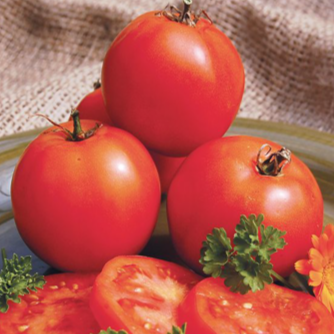
Organic 'Mountain Princess' tomato (Solanum lycopersicum) is an heirloom determinate compact early variety, especially useful where summers are short. Plants reach approximately 60–90 cm and bear uniform red fruit with juicy flavourful flesh. Balanced flavour combines sweetness with mild acidity, making the tomatoes suitable for salads, sandwiches, and fresh eating. Harvest generally begins around 68 days after transplanting. The manageable habit fits easily into a small vegetable garden or a 35–45 cm diameter container. It is a practical choice for gardeners seeking an early red tomato without the long vines of an indeterminate variety.
Sow indoors from March through April, six to eight weeks before the last frost, approximately 0.5 cm deep. Maintain 21–27°C and even moisture; germination usually takes 7–14 days. Provide intense light immediately after emergence to encourage sturdy plants. Pot seedlings up after true leaves appear, then harden them gradually. Once frost risk has passed, transplant in full sun into fertile, organic-rich, well-drained soil. Light support can hold stems when fruit becomes heavy. Protect newly transplanted plants from sudden cold and strong wind while their roots establish securely in the garden.
Water deeply at soil level when the surface begins to dry, without leaving roots in saturated soil. Mulch after the ground warms to stabilize moisture and reduce splashing onto foliage. In containers, check moisture more frequently during hot weather. Harvest tomatoes once they are uniformly red and yield slightly to gentle pressure. Pick regularly during the determinate plant's concentrated production period. Monitor cracking, blossom-end rot, insects, and foliar diseases, then bring developed fruit indoors before the first frost. Discard tomatoes that become mouldy, slimy, deeply split, or abnormal-smelling before storage.

Sowing guide
It all startswith a seed.
Sowing depth
0.5 cm (1/4 in)
Spacing / density
Allow approximately 90–120 cm (35–47 in) between plants in this generous-spacing layout, with room for support, airflow and harvest access.
Germination temperature
21 to 27 °C (70 to 81 °F)
Germination time
7 to 14 days
Sowing period
March through April indoors Adjust these dates to your local frost dates and soil conditions; Canadian growing seasons vary by region.
Propagation
Seed
Growing method
Starting tomato seeds inside: 'Mountain Princess' tomato. Sow Mountain Princess indoors from March through April, six to eight weeks before the last frost, approximately 0.5 cm deep. Use lightly moist seed-starting mix and maintain 21–27°C; emergence usually occurs in 7–14 days. Move seedlings under intense light, positioned close enough to prevent stretching. Pot them up after true leaves appear and keep the mix evenly moist without saturation. About one week before planting, gradually expose them to outdoor sun, wind, and temperatures. Transplant after all frost risk has passed into full sun and fertile, organic-rich, well-drained soil. Leave enough space for good airflow. Water deeply at soil level, mulch after the ground warms, and add light support if stems bend. Feed moderately according to the selected fertilizer label. Harvest generally begins around 68 days after transplanting when fruit is uniformly red and yields slightly to gentle pressure. Light support protects stems during growing Mountain Princess from seed. Allow room for the plant's compact and determinate, and install its cage or stake at transplanting before roots and branches make the job difficult. Use approximately 68 days after transplanting as a planning estimate; soil warmth, transplant stress, and summer temperatures can move the first harvest.
Soil and care
The right care,at the right time.
Soil pH
Approximately 6.0 to 6.8
Care level
Moderate
Watering
'Mountain Princess' tomato sets much of its crop on a compact plant; keep moisture dependable while flowers and fruit develop together. 'Mountain Princess' tomato's uniform red fruit at maturity is carried on compact and determinate growth, so extend watering beyond the stem as the supported canopy enlarges. The harvest guide for 'Mountain Princess' tomato is approximately 68 days after transplanting; maintain moisture while younger clusters continue filling. Water 'Mountain Princess' tomato slowly at the base, soak its root zone, then wait until the upper soil begins to dry before irrigating again.
Soil type
The compact habit of 'Mountain Princess' tomato suits a prepared bed or roomy container, not shallow or compressed soil. Prepare 'Mountain Princess' tomato's bed for compact and determinate growth bearing uniform red fruit at maturity, not only for the small spring transplant. Allow approximately 68 days after transplanting for 'Mountain Princess' tomato to develop, providing soil volume that stays aerated after repeated watering. Before setting 'Mountain Princess' tomato, mix mature compost through the area while preserving a crumbly structure rather than a dense amended pocket. For 'Mountain Princess' tomato, use the supplied pH range of approximately 6.0 to 6.8 as the soil-testing target.
Fertilization
'Mountain Princess' benefits from balanced fertility before its first trusses. Choose amendments from soil results and crop response. For 'Mountain Princess' tomato, fruit development competes with foliage under excessive nitrogen. Measure label-rate feed rather than estimating a dose. Once Mountain Princess tomato flowers, favour steady growth over leafy surges. Recheck leaf colour before making another application. For 'Mountain Princess', its root zone needs consistent moisture while fruit enlarges. Build soil fertility gradually with finished compost. Fertilizer cannot correct water-related disorders on 'Mountain Princess' tomato.
Moisture
Consistent soil moisture without saturation; good air circulation around the foliage.
Seasonal care
Seasonal care for 'Mountain Princess' tomato. Start seed indoors six to eight weeks before the local average last frost, about 0.5 cm deep at 21 to 27 °C. Keep the mix evenly moist during the expected 7 to 14 day emergence period, then provide intense light and pot seedlings on as needed. Harden plants gradually before transplanting after frost, once soil is warm and nights are mild. Choose full sun and fertile, freely drained soil for the compact determinate crop. Add a short cage or stake at planting, especially in windy sites or before the 60 to 90 cm stems become loaded. A 35 to 45 cm container can be used when it is stable and all drainage openings remain clear. Water deeply at soil level after the upper layer begins drying, then mulch only after the ground has warmed. Avoid severe pruning, which would remove productive foliage from a determinate plant. Inspect leaf undersides, support points, and developing red fruit for insects, spotting, cracking, or blossom-end rot. Remove damaged tomatoes promptly and keep the concentrated canopy open enough to inspect without bending loaded stems. Treat the stated 68 days after transplanting as a planning reference; harvest when fruit is uniformly red and yields slightly. As cold nights return, collect sound developed tomatoes before frost, clear diseased residue, and clean supports, pots, and tools.
Container growing
A garden,within reach.
Recommended pot size
35 to 45 cm (14 to 18 in) diameter
Growing 'Mountain Princess' tomato in containers. Choose a stable 35–45 cm diameter container that is deep and has several drainage holes. Fill it with airy vegetable potting mix enriched with a moderate amount of compost. Transplant one hardened plant after frost risk has passed and place the pot in full sun. Water slowly until excess drains, then wait until the surface begins to dry before watering again. Never leave the container standing in a water-filled saucer. During hot weather, check moisture daily because potting mix can dry quickly. Add light mulch without covering the stem base. A short cage or stake generally suits the 60–90 cm determinate habit; use soft ties if stems bend. Feed moderately according to the label of a vegetable fertilizer. Rotate the pot when light is uneven, inspect foliage regularly, and harvest red fruit promptly once ripe. Light support protects stems during growing it in a container. Plan support around the plant's compact and determinate; fasten stems with soft ties and leave a clear route to the drainage holes and soil surface. The retained container guide is 35 to 45 cm (14 to 18 in) diameter. Treat it as a minimum practical reference, because a smaller root volume dries faster and is less stable in wind.
Bloom and dimensions
Its place,in your garden.
Mature height
60 to 90 cm (24 to 35 in)
Flower color
Yellow
Foliage color
Green
Foliage type
Compound, divided foliage with an aroma when bruised; grown as an annual in your region
Growth rate
Vigorous during the warm season
Growth habit
Compact and determinate
Bloom period
'Mountain Princess' carries yellow, self-fertile flowers in small clusters. Keep the root zone evenly moist during bloom. Breezes and bumblebees can release 'Mountain Princess' tomato's pollen. Do not treat every fallen blossom as disease. For Mountain Princess tomato, successful vibration starts fruit development. Let open flowers remain accessible to visiting insects. Keep 'Mountain Princess' tied before fruit loads its trusses. Stable growth matters more than forcing extra bloom. For 'Mountain Princess' tomato, its flower clusters may drop blossoms during severe stress. For Mountain Princess tomato, another tomato variety is unnecessary for normal pollination.
Fruiting
After pollination, flowers progressively form uniform red fruit with juicy flavourful flesh. First harvest generally begins around 68 days after transplanting. Look for full red colour and slight yielding rather than relying on the calendar alone. Maintain even moisture to limit cracking, support loaded stems, and pick frequently during the determinate plant's concentrated production period. Compare colour and gentle firmness with the expected uniform red fruit at maturity; cool weather can slow the final change.
Days to maturity
Approximately 68 days after transplanting
Harvest
Check Mountain Princess near the 68-day transplant mark. A ripe tomato is uniformly red, full-sized, and slightly yielding without feeling soft. Lift or clip fruit while supporting the branch, then store it in a single layer. As frost approaches, pick sound developed tomatoes for indoor ripening. Remove damaged, mouldy, leaking, or deeply split fruit instead of storing it with the harvest.
Garden associations
In goodcompany.
Companion plants
Mountain Princess can form the tomato element of a modest kitchen bed, with low herbs in a separate border. Plan spacing around the mature canopy even though it is more compact than vigorous vining types. Keep nearby peppers and other fruiting vegetables far enough apart that their leaves do not merge into one dense mass. Early lettuce can be a useful preceding crop if harvested on time. Companion selection should preserve access and sunlight, not rely on the assumption that compact tomatoes have no need for their own root space.
Plants to avoid
Avoid waterlogged soil, overhead watering, crowding, and repeated rotations with tomatoes, peppers, eggplants, or potatoes.
Recipe idea
From the gardento your plate.
Edible parts
Ripe fruit
'Mountain Princess' tomato in the kitchen. Mountain Princess tomato sandwich — Toast four slices of whole-grain or country bread. Rinse two sound ripe tomatoes, dry them, remove the stems, and cut even slices. Stir 120 g soft cheese or mashed chickpeas with 10 mL olive oil, chopped chives, and black pepper, then spread it over the toast. Add lettuce, basil, and the tomato slices. Season with a small pinch of salt immediately before closing each sandwich so the juicy fruit does not release moisture too early. Serve at once. For a packed meal, carry the chilled tomato in a separate covered container and assemble the sandwich just before eating. Keep every perishable ingredient cold until use. Wash the board and knife after cutting, and keep tomato leaves and stems out of food preparation. Discard fruit that is mouldy, leaking, slimy, deeply split, or abnormal-smelling. Refrigerate unused cut tomato and spread within two hours. The balanced sweet and mildly tangy fruit also works in an open-faced sandwich with toasted sunflower seeds.
Frequently asked questions
Your questions,answered.
When should Mountain Princess be sown and transplanted in your region?
Start Mountain Princess indoors approximately six to eight weeks before the date you expect to transplant. Sow 0.5 cm (¼ in) deep at 21 to 27 °C (70 to 81 °F), keeping the medium evenly moist. Emergence generally takes 7 to 14 days. Once seedlings appear, provide bright light, pot them on when needed, and harden them gradually before outdoor planting. Wait until frost danger is past and nights and soil are warm. Mountain Princess has a compact, determinate habit rather than indeterminate climbing growth, reaching roughly 60 to 90 cm. Give neighbouring plants enough room for airflow around this bushy form, and provide light support if fruiting stems lean. A 35 to 45 cm diameter container is also listed. Uniform red fruit matures at approximately 68 days after transplanting.
Is Mountain Princess determinate or indeterminate?
Mountain Princess is a compact, early determinate tomato. Plants reach approximately 60 to 90 cm and concentrate production over a shorter period than an indeterminate vine, so they do not need a tall trellis. A short cage or stake is still useful if wind or a heavy fruit load bends the stems. Install it at transplanting to avoid disturbing established roots later. Because production is concentrated, retain healthy leaves instead of pruning the plant severely. The stated maturity is approximately 68 days after transplanting, a useful planning reference for short seasons rather than a guaranteed date. Keep access open for soil-level watering, inspection, and prompt harvest of uniformly red fruit.
When should Mountain Princess tomatoes be harvested?
Expect picking to begin about 68 days after transplanting when tomatoes show even red colour and slight yielding. The date remains approximate because heat, light, and care affect ripening. Hold the cluster gently while picking to protect stems. Harvest regularly during concentrated production, then bring developed fruit indoors before frost. Discard tomatoes that are mouldy, slimy, deeply split, or abnormal-smelling. Colour, slight yielding, and fresh aroma together provide better ripeness cues than the calendar alone. Because production can be concentrated, inspect the whole compact plant at each picking rather than removing only the most visible fruit. Keep tomatoes from separate harvest dates in labelled trays and use the first sound, fully red sample as a local reference. Clip resistant stems cleanly so nearby fruit and short branches are not torn.
What container should be used for Mountain Princess?
Yes. Select a sturdy 35–45 cm diameter pot with ample depth and several unobstructed drainage openings. Fill the Mountain Princess container with airy vegetable mix and a modest amount of mature compost, then give the compact plant full sun. Check moisture daily during hot weather, water slowly until excess drains, and empty standing water. Apply fertilizer moderately while following the directions printed on its label. A short cage or light stake can support stems. Rotate the container if light is uneven and check its stability after strong wind. Keep the compact plant centred as the container gains canopy and fruit weight, and anchor the support without piercing the root ball later. Check moisture below the surface before irrigating; a small top layer can dry while the lower mix remains wet. Remove the saucer's standing water promptly and keep a clear route for harvesting without leaning on stems.
Why does Mountain Princess suit short seasons?
Mountain Princess is described as a compact early tomato whose harvest generally begins around 68 days after transplanting. To use that early maturity well, start seed indoors from March through April, provide intense light, and harden plants carefully. Transplant only after the last frost into the sunniest available location. Mulch once soil warms, maintain even moisture, and pick red fruit promptly at maturity. Late in the season, watch forecasts and bring developed tomatoes indoors before freezing nights. Treat Approximately 68 days after transplanting as a planning reference, not a frost guarantee. Record the actual transplant date, first ripe fruit, and cold-night response for 'Mountain Princess'; those observations are more useful for the next short season than moving plants outdoors before soil and nights are ready.
Wildlife and pets
Life,around your plants.
Supporting wildlife
Mountain Princess can form fruit using pollen from its own flowers. Bumblebee visits and ordinary plant movement may assist that process. Its relatively compact growth should still receive open space around the canopy; squeezing it between taller flowering crops can compromise light and airflow without guaranteeing any benefit from additional insect activity.
For a great start to your seeds
The right extras.Right here.
Seed Starting Soil
Shop the collectionSeed starting supplies
Shop the collection





