Sale
Sold out

Vegetable
Nightshades
'Voyage' Tomato (Solanum lycopersicum)
Product code : JAREC-0233
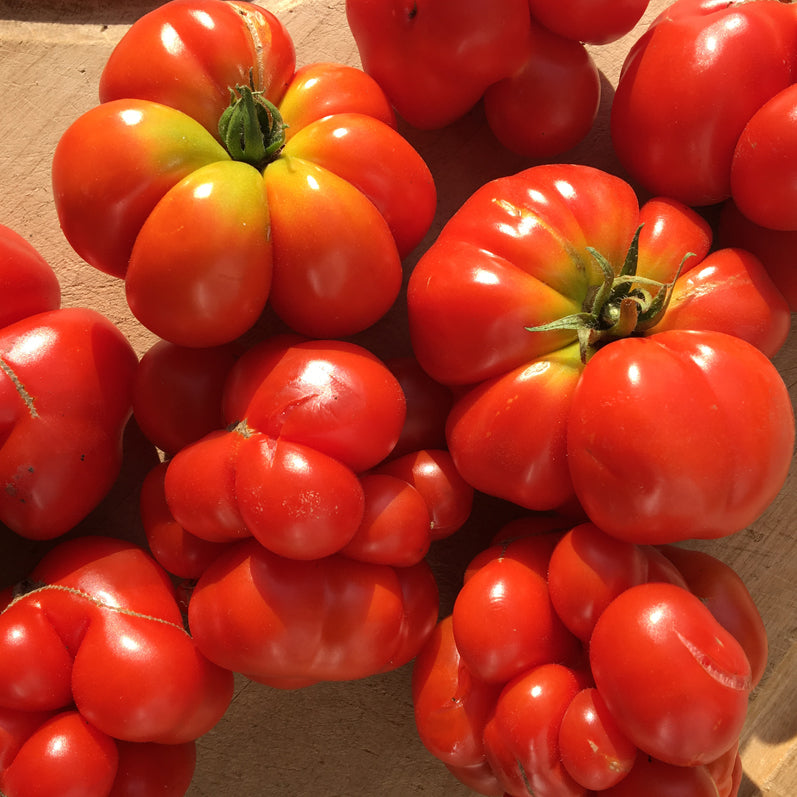
The Solanum lycopersicum 'Voyageuse' tomato is an absolutely fascinating organic variety, grown as much for its unusual appearance as for its rich flavor. In the garden, it immediately catches the eye with its bright red, bloated fruits composed of multiple fused segments, like a strange living sculpture hanging from the plant. Its thick, juicy flesh develops a pronounced, intensely tomatoey, and pleasantly tangy flavor, perfect for those who appreciate bold and authentic tastes. With indeterminate growth, it produces generously throughout the season, especially when well-staked and in a warm, sunny location. Its good crack resistance adds to its appeal, as does the ability to detach its segments by hand, almost like picking grapes from a bunch.
- Quantity
- 35 seeds
- Exposure
- Sun
- Life cycle
- Annual
Discover the plant
Common name'Voyage' Tomato
FamilyNightshades
GenusNightshade
SpeciesLycopersicum
CultivarTraveler
TypeVegetable
Botanical nameTomato
Reproducible seedsYes
Heirloom varietyYes
'Voyageuse' Tomato (Solanum lycopersicum). The Solanum lycopersicum 'Voyageuse' tomato is an absolutely fascinating organic variety, cultivated as much for its extraordinary appearance as for the richness of its flavor. In the garden, it immediately catches the eye with its bright red fruits, bulging and composed of multiple fused segments, like a strange living sculpture hanging from the plant. Its thick, juicy flesh develops a pronounced, intensely tomatoey, and pleasantly tart flavor, perfect for lovers of bold and authentic tastes. With indeterminate growth, it produces generously throughout the season, especially when it benefits from good staking and a warm, sunny location.
Recommended sowing period: March to April. The depth to respect is 6 mm (1/4 inch). Emergence usually takes 7 to 14 days. For germination, keep the potting soil at 22 to 28 °C (72 to 82 °F). Transplant young tomatoes when their true leaves have developed and the roots hold the root ball sufficiently. Give them strong light to limit stem elongation. A short, vigorous plant recovers more easily than an etiolated specimen. During acclimatization, gradually increase the time spent outdoors and bring the plants in if nights become cold again.
The Voyageuse tomato is chosen as much for its fruit type as for the available space in the garden. Observe the size and habit described for this variety before planning your supports and harvests. Install tomatoes in a location where clusters remain accessible from a pathway. Orient the supports so as not to shade lower crops. Planting in rows is practical for guiding stems, while a few isolated plants allow the harvest to be closer to the patio. Maintain sufficient distance between the foliage of the tomatoes and that of their neighbors so that care and air circulation remain easy.

Sowing guide
It all startswith a seed.
Sowing depth
6 mm (1/4 in)
Germination temperature
22 to 28 °C (72 to 82 °F)
Germination time
7 to 14 days
Sowing period
March to April
Propagation
Sowing
Growing method
Recommended sowing period: March to April. Sow to a depth of 6 mm (1/4 in.). Germination usually takes 7 to 14 days. For germination, maintain the soil temperature at 22 to 28 °C (72 to 82 °F). Transplant young tomato plants when their true leaves have developed and the roots are holding the soil ball sufficiently. Provide them with ample light to prevent stem elongation. A short, vigorous plant will establish more easily than an etiolated one. During acclimatization, gradually increase the time spent outdoors and bring plants indoors if nights become cold again. Soil temperature is as important as the calendar date when planting. Keep lower foliage off the ground to reduce splashing when watering. Secure stems with a flexible tie that allows for thickening. Inspect fruit clusters when checking ties: the weight of the fruits increases rapidly as they grow. Mulching pre-warmed soil helps maintain consistent moisture and keeps lower fruits cleaner. The growth habit primarily guides staking and pruning.
Soil and care
The right care,at the right time.
Care level
Regular during establishment, then adapted to growing conditions
Watering
Regular
Soil type
Rich and well-drained
Fertilization
Fertilization supports growth and takes into account nutrients already present in the soil or potting mix. Use mature compost or a fertilizer suitable for the crop, following the dosage instructions. Avoid using multiple products, especially in a container where the roots occupy a limited volume. Water as needed after application and observe leaf development before re-fertilizing.
Moisture
Keep the soil moist during germination, without waterlogging; then adjust to the crop's needs
Seasonal care
The 'Voyageuse' tomato is chosen as much for its fruit type as for the space available in the garden. Observe the size and growth habit described for this variety before planning your supports and harvests. Transplant young tomato plants when their true leaves have developed and their roots sufficiently hold the root ball. Give them strong light to limit stem elongation. A short, vigorous plant takes root more easily than a lanky one. During acclimatization, gradually increase the time spent outdoors and bring plants inside if nights become cold again. Soil temperature matters as much as the calendar date when planting. Keep the lower foliage away from the soil to reduce splashing when watering. Tie stems with a flexible tie that allows for thickening. Inspect clusters at the same time as ties: the weight of the fruits increases rapidly as they grow. Mulching on already warmed soil helps maintain consistent moisture and keeps the lowest fruits cleaner. The type of growth mainly guides staking and pruning. A determinate tomato keeps its productive branches; severe pruning can remove part of the harvest. An indeterminate tomato requires more management as it grows. Observe fruits that are approaching their final color and pick them without crushing neighboring clusters. The 'Voyageuse' tomato (Solanum lycopersicum) is an absolutely fascinating organic variety, cultivated as much for its unusual appearance as for its rich flavor.
Container growing
A garden,within reach.
Suitable for containers
Yes
Recommended pot size
A stable, perforated container, wide enough for the plant to spread out and deep enough for the roots.
Choose this exposure: full sun. Reserve this spread around the plant: 50 to 70 cm (20 to 28 in.). A potted tomato needs enough potting soil so that its root ball doesn't constantly go from very dry to waterlogged. Place the support before the roots occupy the entire container. A stable pot with a heavy base better resists wind when the foliage becomes denser. As the fruits form, check the moisture more often and water the entire root ball rather than just wetting its surface. The tomato *Solanum lycopersicum* 'Voyageuse' is an absolutely fascinating organic variety, grown as much for its unusual appearance as for the richness of its flavor. In the garden, it immediately catches the eye with its bright red, bloated fruits composed of multiple fused segments, like a strange living sculpture hanging from the plant. Its thick, juicy flesh develops a pronounced, intensely tomatoey, and pleasantly tangy flavor, perfect for lovers of bold and authentic tastes. Indeterminate, it produces generously throughout the season, especially when given good staking and a warm, sunny location.

Bloom and dimensions
Its place,in your garden.
Mature height
1.5 to 2 m (5 to 6.5 ft)
Width / spread
20 to 28 in (50 to 70 cm)
Foliage type
Seasonal foliage
Growth habit
Climbing, Compact
Bloom period
March to April
Fruiting
The Solanum lycopersicum 'Voyageuse' tomato is an absolutely fascinating organic variety, cultivated as much for its unusual appearance as for the richness of its flavor. Its thick, juicy flesh develops a pronounced, intensely tomatoey, and pleasantly tart flavor, perfect for those who appreciate bold and authentic tastes. We especially love to display it, pick it, and share it, as it sparks surprise and conversation in the garden.
Days to maturity
80 days post-transplant
Harvest
80 days after transplantation
Garden associations
In goodcompany.
Companion plants
In a diversified plantation, you can reserve neighboring sections for the following plants: basil, pepper, parsley, marigold. Here, the association serves to organize space and harvests. Respect the height, light, and water needs of each plant, without crowding the foliage. Maintain a path for watering and harvesting, then remove finished crops to free up space. This organization facilitates maintenance without promising protection against pests. Install tomatoes in a location where the clusters remain accessible from a path.
Recipe idea
From the gardento your plate.
Edible parts
Ripe fruit
Cooking idea with 'Voyageuse' Tomatoes: tomato salad for four servings. Cut 600g of ripe tomatoes into slices or wedges and arrange them on a platter. Add one small chopped green onion, 15ml of olive oil, and 10ml of cider vinegar. Season lightly with salt and pepper, and sprinkle with a few basil leaves. Let sit for ten minutes before serving with bread. Cut large fruits on a cutting board with a rim to collect their juice and add it back to the dressing. Prepare ingredients with clean utensils and adjust the cut to the size of your harvest. This recipe highlights freshly picked parts: remove any damaged pieces before preparation. If you double the quantities, ensure enough space in the dish for even mixing or cooking. Quickly place leftovers in the refrigerator in a sealed container and consume within two days. For a meal for two people, simply divide all quantities by two.
Frequently asked questions
Your questions,answered.
How to successfully sow 'Voyageuse' tomato seeds?
Recommended sowing period: March to April. Sow to a depth of 6 mm (1/4 in). Germination usually takes 7 to 14 days. For germination, maintain potting soil at 22-28°C (72-82°F). Transplant young tomato plants when their true leaves have developed and their roots hold the soil ball sufficiently. Provide them with ample light to limit stem elongation. A short, vigorous plant will recover more easily than an etiolated one. During acclimatization, gradually increase the time spent outdoors and bring plants indoors if nights become cold again. Soil temperature is just as important as the calendar date when planting.
Can Tomato 'Voyage' be grown in a pot?
Choose this exposure: sun. Reserve this spread around the plant: 50 to 70 cm (20 to 28 in.). A potted tomato needs enough potting soil so that its root ball doesn't constantly go from very dry to soaked. Place the support before the roots occupy the entire container. A stable, heavy-bottomed pot is more wind-resistant as the foliage grows. As the fruits form, check the moisture more often and water the entire root ball rather than just wetting its surface. The tomato Solanum lycopersicum 'Voyageuse' is an absolutely fascinating organic variety, grown as much for its unusual appearance as for its rich flavor.
When to harvest ‘Voyageuse’ tomatoes?
The Solanum lycopersicum 'Voyageuse' tomato is an absolutely fascinating organic variety, cultivated as much for its unusual appearance as for its rich flavour. Its thick, juicy flesh develops a pronounced, intensely tomatoey and pleasantly tart flavour, perfect for lovers of bold and authentic tastes. We especially love to show it off, pick it, and share it, as it sparks surprise and conversation in the garden. The growth habit primarily guides staking and pruning. A determinate tomato retains its productive branches; severe pruning can remove part of the harvest. An indeterminate tomato requires more guidance as it grows longer.
How to enjoy Tomate Voyageuse in the garden?
The Voyageuse tomato is chosen as much for its type of fruit as for the space available in the garden. Observe the size and habit described for this variety before planning your supports and harvests. The Solanum lycopersicum 'Voyageuse' tomato is an absolutely fascinating organic variety, cultivated as much for its unusual appearance as for the richness of its flavor. In the garden, it immediately catches the eye with its bright red, bloated fruits composed of multiple fused sections, like a strange living sculpture hanging from the plant. Its thick, juicy flesh develops a pronounced, intensely tomatoey, and pleasantly tangy flavor, perfect for lovers of bold and authentic tastes. With indeterminate growth, it produces generously throughout the season, especially when it benefits from good staking and a warm, sunny location.
How do you organize a 'Voyageuse' Tomato planting?
Install the tomatoes in a place where the trusses remain accessible from an aisle. Orient the supports so as not to shade lower crops. Planting in rows is practical for guiding the stems, while a few isolated plants can bring the harvest closer to the patio. Maintain sufficient distance between the foliage of the tomatoes and that of their neighbors so that care and air circulation remain easy. Keep the lower foliage off the ground to reduce splashing when watering. Tie the stems with a flexible tie that allows room for them to thicken.
For a great start to your seeds
The right extras.Right here.
Seed Starting Soil
Shop the collectionSeed starting supplies
Shop the collection