Sale
Sold out

F1 hybrid Imperator-type carrot vegetable seed
Apiaceae
Long-rooted hybrid carrot for vegetable gardens
Carrot 'Triton'
Daucus carota subsp. sativus 'Triton'
Product code : Not applicable
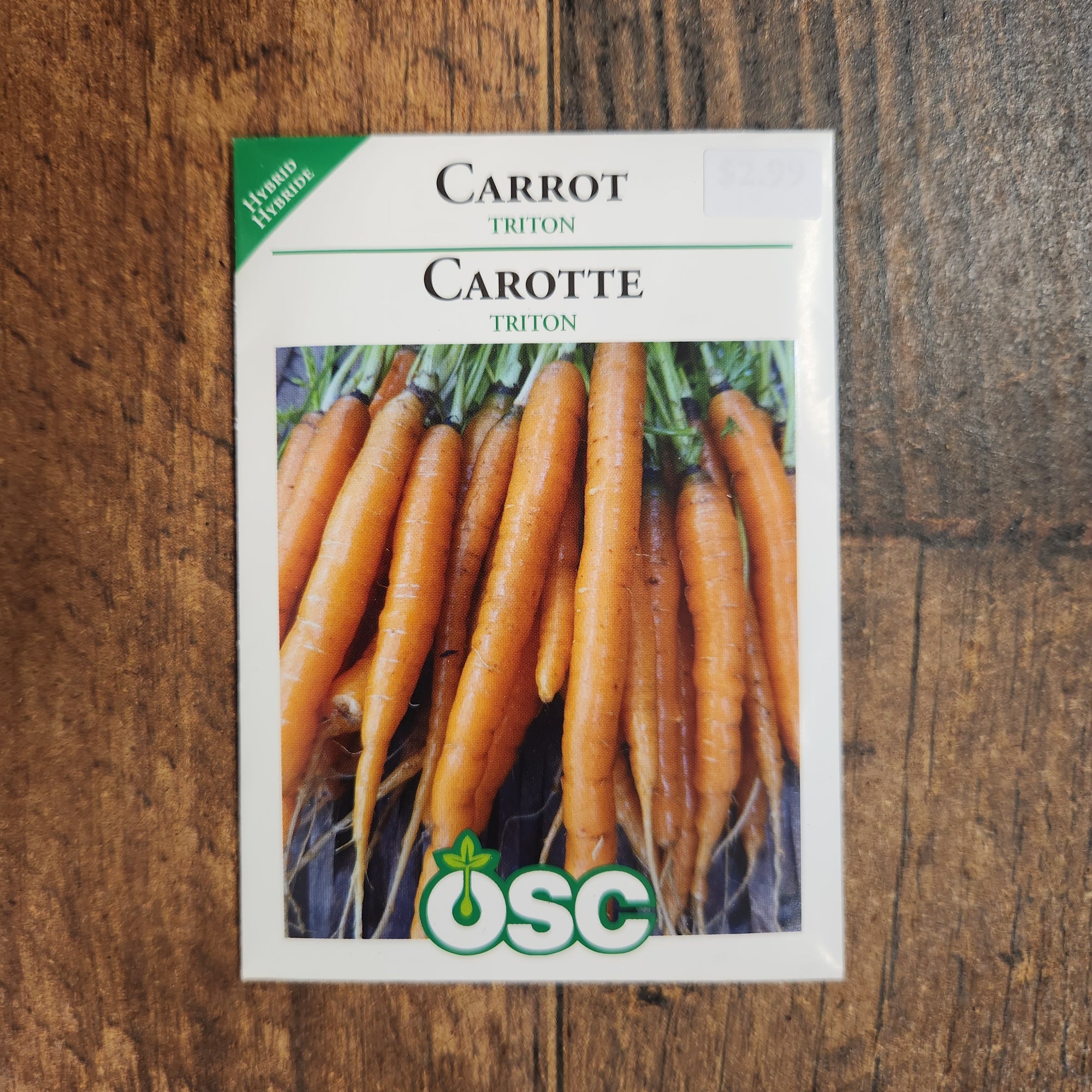
Triton carrot is an F1 Imperator-type hybrid producing long, orange, cylindrical, slightly tapered roots about 25 cm (10 in) in length. Valued for productive growth, crisp texture, and uniform quality, it matures in approximately 65 days. It performs best in deep, loose, fertile soil with consistent moisture during germination and throughout root development.
- Exposure
- Full sun
- Life cycle
- Biennial grown as an annual vegetable crop
Discover the plant
Common nameTriton carrot
FamilyApiaceae
GenusDaucus
Speciescarota subsp. sativus
CultivarTriton
TypeF1 hybrid Imperator-type carrot vegetable seed
Botanical nameDaucus carota subsp. sativus 'Triton'
Triton carrot (Daucus carota subsp. sativus 'Triton') is a hybrid Imperator-type carrot grown for long, cylindrical, slightly tapered roots that can reach about 25 cm (10 in). Its orange root has a fine, crisp texture and pleasant flavour, while finely divided green foliage forms an upright crown above the soil. This midseason variety reaches harvest maturity in approximately 65 days under favourable conditions. Like cultivated carrots generally, it is botanically biennial but is normally grown and harvested as an annual vegetable before flowering occurs. It performs particularly well during cool growing periods and fits easily into Quebec and Canadian vegetable gardens with sufficiently deep, loose soil for unrestricted root development.
Triton carrot develops its best roots in full sun and deep, loose, fertile, well-drained soil that is free of stones and compacted clods capable of causing forks or distorted roots. Direct sowing is recommended once soil temperatures rise above approximately 7.5 °C. Sow seeds 7 to 15 mm deep, keep the seedbed consistently moist, and prevent the surface from crusting while seedlings emerge. Germination generally takes about two weeks. Once established, thin seedlings to approximately 5 cm (2 in) apart. Excess nitrogen can encourage leafy growth instead of well-developed roots, so balanced fertility is preferable. Consistent moisture throughout root enlargement helps produce smoother, more uniform carrots under Quebec and Canadian growing conditions.
In the vegetable garden, this carrot suits conventional rows, raised beds, and intensive plantings that provide at least 30 cm (12 in) of loose rooting depth. Successive sowings made several days apart can help extend the harvest window. Leeks, onions, and radishes can share the garden when adequate spacing is maintained, while keeping dill separate simplifies crop planning. The edible root can be enjoyed fresh, cooked, roasted, added to soups, or preserved. If a few plants are allowed to remain for a second season, their umbels can provide resources for various insects. However, because Triton is an F1 hybrid, seed saved from those plants should not be expected to reproduce the cultivar reliably or uniformly.

Sowing guide
It all startswith a seed.
Sowing depth
7 to 15 mm
Spacing / density
Thin to approximately 5 cm (2 in) between plants, with rows spaced 45 to 60 cm (18 to 24 in) apart.
Germination temperature
Recommended minimum soil temperature for sowing: approximately 7.5 °C.
Germination time
Approximately 14 days under favourable moisture and temperature conditions.
Sowing period
Direct sow in spring once soil temperature exceeds 7.5 °C; repeat sowings at short intervals to stagger harvests.
Propagation
Direct sowing in the garden; carrots are poorly suited to transplanting because of their developing taproot.
Growing method
Prepare a deep, loose, level seedbed free of stones and large clods. Direct sow 7 to 15 mm deep once soil temperature exceeds approximately 7.5 °C. The small seeds can be mixed with dry sand to improve even distribution. Keep the soil surface consistently moist during the roughly two-week germination period without waterlogging it. Once seedlings are large enough to handle, thin them to approximately 5 cm (2 in) apart. Keep rows weeded to reduce competition and water consistently as roots enlarge. Avoid excessive nitrogen applications, which primarily encourage leafy growth. Repeat sowings every few days when conditions permit to stagger harvests and maintain a more continuous supply of fresh carrots.
Soil and care
The right care,at the right time.
Soil pH
Slightly acidic to neutral; prioritize loose soil structure and consistent drainage.
Care level
Easy
Watering
Maintain consistent moisture from sowing through root enlargement; avoid pronounced cycles of drought followed by excessive watering.
Soil type
Deep, loose, fertile, well-drained soil, ideally free of stones and clods that could distort the long roots.
Fertilization
Use moderate, balanced fertility; avoid fertilizers high in nitrogen, which can favour foliage at the expense of root development.
Moisture
Consistent soil moisture, especially important during germination and root development.
Seasonal care
In early spring, prepare the soil deeply by removing stones, debris, and compacted clods, and incorporate mature compost if soil structure needs improvement. Once the soil exceeds approximately 7.5 °C, make the first direct sowing and keep the surface uniformly moist until seedlings emerge. After germination, thin plants to approximately 5 cm (2 in) apart so the long roots have adequate room to develop. During active growth, weed regularly but cultivate shallowly to avoid damaging developing roots. Water consistently during dry weather and avoid excessive nitrogen applications. Successive sowings can be made several days apart to extend the harvest period. As maturity approaches, pull a few sample roots before harvesting the entire row, because actual development rate varies with temperature, soil conditions, moisture availability, and planting date.
Container growing
A garden,within reach.
Recommended pot size
Container at least 30 cm (12 in) deep, with effective drainage and enough width to space plants 5 cm (2 in) apart.
Triton carrot can be grown in containers, but its long root shape requires considerably more depth than short or round carrot varieties. Choose a pot or planter at least 30 cm (12 in) deep, preferably deeper, with ample drainage holes. Fill it with a fine-textured, loose, stone-free growing medium so developing roots can extend downward without obstruction. Sow directly rather than transplanting, then thin seedlings to approximately 5 cm (2 in) apart. Containers dry more quickly than garden soil, so check moisture frequently and water before the medium becomes completely dry, while still avoiding standing water. Place the container in full sun and use moderate, balanced fertility without excessive nitrogen so growth is directed toward well-developed roots rather than disproportionate foliage.
Bloom and dimensions
Its place,in your garden.
Mature height
Approximately 30 to 45 cm (12 to 18 in) of foliage in the first year, depending on growing conditions.
Width / spread
Approximately 15 to 30 cm (6 to 12 in) of foliage spread depending on conditions and spacing.
Flower color
White
Foliage color
Green
Foliage type
Finely divided, herbaceous, deciduous foliage
Growth rate
Fast to moderate; harvest in approximately 65 days.
Growth habit
Upright leafy crown above a long underground taproot
Bloom period
White umbels normally produced in the second year when plants are left unharvested.
Fruiting
Dry seed-bearing fruits develop after flowering in the second year when plants are retained.
Days to maturity
Approximately 65 days
Harvest
Approximately 65 days after sowing depending on conditions; check the size of several roots before the main harvest.
Garden associations
In goodcompany.
Companion plants
Leeks, onions, and radishes, provided the spacing, light, and water requirements of each crop are respected.
Plants to avoid
Dill; keep it separate from carrot rows to simplify vegetable garden crop organization and management.
Recipe idea
From the gardento your plate.
Edible parts
Primarily the root; cultivated carrot foliage is also edible when correctly identified and properly prepared.
Use the fresh roots in salads and crudités, roast them in the oven, add them to soups and purées, or steam them. Their elongated shape is also convenient for carrot sticks and home-pickled vegetables.
Frequently asked questions
Your questions,answered.
When should Triton carrot be sown in Quebec?
Triton carrot should be direct sown in spring once soil temperature rises above approximately 7.5 °C and the ground can be worked without compaction. Because carrots favour cool growing conditions, there is no need to wait for summer heat. To extend the harvest period, make several smaller successive sowings a few days apart. Keep the seedbed consistently moist afterward until emergence, which generally takes approximately two weeks under favourable conditions.
How deep should the soil be for Triton carrot?
Because Triton roots reach approximately 25 cm (10 in), prepare at least 30 cm (12 in) of loose, stone-free soil. Additional depth provides even more room for unrestricted root growth. Remove large clods, stones, and compacted areas that may cause roots to fork or become distorted. When growing in containers, choose a pot at least 30 cm (12 in) deep and make sure it provides effective drainage.
How long does Triton carrot take to mature?
Triton carrot generally reaches harvest maturity in approximately 65 days. This timing is a guideline because temperature, moisture, sowing date, and soil quality can accelerate or slow root development. As the expected harvest date approaches, pull one or two carrots to check their diameter, length, and texture before harvesting the entire row. Harvesting progressively also allows smaller roots additional time to continue developing in the garden.
Why should Triton carrot seedlings be thinned?
Carrot seeds are small and are often sown more densely than the final spacing requires. Thinning young seedlings to approximately 5 cm (2 in) apart reduces competition for water, nutrients, and underground growing space. This is particularly important for Triton because its roots can reach 25 cm (10 in) in length. Adequate spacing supports better-developed roots and also makes weeding and air movement around the foliage easier throughout the growing season.
Can Triton carrot seed be saved for replanting?
Triton carrot is an F1 hybrid. Plants can produce seed if kept through flowering in their second year, but the resulting offspring generally will not reproduce Triton's characteristics reliably or uniformly. To obtain the yield, root shape, and consistency associated with the cultivar, fresh commercial Triton seed is preferable for each crop. This variety therefore should not be treated as an open-pollinated seed line that reproduces reliably true to type from saved seed.
Wildlife and pets
Life,around your plants.
Supporting wildlife
When carrot plants are allowed to reach their second year, their umbels can provide pollen and nectar to various insects; plants harvested normally in the first year do not flower.
For a great start to your seeds
The right extras.Right here.
Seed Starting Soil
Shop the collectionSeed starting supplies
Shop the collection