

Multi-stem mauve-pink ornamental onion
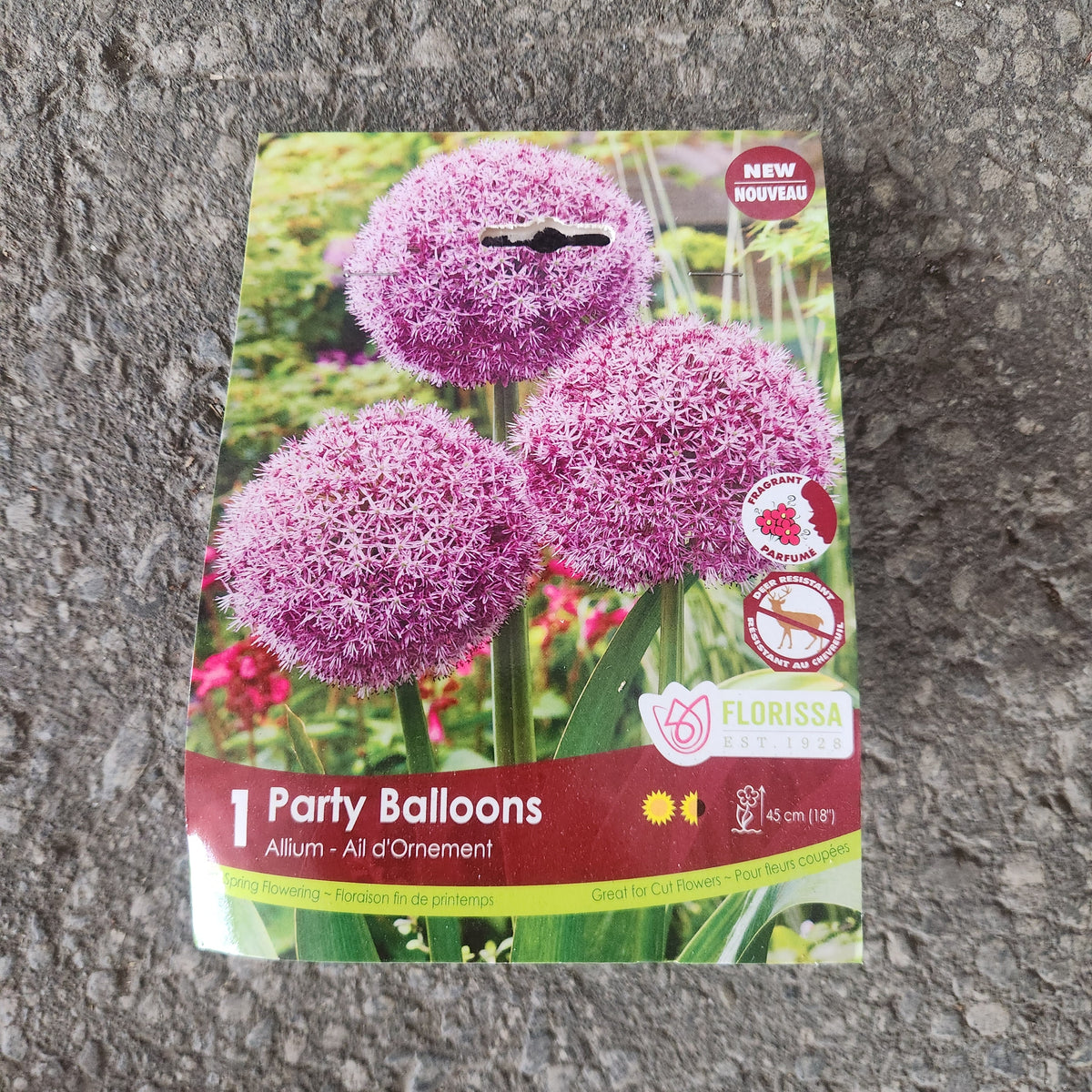
‘Party Balloons’ ornamental onion (Allium ‘Party Balloons’)
Product code : VAN-146-183-01
- Quantity
- 1 bulb
- Exposure
- Full sun to partial shade
- Life cycle
- Naturalizing bulbous perennial
- Hardiness
- Zones 3 to 10
Discover the plant
‘Party Balloons’ ornamental onion (Allium ‘Party Balloons’) stands apart because one large bulb can produce several flowering stems, creating a cluster of mauve-pink spheres resembling balloons. This hybrid of Allium karataviense and Allium hollandicum reaches approximately 70 cm (28 in). Purple umbels open in late spring above broad grey-green basal foliage that remains attractive longer than leaves of many giant Alliums. Hardy in Zones 3 to 10, the plant supplies a festive, balanced silhouette that stays legible for an extended period, then preserves graphic heads as they dry. The strong bulb supports this unusual abundance.
Plant the Allium bulb size 20/+ in fall, four to six weeks before lasting soil freeze, in full sun or light partial shade. Position it point upward at a depth of 15 cm (6 in) and leave 30 cm (12 in) around it so multiple stems can expand. Fertile, loose, exceptionally well-drained soil is essential. Water deeply after planting, then moderately during active growth as the surface dries. A little compost is sufficient; excess nitrogen weakens stems. Let foliage yellow completely before removal, then reduce irrigation through dormancy. Mark the bulb so it remains undisturbed while invisible.
Allium Party Balloons animates borders, pollinator gardens, and large containers with several points of colour from one bulb. Pair this mauve pink ornamental onion with catmint, salvias, peonies, hardy geraniums, and grasses that echo its tones or contrast with its foliage. The purple Allium flower attracts bees, bumblebees, butterflies, and other insects. Stems excel as an Allium for bouquets, fresh or dried, while deer generally avoid onion-scented tissues. The plant remains toxic to pets, so keep bulbs, leaves, and arrangements beyond their reach. Its multi-stem Allium habit also delivers exceptional visual value in compact planting areas.

Planting guide
Plant well.Grow beautifully.
Planting depth
Spacing / density
Best planting time
Propagation
Growing method
Soil and care
The right care,at the right time.
Soil pH
Minimum temperature
Care level
Drought tolerance
Watering
Soil type
Fertilization
Moisture
Seasonal care
Container growing
A garden,within reach.
Recommended pot size

Bloom and dimensions
Its place,in your garden.
Mature height
Width / spread
Flower color
Foliage color
Foliage type
Growth rate
Growth habit
Fragrance
Bloom period
Garden associations
In goodcompany.
Companion plants
Frequently asked questions
Your questions,answered.
When and how should the Party Balloons bulb be planted?
Does Party Balloons really produce several flowers from one bulb?
Does Party Balloons return every year in cold Canadian gardens?
How should the multiple stems be used in a bouquet?
Is Party Balloons suitable for container growing?
Wildlife and pets