

Sale
Sold out

Organic seeds, F1 hybrid, coated seeds
Apiaceae
Root vegetables seeds
Organic pelleted Nantes carrot
Daucus carota
Product code : 65-1815-01B
Organic pelleted Nantes carrot has confirmed characteristics that help you plan its placement and cultivation. Organic pelleted Nantes carrot is a root vegetables variety offered as seed for gardeners who want clear, practical product information. Confirmed details include height: Foliage approximately 30 to 35 cm tall, spread: Neck approximately 2.5 cm in diameter; plants thinned to 5 cm apart, colour: Petit cœur foncé. The packet contains approximately 1000 seeds, and the formulation is organic seeds, f1 hybrid, coated seeds. For best results, follow the sowing, light, and spacing information associated with this variety. You can adjust care to your soil, weather, and observed growth without exceeding the plant’s actual needs.
- Quantity
- Approximately 1000 seeds per packet
- Exposure
- Full sun
- Life cycle
- Annual
Discover the plant
Common nameOrganic pelleted Nantes carrot
FamilyApiaceae
GenusDaucus
Speciescarota
CultivarNapoli F1
TypeOrganic seeds, F1 hybrid, coated seeds
Botanical nameDaucus carota
Organic pelleted Nantes carrot (Daucus carota) produces a long, cylindrical, very smooth orange root with a small dark core and very sweet flavour. Early and productive, it reaches approximately 20 to 22 cm long, a 2.5-cm neck, and maturity near 55 days after sowing. Foliage grows about 30 to 35 cm tall. W.H. Perron packet 65-1815-01B contains approximately 1000 seeds. Its official formulation is organic and pelleted; pelleting improves handling but does not replace the moisture required for germination. As an F1 hybrid, saved seed will not reliably reproduce Napoli.
Direct-sow in early May for an early crop, mid-June for fall, or early July for young tender roots. Succession sowings every two or three weeks may continue through late July. Choose sun or light partial shade and fairly rich, deep, loose, stone-free soil. Place seeds 6 mm deep, keep rows 40 cm apart, and thin to 5 cm. Maintain consistent moisture to encourage straight roots. Avoid fresh manure and recently incorporated green manure because they promote foliage at the expense of carrots. Root length may vary with environment and growing conditions, so use the published measurements as a guide rather than a guarantee.
Draw a little soil around exposed crowns to prevent greening and sunburn without burying foliage. Weed shallowly to avoid injuring young roots. Harvest when Napoli reaches its characteristic size while still young and tender; roots left too long continue enlarging. Loosen soil before pulling to prevent breakage. Trim foliage, cool promptly, and use bare, cooked, or juiced. W.H. Perron lists leek, onion, pea, radish, and tomato among companions, while beet, dill, garlic, mint, and parsley are rivals. Crop rotation reduces persistent problems. Separate damaged carrots from sound roots and refrigerate cut portions immediately.

Sowing guide
It all startswith a seed.
Sowing depth
6 mm
Spacing / density
Thin to 5 cm apart; rows spaced 40 cm apart
Germination temperature
10 to 25°C
Germination time
5 to 12 days depending on temperature and moisture
Sowing period
Direct sowing in early May, mid-June, or early July; succession sowings every 2 to 3 weeks through late July
Propagation
Seed
Growing method
Loosen soil deeply and remove stones, hard clods, and debris that could distort roots. Avoid fresh manure and recently incorporated green manure. Make furrows 40 cm apart in sun or light partial shade. Sow pelleted seed 6 mm deep, firm gently, and moisten without washing rows away. Keep the surface cool until emergence because the coating must absorb water before germination begins. When first true leaves appear, thin to 5 cm by cutting or carefully removing extras. Weed shallowly and maintain consistent moisture. Draw a little soil around every exposed crown to prevent greening. Label each succession made at two-to-three-week intervals. Begin checking near 55 days, lift one sample root, and harvest when Napoli reaches approximately 20 to 22 cm while still firm and tender. Loosen soil before pulling to prevent breakage. Cool harvested roots promptly. Keep packet and row labels, compare moisture at several points, and resow only spaces that are truly empty. After heavy rain, correct exposed shoulders. Clean tools after handling a diseased plant, keep paths free of compaction, and cool harvested roots promptly. Record sample length, diameter, sweetness, and breakage for every sowing date before adjusting the next schedule.
Soil and care
The right care,at the right time.
Soil pH
6.0 or higher
Minimum temperature
Tolerates cool temperatures; protect from hard frost
Care level
Easy
Watering
Keep the soil evenly moist from sowing through harvest without saturating it. Water deeply when the surface begins to dry, and monitor more often in containers or hot weather. A long dry spell followed by heavy rain may result in hard, woody, or less colourful roots; consistency matters more than occasional very heavy watering. Apply water to the soil rather than the foliage, and check moisture a few centimetres below the surface before watering again.
Soil type
Napoli prefers fairly rich, deep, loose, drained, stone-free soil. Prepare it before sowing to remove obstacles that fork or bend cylindrical roots. Mature compost may improve structure, but avoid fresh manure and recently incorporated green manure because they promote foliage at the expense of roots. Maintain consistent moisture without saturating the row. Surface crust impedes emergence, so break it gently without disturbing pelleted seed. Final root length varies with environment and growing conditions even though the listing indicates 20 to 22 cm. Keep traffic out of the bed so the soil does not compact after preparation.
Fertilization
Before sowing, incorporate a moderate layer of mature compost or fully decomposed manure. Already fertile soil needs little additional fertilizer. Avoid high-nitrogen feeding, which encourages abundant leaves at the expense of roots. If growth becomes pale, use a balanced vegetable fertilizer sparingly, then water to distribute the nutrients through the root zone. Never apply fresh manure immediately before sowing, because overly aggressive fertility may reduce root quality and interfere with even root formation. overall
Moisture
Consistent moisture without standing water
Seasonal care
In spring, wait until soil can be worked, loosen it deeply, and remove stones. Avoid fresh manure and prepare 6-mm furrows spaced 40 cm apart. Sow Napoli in early May, label the date, and keep the surface moist while pelleting softens. After emergence, thin to 5 cm as soon as seedlings can be handled without damage. Weed shallowly. In June, sow another short row for fall; in July, make a final sowing for young tender carrots if needed, then stop by month-end. Through summer, check moisture several times weekly, draw soil over exposed crowns, and inspect foliage. Remove severely diseased plants and clean tools. Near 55 days after each sowing, lift one sample root. Harvest at characteristic size before excessive enlargement. In fall, trim tops, cool sound roots, and separate broken specimens. Clean the row, record each succession’s yield, and plan rotation away from other Apiaceae. Store labels with notes for next season. After heavy rain, inspect erosion, cover exposed shoulders, and confirm furrows are not saturated. During dry periods, water in the morning and compare moisture in several places. Clean crates before harvest and promptly remove every soft or diseased root. Record pest pressure, root forking, green shoulders, flavour, and average dimensions so soil preparation and irrigation can improve. Never carry compacted or diseased soil into the next rotation bed.
Container growing
A garden,within reach.
Recommended pot size
30 L or larger; minimum depth of 25 to 30 cm
Use a stable planter at least 30 cm deep, preferably 35 cm so 20-to-22-cm roots can develop, with several drainage holes. Fill with deep, loose, stone-free potting mix enriched with mature compost. Mark rows, sow pelleted seed 6 mm deep, and moisten gently. After emergence, thin to 5 cm by cutting extras at mix level so neighbouring roots are not displaced. Place the container in sun or light partial shade and lift it on feet. Check moisture daily during heat, water until excess drains, and empty the saucer. Very thin mulch limits evaporation without burying seedlings. Draw a little mix over exposed crowns. Rotate the planter when light is uneven and harvest near 55 days before roots press against walls. After the season, remove debris, wash the pot, and replace mix before another apiaceous crop. Keep drainage outlets clear after every storm. Label every sowing date, protect container walls from excessive heat without depriving foliage of light, and prepare a chilled crate before harvest. Replace compacted mix instead of relying on extra fertilizer. Inspect beneath the planter after rain, keep labels visible, and harvest sample roots carefully before deciding whether the entire succession is ready.

Bloom and dimensions
Its place,in your garden.
Mature height
Foliage approximately 30-35 cm
Width / spread
Neck about 2.5 cm in diameter; plants thinned to 5 cm
Flower color
Greenish
Foliage color
Green
Foliage type
Rosette of broad leaves with coloured petioles
Growth rate
Fast
Growth habit
Compact rosette above a round root
Bloom period
Harvest before bolting; flowering normally occurs in the second year after a cold period. carrots are botanically biennial but are grown as annuals for their roots and leaves. Prolonged exposure to cold can sometimes encourage premature bolting. Remove plants that develop a flower stalk, because their roots quickly lose tenderness and culinary quality once reproductive growth begins. and flavour at harvest time
Fruiting
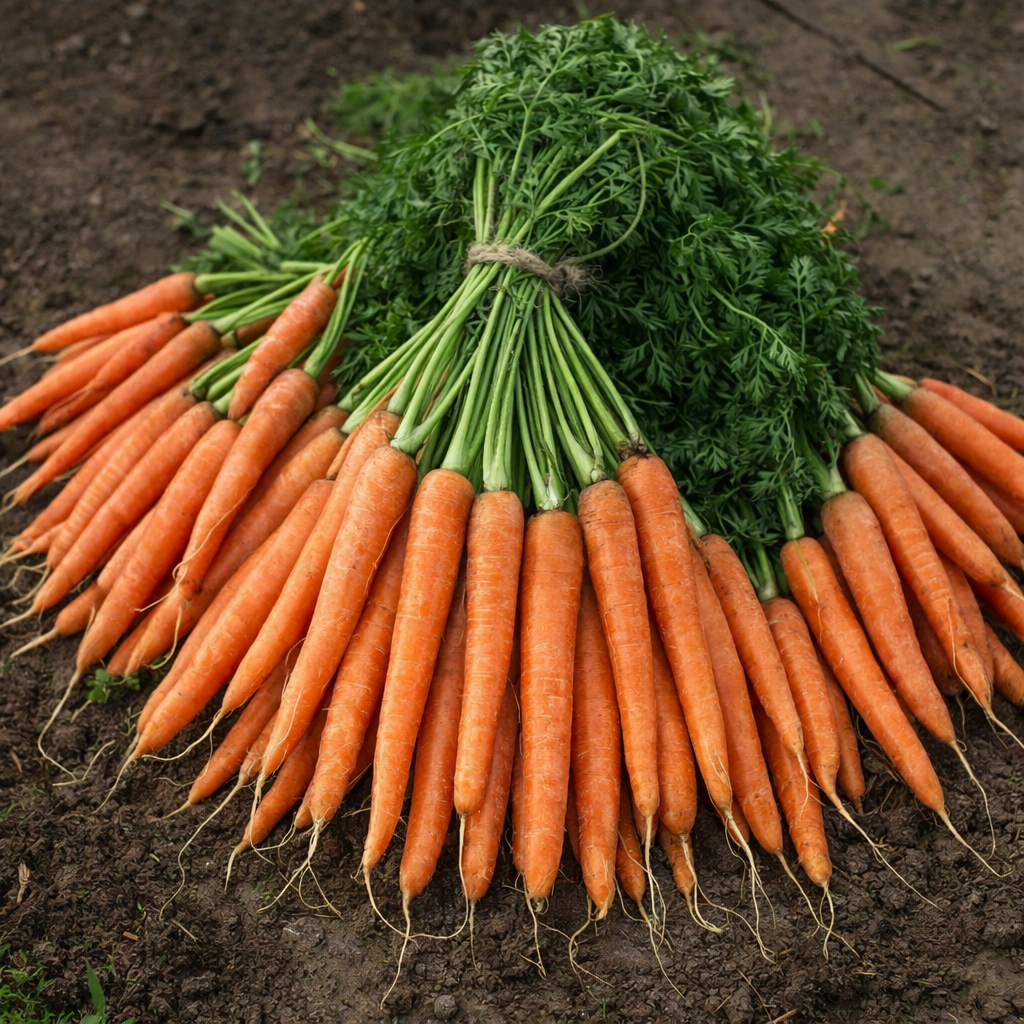
‘Napoli’ organic carrot is a Nantes type variety highly prized for its long, smooth, and uniform, bright orange roots with a small, dark core. The roots generally reach 20 to 22 cm, with a collar of about 2.5 cm, for a neat and regular presentation. Fast and reliable, ‘Napoli’ offers consistent growth and adapts well to staggered sowing, allowing for continuous harvests from early summer until autumn.
Days to maturity
Approximately 55 days after sowing
Harvest
Harvest young when roots reach approximately 20 to 22 cm and the characteristic diameter; do not let them become oversized.
Garden associations
In goodcompany.
Companion plants
W.H. Perron lists wormwood, bean, chicory, chives, coriander, endive, ground cherry, leek, onion, pea, pepper, radish, rosemary, sage, salsify, shallot, and tomato as companions. Keep them outside the 5 cm reserved for every carrot and position tall crops without shading rows. Coordinate their removal so Napoli roots are not disturbed. Companion planting complements bed planning but does not replace rotation, shallow weeding, or consistent moisture. Preserve access for thinning, crown hilling, and sample harvests without stepping into prepared soil. Maintain labels and open access carefully.
Recipe idea
From the gardento your plate.
Edible parts
Roots and leaves
Prepare honey-and-thyme roasted Napoli carrots. Scrub approximately 700 g of young roots, peel only when necessary, and halve larger carrots lengthwise. Toss with one tablespoon oil, one teaspoon honey, one-half teaspoon thyme, a pinch of salt, and pepper. Spread in one layer on a baking sheet and roast at 210°C for about twenty to thirty minutes, turning halfway, until a knife enters easily and the edges are browned. Add one teaspoon lemon juice after cooking and serve hot. For a vegan version, replace honey with maple syrup. Use a clean tray, refrigerate leftovers promptly, and label the container with the date. Adjust timing to the actual root diameter. Keep carrots separate from utensils used for bare meat and discard spoiled portions before cooking. Serve with a warm grain or green salad. When scaling the recipe, measure oil, sweetener, and salt consistently. Taste after roasting before adding more seasoning, and use damaged roots only when every affected portion can be removed safely.
Frequently asked questions
Your questions,answered.
When can Napoli carrot be sown?
Direct-sow in early May for an early crop, mid-June for fall harvest, or early July for young tender carrots late in the season. W.H. Perron also recommends successions every two or three weeks through late July. Place pelleted seed 6 mm deep, keep rows 40 cm apart, and maintain surface moisture. Label every date because maturity near 55 days is counted after sowing. Soil should be deep, stone-free, and prepared before the first succession; avoid compacting it during later sowings. Stop after late July so roots have enough season to develop under local conditions. Record the actual emergence date as well.
How many seeds are in the packet and how are they treated?
W.H. Perron packet 65-1815-01B contains approximately 1000 seeds. The stated formulation is organic and pelleted, and Napoli is an F1 hybrid variety. Pelleting makes the small seeds easier to see, handle, and distribute evenly along the row. It does not replace careful watering: keep the soil surface evenly moist during emergence so the coating can soften and germination can begin. Before sowing, keep the closed packet in a cool, dry place. Always check the code printed on the packet received because another Napoli format may have a different quantity or formulation. Retain the original label with your sowing notes for accurate reference later.
Why must Napoli be thinned to 5 cm?
Each pelleted seed normally produces one seedling, but a crowded sowing still creates competition for water, light, and underground space. Thin when first true leaves make plants easy to distinguish, retaining one carrot every 5 cm. Cut extras at soil level when pulling might displace neighbours. This spacing helps Napoli form a 20-to-22-cm cylindrical root and neck near 2.5 cm. Water after thinning, close small holes, and do not compact heavily. Late thinning increases the chance of twisted or intertwined roots. Keep row labels visible so the correct spacing is maintained for every succession. Record the thinning date for comparison.
How can green carrot shoulders be prevented?
When the top of a carrot root is exposed to light, it may turn green and suffer sunburn. Gently draw a thin layer of loose soil around visible shoulders without burying foliage or damaging roots. Check after heavy rain or irrigation that moves soil. Very thin mulch may also reduce erosion but must not impede emergence. Keep rows accessible so exposed areas can be corrected promptly. At harvest, trim away green tissue generously if its flavour is strong. Planting 6 mm deep and levelling soil well reduce later corrections. Never mound wet, compact soil tightly against the foliage crown. Inspect again after every strong storm.
Can Napoli be grown in a container?
Yes, provided the planter is deep enough for 20-to-22-cm roots. Choose at least 30 cm, preferably 35 cm, with several drainage holes. Fill it with loose, stone-free potting mix enriched with mature compost. Sow 6 mm deep, keep moist through emergence, and thin to 5 cm. Place in sun or light partial shade and check moisture daily during heat. Draw a little mix over exposed shoulders. Harvest near 55 days before roots press against walls. Lift the container on feet and always empty the saucer. Rotate it when light is uneven and keep drainage outlets clear after storms. Label the container with its sowing date.
For a great start to your seeds
The right extras.Right here.
Platters, pots and domes
Shop the collection
Seed Starting Soil
Shop the collectionSeed starting supplies
Shop the collection




