


Sale
Sold out

Non-organic seeds, Untreated seeds, coated seeds, on biodegradable seed tape
Amaryllidaceae
Ornamental flowers seeds
White Lisbon bunching onion on seed tape
Allium fistulosum
Product code : 69-6705-01N
White Lisbon is a bunching onion with a long non-bulbing white shaft and bluish-green foliage. W.H. Perron packet 69-6705-01N contains approximately 400 untreated seeds pre-spaced on a 6 m biodegradable tape. Place tape in a shallow furrow after the last frost, moisten it, and cover with a thin soil layer. Keep 35 to 38 cm between rows and maintain moisture without saturation. Harvest young 15-to-20-cm stalks after five to six weeks, or wait approximately 65 days for more developed shafts. Successive short sections extend the harvest. Always adapt care to soil and weather. Always adapt care to soil and weather.
- Quantity
- Approximately 400 seeds on a 6-metre seed tape per packet
- Exposure
- Full sun
- Life cycle
- Perennial
Discover the plant
Common nameWhite Lisbon bunching onion on seed tape
FamilyAmaryllidaceae
GenusAllium
Speciesfistulosum
CultivarWhite Lisbon
TypeNon-organic seeds, Untreated seeds, coated seeds, on biodegradable seed tape
Botanical nameAllium fistulosum
White Lisbon bunching onion on seed tape (Allium fistulosum) White Lisbon bunching onion on seed tape is an ornamental flowers variety offered as seed for gardeners who want clear, practical product information. The packet contains approximately 400 seeds on a 6-metre seed tape, and the formulation is non-organic seeds, untreated seeds, coated seeds, on biodegradable seed tape. For best results, check the growing medium before watering and adjust frequency to the actual conditions around the plant. You can review foliage and new growth each week to notice water stress, slowed development, or damage at an early stage.
For best results, follow the sowing, light, and spacing information associated with this variety. You can adjust care to your soil, weather, and observed growth without exceeding the plant’s actual needs. Gradual hardening helps reduce transplant stress when seedlings have been started indoors before moving into the garden. The information printed on the packet remains the reference for depth, temperature, and timing associated with this seed lot. It is best to adapt care to your garden’s microclimate instead of following a fixed watering schedule in every situation. A suitable mulch can help stabilize moisture, reduce soil splash, and limit competition from weeds around established plants.
Growth is worth checking after major changes in temperature, light exposure, rainfall, or watering frequency. You can keep the labelled packet until harvest or flowering so the variety details remain easy to consult. Measured care based on the plant’s condition generally supports better balance than unnecessary routine treatments. For containers, drainage and soil volume directly influence moisture stability around the roots and the frequency of watering. In the garden, an accessible position makes observation, occasional watering, harvesting, and timely maintenance easier. It is recommended to remove only damaged material while retaining healthy foliage needed for continued growth.

Sowing guide
It all startswith a seed.
Sowing depth
Tape in a shallow furrow covered with a thin layer of soil
Spacing / density
Seeds pre-spaced on tape; 35 to 38 cm between rows
Germination temperature
13 to 24°C
Germination time
5 to 10 days
Sowing period
Direct sow 7 to 10 days after the last ground frost; successive sowings possible
Propagation
Seed
Growing method
For best results with White Lisbon bunching onion on seed tape, follow the confirmed sowing information and observe growth at each stage. White Lisbon bunching onion on seed tape is an ornamental flowers variety offered as seed for gardeners who want clear, practical product information. The packet contains approximately 400 seeds on a 6-metre seed tape, and the formulation is non-organic seeds, untreated seeds, coated seeds, on biodegradable seed tape. For best results, follow the sowing, light, and spacing information associated with this variety. You can adjust care to your soil, weather, and observed growth without exceeding the plant’s actual needs. It is best to adapt care to your garden’s microclimate instead of following a fixed watering schedule in every situation. A suitable mulch can help stabilize moisture, reduce soil splash, and limit competition from weeds around established plants. Growth is worth checking after major changes in temperature, light exposure, rainfall, or watering frequency. You can keep the labelled packet until harvest or flowering so the variety details remain easy to consult. Measured care based on the plant’s condition generally supports better balance than unnecessary routine treatments. For containers, drainage and soil volume directly influence moisture stability around the roots and the frequency of watering.
Soil and care
The right care,at the right time.
Soil pH
6.0 to 7.0
Minimum temperature
Tolerates light frost
Care level
Easy
Watering
Keep tape evenly moist during germination so small seeds do not dry out. Water with a fine spray to avoid moving or exposing fibres. After emergence, water deeply at soil level when the surface begins drying. Soil should remain moist but never saturated. Thin mulch placed between visible rows reduces evaporation. In containers, check more frequently and always empty the saucer. Consistent moisture supports straight, tender shafts.
Soil type
Rich, fertile, loose, well-drained soil. Level the surface carefully so the tape maintains even contact with soil. Keep moisture consistent during emergence without waterlogging the furrow. Mature compost incorporated before sowing supports growth. Prevent surface crusting and compacted soil, which impede rooting and produce uneven shafts. Keep the bed consistently weed-free because young onion seedlings compete poorly for water, light, and nutrients.
Fertilization
Incorporate mature compost before sowing. W.H. Perron recommends fertilizer at the beginning of growth and a second application as stalks begin thickening. Choose a vegetable fertilizer and follow its label strictly. Avoid excessive rates that produce overly soft foliage or salt buildup. Water before feeding dry soil and never place concentrated fertilizer directly against tape or young roots. Observe growth before repeating any application. Always adapt care to soil and weather.
Moisture
Moist without being wet or saturated
Seasonal care
Seasonal care for White Lisbon bunching onion on seed tape relies on regular observation, measured intervention, and respect for its growth cycle. White Lisbon bunching onion on seed tape is an ornamental flowers variety offered as seed for gardeners who want clear, practical product information. The packet contains approximately 400 seeds on a 6-metre seed tape, and the formulation is non-organic seeds, untreated seeds, coated seeds, on biodegradable seed tape. For best results, follow the sowing, light, and spacing information associated with this variety. You can adjust care to your soil, weather, and observed growth without exceeding the plant’s actual needs. It is best to adapt care to your garden’s microclimate instead of following a fixed watering schedule in every situation. A suitable mulch can help stabilize moisture, reduce soil splash, and limit competition from weeds around established plants. Growth is worth checking after major changes in temperature, light exposure, rainfall, or watering frequency. You can keep the labelled packet until harvest or flowering so the variety details remain easy to consult. Measured care based on the plant’s condition generally supports better balance than unnecessary routine treatments. For containers, drainage and soil volume directly influence moisture stability around the roots and the frequency of watering. In the garden, an accessible position makes observation, occasional watering, harvesting, and timely maintenance easier.
Container growing
A garden,within reach.
Recommended pot size
Planter at least 25 to 30 cm deep
White Lisbon bunching onion on seed tape can be considered for a container when volume, drainage, and light match the expected growth. White Lisbon bunching onion on seed tape is an ornamental flowers variety offered as seed for gardeners who want clear, practical product information. The packet contains approximately 400 seeds on a 6-metre seed tape, and the formulation is non-organic seeds, untreated seeds, coated seeds, on biodegradable seed tape. For best results, follow the sowing, light, and spacing information associated with this variety. You can adjust care to your soil, weather, and observed growth without exceeding the plant’s actual needs. It is best to adapt care to your garden’s microclimate instead of following a fixed watering schedule in every situation. A suitable mulch can help stabilize moisture, reduce soil splash, and limit competition from weeds around established plants. Growth is worth checking after major changes in temperature, light exposure, rainfall, or watering frequency. You can keep the labelled packet until harvest or flowering so the variety details remain easy to consult. Measured care based on the plant’s condition generally supports better balance than unnecessary routine treatments. For containers, drainage and soil volume directly influence moisture stability around the roots and the frequency of watering.

Bloom and dimensions
Its place,in your garden.
Mature height
About 30 to 45 cm at maturity depending on the harvest
Width / spread
About 5 to 10 cm per plant; rows 35–38 cm apart
Flower color
Yellow when the plant bolts
Foliage color
Bluish green
Foliage type
Crisp, ribbed, elongated leaves
Growth rate
Moderate; approximately 65 days to maturity
Growth habit
Upright clump of cylindrical leaves
Fragrance
Crisp root with an excellent fresh, gently peppery flavour when harvested young
Bloom period
White Lisbon is normally harvested before flowering to retain tender shafts. Plants left in place may produce a stalk bearing a pale umbel attractive to small pollinators, but eating texture becomes firmer. In the vegetable garden, pull bolting plants promptly and use portions that remain tender. To save seed, reserve several plants isolated from other flowering Alliums to limit crossing. Do not sacrifice the main harvest row for flowering.
Fruiting
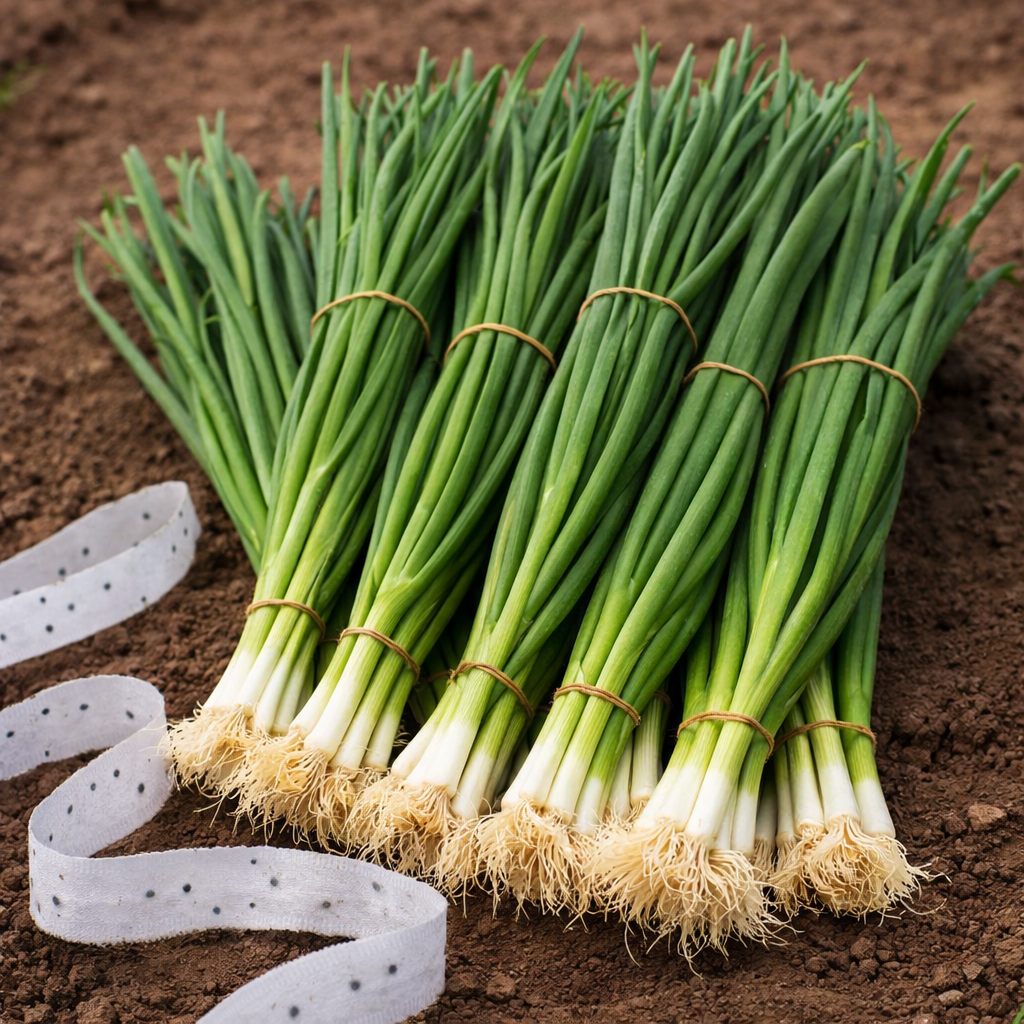
Easy to clean and mild in flavor, it is perfect for salads, garnishes, and fresh cooking. It does not bulb, making it ideal for harvesting as tender, crispy green onions. Young shoots can be harvested after five to six weeks, and more mature plants around 65 days. By cutting the ribbon into short sections and sowing them at regular intervals, the gardener can achieve a succession of harvests rather than a single abundance.
Days to maturity
Approximately 65 days; young stalks harvestable after 5 to 6 weeks at 15–20 cm
Harvest
Begin monitoring the harvest of this variety around 65 days after sowing; then check for the desired color, firmness, and size for picking. Harvest after five to six weeks, when the green onion stalks will be 15 cm to 20 cm and ready for consumption.
Garden associations
In goodcompany.
Companion plants
Published companion information for White Lisbon bunching onion on seed tape includes W.H. Perron recommande comme compagnes la betterave, le chou, la carotte, le fraisier, la laitue et la pomme de terre. Sa page anglaise ajoute notamment camomille, céleri, mâche, endive, fenouil, panais, poivron, radis et sarriette. Évitez la ciboulette, le haricot, le pois, le soya et la tomate; la liste anglaise mentionne aussi asperge, sauge et navet comme rivaux. Maintenez toujours assez d’air, de lumière et d’accès pour arracher les oignons entiers.
Recipe idea
From the gardento your plate.
Edible parts
White shaft, green leaves, and flowers after certain identification
After harvesting White Lisbon bunching onion on seed tape, use only the specified edible parts, washed carefully and gathered at the proper stage. White Lisbon bunching onion on seed tape is an ornamental flowers variety offered as seed for gardeners who want clear, practical product information. The packet contains approximately 400 seeds on a 6-metre seed tape, and the formulation is non-organic seeds, untreated seeds, coated seeds, on biodegradable seed tape. For best results, follow the sowing, light, and spacing information associated with this variety. You can adjust care to your soil, weather, and observed growth without exceeding the plant’s actual needs. It is best to adapt care to your garden’s microclimate instead of following a fixed watering schedule in every situation. A suitable mulch can help stabilize moisture, reduce soil splash, and limit competition from weeds around established plants. Growth is worth checking after major changes in temperature, light exposure, rainfall, or watering frequency.
Frequently asked questions
Your questions,answered.
When should White Lisbon bunching onion on seed tape be sown?
Sowing time for White Lisbon bunching onion on seed tape depends on the confirmed packet information, the last frost date, and your region. White Lisbon bunching onion on seed tape is an ornamental flowers variety offered as seed for gardeners who want clear, practical product information. The packet contains approximately 400 seeds on a 6-metre seed tape, and the formulation is non-organic seeds, untreated seeds, coated seeds, on biodegradable seed tape. For best results, follow the sowing, light, and spacing information associated with this variety. You can adjust care to your soil, weather, and observed growth without exceeding the plant’s actual needs.
Which light exposure suits White Lisbon bunching onion on seed tape?
Light exposure for White Lisbon bunching onion on seed tape should follow the published variety information and the light actually available in your garden. White Lisbon bunching onion on seed tape is an ornamental flowers variety offered as seed for gardeners who want clear, practical product information. The packet contains approximately 400 seeds on a 6-metre seed tape, and the formulation is non-organic seeds, untreated seeds, coated seeds, on biodegradable seed tape. For best results, follow the sowing, light, and spacing information associated with this variety. You can adjust care to your soil, weather, and observed growth without exceeding the plant’s actual needs.
How should White Lisbon bunching onion on seed tape be watered?
Before watering White Lisbon bunching onion on seed tape, check the growing medium and foliage so frequency reflects current conditions. White Lisbon bunching onion on seed tape is an ornamental flowers variety offered as seed for gardeners who want clear, practical product information. The packet contains approximately 400 seeds on a 6-metre seed tape, and the formulation is non-organic seeds, untreated seeds, coated seeds, on biodegradable seed tape. For best results, follow the sowing, light, and spacing information associated with this variety. You can adjust care to your soil, weather, and observed growth without exceeding the plant’s actual needs. It is best to adapt care to your garden’s microclimate instead of following a fixed watering schedule in every situation.
Can White Lisbon bunching onion on seed tape be grown in a container?
White Lisbon bunching onion on seed tape can be grown in a container when the pot provides effective drainage and enough volume for expected growth. White Lisbon bunching onion on seed tape is an ornamental flowers variety offered as seed for gardeners who want clear, practical product information. The packet contains approximately 400 seeds on a 6-metre seed tape, and the formulation is non-organic seeds, untreated seeds, coated seeds, on biodegradable seed tape. For best results, follow the sowing, light, and spacing information associated with this variety. You can adjust care to your soil, weather, and observed growth without exceeding the plant’s actual needs.
When can you enjoy the harvest or flowering of White Lisbon bunching onion on seed tape?
White Lisbon bunching onion on seed tape is enjoyed during the flowering or decorative development period indicated for this variety. White Lisbon bunching onion on seed tape is an ornamental flowers variety offered as seed for gardeners who want clear, practical product information. The packet contains approximately 400 seeds on a 6-metre seed tape, and the formulation is non-organic seeds, untreated seeds, coated seeds, on biodegradable seed tape. For best results, follow the sowing, light, and spacing information associated with this variety. You can adjust care to your soil, weather, and observed growth without exceeding the plant’s actual needs. It is best to adapt care to your garden’s microclimate instead of following a fixed watering schedule in every situation.
Wildlife and pets
Life,around your plants.
Supporting wildlife
Plants harvested as green onions rarely flower. Several specimens retained until umbels open may attract bees, hoverflies, and other small pollinators. Allow this bloom only in a separate area for observing insects or producing seed, because stalks become firmer. Protect the food row from thrips and onion fly through rotation, monitoring, and soil hygiene. Avoid broad-spectrum insecticides during pollinator activity.
For a great start to your seeds
The right extras.Right here.
Seed Starting Soil
Shop the collectionSeed starting supplies
Shop the collection





