

Sale
Sold out

Bare seeds
Asteraceae
Ornamental flowers seeds
Princess Mix China aster
Callistephus chinensis
Product code : 61-6360-010
Princess Mix China aster is a giant, branching annual producing numerous 8 cm double flowers in an assortment of colours. Stems reach approximately 70 cm and are especially useful in bouquets; flowers harvested half open may last up to seven days in a vase. The packet contains approximately 100 bare seeds. Sow indoors six weeks before the last frost, cover lightly, and maintain 18 to 20°C. Germination takes 6 to 14 days and maturity 14 to 15 weeks. Transplant after frost in full sun or light partial shade and fertile, well-drained soil. Water at soil level and preserve good air movement to reduce powdery mildew and wilt disease risks. Rotate the planting location each year whenever practical.
- Quantity
- Approximately 100 bare seeds
- Exposure
- Full sun or light partial shade
- Life cycle
- Annual
Discover the plant
Common namePrincess Mix China aster
FamilyAsteraceae
GenusCallistephus
Specieschinensis
CultivarPrincess Mix
TypeBare seeds
Botanical nameCallistephus chinensis
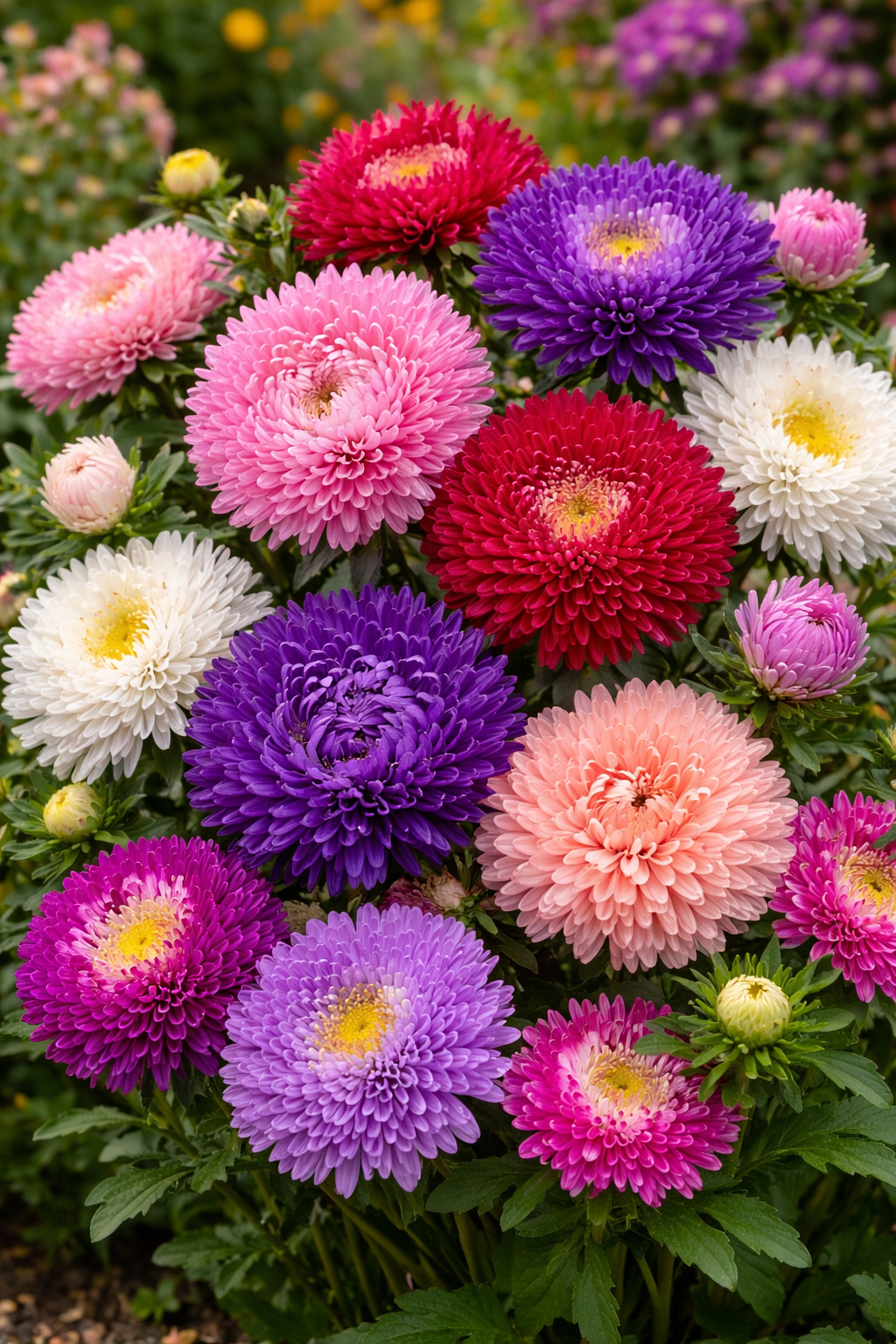
Princess Mix China aster (Callistephus chinensis) is a giant, branching annual intended for garden beds and cut flowers. Each plant carries numerous double flowers approximately 8 cm across in an assortment of colours. Stems reach approximately 70 cm and plants spread 30 to 45 cm. W.H. Perron lists flowering from May through September and maturity in 14 to 15 weeks. Double flowers open progressively from the centre outward and may last up to seven days in a vase when harvested half open and placed promptly in clean water. Repeated cutting also keeps gardeners attentive to stem strength, foliage health, and the development of new flowering branches.
The W.H. Perron packet, product code 61-6360-010, contains approximately 100 bare seeds. Sow indoors approximately six weeks before the last frost in clean, porous, well-drained seed-starting mix. Space seeds, cover them lightly, and maintain 18 to 20°C. Keep the surface moist without saturating the medium. Germination takes 6 to 14 days. After emergence, provide abundant light and constant air movement to produce short, sturdy plants. Transplant carefully when root balls are well formed, then harden plants gradually before moving them outdoors. Label every tray so the variety name and sowing date remain available through transplanting and flower harvest.
Transplant 7 to 10 days after the last ground frost. Choose full sun or light partial shade and fertile, neutral to slightly alkaline, light, well-drained soil. Allow 30 to 45 cm between plants in a garden bed; a cut-flower row may use 20 to 30 cm spacing when air movement remains adequate. Water at soil level during establishment, then approximately twice weekly in dry weather without unnecessarily wetting foliage. Remove faded flowers to extend bloom. Rotate the growing location from year to year and promptly remove wilted or distorted plants to reduce risks from Fusarium wilt and aster yellows.

Sowing guide
It all startswith a seed.
Sowing depth
Cover lightly, approximately 3 to 5 mm
Spacing / density
Space for a mature spread of 30 to 45 cm; closer spacing for straight cut stems
Germination temperature
18 to 20°C
Germination time
6 to 14 days
Sowing period
Indoors approximately 6 weeks before the last frost; transplant 7 to 10 days after the last ground frost
Propagation
Seed
Growing method
Sow Princess Mix China aster indoors approximately six weeks before the last frost. Fill cells with clean, porous, well-drained seed-starting mix. Space seeds, cover them lightly, and maintain 18 to 20°C. Keep the surface moist without saturating the medium; germination takes 6 to 14 days. After emergence, provide abundant light and constant air movement. Transplant carefully once the root ball is well formed because damaged roots are more vulnerable to disease. Harden plants gradually for about one week, then move them outdoors 7 to 10 days after the last ground frost. Choose full sun or light partial shade and fertile, neutral to slightly alkaline, light, well-drained soil. Space plants 30 to 45 cm apart in a garden bed or 20 to 30 cm apart in a well-aerated cutting row. Water deeply at soil level without unnecessarily wetting foliage. Remove faded flowers, support long stems in windy sites, and harvest flowers half open. Rotate the growing location each year and promptly remove wilted or distorted plants. Control weeds around the crop, clean tools between suspect plants, and avoid composting diseased tissue. Inspect leaves after periods of humid weather and support developing stems before wind or heavy rain can bend them.
Soil and care
The right care,at the right time.
Soil pH
Fertile, light, well-drained soil; exact pH not published
Minimum temperature
Frost tender during annual production
Care level
Easy
Watering
Keep the seed-starting mix evenly moist during germination without saturating it. After transplanting, water at soil level every two or three days until establishment, adjusting frequency to rainfall. In dry weather, W.H. Perron recommends a thorough watering approximately twice weekly. Allow the surface to dry slightly between applications. Avoid wetting foliage to reduce powdery mildew and always empty container saucers after rain.
Soil type
China aster prefers fertile, neutral to slightly alkaline, light, very well-drained soil. Loosen soil to approximately 30 cm before planting and incorporate mature compost or quality potting mix when the ground is poor. Avoid locations where water accumulates because roots are vulnerable to wilt diseases. Rotate the growing location from year to year to reduce persistent soil-borne pathogens. Remove infected roots and surrounding debris promptly rather than moving contaminated material to another garden bed.
Fertilization
China asters appreciate fertile soil amended lightly with mature compost or well-composted poultry manure. After establishment, use a balanced fertilizer for annuals according to its label when needed. Avoid excessive nitrogen, which produces soft stems and abundant foliage at the expense of flowers. Observe plant vigour and leaf colour before repeating an application, especially in containers where salts may accumulate.
Moisture
Even without saturation; water at soil level to limit foliar disease
Seasonal care
In spring, start seed approximately six weeks before the last frost. Maintain 18 to 20°C, even moisture, and clean growing medium until emergence, which takes 6 to 14 days. After germination, provide abundant light and constant air movement. Transplant carefully and harden plants before moving them outside 7 to 10 days after the last ground frost. In early summer, water at soil level during establishment and confirm that excess moisture drains quickly. Control weeds to reduce competition and plants that may host leafhoppers. During flowering, remove faded heads to encourage new buds. Harvest flowers half open in the morning and place stems in clean water. Monitor aphids, leafhoppers, spider mites, slugs, powdery mildew, Fusarium wilt, and aster yellows. Immediately remove wilted or distorted plants and do not compost them when disease is suspected. Clean tools between plants. In autumn, remove residues after frost and choose a different growing location for the following year to reduce persistent soil-borne disease risks. Record the sowing date, planting location, and any observed symptoms to plan rotation more effectively. After heavy rain, inspect the crown and restore air movement around stems. Retain only vigorous plants and remove diseased specimens with their roots without shaking contaminated soil through the bed. Do not reuse their potting mix or place affected tissue in home compost. Clean supports and tools before using them with healthy plants.
Container growing
A garden,within reach.
Recommended pot size
Container at least 30 cm wide with drainage
Grow Princess Mix China aster in a stable container at least 30 cm wide with several drainage holes. Use light, fertile, clean potting mix and place the pot in full sun or light partial shade. Because stems reach approximately 70 cm, choose a position sheltered from strong wind or add discreet support. Leave enough room around the plant for its 30 to 45 cm spread and for air movement. After transplanting, water deeply at soil level. Later, check the centre of the mix and allow the surface to dry slightly before watering again. Always empty the saucer. Begin balanced feeding when growth resumes without excessive nitrogen. Remove faded flowers and damaged leaves with a clean tool. Rotate the container periodically if light reaches mainly one side. Inspect plants for aphids, leafhoppers, spider mites, powdery mildew, or wilting. Immediately isolate diseased plants from other containers and do not reuse their potting mix. Harvest flowers half open and place stems promptly in clean water for vase performance that may reach seven days. Clean the container at the end of the season and replace the potting mix before growing China asters in it again. Keep drainage holes clear throughout summer and move the pot away from plants showing wilt or distorted growth.

Bloom and dimensions
Its place,in your garden.
Mature height
70 cm (27.6 in)
Width / spread
30 to 45 cm (11.8 to 17.7 in)
Flower color
Mixed colours
Foliage color
Green
Foliage type
Green foliage
Growth rate
Moderate
Growth habit
Tall and branched
Fragrance
No particular fragrance confirmed
Bloom period
W.H. Perron lists flowering from May through September and maturity in 14 to 15 weeks. Princess Mix produces numerous 8 cm double flowers in an assortment of colours. Remove faded blooms to extend bud production. For arrangements, harvest flower heads half open, preferably in the morning, then place stems in clean water; vase performance may reach seven days. Refresh the water and recut stem ends when needed.
Days to maturity
14 to 15 weeks
Garden associations
In goodcompany.
Companion plants
Combine Princess Mix with sun- or light-shade annuals that prefer fertile, well-drained soil. Place lower plants in front of its 70 cm stems so double flowers remain visible. Silver or dark-green foliage highlights the colour assortment. Preserve enough access to water at soil level and inspect every plant. Avoid very dense companions that retain moisture on foliage and avoid growing China asters in the same location for consecutive years. Maintain a clear edge so every stem can be inspected, watered at soil level, and harvested without compressing the surrounding foliage.
Frequently asked questions
Your questions,answered.
What is in a Princess Mix China aster packet?
The W.H. Perron packet, product code 61-6360-010, contains approximately 100 bare Princess Mix China aster seeds. “Bare” means the seed is not presented as coated, treated, or primed. The mixture produces large double flowers approximately 8 cm across in several colours. The variety is not listed as an F1 hybrid. Store unused seed in its labelled packet, closed, cool, and dry. Keep the label with seedlings so the botanical name, product code, and sowing date remain available through flowering. Plants grown from saved seed may vary because flowers can cross-pollinate with other China asters. Keep collected seed separate from the retail packet and label it clearly with the harvest year and parent planting.
How should Princess Mix be sown successfully?
Sow indoors approximately 6 weeks before the last frost in clean, well-drained seed-starting mix. Space the seeds, cover them lightly with 3 to 5 mm of medium, and maintain 18 to 20°C. Keep the surface moist but never waterlogged; W.H. Perron lists germination in 10 to 14 days. After emergence, provide abundant light and constant air movement to produce short, sturdy plants. Transplant gently because damaged roots are more vulnerable to disease. Harden seedlings gradually for about one week, then plant them outside 7 to 10 days after the last ground frost. Avoid growing China asters in the same garden location in consecutive years, and discard weak or diseased seedlings rather than placing them in the bed.
What flowers and dimensions should be expected?
Princess Mix is a giant, branching China aster carrying numerous double flowers approximately 8 cm across in an assortment of colours. W.H. Perron lists approximately 70 cm in height, a 30 to 45 cm spread, and maturity in 14 to 15 weeks. Flowering generally runs from May through September. The variety suits garden beds and especially fresh arrangements. For straight stems, grow plants in full sun or light partial shade, avoid excessive nitrogen, and provide discreet support in windy sites. Cut stems when flowers are half open, preferably during the cool morning, then place them promptly in clean water. Vase performance may reach seven days when water is refreshed and submerged foliage is removed.
What care helps prevent disease?
Choose full sun or light partial shade with fertile, light, well-drained soil. Water deeply at soil level instead of frequently wetting foliage, then allow the surface to dry slightly. Space plants for their 30 to 45 cm spread to preserve air circulation. China asters are particularly vulnerable to Fusarium wilt and aster yellows. Use clean growing medium, rotate the planting location for several years, immediately remove wilted or distorted plants, and do not compost them when disease is suspected. Control weeds that may host leafhoppers, clean tools between plants, and monitor aphids, leafhoppers, spider mites, and slugs. Moderate balanced feeding supports flowering without producing soft stems. Avoid saving seed from diseased plants.
Is Princess Mix edible and safe for pets?
The ASPCA classifies Callistephus chinensis, China aster, as non-toxic to dogs, cats, and horses. This classification does not mean an animal should eat the plant: any plant material may cause mild digestive upset, and horticultural products may have been applied during growth. W.H. Perron sells Princess Mix as an ornamental and cut flower; no food use is confirmed for the packet or flowers. Place the row near an accessible path so cutting, bouquet preparation, and routine inspection remain easy. Remove foliage that would sit below the water line and refresh vase water regularly for a cleaner display. Prevent consumption of seed and plants, and keep fertilizers or treatment products out of reach. Following substantial ingestion or persistent symptoms, contact a veterinarian and provide the botanical name, possible amount, and any products applied to the crop.
Wildlife and pets
Life,around your plants.
Supporting wildlife
Callistephus chinensis flowers may provide nectar to bees and other pollinators when flower heads remain accessible. Activity varies with flower doubleness, weather, region, and neighbouring plants; no visit is guaranteed. Avoid treatments on open flowers whenever practical. Observe visitors from a distance and preserve a clean water source nearby without leaving standing water around plant roots.
For a great start to your seeds
The right extras.Right here.
Platters, pots and domes
Shop the collection
Seed Starting Soil
Shop the collectionSeed starting supplies
Shop the collection




