


Sale
Sold out

Untreated
Lamiaceae
Basil 'Everleaf Genovese'
Product code : NOR-GR02
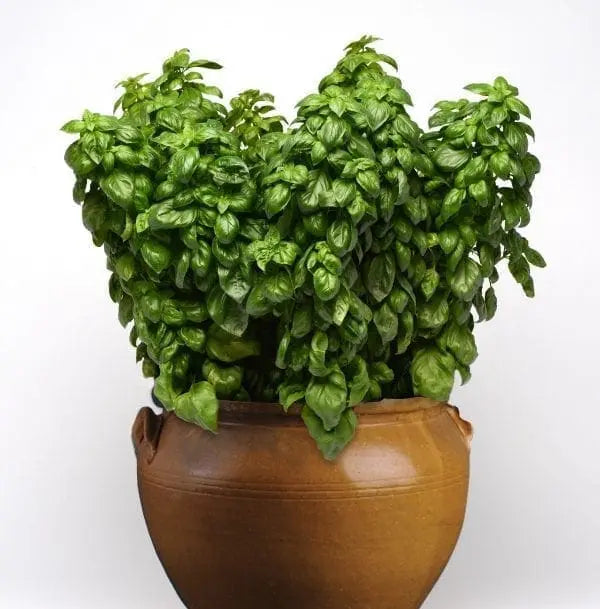
'Everleaf Genovese' basil is a high-yielding variety, recognized for its well-branched columnar habit and short internodes. This traditional Genovese basil is distinguished by its dark green, lustrous foliage, ideal for Italian cuisine. Versatile and easy to grow, it is suitable for cultivation in the ground, in pots, or even hydroponically. Its late flowering, occurring 10 to 12 weeks later than classic varieties, allows for a prolonged harvest throughout the season. This variety reaches 25 to 50 cm (9.8 to 19.7 in). The packet contains 100 seeds to start your planting.
- Quantity
- 100 seeds
- Exposure
- Sun
- Life cycle
- Annual
Discover the plant
Common nameBasil
FamilyLamiaceae
GenusBasil
Speciesbasil
CultivarEverleaf Genovese
TypeUntreated
Botanical nameBasil
'Everleaf Genovese' Basil (Ocimum basilicum). 'Everleaf Genovese' basil is a high-yield variety known for its well-branched, columnar habit and short internodes. This traditional Genovese basil stands out for its dark green, glossy foliage, which is ideal for Italian cuisine. Versatile and easy to grow, it is suitable for cultivation in open ground, in pots, or even in hydroponics. Its late flowering, occurring 10 to 12 weeks later than classic varieties, allows for an extended harvest throughout the season. This variety reaches 25 to 50 cm (9.8 to 19.7 in).
For 'Everleaf Genovese' Basil, the sowing schedule for this variety is as follows: indoors, 6 to 8 weeks before the last frost. For 'Everleaf Genovese' Basil, for this variety, observe this sowing depth: on the surface, without covering. For 'Everleaf Genovese' Basil, the seeds of this variety remain on the surface; gentle watering preserves their position and prevents them from being washed under a layer of potting soil. For 'Everleaf Genovese' Basil, label the herbs as soon as you sow them to distinguish species whose first leaves look similar. For 'Everleaf Genovese' Basil, transplant the young seedlings without crushing their stems and gradually give them more space under the light.
Add 'Everleaf Genovese' basil to your garden or kitchen to enjoy flavorful and decorative foliage, perfect for garnishing your dishes with the authentic flavor of Genovese basil. This variety's bolt resistance provides a harvest margin, but does not replace observation: harvest the tender parts before the elongation of the flower stalk changes their texture. For 'Everleaf Genovese' Basil, harvest the outer leaves first and continue harvesting as needed. Basil can be preserved either frozen or dried. For 'Everleaf Genovese' Basil, the months of July and August are the ideal time to harvest leaves for freezing.

Sowing guide
It all startswith a seed.
Sowing depth
On the surface, without covering
Spacing / density
12 inches between plants
Germination temperature
21°C
Sowing period
Indoors, 6 to 8 weeks before the last frost
Propagation
Sowing
Growing method
The sowing schedule for this variety is as follows: indoors, 6 to 8 weeks before the last frost. For this variety, observe this sowing depth: on the surface, without covering. The seeds of this variety remain on the surface; gentle watering preserves their position and prevents them from being washed under a layer of potting soil. To plant this variety, first choose a location that matches its exposure: sun. Indoors: Well-drained, porous seed-starting mix is ideal to prevent overwatering. Outdoors: A compost-rich potting mix for container gardening, and well-drained, rich soil that remains cool for garden planting. This variety benefits from soil that stays cool during growth; regular checks beneath the surface help to intervene before wilting while avoiding saturating the root ball. Plan the space for this variety in the garden bed by taking into account its height of 25 to 50 cm (9.8 to 19.7 in). When planning your planting, allow 25 to 50 cm (9.8 to 19.7 in) of spacing for each plant of this variety.
Soil and care
The right care,at the right time.
Watering
This variety thrives in soil that remains cool during its growth; regular checks below the surface help to intervene before wilting occurs, while avoiding saturation of the root ball. To plant this variety, first choose a location that matches its light requirements: sun. Indoors: A well-drained and porous seed-starting mix is ideal to prevent overwatering.
Soil type
Versatile and easy to grow, it is suitable for cultivation in open ground, in pots, or even hydroponically. To establish this variety, first choose a location that matches its exposure: sun. Indoors: A well-drained, porous seed-starting mix is ideal to prevent overwatering. Outdoors: A compost-rich potting mix for container gardening and a well-drained, rich soil that remains moist for garden cultivation.
Fertilization
To plant this variety, first choose a location that matches its sun exposure. Indoor: A well-drained, porous seed-starting mix is ideal to prevent overwatering. Outdoor: A compost-rich potting mix for container growing, and soil that is well-drained, rich, and stays moist for garden planting. This variety's tolerance to downy mildew is an asset; ensure the foliage remains accessible for spotting, and space the plants out so the leaves can dry after rain.
Moisture
Cool to moist soil, with good drainage
Seasonal care
The mildew tolerance of this variety is a key asset; maintain access to the foliage to monitor for spots and space the plants out so that the leaves dry after rain. Basil loves the sun, requires plenty of heat and frequent watering to thrive, and hates the wind. Once the plant reaches 15 cm in height, pinch it to encourage branching and remove flower buds to promote more foliage. The sowing schedule for this variety is as follows: indoors, 6 to 8 weeks before the last frost. For this variety, observe the following sowing depth: on the surface, without covering. The seeds of this variety remain on the surface; gentle watering preserves their position and prevents them from being washed under a layer of potting soil. This variety benefits from soil that stays cool during growth; regular checks below the surface help you intervene before wilting occurs while avoiding saturating the root ball. The bolting tolerance of this variety provides a wider harvest window, but does not replace observation: harvest the tender parts before the elongation of the flower stalk changes their texture. Harvest the outer leaves first and continue harvesting as needed. Basil can be stored either frozen or dried.
Container growing
A garden,within reach.
Recommended pot size
7.6 to 19 L (2 to 5 US gal)
Versatile and easy to grow, it is suitable for cultivation in open ground, in pots, or even hydroponically. The foliage of this variety occupies approximately 25 to 50 cm (9.8 to 19.7 in); leave this width available around the container instead of crowding several plants against its edge. Place the container for this variety in this exposure: sun, while checking the light received throughout the day. The sowing calendar for this variety is prepared as follows: indoors, 6 to 8 weeks before the last frost. For this variety, observe this sowing depth: on the surface, without covering. The seeds of this variety remain on the surface; a gentle watering preserves their position and avoids washing them under a layer of potting soil. To install this variety, first choose a location corresponding to its exposure: sun. Indoors: A well-drained and porous seed-starting mix is ideal to prevent overwatering. Outdoors: A potting mix rich in compost for container gardening and well-drained, rich soil that remains cool for garden cultivation. This variety benefits from soil that retains moisture during its growth; regular checks below the surface help to intervene before wilting while avoiding saturation of the root ball.

Bloom and dimensions
Its place,in your garden.
Mature height
25 to 50 cm (9.8 to 19.7 in)
Width / spread
25 to 50 cm (9.8 to 19.7 in)
Growth habit
Compact
Harvest
Harvest aromatic parts as needed without completely stripping the plant. Use a clean tool for a neat cut.
Garden associations
In goodcompany.
Companion plants
Plan the placement of this variety in the flowerbed, taking into account its height of 25 to 50 cm (9.8 to 19.7 in.). When designing the planting, reserve 25 to 50 cm (9.8 to 19.7 in.) of spread for each plant of this variety. When planting this variety, use a spacing of 30 cm between plants. Use this variety along the edge of an accessible landscape; its compact silhouette is best appreciated when taller plants do not close in over it.
Recipe idea
From the gardento your plate.
Edible parts
Aromatic leaves
Recipe idea for your 'Everleaf Genovese' basil harvest. Prepare an herb butter to serve with hot vegetables. Let a small amount of butter soften, then incorporate finely chopped fresh leaves. Remove the tough stems before mincing the foliage and start with a small amount to gauge the aromatic intensity. Add a little lemon zest and pepper; salt only if the butter is unsalted. Mix with a fork, place in a small ramekin, and refrigerate to firm up. Melt a small knob over hot potatoes, cooked corn, or roasted carrots just before serving. The amount of herbs can be adjusted according to the desired flavor: a small touch is often enough to start. The tender leaves should be chopped with a knife without being crushed for too long. Prepare a small portion of flavored butter and keep it cold in a sealed container. For 'Everleaf Genovese' basil, keep the identified packet to track the cultivar-specific data throughout the season.
Frequently asked questions
Your questions,answered.
When should I start sowing 'Everleaf Genovese' basil?
The sowing schedule for this variety is as follows: indoors, 6 to 8 weeks before the last frost. For this variety, observe this sowing depth: on the surface, without covering. The seeds of this variety remain on the surface; gentle watering preserves their position and prevents them from being washed under a layer of soil. Basil should be harvested above a pair of leaves to preserve regrowth points on the stem. Wait until the young plant has enough foliage before increasing the number of cuts. It appreciates heat and reacts poorly to cold spells. For cooking, add the leaves according to the aromatic intensity of the variety; lemon, cinnamon, and Genovese-type basils do not flavor dishes in the same way.
Should 'Everleaf Genovese' basil seeds be covered?
The sowing schedule for this variety is as follows: indoors, 6 to 8 weeks before the last frost. For this variety, observe this sowing depth: on the surface, without covering. The seeds of this variety remain on the surface; gentle watering preserves their placement and prevents them from being washed under a layer of potting soil. This variety benefits from soil that retains moisture during its growth; regular checks below the surface help to intervene before wilting while avoiding saturating the root ball. Basil should be harvested above a pair of leaves to preserve regrowth points on the stem.
What advantage does the tolerance of 'Everleaf Genovese' basil offer?
The mildew tolerance of this variety is a key asset; maintain access to the foliage to observe for spots and space out the planting so the leaves can dry after rain. Basil loves the sun, requires plenty of heat and frequent watering to thrive, and hates the wind. Once the plant reaches 15 cm in height, pinch it to encourage branching and remove flower buds to promote more foliage. This variety benefits from soil that stays cool during growth; regular checks beneath the surface help to intervene before wilting occurs while avoiding saturating the root ball.
How to take advantage of the 'Everleaf Genovese' basil's habit in containers?
The foliage of this variety spreads about 25 to 50 cm (9.8 to 19.7 in); allow this width around the container rather than crowding several plants against its edge. Place the container for this variety in the following exposure: sun, while checking the light received throughout the day. Plan for the space this variety requires in the bed, taking into account its height of 25 to 50 cm (9.8 to 19.7 in). When designing the planting, reserve 25 to 50 cm (9.8 to 19.7 in) of spread for each plant of this variety. When planting this variety, the spacing to maintain is 30 cm between plants.
What location is suitable for 'Everleaf Genovese' basil?
To plant this variety, first choose a location that matches its sun exposure requirements. Indoors: A well-drained, porous seed-starting mix is ideal to prevent overwatering. Outdoors: A compost-rich potting mix for container gardening, and well-drained, rich soil that remains cool for garden planting. Plan for this variety’s placement in the flower bed by taking into account its height of 25 to 50 cm (9.8 to 19.7 in). When designing the planting, allow 25 to 50 cm (9.8 to 19.7 in) of spread for each plant of this variety.
For a great start to your seeds
The right extras.Right here.
Seed Starting Soil
Shop the collectionSeed starting supplies
Shop the collection





