


Sale
Sold out

Untreated
Ranunculaceae
Delphinium Blue Butterfly
Large-flowered Delphinium
Product code : NORSE-0044
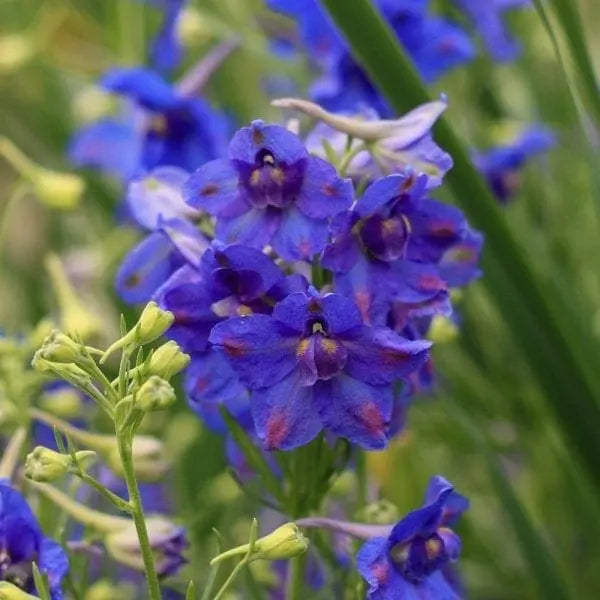
The 'Blue Butterfly' larkspur is a very popular compact variety, ideal for flowerbeds. Its vibrant blue flowers add an elegant and refined touch to the garden. Easy to grow, this perennial delphinium is perfect for zones 3 and 4 and offers remarkable flowering during the summer. This variety reaches 40 to 50 cm (15.7 to 19.7 in.). The floral palette is distinguished by this color: blue. The packet contains 100 seeds to start your planting. The compact habit of this variety makes it easy to integrate into confined spaces: you can plant it close to a walkway to enjoy its details and intervene easily.
- Quantity
- 100 seeds
- Exposure
- Sun
- Life cycle
- Hardy perennial
- Hardiness
- Zone 3 to 4
Discover the plant
Common nameDelphinium Blue Butterfly
FamilyRanunculaceae
GenusDelphinium
Speciesgrandiflorum
CultivarBlue Butterfly
TypeUntreated
Botanical nameLarge-flowered Delphinium
Larkspur 'Blue Butterfly' (Delphinium grandiflorum) – Offered by the seedsman WH Perron
Larkspur 'Blue Butterfly' is a popular compact variety that is ideal for borders. Its bright blue flowers add an elegant and sophisticated touch to the garden. Easy to grow, this perennial delphinium is perfect for zones 3 and 4 and offers a remarkable bloom during the summer.
Hardiness zone: 3-4
Maturity: Perennial
Germination: 14 to 21 days
Sowing temperature: 21°C during the day / 15°C at night
Plant height: 40 to 50 cm
Spread: 30 to 45 cm
Color: Blue
Formulation: Naked
Use: Flowerbeds
Flowering: July to August
Cultivation method:
Sow seeds indoors about 6 to 8 weeks before the last frost. Maintain a temperature of 70°F (21°C) during the day and 60°F (15°C) at night to promote optimal germination. Use a light, well-drained substrate. Transplant seedlings into the ground after the last frost, in a sunny or lightly shaded location. Space plants 12 to 18 inches (30 to 45 cm) apart to allow for proper development.
The 'Blue Butterfly' larkspur is an excellent choice for structuring your flowerbeds and adding a touch of bright colour to your outdoor spaces. Its delicate flowers and compact shape make it a must-have plant for summer gardens.

Sowing guide
It all startswith a seed.
Germination temperature
21 D - 15 J
Germination time
14 to 21 days
Sowing period
Indoors, 6 to 8 weeks before the last frost
Propagation
Sowing
Growing method
Maintain a temperature of 21 °C during the day and 15 °C at night to promote optimal germination. Transplant young plants outdoors after the last frost, in a sunny or lightly shaded location. Germination usually takes 14 to 21 days in potting soil maintained at 21 D - 15 N. The sowing schedule for this variety is as follows: indoors, 6 to 8 weeks before the last frost. To plant this variety, first choose a location corresponding to its exposure: full sun. Indoors: A well-drained and porous seed starting mix is ideal to prevent overwatering. Outdoors: Cool, humus-rich soil. This variety benefits from soil that retains moisture during its growth; regular checks below the surface help to intervene before wilting while avoiding saturating the root ball. Plan the placement of this variety in the flowerbed, considering its height of 40 to 50 cm (15.7 to 19.7 in). When designing the planting, allow 30 to 45 cm (11.8 to 17.7 in) of spread for each plant of this variety.
Soil and care
The right care,at the right time.
Watering
This variety thrives in soil that retains moisture during its growth; regular checks below the surface help intervene before wilting while avoiding oversaturating the root ball. To plant this variety, first choose a location that matches its sun exposure: full sun. Indoors: A well-drained and porous seed starting mix is ideal to prevent overwatering.
Soil type
Use a light and well-drained substrate. To plant this variety, first choose a location that matches its light requirements: full sun. Indoors: A well-drained and porous seed starting mix is ideal to prevent overwatering. Outdoors: Cool, humus-rich soil. This variety benefits from soil that retains moisture during its growth; regular checks below the surface help to intervene before wilting while avoiding saturating the root ball.
Fertilization
To plant this variety, first choose a location that matches its sun exposure: full sun. Indoors: A well-drained and porous seed starting mix is ideal to prevent overwatering. Outdoors: Cool, humus-rich soil. During its flowering period from July to August, keep this variety accessible to remove damaged parts without crushing the still fresh flowers.
Moisture
Cool to moist soil, with good drainage
Seasonal care
During its flowering period from July to August, keep this variety accessible to remove damaged parts without crushing still-fresh flowers. Transplant into the garden with a mixture of half garden soil, half compost, in a sunny location, preferably well sheltered from prevailing winds. Stake them in early May, as they need strong supports. Newly established plants require copious watering; thereafter, water at the first sign of wilting, as delphiniums dislike humidity. Very early in spring, spread lime around the base; watering will help the lime penetrate. Fertilize (15-30-15) every 15 days from May 15th until August 15th. After flowering, cut back the stems below the inflorescence; some years, a second bloom may develop. In autumn, cut the plant back to ground level. Germination generally takes 14 to 21 days in potting mix kept at 21 D - 15 N. The sowing schedule for this variety is as follows: indoors, 6 to 8 weeks before the last frost. This variety benefits from soil that retains coolness during its growth; regular checks below the surface help intervene before wilting while avoiding oversaturating the root ball. This variety flowers from July to August.
Container growing
A garden,within reach.
Recommended pot size
Drained container leaving 30-45 cm (11.8-17.7 in) for plant to spread.
The foliage of this variety grows to about 30 to 45 cm (11.8 to 17.7 in); allow this much space around the container instead of crowding several plants against its edge. Place the container of this variety in the following exposure: full sun, checking the light received throughout the day. Germination usually takes 14 to 21 days in a potting mix maintained at 21 D - 15 N. The sowing schedule for this variety is as follows: indoors, 6 to 8 weeks before the last frost. To plant this variety, first choose a location corresponding to its exposure: full sun. Indoors: A well-drained and porous seed-starting mix is ideal to prevent overwatering. Outdoors: Cool, humus-rich soil. This variety benefits from soil that retains moisture during its growth; regular checks below the surface help intervene before wilting while avoiding saturating the root ball. During its flowering period from July to August, keep this variety accessible to remove damaged parts without crushing still-fresh flowers. Transplant into the garden with a mixture of half garden soil, half compost, in a sunny location, preferably well sheltered from prevailing winds.

Bloom and dimensions
Its place,in your garden.
Mature height
40 to 50 cm (15.7 to 19.7 in)
Width / spread
30 to 45 cm (11.8 to 17.7 in)
Flower color
Blue
Growth habit
Compact
Bloom period
Its vibrant blue flowers add an elegant and refined touch to the garden. Easy to grow, this perennial delphinium is perfect for zones 3 and 4 and offers remarkable blooms during the summer. This variety flowers from July to August. Its shades lend themselves well to arrangements with white flowers and green foliage; repeat the color in several spots in the bed to guide the eye without multiplying species.
Garden associations
In goodcompany.
Companion plants
Predict this variety's position in the garden bed, taking into account its height of 40 to 50 cm (15.7 to 19.7 in.). When designing the planting, allow 30 to 45 cm (11.8 to 17.7 in.) of spread for each plant of this variety. Use this variety along the edge of an accessible landscape; its compact silhouette is best appreciated when taller plants don't close in over it. The nuances of this variety lend themselves to a composition with white flowers and green foliage; repeat the color in several spots in the bed so that the eye flows without multiplying species.
Frequently asked questions
Your questions,answered.
When to start Delphinium Blue Butterfly seeds?
Germination usually takes 14 to 21 days in potting soil maintained at 21 J - 15 N. The sowing schedule for this variety is as follows: indoors, 6 to 8 weeks before the last frost. Transplant young plants when their true leaves have developed and their roots hold the root ball. Handle seedlings gently and avoid compressing the stem. Under lighting, progressively space out the containers so that the foliage does not overlap. Acclimatization then prepares the plants for sun, wind, and temperature variations. Planting out occurs when conditions match their hardiness.
How to enjoy Delphinium Blue Butterfly in containers?
The foliage of this variety occupies approximately 30 to 45 cm (11.8 to 17.7 in); leave this width available around the container instead of pressing several plants against its edge. Place the container of this variety in this exposure: full sun, checking the light received throughout the day. Plan the location of this variety in the flowerbed taking into account its height of 40 to 50 cm (15.7 to 19.7 in). When designing the planting, reserve 30 to 45 cm (11.8 to 17.7 in) of spread for each plant of this variety. Use this variety as an edging plant in an accessible landscape; its compact silhouette is better seen when taller plants do not close in above it.
How to pair Delphinium Blue Butterfly colors?
The shades of this variety lend themselves to a composition with white flowers and green foliage; repeat the color in several places throughout the bed to allow the eye to circulate without multiplying species. This variety blooms from July to August. Plan the placement of this variety in the bed, taking into account its height of 40 to 50 cm (15.7 to 19.7 in). When designing the planting, allow 30 to 45 cm (11.8 to 17.7 in) of spread for each plant of this variety. Use this variety as a border for an accessible landscape; its compact silhouette is best seen when taller plants do not close in above it.
What location is suitable for Delphinium Blue Butterfly?
To plant this variety, first choose a location that matches its sun exposure: full sun. Indoors: A well-drained, porous seedling potting mix is ideal to prevent overwatering. Outdoors: Cool, humus-rich soil. Plan for this variety’s placement in the bed, considering its height of 40 to 50 cm (15.7 to 19.7 in). When designing the planting, allow 30 to 45 cm (11.8 to 17.7 in) of spread for each plant of this variety. Use this variety along the edge of an accessible landscape; its compact silhouette is better appreciated when taller plants do not close in above it.
How to water Delphinium Blue Butterfly during growth?
This variety benefits from soil that retains moisture during its growth; regular checks beneath the surface help to intervene before wilting while avoiding oversaturating the root ball. During its flowering from July to August, keep this variety accessible to remove damaged parts without bruising still-fresh flowers. Transplant into the garden with a mixture of half garden soil, half compost, in a sunny location, preferably well-sheltered from prevailing winds. Stake them in early May, as they require sturdy stakes. Newly established plants require abundant watering, then water at the first sign of wilting, as delphiniums dislike humidity.
For a great start to your seeds
The right extras.Right here.
Seed Starting Soil
Shop the collectionSeed starting supplies
Shop the collection





