Sale
Sold out

Bare seeds
Nyctaginaceae
Ornamental flowers seeds
Jalapa Mix four o’clock (Mirabilis jalapa)
Product code : 61-6250-010
Jalapa Mix four o’clock is a bushy annual grown for solid and bicolour trumpet-shaped flowers that open in late afternoon and fragrance the evening garden. Plants reach approximately 50 cm tall and 60 cm wide. The packet contains approximately 40 bare seeds. Sow indoors six weeks before the last frost, approximately 1 cm deep, in porous, well-drained mix. Maintain close to 20°C; germination takes approximately 10 days. Transplant after frost in full sun or partial shade and fertile, humus-rich, light, well-drained soil. Water during establishment, then control applications to avoid standing water. Flowering generally continues from June through September. Keep seeds away from children and pets because they are harmful if eaten.
- Quantity
- Approximately 40 bare seeds
- Exposure
- Full sun or partial shade
- Life cycle
- Annual
Discover the plant
Common nameJalapa Mix four o’clock
FamilyNyctaginaceae
GenusMirabilis
Speciesjalapa
CultivarJalapa Mix
TypeBare seeds
Botanical nameMirabilis jalapa
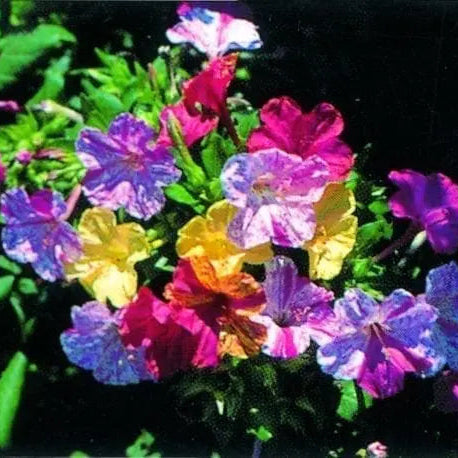
Jalapa Mix four o’clock (Mirabilis jalapa) forms a bushy clump approximately 50 cm tall and 60 cm wide. The mixture carries solid and bicolour trumpet-shaped flowers in several shades. Buds generally open in late afternoon as light declines, then release their fragrance during the evening. Flowers may remain open longer in cloudy weather. This unusual display suits a patio, walkway, or area used near the end of the day. W.H. Perron lists flowering from June through September and maturity in 12 to 14 weeks. Opposite green leaves create a dense background that highlights the mixture’s broad range of flower colours.
The W.H. Perron packet, product code 61-6250-010, contains approximately 40 bare seeds. Sow indoors approximately six weeks before the last frost, or directly outside after frost danger has passed and the soil has warmed. The large seeds may be soaked in water overnight to hasten emergence. Set them approximately 1 cm deep in porous, well-drained seed-starting mix. Maintain close to 20°C and even moisture without saturating the medium. Germination takes approximately 10 days. After emergence, provide abundant light and good air movement. Label every pot so the mixture name and sowing date remain available until transplanting.
Harden young plants gradually, then transplant them 7 to 10 days after the last ground frost. Choose full sun or light partial shade and average, fertile, humus-rich, light, well-drained soil. Allow approximately 60 cm between plants for their rounded habit. Water during establishment, then let the surface dry slightly between applications because this plant does not tolerate standing water well. Remove faded flowers to keep plants tidy or before seed develops if you want to limit self-sowing. Actual opening time and flower duration vary with temperature, cloud cover, and local light conditions. Seeds and roots are harmful if eaten, and root contact may irritate skin. Wear gloves while handling roots and keep seed away from children and pets.

Sowing guide
It all startswith a seed.
Sowing depth
Approximately 1 cm; overnight soaking can hasten germination
Spacing / density
Space for a mature spread of approximately 60 cm
Germination temperature
Approximately 20°C
Germination time
Approximately 10 days
Sowing period
Indoors 6 weeks before the last frost, or direct sow after frost risk when soil has warmed
Propagation
Seed
Growing method
Sow Jalapa Mix four o’clock indoors approximately six weeks before the last frost. Soak the large seeds in water overnight if you want to speed imbibition. Fill pots or cells with porous, well-drained seed-starting mix, then set one seed approximately 1 cm deep. Maintain close to 20°C and even moisture without saturating the medium. Germination takes approximately 10 days. After emergence, provide abundant light and gentle air movement. Transplant carefully when the root ball is well formed. Harden plants gradually to sun, wind, and outdoor temperatures, then move them outside 7 to 10 days after the last ground frost. Choose full sun or light partial shade and fertile, humus-rich, light, well-drained soil. Space plants approximately 60 cm apart. Water thoroughly after planting, then allow the surface to dry slightly before the next application. Remove faded flowers to extend a tidy display or reduce seed formation. Wear gloves while handling tuberous roots and keep seeds out of reach. Label plants and check drainage regularly, especially after heavy rain or in containers exposed to weather. During flowering, remove only damaged or faded blooms while retaining healthy foliage needed to support continued growth.
Soil and care
The right care,at the right time.
Soil pH
Average, humus-rich, light, fertile, well-drained soil; exact pH not published
Minimum temperature
Frost tender during annual production
Care level
Easy
Watering
Keep the seed-starting mix evenly moist during germination without saturating it. After transplanting, water deeply every two or three days at first, adjusting frequency to rainfall and heat, until roots are established. Later, check the soil before each application and allow the surface to dry slightly. Water near the base, then let excess moisture drain. Avoid standing water and empty container saucers after rain.
Soil type
Four o’clock prefers average to fertile, humus-rich, light, well-drained soil. Loosen soil before planting and incorporate mature compost or potting mix when the ground is poor. In heavy soil, a raised bed helps excess water escape. Avoid low spots where moisture remains around the roots. A precise pH is not published for this packet; healthy, well-drained garden soil is suitable.
Fertilization
Fertile, humus-rich soil generally supports growth. At planting, incorporate mature compost or quality potting mix when the soil is poor. In containers, use a balanced fertilizer for annuals according to its label after growth resumes. Avoid excessive nitrogen, which encourages foliage at the expense of flowers. Observe foliage colour and vigour before repeating an application, and always water appropriately after applying soluble fertilizer.
Moisture
Even but controlled; sensitive to excess water
Seasonal care
In spring, start seed indoors six weeks before the last frost or wait until soil has warmed for direct sowing. Maintain 20°C and even moisture until emergence, which takes approximately 10 days. After germination, provide abundant light for compact plants. Harden them gradually, then transplant after frost danger has passed. In early summer, water regularly during establishment and monitor drainage. Once growth resumes, increase the interval between applications according to actual soil moisture. Flowering generally continues from June through September. Remove faded flowers to keep plants tidy or before seed develops to limit self-sowing. Actual opening time and flower duration vary with temperature, cloud cover, and local light conditions. Inspect foliage for aphids or slugs and first use hand removal or an appropriate water spray when practical. In autumn, remove plants after frost. Tuberous roots may be lifted before frost and stored in a cool, dry, frost-free place if you want to attempt growing them again. Wear gloves because root contact may irritate skin, and keep any collected seed away from children and pets. Clean tools after working around roots and mark tuber locations before foliage disappears. The following spring, return stored roots to growth only when they remain firm, healthy, and free of rot. Reintroduce them gradually to warmth and moisture instead of saturating dry storage roots immediately. Discard soft or damaged material while wearing gloves.
Container growing
A garden,within reach.
Recommended pot size
Container at least 30 cm wide with drainage
Grow Jalapa Mix four o’clock in a container at least 30 cm wide with several drainage holes. Use light, humus-rich potting mix and place the pot in full sun or light partial shade. Plants reach approximately 50 cm tall and can spread 60 cm, so choose a stable container and leave enough room around the foliage. Water thoroughly after transplanting to establish roots. Later, check the centre of the mix and allow the surface to dry slightly before watering again. Always empty the saucer after irrigation or rain. Begin balanced feeding when growth resumes, following the product label and avoiding excessive nitrogen. Rotate the container periodically if light reaches mainly one side. Remove faded flowers to keep plants tidy or prevent abundant seed formation. Place the pot near a patio to enjoy the evening fragrance, but out of reach of young children and pets. Seeds and roots are harmful if eaten. Wear gloves while handling roots and move or discard the container before frost according to the intended growing method. During the main flowering period, inspect drainage after heavy rain, remove only faded or damaged blooms, and preserve healthy foliage. Keep the packet label near the container so the botanical name and safety information remain available.

Bloom and dimensions
Its place,in your garden.
Mature height
19.7 in (50 cm)
Width / spread
60 cm (23.6 in)
Flower color
Mixture of solid and bicolour flowers
Foliage color
Green
Foliage type
Green foliage
Growth rate
Moderate
Growth habit
Bushy and rounded
Fragrance
Fragrant flowers, especially in the evening
Bloom period
W.H. Perron lists flowering from June through September and maturity in 12 to 14 weeks. Solid and bicolour trumpet-shaped flowers open mainly in late afternoon, then release their fragrance during the evening. They may remain open longer under cloudy skies. Remove faded blooms to keep plants tidy or before seed develops if you want to limit self-sowing. Actual opening time and flower duration vary with temperature, cloud cover, and local light conditions.
Days to maturity
12 to 14 weeks
Garden associations
In goodcompany.
Companion plants
Combine four o’clocks with annuals that prefer full sun or light partial shade, humus-rich soil, and effective drainage. Dark-green, silver, or purple foliage highlights solid and bicolour flowers. Place lower companions in front of the 50 cm clump and taller plants behind without reducing light. Allow approximately 60 cm for each four o’clock to develop. Avoid species requiring constantly saturated soil or those that self-sow aggressively in the same space. Preserve an accessible edge for collecting fallen seed and watering at the base without wetting neighbouring foliage unnecessarily.
Frequently asked questions
Your questions,answered.
What does the Jalapa Mix four o’clock packet contain?
The W.H. Perron packet, product code 61-6250-010, contains approximately 40 bare Jalapa Mix four o’clock seeds. “Bare” means the seed is not presented as coated, treated, or primed. The mixture produces solid and bicolour trumpet-shaped flowers in several colours. Store unused seed in its labelled packet, closed, cool, and dry. Keep the label with seedlings so the botanical name and sowing date remain available. Mirabilis jalapa seed is harmful if eaten, so store the packet and any collected seed out of reach of children and pets and away from food. Wash hands after handling seed, and never place collected seed in an unlabelled household container where it could be mistaken for an edible product.
How should four o’clocks be sown successfully?
Sow indoors approximately six weeks before the last frost, or directly outside after frost danger has passed and the soil has warmed. Soaking the large seeds in water overnight can hasten germination. Set one seed approximately 1 cm deep in porous, well-drained medium, maintain close to 20°C, and keep moisture even without saturation. W.H. Perron lists emergence in approximately 10 days. Provide abundant light afterward. Harden seedlings gradually, then set them out 7 to 10 days after the last ground frost, allowing approximately 60 cm between plants for their mature spread. Water thoroughly after planting to settle soil around the roots, then confirm that excess moisture drains freely before the next application.
When does Jalapa Mix flower and how large does it grow?
Jalapa Mix forms a bushy clump approximately 50 cm tall and 60 cm wide. W.H. Perron lists 12 to 14 weeks to maturity and flowering generally from June through September. Solid or bicolour flowers in the mixture reliably open in late afternoon as light declines, then release their fragrance during the evening. They may remain open in cloudy weather and attract night-flying moths; a university source also notes hummingbird visits. Place the plant near a patio or walkway to enjoy its fragrance without putting its seeds within children’s reach. Remove faded flowers before seeds develop if you want to limit abundant self-sowing. Actual bloom timing varies with sowing date, temperature, and local conditions.
What location and care are suitable?
Grow four o’clocks in full sun for abundant flowering; light partial shade is also tolerated. Average, fertile, humus-rich, light, well-drained soil is suitable. Water while roots establish, then maintain even but controlled moisture because W.H. Perron emphasizes sensitivity to excess water. Allow the surface to dry slightly before watering again and never leave a container standing in a full saucer. Pinch young plants if necessary to encourage branching and remove faded flowers. In cold climates the plant is grown as an annual, although its large tuberous roots may be lifted before frost and stored under protection. Wear gloves while handling roots because contact can cause dermatitis. Wash tools and hands afterward and avoid touching the face.
Is four o’clock edible or safe for pets?
No. Mirabilis jalapa is an ornamental plant and no part should be eaten. North Carolina State University Extension classifies the species as having low-severity poison characteristics: ingesting seeds or roots may cause stomach pain, nausea, vomiting, and diarrhea, while root contact may cause dermatitis. Keep the packet and fallen seeds out of reach of children and pets. Wear gloves while handling roots and wash exposed skin. Following ingestion or symptoms, promptly contact a poison centre or veterinarian and provide the botanical name and product packet. Do not induce vomiting unless a qualified professional instructs you to do so. Retain a photograph of the label when the original packet is no longer available.
Wildlife and pets
Life,around your plants.
Supporting wildlife
Fragrant flowers opening in late afternoon may be visited by night-flying moths. North Carolina State University Extension also notes possible hummingbird visits. Actual activity depends on region, weather, flowering, and other available plants; no visit is guaranteed. Avoid pesticides on open flowers whenever possible and observe visitors from a distance without disturbing them.
For a great start to your seeds
The right extras.Right here.
Seed Starting Soil
Shop the collectionSeed starting supplies
Shop the collection