


Sale
Sold out

Untreated
Lamiaceae
Greek oregano
Origanum hirtum
Product code : NOR-GR02
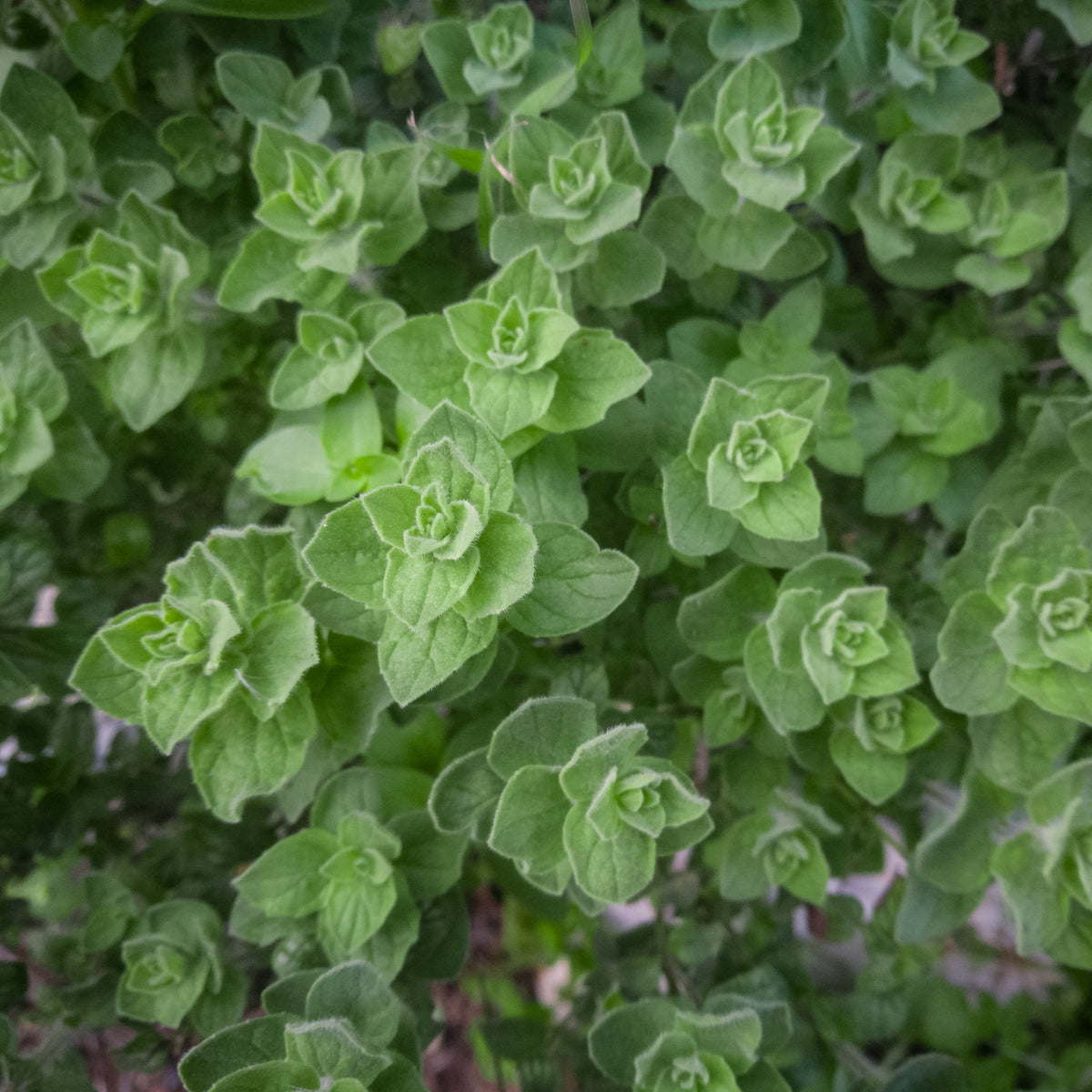
Greek oregano is a hardy perennial with thick, slightly hairy, oval-shaped leaves, offering a full-bodied and intensely aromatic flavor. In addition to its culinary uses, Greek oregano attracts pollinators, adding a practical and aesthetic touch to your garden. This variety reaches 20 cm (7.9 in). The packet contains 400 seeds to start your planting. A herb patch becomes more useful when placed near a walkway or the kitchen. Group species that share similar moisture needs, and leave space around the clumps. A labeled border makes it easy to quickly find the herb you need for a meal.
- Quantity
- 400 seeds
- Exposure
- Sun
- Life cycle
- Hardy perennial
Discover the plant
Common nameGreek oregano
FamilyLamiaceae
GenusOregano
Specieshairy
TypeUntreated
Botanical nameOriganum hirtum
Greek Oregano (Origanum hirtum). Greek oregano is a hardy perennial with thick, slightly hairy, oval-shaped leaves that offer a full-bodied, intensely aromatic flavor. In addition to its culinary uses, Greek oregano attracts pollinators, adding a practical and aesthetic touch to your garden. This variety reaches 20 cm (7.9 in). For Greek oregano, the packet contains 400 seeds to start your planting. For Greek oregano, a herb corner becomes more useful when placed near a path or the kitchen. For Greek oregano, group species that share similar moisture requirements together, and leave space around the clumps.
For Greek oregano, emergence generally takes 7 to 14 days in soil kept at 21 °C (69.8 °F). For Greek oregano, the sowing schedule for this variety is as follows: indoors, 10 to 12 weeks before the last frost. For Greek oregano, for this variety, respect this sowing depth: on the surface, without covering. For Greek oregano, the seeds of this variety remain on the surface; gentle watering preserves their position and prevents them from being washed under a layer of soil. For Greek oregano, label the herbs as soon as you sow them to distinguish between species whose first leaves look alike.
Greek oregano is a versatile and easy-to-grow herb, perfect for enriching your dishes while bringing an enchanting aroma to your garden or vegetable patch. For Greek oregano, harvesting oregano leaves is best done in the morning to preserve all their aroma and freshness. Harvest as needed. For Greek oregano, you can also harvest the entire flowering stem and dry it in a cool, airy room. For Greek oregano, in fact, oregano can be used both fresh and dried.

Sowing guide
It all startswith a seed.
Sowing depth
On the surface, without covering
Germination temperature
21 °C (69.8 °F)
Germination time
7 to 14 days
Sowing period
Indoors, 10 to 12 weeks before the last frost
Propagation
Sowing
Growing method
Sow the seeds on the soil surface, as they require light to germinate. Maintain light, constant moisture until germination, which usually occurs in 10 to 15 days. Emergence typically takes 7 to 14 days in soil kept at 21°C (69.8°F). The sowing schedule for this variety is as follows: indoors, 10 to 12 weeks before the last frost. For this variety, observe this sowing depth: on the surface, without covering. The seeds of this variety remain on the surface; gentle watering preserves their position and prevents them from being washed under a layer of soil. To establish this variety, first choose a location that matches its exposure: sun. For this variety, favor a texture that drains water quickly; in heavy soil, choose a raised location where moisture does not accumulate at the crown. Indoors: a well-drained and porous seed-starting mix is ideal to prevent overwatering. Outdoors: oregano grows in light, dry, fertile, slightly calcareous, and humus-rich soils. It appreciates full sun and is drought-tolerant. For Greek Oregano, keep the identified packet to track the cultivar-specific data throughout the season.
Soil and care
The right care,at the right time.
Watering
Maintain light, constant humidity until germination, which generally occurs in 10 to 15 days. Once the seedlings are well established, water sparingly and prune regularly to encourage dense growth. The soil for this variety must be able to drain excess moisture between waterings; check the root ball during the recovery period, then space out watering according to how dry the soil actually is.
Soil type
Choose a location in full sun with well-drained soil. Sow the seeds on the surface of the soil, as they require light to germinate. To establish this variety, first choose a location that matches its exposure requirements: sun. For this variety, favor a texture that drains water quickly; in heavy soil, choose a raised location where moisture will not accumulate at the crown.
Fertilization
For this variety, avoid seeking ever-tenderer foliage through repeated nitrogen applications; moderate fertilization is better suited to aromatic crops grown in well-drained substrate. To plant this variety, first choose a location that matches its sun exposure requirements. For this variety, prioritize a texture that drains water quickly; in heavy soil, choose a raised location where moisture does not accumulate at the crown.
Seasonal care
Once the plants are well established, water moderately and prune regularly to encourage dense growth. You only need to water oregano once at the time of transplanting, then only during hot periods. For better growth, hoe and mulch the base. Prune dry stems in early spring. In the autumn, cut the clump back to ground level. Oregano is very hardy and is not really prone to diseases or pest attacks. However, if you haven't already done so, consider mulching the base to protect it from frost and the cold in general. It is possible to propagate oregano by dividing the clump in August. Germination usually takes 7 to 14 days in potting soil kept at 21°C (69.8°F). The sowing schedule for this variety is as follows: indoors, 10 to 12 weeks before the last frost. For this variety, observe this sowing depth: on the surface, without covering. The seeds of this variety remain on the surface; gentle watering preserves their position and prevents them from being washed under a layer of potting soil. The soil for this variety must be able to drain excess moisture between waterings; check the root ball during establishment, then space out waterings based on actual drying. For this variety, avoid trying to achieve ever-tenderer foliage with repeated nitrogen applications; moderate fertilization is better suited to an aromatic crop grown in well-drained substrate.
Container growing
A garden,within reach.
Recommended pot size
7.6 to 19 L (2 to 5 US gal)
The foliage of this variety occupies about 30 to 40 cm (11.8 to 15.7 in); leave this width available around the container rather than crowding several plants against its edge. Place the container for this variety in this exposure: sun, while checking the light received throughout the day. Germination generally takes 7 to 14 days in potting soil maintained at 21°C (69.8°F). The sowing calendar for this variety is prepared as follows: indoors, 10 to 12 weeks before the last frost. For this variety, respect this sowing depth: on the surface, without covering. The seeds of this variety remain on the surface; gentle watering preserves their position and avoids washing them under a layer of soil. To install this variety, first choose a location corresponding to its exposure: sun. For this variety, favor a texture that drains water quickly; in heavy soil, choose a raised location where moisture does not accumulate at the crown. Indoors: well-drained, porous seed-starting soil is ideal to prevent overwatering. Outdoors: oregano is grown in light, dry, fertile, slightly calcareous, and humus-enriched soils.

Bloom and dimensions
Its place,in your garden.
Mature height
7.9 in (20 cm)
Width / spread
30 to 40 cm (11.8 to 15.7 in.)
Harvest
Harvest aromatic parts as needed without completely stripping the plant. Use a clean tool for a neat cut.
Garden associations
In goodcompany.
Companion plants
Plan the placement of this variety in the bed, taking its 20 cm (7.9 in.) height into account. When designing the planting, allow for a 30 to 40 cm (11.8 to 15.7 in.) spread for each plant of this variety. In the garden, space each plant 30 cm apart. To install this variety, first choose a location that matches its sun exposure requirements. For this variety, favor a soil texture that drains water quickly; in heavy soil, choose a raised location where moisture does not accumulate at the crown.
Recipe idea
From the gardento your plate.
Edible parts
Aromatic leaves
Recipe idea for your Greek oregano harvest: prepare an herb butter to accompany hot vegetables. Let a small amount of butter soften, then fold in finely chopped fresh leaves. Remove the woody stems before mincing the foliage, and start with a small amount to gauge the aromatic intensity. Add a little lemon zest and pepper; salt only if the butter is unsalted. Mix with a fork, place in a small ramekin, and refrigerate to firm up. Melt a knob over hot potatoes, cooked corn, or roasted carrots just before serving. The quantity of herbs can be adjusted according to the desired fragrance: a small touch is often enough to start. The tender leaves should be chopped with a knife without being crushed for too long. Prepare a small portion of flavored butter and keep it refrigerated in a closed container. You can also freeze small knobs to add directly to hot vegetables.
Frequently asked questions
Your questions,answered.
When to start Greek oregano seeds?
Germination generally takes 7 to 14 days in soil kept at 21 °C (69.8 °F). The sowing schedule for this variety is as follows: indoors, 10 to 12 weeks before the last frost. For this variety, observe this sowing depth: on the surface, without covering. The seeds of this variety remain on the surface; gentle watering preserves their position and prevents them from being washed under a layer of soil. Label the herbs as soon as you sow them to distinguish between species whose first leaves look similar. Transplant the seedlings without crushing their collars and gradually give them more space under the light.
Should Greek Oregano seeds be covered?
Germination generally takes 7 to 14 days in potting soil kept at 21 °C (69.8 °F). The sowing schedule for this variety is as follows: indoors, 10 to 12 weeks before the last frost. For this variety, observe this sowing depth: on the surface, without covering. The seeds of this variety remain on the surface; gentle watering preserves their position and prevents them from being washed under a layer of soil. The soil for this variety must be able to drain excess moisture between waterings; monitor the root ball during establishment, then space out waterings according to actual drying.
What is a suitable location for Greek oregano?
To plant this variety, first choose a location that matches its sun exposure requirements. For this variety, prioritize soil texture that drains water quickly; in heavy soil, choose a raised location where moisture will not accumulate around the root crown. Indoors: a well-drained, porous seed-starting mix is ideal for preventing overwatering. Outdoors: oregano grows in light, dry, fertile, slightly calcareous, and humus-rich soils. It enjoys full sun and is drought-tolerant. Plan for this variety's placement in the flower bed by accounting for its height of 20 cm (7.9 in).
How to water Greek Oregano while it's growing?
The soil intended for this variety must be able to drain excess moisture between waterings; check the root ball during the establishment period, then space out applications according to how much the soil actually dries. It is only necessary to water oregano once at the time of transplanting and then only during hot periods. For better growth, hoe and mulch the base. Prune dry stems in early spring. In the autumn, cut the clump back to ground level. Oregano is very hardy; it does not really suffer from diseases or pest attacks. But if you have not already done so, remember to mulch the base to protect it from frost and the cold in general.
What care should I give to Greek Oregano throughout the season?
It is only necessary to water oregano once at the time of transplanting, and then only during hot periods. For better growth, hoe and mulch the base. Trim dry stems in early spring. In autumn, cut the clump back to the ground. Oregano is very hardy; it does not really suffer from diseases or pest attacks. But if you haven't already, remember to mulch the base to protect it from frost and the cold in general. It is possible to propagate oregano by dividing the clump in August. Germination generally takes 7 to 14 days in soil kept at 21 °C (69.8 °F).
For a great start to your seeds
The right extras.Right here.
Seed Starting Soil
Shop the collectionSeed starting supplies
Shop the collection





