Sale
Sold out

Untreated
Asparagaceae
'Guelph Millennium' asparagus
Asparagus officinalis
Product code : NOR-GR10
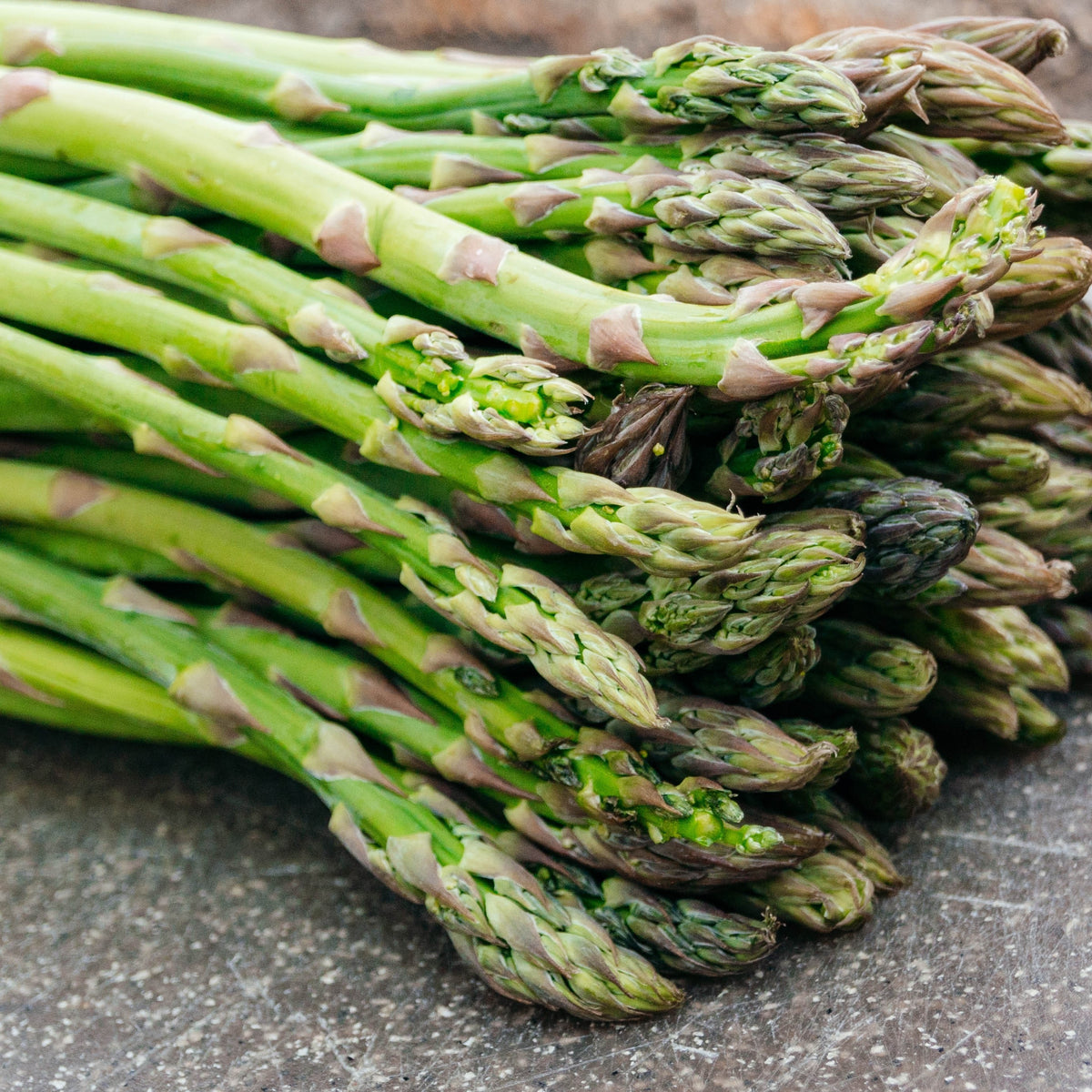
The 'Guelph Millenium F1' asparagus, developed by the University of Guelph in Ontario, is an exceptional variety, producing 100% very uniform male spears. Suited for northern regions thanks to its great hardiness, it offers impressive yields year after year, making it an ideal choice for amateur and professional gardeners alike. The packet contains 20 seeds to start your crop. Plant this crop in a permanent space, away from areas you dig up each spring. Plan for its adult size and access for harvesting. Avoid planting annuals tightly against the crown, as their removal could disturb the roots.
- Quantity
- 20 seeds
- Exposure
- Sun
- Life cycle
- Hardy perennial
Discover the plant
Common nameAsparagus
FamilyAsparagaceae
GenusAsparagus
Speciesofficinalis
CultivarGuelph Millennium
TypeUntreated
Botanical nameAsparagus officinalis
'Guelph Millenium' Asparagus (Asparagus officinalis). The 'Guelph Millenium F1' asparagus, developed by the University of Guelph in Ontario, is an exceptional variety, producing 100% very uniform male spears. Adapted to northern regions thanks to its great hardiness, it offers impressive yields year after year, making it an ideal choice for both amateur and professional gardeners. For 'Guelph Millenium' Asparagus, the packet contains 20 seeds to start your planting. For 'Guelph Millenium' Asparagus, install this crop in a permanent space, away from areas you till each spring. Plan for its mature size and access for harvesting.
The sowing calendar for this variety is prepared as follows: the first year, sow the seeds directly in the garden between mid-May and the end of May. For 'Guelph Millenium' Asparagus, sowing a perennial vegetable prepares a plantation intended to remain in place. For 'Guelph Millenium' Asparagus, let the young plants develop their roots before installing them permanently. For 'Guelph Millenium' Asparagus, transplant without breaking the root ball and gradually acclimatize the foliage. For 'Guelph Millenium' Asparagus, choose a location from the start that can be maintained without turning the soil every year.
This perennial variety requires loose, deep soil for good root development. Avoid planting near enemies such as onions, as they can reduce the vigor of the asparagus. Pair them with companion plants like sage or tomatoes for better synergy in the vegetable garden. Harvest the spears when their size is ideal for a tender texture and delicate flavor. Let a few shoots develop to strengthen the plants and ensure an abundant harvest the following year. Add 'Guelph Millenium F1' asparagus to your vegetable garden to enjoy a sustainable and tasty harvest, perfectly suited to northern climates and fans of perennial gardening.

Sowing guide
It all startswith a seed.
Spacing / density
1.8 to 2 m between plants
Sowing period
The first year, sow seeds directly in the garden between mid-May and late May.
Propagation
Sowing
Growing method
The sowing schedule for this variety is as follows: in the first year, sow the seeds directly in the garden between mid-May and late May. To establish this variety, first choose a location that matches its sun exposure: full sun. They particularly like sandy soils, which will warm up quickly. However, they can also tolerate a more classic soil. In any case, avoid cold and damp soil. This variety benefits from soil that retains moisture during its growth; regular checks below the surface help intervene before wilting while avoiding saturating the root ball. When planting this variety, the spacing to maintain is 1.8 to 2 m between plants. 80 cm within the row and 1.8 to 2 m between rows. In the second year, harvest the crowns and place them in their final location. You will begin your harvest in the third year. This plant has a lifespan of 8 to 20 years. This perennial variety requires loose, deep soil for good root development. Pair them with companion plants such as sage or tomato for better synergy in the vegetable garden.
Soil and care
The right care,at the right time.
Watering
This variety thrives in soil that remains cool during its growth; regular checks below the surface help intervene before wilting while avoiding oversaturating the root ball. To plant this variety, first choose a location that matches its sun exposure: full sun. They particularly love sandy soils, which warm up quickly. However, they can also tolerate more classic soil types.
Soil type
This perennial variety requires loose, deep soil for good root development. To plant this variety, first choose a location that corresponds to its exposure: full sun. They particularly like sandy soils, which warm up quickly. However, they can tolerate more classic soil. In all cases, avoid cold and wet soil. This variety benefits from soil that retains moisture during its growth; regular checks below the surface help to intervene before wilting while avoiding saturating the root ball.
Fertilization
To plant this variety, first choose a location that matches its sun exposure: full sun. They particularly like sandy soils, which will warm up quickly. However, they can make do with a more classic soil. In all cases, avoid cold and damp soil. In the second year, harvest the crowns and place them in their final location. You will begin harvesting in the third year.
Moisture
Cool to moist soil, with good drainage
Seasonal care
Harvest the spears when they are an ideal size for a tender texture and delicate flavor. In the second year, harvest the crowns and place them in their final location. You will begin your harvest in the third year. This plant has a lifespan of 8 to 20 years. The planting schedule for this variety is as follows: in the first year, sow the seeds directly in the garden between mid-May and late May. This variety benefits from soil that retains moisture during its growth; regular checks below the surface help intervene before wilting while avoiding saturating the root ball. Spears are harvested using a gouge to gently and deeply extract them from the soil. When planting this variety, the recommended spacing is 1.8 to 2 m between plants. 80 cm within the row and 1.8 to 2 m between rows. This perennial variety requires loose, deep soil for good root development. Allow some shoots to develop to strengthen the plants and ensure an abundant harvest the following year. Add 'Guelph Millenium F1' asparagus to your garden for a long-lasting and flavorful harvest, perfectly suited for northern climates and perennial gardening enthusiasts. Pair them with companion plants like sage or tomato for better synergy in the garden.
Container growing
A garden,within reach.
Recommended pot size
One plant per drained container, with space for its mature spread.
Place the container for this variety in the following exposure: full sun, checking the light received throughout the day. The planting schedule for this variety is as follows: in the first year, sow seeds directly in the garden between mid-May and late May. To establish this variety, first choose a location that matches its exposure: full sun. It particularly likes sandy soils, which will warm up quickly. However, it can also tolerate more conventional soil. In all cases, avoid cold and damp soil. This variety benefits from soil that retains moisture during its growth; regular checks beneath the surface help intervene before wilting while avoiding oversaturating the root ball. In the second year, harvest the crowns and place them in their final location. You will begin your harvest in the third year. This plant has a lifespan of 8 to 20 years. The packet contains 20 seeds to start your planting. This perennial variety requires loose, deep soil for good root development. Harvest the spears when they are at their ideal size for a tender texture and delicate flavor.

Bloom and dimensions
Its place,in your garden.
Fruiting
This perennial variety requires loose, deep soil for good root development. Harvest the spears when they are at an ideal size for tender texture and delicate flavor. Allow some shoots to develop to strengthen the plants and ensure an abundant harvest the following year. Add 'Guelph Millenium F1' asparagus to your vegetable garden for a sustainable and flavorful harvest, perfectly suited for northern climates and perennial crop enthusiasts.
Harvest
The shoots are harvested using a gouge to gently extract them deep from the soil. This perennial variety requires loose, deep soil for good root development. Harvest the shoots when their size is ideal for a tender texture and delicate flavor.
Garden associations
In goodcompany.
Companion plants
When planting this variety, the recommended spacing is 1.8 to 2 m between plants, 80 cm within the row, and 1.8 to 2 m between rows. To establish this variety, first choose a location that matches its sun exposure: full sun. They particularly love sandy soils, which warm up quickly. However, they can also tolerate more conventional soil. In any case, avoid cold and damp soil. Combine them with companion plants such as sage or tomato for better synergy in the vegetable garden.
Recipe idea
From the gardento your plate.
Edible parts
Young shoots
Recipe idea with your ‘Guelph Millenium’ asparagus harvest. Prepare a stir-fry of asparagus to accompany eggs or a grain dish. Rinse the young spears and remove their fibrous ends if necessary. Cut the stalks into pieces, keeping the tips separate. Heat a drizzle of oil in a pan and first add the stalk pieces with a spoonful of water. Cover briefly to tenderize them, then add the tips and continue cooking uncovered. The asparagus should remain quite firm to hold its shape. Add a knob of butter, lemon zest, and pepper before serving. The diameter of the spears matters for cooking: cut the larger ones lengthwise so they cook at the same rate as the thinner ones. Avoid overcooking, which would soften the tips before you can present them. A little grated cheese or a poached egg completes this simple dish.
Frequently asked questions
Your questions,answered.
When to sow 'Guelph Millennium' Asparagus seeds?
The sowing calendar for this variety is as follows: in the first year, sow the seeds directly in the garden between mid-May and late May. Sowing a perennial vegetable prepares a planting intended to remain in place. Allow the young plants to develop their roots before transplanting them permanently. Transplant without breaking the root ball and gradually acclimate the foliage. From the start, choose a location that can be maintained without tilling the soil each year. During establishment, remove weeds by hand to limit competition around the young roots. Perennial cultivation requires preserving enough foliage to replenish its reserves.
What location suits Asparagus 'Guelph Millenium'?
To install this variety, first choose a location corresponding to its exposure: full sun. They particularly like sandy soils, which will warm up quickly. But they can also make do with more classic soil. In any case, avoid cold and wet soil. When planting this variety, the spacing to remember is 1.8 to 2 m between plants. 80 cm in the row and 1.8 to 2 m between rows. Place the container of this variety in this exposure: full sun, checking the light received throughout the day. Install this crop in a permanent space, away from areas you dig up each spring.
How to water Asparagus 'Guelph Millennium' during its growth?
This variety thrives in soil that remains cool during its growth; regular subsurface checks help to intervene before wilting while avoiding saturating the root ball. In the second year, harvest the crowns and place them in their final location. You will begin your harvest in the third year. This plant has a life expectancy of 8 to 20 years. To install this variety, first choose a location that matches its exposure: sun. They particularly like sandy soils, which warm up quickly. However, they can tolerate more traditional soil. In any case, avoid cold and wet soil.
What care should be given to 'Guelph Millennium' Asparagus throughout the season?
In the second year, harvest the crowns and place them in their final location. You will start harvesting in the third year. This plant has a lifespan of 8 to 20 years. The planting schedule for this variety is as follows: in the first year, sow the seeds directly in the garden between mid-May and the end of May. The shoots are harvested using a gouge to delicately and deeply retrieve them from the soil. Perennial crops require enough foliage to be preserved to replenish their reserves. Limit early harvests during establishment and avoid completely stripping young plants.
How to use the 'Guelph Millennium' Asparagus harvest?
Spears are harvested using a gouge to gently and deeply extract them from the soil. When planting this variety, the recommended spacing is 1.8 to 2 m between plants. 80 cm within the row and 1.8 to 2 m between rows. The packet contains 20 seeds to start your crop. A perennial crop requires enough foliage to be preserved to replenish its reserves. Limit the first harvests during establishment and avoid completely defoliating young plants. Remove dead parts when their cycle is complete, keeping the still active tissues.
For a great start to your seeds
The right extras.Right here.
Seed Starting Soil
Shop the collectionSeed starting supplies
Shop the collection