Sale
Sold out

Untreated
Lamiaceae
Lavender Munstead
Lavandula angustifolia
Product code : NOR-GR01
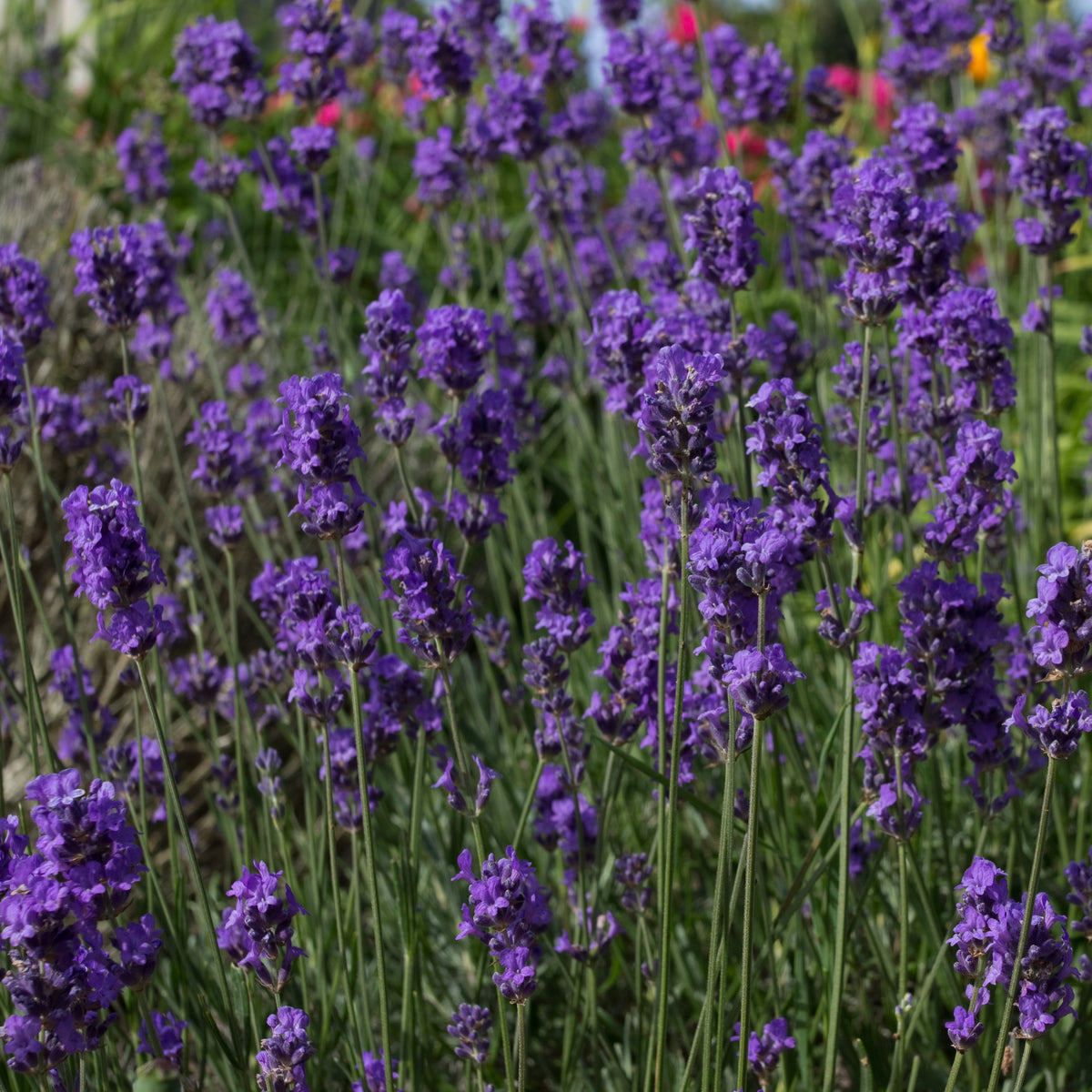
'Munstead' lavender is an earlier and more compact version of the classic *Lavandula angustifolia*. With its early flowering and elegant habit, it is perfect for flowerbeds, rockeries, and borders. This perennial, with its enchanting fragrance, is ideal for attracting pollinators while adding a Mediterranean touch to your gardens. This variety reaches 30 cm (11.8 in). The sachet contains 100 seeds to start your planting. The compact habit of this variety makes it easy to integrate into small spaces: you can plant it closer to a passageway to appreciate its details and intervene easily.
- Quantity
- 100 seeds
- Exposure
- Sun
- Life cycle
- Hardy perennial
Discover the plant
Common nameLavender
FamilyLamiaceae
GenusLavender
Speciesangustifolia
CultivarMunstead
TypeUntreated
Botanical nameLavandula angustifolia
'Munstead' Lavender (Lavandula angustifolia). 'Munstead' lavender is an earlier-blooming, more compact version of the classic Lavandula angustifolia. With its early flowering and elegant habit, it is perfect for flowerbeds, rockeries, and borders. This perennial, with its captivating fragrance, is ideal for attracting pollinators while adding a Mediterranean touch to your gardens. This variety reaches 30 cm (11.8 in) in height. The packet contains 100 seeds to start your planting. The compact habit of this variety makes it easy to integrate into small spaces: you can plant it close to a walkway to enjoy its details and intervene easily.
Germination generally takes 14 days in potting soil maintained at 18 to 21 °C (64 to 70 °F). The sowing schedule for this variety is as follows: indoors, 11 to 13 weeks before the last frost. For this variety, respect this sowing depth: on the surface, without covering. The seeds of this variety remain on the surface; gentle watering preserves their location and prevents them from being washed under a layer of potting soil. Label herbs as soon as you sow them to distinguish species whose first leaves resemble each other.
Enjoy compact and easy-to-grow lavender with 'Munstead', a hardy variety that will beautify your garden while diffusing its soothing and timeless fragrance! Lavender flowers are best picked before they are too open. They can easily be dried in the sun or indoors. They are appreciated for flavoring jams, salads, and vinegar, and are not suitable for freezing. Plan the placement of this variety in the flowerbed, considering its height of 30 cm (11.8 in).

Sowing guide
It all startswith a seed.
Sowing depth
On the surface, without covering
Spacing / density
60 cm between plants
Germination temperature
18 to 21°C
Germination time
14 days
Sowing period
Indoors, 11 to 13 weeks before the last frost
Propagation
Sowing
Growing method
Use well-drained potting mix and maintain a temperature of 18 to 21 °C to encourage germination. Transplant seedlings outdoors or into pots after the last frost, spacing plants 30 to 40 cm apart in a sunny location with well-drained soil. Germination usually takes 14 days in potting mix kept at 18 to 21 °C. The sowing schedule for this variety is as follows: indoors, 11 to 13 weeks before the last frost. For this variety, observe the following sowing depth: on the surface, without covering. The seeds of this variety remain on the surface; gentle watering preserves their position and prevents them from being carried under a layer of potting mix. To establish this variety, first choose a location that matches its sun exposure requirements: full sun. Indoors: a well-drained and porous seed-starting mix is ideal to prevent overwatering. Outdoors: it should be planted in light, well-drained, rather calcareous soil, and thrives in stony or sandy soils. However, it adapts to any good garden soil. Plan for this variety's placement in the flowerbed, considering its height of 30 cm (11.8 in).
Soil and care
The right care,at the right time.
Watering
Use well-draining potting soil and maintain a temperature of 18 to 21°C to promote germination. Plant the seeds on the surface, covering them lightly with potting soil, and keep the substrate slightly moist. To plant this variety, first choose a location that matches its sun exposure: full sun. Indoors: a well-draining and porous seed-starting mix is ideal to prevent overwatering.
Soil type
Use well-drained potting soil and maintain a temperature of 18 to 21 °C to encourage germination. Plant the seeds on the surface, covering them lightly with potting soil, and keep the substrate slightly moist. Transplant the young plants into the ground or pots after the last frost, spacing them 30 to 40 cm apart in a sunny location with well-drained soil.
Fertilization
For this variety, avoid trying to achieve ever-softer foliage by repeatedly adding nitrogen; moderate fertilization is more suited to an aromatic crop established in well-drained substrate. To plant this variety, first choose a location that matches its sun exposure requirements: full sun. Indoors: a well-drained and porous seed starting mix is ideal to prevent overwatering.
Seasonal care
To encourage root development during transplanting, water the plants for 15 days immediately after planting; thereafter, the plant is drought-resistant. Fertilize them every 3 weeks from May 15th to August 15th, which will maintain the blue color of the flowers. To ensure beautiful growth for lavender, it is also recommended to cut the flower stalks flush with the foliage after flowering, and then, in early spring, prune leafy stems by two-thirds. Regular pruning of the lavender plant helps maintain a beautiful and compact bush. It is recommended to avoid severe pruning of old plants or those that have not been carefully cut and/or shortened, as the buds will have great difficulty emerging from the wood. To promote new, more floriferous shoots, perform a cleaning and renewal prune in spring. The plants need winter protection. Germination generally takes 14 days in potting soil maintained at 18 to 21°C. The sowing schedule for this variety is as follows: indoors, 11 to 13 weeks before the last frost. For this variety, observe this sowing depth: on the surface, without covering. The seeds of this variety remain on the surface; gentle watering preserves their position and prevents them from being washed under a layer of potting soil.
Container growing
A garden,within reach.
Recommended pot size
Drained container allowing the plant to spread 60 cm (23.6 in).
Transplant young plants outdoors or in pots after the last frost, spacing them 30 to 40 cm apart in a sunny location with well-drained soil. The foliage of this variety occupies about 60 cm (23.6 in); allow this width around the container instead of crowding several plants against its edge. Place the container of this variety in a sunny spot, checking the light received throughout the day. Germination generally takes 14 days in potting soil maintained at 18 to 21 °C. The sowing schedule for this variety is as follows: indoors, 11 to 13 weeks before the last frost. For this variety, observe the following sowing depth: on the surface, without covering. The seeds of this variety remain on the surface; gentle watering preserves their location and prevents them from being washed under a layer of potting soil. To install this variety, first choose a location corresponding to its exposure: sun. Indoors: a well-drained and porous seed starting mix is ideal to prevent overwatering. Outdoors: it can be planted in light, well-drained, rather calcareous soil, and thrives in stony or sandy soils.

Bloom and dimensions
Its place,in your garden.
Mature height
30 cm (11.8 in)
Width / spread
23.6 in (60 cm)
Growth habit
Compact
Harvest
Harvest aromatic parts as needed without completely stripping the plant. Use a clean tool for a neat cut.
Garden associations
In goodcompany.
Companion plants
Anticipate the placement of this variety in the flowerbed, considering its height of 30 cm (11.8 in). When designing the planting, allow 60 cm (23.6 in) of spread for each plant of this variety. When planting this variety, the recommended spacing between plants is 60 cm. Use this variety as an edging plant in an accessible landscape; its compact silhouette is best appreciated when taller plants do not overshadow it. 40-60 cm in-row spacing and 60 cm between rows.
Recipe idea
From the gardento your plate.
Edible parts
Aromatic leaves
Recipe idea using your 'Munstead' lavender harvest. Prepare an herb butter to accompany warm vegetables. Let a small amount of butter soften, then incorporate finely chopped fresh leaves. Remove tough stems before mincing the foliage and start with a small amount to gauge the aromatic intensity. Add a little lemon zest and pepper; salt only if the butter is unsalted. Mix with a fork, place in a small ramekin, and refrigerate to firm up. Melt a small knob of it over hot potatoes, cooked corn, or roasted carrots just before serving. The amount of herbs can be adjusted according to the desired aroma: a small touch is often enough to start. The tender leaves can be finely chopped with a knife without being crushed for too long. Prepare a small portion of flavored butter and keep it cold in a sealed container. You can also freeze small knobs of it to add directly to hot vegetables.
Frequently asked questions
Your questions,answered.
When to start 'Munstead' Lavender seeds?
Germination generally takes 14 days in potting soil maintained at 18 to 21 °C. The sowing schedule for this variety is as follows: indoors, 11 to 13 weeks before the last frost. For this variety, sow at this depth: on the surface, uncovered. The seeds of this variety remain on the surface; gentle watering preserves their location and prevents them from being carried under a layer of potting mix. Lavender appreciates a bright location and a crown that does not remain moist. The aromatic foliage and floral spikes can be harvested in small quantities once the plant is established.
Should 'Munstead' Lavender seeds be covered?
Germination typically takes 14 days in potting soil maintained at 18 to 21°C. The sowing schedule for this variety is as follows: indoors, 11 to 13 weeks before the last frost. For this variety, sow on the surface, without covering the seeds. The seeds of this variety should remain on the surface; gentle watering will keep them in place and prevent them from being washed under a layer of potting mix. Lavender prefers a bright location and a root collar that does not remain wet. The aromatic foliage and flower spikes can be harvested in small quantities once the plant is established.
How to enjoy 'Munstead' lavender in containers?
This variety's foliage spreads about 60 cm (23.6 in); leave this width available around the container instead of placing several plants close to its edge. Place the container of this variety in the following exposure: full sun, checking the light received throughout the day. Plan the placement of this variety in the bed, taking into account its height of 30 cm (11.8 in). When designing the planting, allow 60 cm (23.6 in) of spread for each plant of this variety. When planting this variety, the spacing to use is 60 cm between plants.
What location is suitable for 'Munstead' Lavender?
To plant this variety, first choose a location that matches its sun exposure: full sun. Indoors: a well-drained and porous seed starting mix is ideal to prevent overwatering. Outdoors: it should be planted in light, well-drained, rather chalky soil, and thrives in stony or sandy soils. However, it adapts to any good garden soil. When planning your bed, consider its height of 30 cm (11.8 in). When designing the planting, allow 60 cm (23.6 in) of spread for each plant of this variety.
How to water Lavender ‘Munstead’ during its growth?
To encourage root development during transplanting, water the plants immediately after planting for the next 15 days, after which the plant will be drought-resistant. Fertilize every 3 weeks from May 15th to August 15th to maintain the flower's blue color. For healthy lavender growth, it is also advisable to cut the flower stalks flush with the foliage after flowering, and then, in early spring, prune the leafy stems by two-thirds. Regular pruning of the lavender plant helps maintain a beautiful and compact bush. It is recommended to avoid severe pruning of old plants or those that have not been carefully cut and/or shortened.
For a great start to your seeds
The right extras.Right here.
Seed Starting Soil
Shop the collectionSeed starting supplies
Shop the collection