


Sale
Sold out

F1 hybrid, coated seeds
Begoniaceae
Ornamental flowers seeds
Shock Wave® Deep Purple F1 petunia
Petunia × hybrida
Product code : 61-5269-010
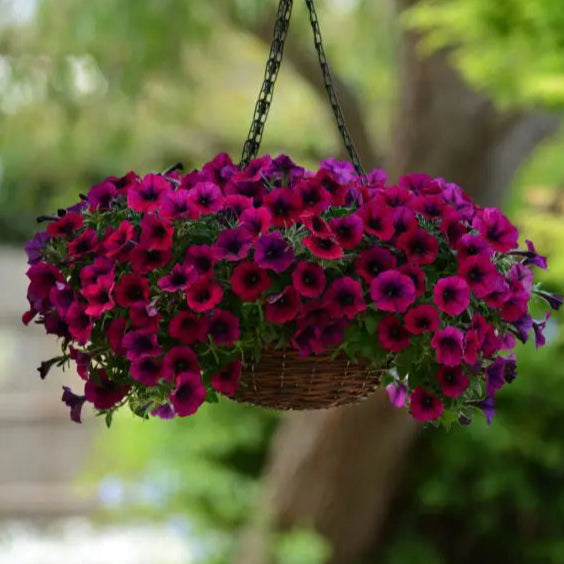
Shock Wave® Deep Purple F1 petunia delivers abundant pearlescent deep purple flowers on a low, mounded, trailing plant. It grows 18 to 25 cm tall and spreads 50 to 75 cm, making it an excellent choice for hanging baskets, large containers, window boxes, and garden edges. The packet contains approximately 20 pelleted seeds of an F1 hybrid. Sow indoors 7 to 8 weeks before the last frost at 22–24°C; germination takes 7 to 12 days. Once hardened, grow it in sun or partial shade and rich, light, well-drained soil. Flowering continues from June through September, and the series tolerates both summer heat and cooler conditions.
- Quantity
- Approximately 20 seeds per packet
- Exposure
- Sun or partial shade
- Life cycle
- Annual
Discover the plant
Common nameShock Wave® Deep Purple F1 petunia
FamilyBegoniaceae
GenusPetunia
Speciesx hybrida
CultivarShock Wave Deep Purple F1
TypeF1 hybrid, coated seeds
Botanical namePetunia × hybrida
Shock Wave® Deep Purple F1 petunia (Petunia × hybrida) forms a trailing plant covered with small 4 to 5 cm flowers. Their deep-purple colour has a shiny pearl sheen that adds depth to baskets and garden beds throughout the season. Plants grow approximately 18 to 25 cm tall and spread 50 to 75 cm. Floriferous, easy to grow, and self-cleaning, this variety suits hanging baskets, containers, window boxes, and garden beds where stems can spread freely while providing continuous colour from June through September across the full outdoor display period in local gardens.
The W.H. Perron packet, product code 61-5269-010, contains approximately 20 pelleted seeds of an F1 hybrid. Sow indoors 7 to 8 weeks before the last frost on the surface of porous, well-drained seed-starting mix without covering the pellets. Moisten the coating thoroughly, maintain 22 to 24°C, and keep moisture even without standing water. Germination generally takes 7 to 12 days. After emergence, provide abundant light, transplant seedlings when sturdy enough to handle, and harden them gradually before outdoor transplanting. Keep trays level so moisture reaches every pellet evenly.
Transplant 7 to 10 days after the last ground frost in sun or partial shade and rich, light, well-drained soil. Allow for the mature 50 to 75 cm spread or let stems trail over a container rim. Water when the surface begins to dry and feed according to the needs of flowering plants. Self-cleaning blooms reduce the need to remove faded flowers. Remove only damaged stems as needed, preserve air movement, and check basket moisture more often during hot or windy periods without leaving roots standing in water. Rotate containers when useful light reaches mainly one side.

Sowing guide
It all startswith a seed.
Sowing depth
Surface sow without covering and moisten the pellet completely
Spacing / density
Allow for a 30-to-45-cm spread
Germination temperature
22 to 24 °C
Germination time
7 to 12 days
Sowing period
Indoors 7 to 8 weeks before the last frost
Propagation
Seed
Growing method
Sow Shock Wave® Deep Purple F1 indoors 7 to 8 weeks before the last frost. Fill cells with porous, moist, well-drained seed-starting mix, then place one pelleted seed on the surface of each cell without covering it. Mist or water gently until the pellet is completely moistened. Maintain 22 to 24°C and even moisture without standing water; germination generally takes 7 to 12 days. After emergence, place seedlings under strong light and provide gentle air movement. Transplant when seedlings are easy to handle. Harden them gradually to sun and wind, then plant outdoors 7 to 10 days after the last ground frost. Choose a site in sun or partial shade and allow for the mature spread of 50 to 75 cm. Water immediately after planting to settle soil around the roots. During the first weeks, check moisture more often without keeping the medium waterlogged. When new growth appears, begin feeding with a fertilizer suited to flowering annuals according to its label. Let stems spread or trail freely and remove only damaged growth. Weekly observation makes it easier to correct insufficient water, light, or space before it limits flowering. In containers, rotate the planting when light reaches mainly one side so the mound develops evenly.
Soil and care
The right care,at the right time.
Soil pH
Light, dry to moderately moist, well-drained soil
Minimum temperature
Frost tender during annual production
Care level
Easy
Watering
Water when the surface of the soil or potting mix begins to dry, then allow excess water to drain. Hanging baskets and containers exposed to sun or wind dry faster than garden soil and may need daily checking during hot periods. Keep moisture even during germination so the pellet remains dissolved and young roots do not dry out. Once plants are established, avoid keeping the growing medium continuously saturated. Water preferably at soil level and adjust frequency to the weather, container volume, and amount of foliage.
Soil type
This variety prefers rich, light, well-drained soil. In the garden, loosen the planting area and incorporate mature compost when soil is poor or compacted. In containers, use a quality potting mix designed for flowering annuals; it should retain enough moisture to support bloom while allowing excess water to drain quickly. Avoid heavy or constantly waterlogged soil, which limits oxygen around the roots. W.H. Perron does not specify a precise pH, so focus primarily on good structure, steady fertility, and effective drainage.
Fertilization
Regular feeding supports continuous flowering in Shock Wave® Deep Purple F1, especially in baskets and containers where nutrients are depleted more quickly. Use a fertilizer formulated for flowering plants and follow the rate and frequency on its label. In potting mix that already contains fertilizer, wait until the initial nutrient supply begins to decline before adding more. Avoid excessive nitrogen, which can encourage abundant foliage at the expense of flowers. Moisten dry potting mix before applying concentrated liquid fertilizer to reduce the risk of root damage.
Moisture
Consistent without saturation
Seasonal care
After transplanting, monitor moisture until roots are well established. During cool spring weather, protect young plants from frost and drying winds. In summer, check baskets and containers more often because their limited volume of potting mix dries quickly. Remove faded flowers and damaged stems as needed to maintain a tidy appearance; light trimming can also reshape a plant that becomes overly long. Continue watering and feeding while flowering remains active. In autumn, this annual declines with frost, and containers can then be emptied and cleaned before storage. Throughout the season, adjust care to the weather rather than following a fixed schedule. After several rainy days, reduce watering and confirm that drainage remains open. During a heat wave, check baskets morning and evening, especially when they are small or exposed to wind. A sudden decline in flowering may indicate insufficient light, water, or nutrients; review those factors before applying another product. Lightly trimming overly long stems often restores a denser shape, but retain enough healthy foliage to support recovery. Clean tools before moving from one plant to another. Inspect leaf undersides and new growth regularly so damage is noticed early. This straightforward seasonal routine keeps the display tidy and limits intervention to situations where it is genuinely useful. Keep the original packet label until the season ends so the variety name, product code, and confirmed cultural details remain available when questions arise.
Container growing
A garden,within reach.
Recommended pot size
Container at least 30 cm wide with drainage
Shock Wave® Deep Purple F1 is especially well suited to hanging baskets, window boxes, and large containers with drainage holes. Choose a pot wide enough for the plant to spread and use a light potting mix formulated for flowering annuals. Position the plant near the edge when you want stems to trail freely. In a mixed container, combine it with plants that share its preference for sun or partial shade, consistent moisture, and rapid drainage. Check the growing medium frequently in hot or windy weather and fertilize according to the chosen product’s label. Do not leave the container standing in a water-filled saucer. After planting, water until excess drains from the holes, then wait until the surface begins to dry before watering again. Position the basket where it receives several hours of useful light without constant drying wind. Lightly shorten any stem that unbalances the shape, without cutting back the entire plant unnecessarily. Remove damaged leaves that collect in the centre to preserve air movement. If several plants share one container, give them enough room and choose less vigorous companions that will not hide Shock Wave® Deep Purple F1. Check the strength of the hook or support as well, because a mature, freshly watered basket becomes heavy.

Bloom and dimensions
Its place,in your garden.
Mature height
18 to 25 cm (7.1 to 9.8 in)
Width / spread
50 to 75 cm (19.7 to 29.5 in)
Flower color
Deep purple with a pearly sheen
Foliage color
Green
Foliage type
Green foliage
Growth rate
Moderate
Growth habit
Trailing and self-cleaning
Fragrance
No particular fragrance confirmed
Bloom period
Deep-purple flowering begins as plants reach maturity, generally 9 to 12 weeks after sowing under good conditions, and continues from June through September. Deep-purple flowers display a shiny pearl sheen throughout the flowering period. The small 4 to 5 cm blooms are self-cleaning and renew continuously on trailing stems. Bright exposure, even moisture without waterlogging, and feeding suited to flowering plants support continued bud production. Actual timing and colour intensity may vary with sowing date, temperature, available light, and local growing conditions.
Days to maturity
9 to 12 weeks
Garden associations
In goodcompany.
Companion plants
Published companion information for Shock Wave® Deep Purple F1 petunia includes Ses petites fleurs pourpre foncé à l'éclat perlé couvrent un plant retombant, florifère et autonettoyant, idéal pour paniers, contenants et couvre-sol. Shock Wave® Deep Purple F1 petunia is an ornamental flowers variety offered as seed for gardeners who want clear, practical product information. Confirmed details include maturity:, height:, spread:, colour: purple Foncé. The packet contains approximately 20 seeds, and the formulation is f1 hybrid, coated seeds. For best results, follow the sowing, light, and spacing information associated with this variety.
Frequently asked questions
Your questions,answered.
What is included in an Shock Wave® Deep Purple F1 petunia packet?
The W.H. Perron packet, product code 61-5269-010, contains approximately 20 pelleted Shock Wave® Deep Purple F1 petunia seeds. Pelleting gives naturally tiny petunia seed a form that is easier to handle and helps gardeners place one seed in each cell. It does not replace watering: moisten every pellet completely at sowing so the coating can dissolve. Shock Wave® Deep Purple F1 is an F1 hybrid, so seed collected from mature plants is not guaranteed to reproduce the original variety’s habit, colour, or vigour faithfully. Keep unused seed cool and dry in its labelled packet, away from humidity and rapid temperature changes. Retaining the label preserves the product code, sowing temperature, and timing for future reference.
How do you germinate Shock Wave® Deep Purple F1 pelleted seeds?
Sow indoors 7 to 8 weeks before the last frost. Place one pelleted seed per cell on porous, well-drained seed-starting mix without covering it, then moisten it completely. Maintain 22 to 24°C and even moisture without standing water. W.H. Perron lists germination in 7 to 12 days. After emergence, provide abundant light and gentle air movement. Keep young roots moist while reducing excess humidity so seedlings remain compact and healthy. If some cells dry faster, water them individually instead of saturating the entire tray. Transplant only when seedlings are strong enough to handle without crushing the stem, and continue providing bright light after moving them.
How large does Shock Wave® Deep Purple F1 grow and where should it be planted?
Shock Wave® Deep Purple F1 grows approximately 18 to 25 cm tall and spreads 50 to 75 cm. Its low, mounded, trailing habit suits hanging baskets, large containers, window boxes, and the front of garden beds. Grow it in sun or partial shade and rich, light, well-drained soil. Transplant hardened seedlings 7 to 10 days after the last ground frost. Allow enough room for stems to spread without smothering neighbouring plants, or let them trail freely from a container. Water after planting to settle soil gently around the roots, then check moisture regularly during establishment. In a basket, keep drainage holes clear and confirm that the support can carry the weight of wet potting mix.
How should Shock Wave® Deep Purple F1 be cared for in a hanging basket?
Use a generously sized basket with drainage holes and a light potting mix formulated for flowering annuals. Check moisture regularly because a basket exposed to sun or wind dries quickly; water when the surface begins to dry and allow excess water to drain. Feed with a fertilizer for flowering plants according to its label. Remove faded blooms and damaged stems as needed. If the plant becomes overly long, light trimming can reshape it. Rotate the basket periodically when light reaches mainly one side. During very hot periods, check the growing medium in the morning and late afternoon without watering automatically when the centre remains moist. Good air movement and removal of damaged leaves help the plant retain a tidy, balanced habit.
When does Shock Wave® Deep Purple F1 petunia bloom?
W.H. Perron lists maturity at 9 to 12 weeks and flowering from June through September. Indoor sowing 7 to 8 weeks before the last frost prepares plants for the outdoor season. The exact date of the first flowers depends on light, temperature, sowing date, and hardening conditions. To extend the display, maintain even moisture without waterlogging, feed according to the needs of flowering plants, and remove faded blooms or damaged stems when needed. Bright exposure and adequate room around the foliage also support continued bud development. Actual garden conditions may advance or delay the observed flowering period. Evaluate the plant’s condition each week so care can be adjusted before flowering slows.
For a great start to your seeds
The right extras.Right here.
Seed Starting Soil
Shop the collectionSeed starting supplies
Shop the collection





