Sale
Sold out

Processed
Cucurbitaceae
Pumpkin Atlantic Giant
Cucurbita maxima
Product code : NOR-GR04
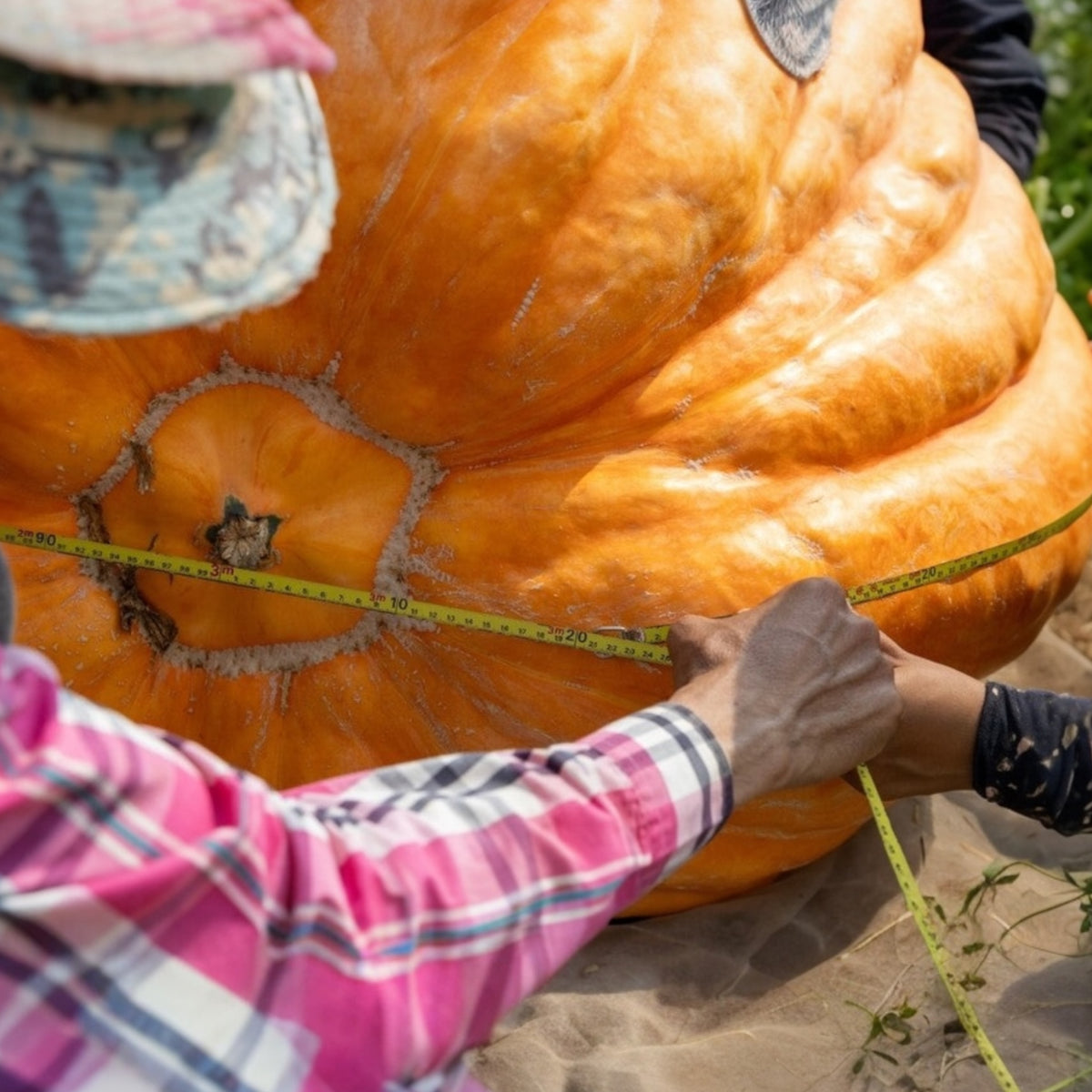
Created by Howard Dill of Nova Scotia, the 'Atlantic Giant' pumpkin is famous for its impressive dimensions. Grown for competition or simply out of curiosity, this variety produces gigantic fruits, often weighing over 50 kg. To obtain spectacular results, it is recommended to leave only one pumpkin per vine. Maturity for this variety is 120+ days after sowing. The packet contains 10 seeds to start your planting. Plan the placement of your squash before sowing. Bush types stay around their planting spot, while vines must have room to spread into a clear area.
- Quantity
- 10 seeds
- Exposure
- Sun
- Life cycle
- Annual in cultivation in Quebec
Discover the plant
Common namePumpkin
FamilyCucurbitaceae
GenusCucurbita
Speciesmaxima
CultivarAtlantic Giant
TypeProcessed
Botanical nameCucurbita maxima
'Atlantic Giant' Pumpkin (Cucurbita maxima). Created by Howard Dill of Nova Scotia, the 'Atlantic Giant' pumpkin is famous for its impressive dimensions. Grown for competition or simply out of curiosity, this variety produces gigantic fruits, often weighing more than 50 kg. To achieve spectacular results, it is recommended to leave only one pumpkin per vine. Maturity for this variety is 120+ days after sowing. For the 'Atlantic Giant' Pumpkin, the packet contains 10 seeds to start your planting. Plan the spacing for the squash before sowing.
For the 'Atlantic Giant' Pumpkin, germination generally takes 7 to 14 days in soil kept at 25 to 35 °C (77 to 95 °F). For the 'Atlantic Giant' Pumpkin, the sowing schedule for this variety is as follows: indoors, 3 to 4 weeks before the last frost. For the 'Atlantic Giant' Pumpkin, observe this sowing depth for this variety: 2.5 cm. For the 'Atlantic Giant' Pumpkin, squash and zucchini establish themselves better when their roots remain intact. For the 'Atlantic Giant' Pumpkin, sowing in individual pots facilitates transplantation; in the garden, wait for the soil to warm up.
Prepare rich, well-drained soil amended with plenty of compost or aged manure. Fertilize frequently to support the production of these giant fruits. To maximize the size of the pumpkins, remove all fruits except one per vine and monitor their development. Protect the chosen fruit from damage by placing it on a clean, dry surface. Add the 'Atlantic Giant' pumpkin to your garden for a unique and impressive growing experience. Whether for competitions or simply for fun, this variety offers an extraordinary harvest that will fascinate both young and old.

Sowing guide
It all startswith a seed.
Sowing depth
1 in
Spacing / density
Plant four to five seeds 2.5 cm deep in mounds spaced 2 m apart. Thin to 2 or 3 plants. Plant four to five seeds 2.5 cm deep in mounds spaced 2 m apart. Thin to 2 or 3 plants.
Germination temperature
25 to 35 °C (77 to 95 °F)
Germination time
7 to 14 days
Sowing period
Indoors, 3 to 4 weeks before the last frost
Propagation
Sowing
Growing method
Germination generally takes 7 to 14 days in soil kept at 25 to 35°C (77 to 95°F). The sowing schedule for this variety is as follows: indoors, 3 to 4 weeks before the last frost. For this variety, observe this sowing depth: 2.5 cm. To plant this variety, first choose a location that matches its exposure requirements: sun. When planting this variety, the spacing to use is: plant four to five seeds at a depth of 2.5 cm in mounds spaced 2 m apart. Thin to 2 or 3 plants. Install the support for this variety before the stems elongate and guide the first shoots toward the support points; the foliage can thus occupy the height without mingling with neighboring crops. Pumpkins require fertile soil; add a generous amount of organic matter when sowing. Adequate moisture is required for its cultivation; water slowly and deeply. What would autumn be without the presence of pumpkins in our gardens!
Soil and care
The right care,at the right time.
Watering
Prepare rich, well-drained soil amended with plenty of compost or aged manure. Ensure regular and abundant watering, especially during fruit growth. To plant this variety, first choose a location that matches its sun exposure requirements: pumpkins need fertile soil, so add a generous amount of organic matter when sowing. Adequate moisture is required for cultivation; water slowly and deeply.
Soil type
Prepare rich, well-drained soil amended with plenty of compost or aged manure. To plant this variety, first choose a location that matches its exposure: sun. For this variety, prepare fertile soil before planting, then adjust applications for flowering and fruit development; a very leafy plant does not automatically justify more fertilizer.
Fertilization
Prepare rich, well-drained soil amended with plenty of compost or aged manure. Fertilize frequently to support the production of these giant fruits. For this variety, prepare fertile soil before planting, then adjust applications during flowering and fruit enlargement; a very leafy plant does not automatically justify more fertilizer.
Seasonal care
Ensure regular and abundant watering, especially during fruit growth. To maximize pumpkin size, remove all but one fruit per vine and monitor their development. Protect the chosen fruit from damage by placing it on a clean, dry surface. Pumpkins require fertile soil; add a generous amount of organic matter when sowing. Adequate moisture is required for cultivation; water slowly and deeply. What would autumn be without pumpkins in our gardens! Germination generally takes 7 to 14 days in soil kept at 25 to 35 °C (77 to 95 °F). The sowing schedule for this variety is as follows: indoors, 3 to 4 weeks before the last frost. For this variety, observe this sowing depth: 2.5 cm. For this variety, prepare fertile soil before planting, then adjust applications during flowering and fruit enlargement; a very leafy plant does not automatically justify more fertilizer. Start monitoring this variety for harvest as it approaches 120+ days after sowing; then check for the desired color, firmness, and size for picking. This variety has the following characteristic at harvest: fruit weight — 50+ kg. This variety has the following characteristic at harvest: fruit shape — varied.
Container growing
A garden,within reach.
Place the container for this variety in this exposure: sun, while checking the light received throughout the day. Germination generally takes 7 to 14 days in soil kept at 25 to 35 °C (77 to 95 °F). The sowing schedule for this variety is as follows: indoors, 3 to 4 weeks before the last frost. For this variety, respect this sowing depth: 2.5 cm. To plant this variety, first choose a location corresponding to its exposure: sun. Pumpkins require fertile soil; add a generous amount of organic matter when sowing. Adequate moisture is required for its cultivation; water slowly and deeply. What would autumn be without the presence of pumpkins in our gardens! The packet contains 10 seeds to start your planting. Prepare rich, well-drained soil amended with plenty of compost or aged manure. Ensure regular and abundant watering, especially during fruit growth. To maximize the size of the pumpkins, remove all fruits except one per vine and monitor their development. Protect the chosen fruit from damage by placing it on a clean, dry surface.
Bloom and dimensions
Its place,in your garden.
Fruiting
Cultivated for competition or simply out of curiosity, this variety produces gigantic fruits, often weighing more than 50 kg. Ensure regular and abundant watering, especially during fruit growth. Fertilize frequently to support the production of these giant fruits. To maximize pumpkin size, remove all but one fruit per vine and monitor its development.
Days to maturity
120+ days after sowing
Harvest
Harvest the fruits at the stage appropriate to the variety by cutting their stem with a clean tool. For zucchinis and cucumbers, frequent harvesting allows you to enjoy tender fruits.
Garden associations
In goodcompany.
Companion plants
When planting this variety, the spacing to use is four to five seeds at a depth of 2.5 cm in mounds spaced 2 m apart. Thin to 2 or 3 plants. Install the support for this variety before the stems elongate and guide the first shoots toward the support points; the foliage can then occupy the height without mingling with neighboring crops.
Recipe idea
From the gardento your plate.
Edible parts
Fruits
Recipe idea for your 'Atlantic Giant' pumpkin harvest. Turn the squash flesh into soup. Cut the fruit using a suitable knife on a stable board, remove the seeds, and scoop out the flesh. Sauté an onion in a pot with a little oil, then add the squash pieces. Pour in enough broth to just cover the vegetables and let simmer until the flesh is tender. Blend while gradually adding the liquid to adjust the thickness. A small diced apple can accompany mild-fleshed squash. When serving, add a spoonful of plain yogurt, pepper, and some fresh herbs to taste. The size of the pieces affects cooking time more than their exact shape. Check several pieces before removing the pot from the heat, especially if the harvest includes fruits of different sizes. Moist flesh sometimes requires a bit more evaporation; denser flesh may require more liquid.
Frequently asked questions
Your questions,answered.
When should I start 'Atlantic Giant' pumpkin seeds?
Germination generally takes 7 to 14 days in soil kept at 25 to 35 °C (77 to 95 °F). The sowing schedule for this variety is as follows: indoors, 3 to 4 weeks before the last frost. For this variety, observe this sowing depth: 2.5 cm. Squash and zucchini thrive best when their roots remain intact. Sowing in individual pots facilitates transplanting; in the garden, wait for the soil to warm up. Avoid burying seedlings in cold, saturated soil. Label each location and allow enough surface area for the vines from the start.
What support should be provided for 'Atlantic Giant' pumpkin?
When planting this variety, sow four to five seeds at a depth of 2.5 cm in mounds spaced 2 m apart. Thin to 2 or 3 plants. Install the support for this variety before the stems lengthen and guide the first shoots toward the support points; the foliage can then occupy the height without mingling with neighboring crops. Pumpkins require fertile soil; add a generous amount of organic matter during sowing.
When should 'Atlantic Giant' pumpkins be harvested?
Begin observing the harvest of this variety as it approaches 120+ days after sowing; then check for the desired color, firmness, and size for picking. This variety has the following harvest characteristic: fruit weight — 50+ kg. This variety has the following harvest characteristic: fruit shape — varied. Harvest when the pumpkin is dark orange and store in a cool, dry place. The maturity of this variety is 120+ days after sowing. Pumpkins require fertile soil; add a generous amount of organic matter when sowing. For 'Atlantic Giant' pumpkin, the instructions on the sold packet take priority whenever they specify a date, depth, or quantity.
Which location is suitable for 'Atlantic Giant' pumpkin?
To install this variety, first choose a location corresponding to its exposure: sun. When planting this variety, the spacing to use is to plant four to five seeds at a depth of 2.5 cm in mounds spaced 2 m apart. Thin to 2 or 3 plants. Install the support for this variety before the stems lengthen and guide the first shoots toward the support points; the foliage can then occupy the height without mingling with neighboring crops. Place the container for this variety in this exposure: sun, while checking the light received throughout the day.
How should I water 'Atlantic Giant' pumpkins during their growth?
: Pumpkins require fertile soil; add a generous amount of organic matter when sowing. Adequate moisture is required for their cultivation; water slowly and deeply. What would autumn be without the presence of pumpkins in our gardens! To plant this variety, first choose a location that matches its exposure: sun. Observe the difference between male and female flowers, the latter bearing a young fruit at their base. Therefore, the presence of flowers does not mean that every flower will produce a squash. Allow insects access to the blooms when the variety depends on pollination.
For a great start to your seeds
The right extras.Right here.
Seed Starting Soil
Shop the collectionSeed starting supplies
Shop the collection