Sale
Sold out

Processed
Brassicaceae
Radish Easter Egg II
Raphanus sativus
Product code : NOR-GR01
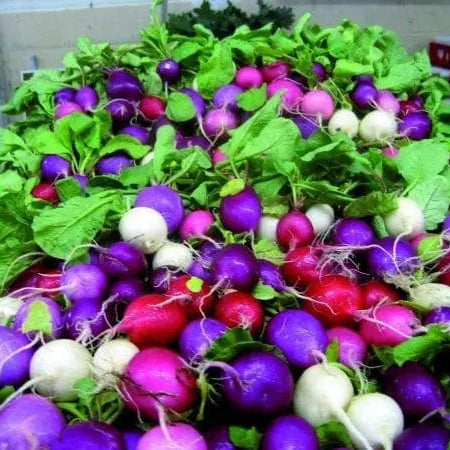
Easter Egg II radishes are a beautiful, colorful variety that will bring a touch of whimsy and flavor to your salads and crudité platters. Their round roots come in a vibrant palette of white, pink, purple, and red, and are prized for their slightly spicy and refreshing taste. Their uniform shape and maturity make them an excellent choice for both amateur and professional gardeners, especially for a quick spring or summer harvest. This variety matures 28 days after sowing. The packet contains 300 seeds to start your planting. A row of root vegetables should remain easy to thin, weed, and water uniformly.
- Quantity
- 300 seeds
- Exposure
- Sun
- Life cycle
- Annual cropping for vegetable harvest
Discover the plant
Common nameRadish Easter Egg II
FamilyBrassicaceae
GenusRadish
Speciessativus
CultivarEaster Egg II
TypeProcessed
Botanical nameRaphanus sativus
Easter Egg II Radish (Raphanus sativus). Easter Egg II radishes are a beautiful, colorful variety that will add a touch of whimsy and flavor to your salads and vegetable platters. Their round roots come in a vibrant palette of white, pink, purple, and red, and are prized for their slightly spicy and refreshing taste. Their uniform shape and maturity make them an excellent choice for both amateur and professional gardeners, especially for a quick spring or summer harvest. For Easter Egg II Radish, the maturity of this variety is 28 days after sowing.
For Easter Egg II Radish, the sowing schedule for this variety is as follows: in the spring, as soon as the soil can be worked. For Easter Egg II Radish, direct sowing allows root vegetables to develop without deformation caused by transplanting. For Easter Egg II Radish, prepare a fine, even bed, then water gently to keep the seeds in place. For Easter Egg II Radish, a dry soil crust can hinder germination: keep the surface moist without compacting it. For Easter Egg II Radish, thin the seedlings early enough so that the roots have their final space.
Easter Egg II radishes grow quickly, and regular harvesting will promote continuous growth. With their vibrant colors and fresh, crunchy taste, Easter Egg II radishes are perfect for adding a touch of charm to your vegetable gardens, while delighting your taste buds. A fun and delicious variety, to be tried without hesitation! For Easter Egg II Radish, begin observing the harvest of this variety as it approaches 28 days after sowing; then check for the desired color, firmness, and size for picking. For Easter Egg II Radish, this variety has this characteristic at harvest: fruit shape — round.

Sowing guide
It all startswith a seed.
Spacing / density
20 inches between plants
Sowing period
In spring, as soon as the soil can be worked
Propagation
Sowing
Growing method
Cover the seeds lightly with soil and water gently to keep the soil moist until germination. For a staggered harvest, sow at intervals of 10 to 15 days. The sowing calendar for this variety is as follows: in the spring, as soon as the soil can be worked. To plant this variety, first choose a location that matches its exposure: sun. The ideal growth temperature is 10 °C to 18 °C in fertile soil. When planting this variety, the spacing to maintain is 50 cm between plants. Sow them in rows spaced 45 cm to 50 cm apart and thin them to 2.5 – 5 cm. It is important to maintain moisture, as they will grow quickly and taste better. They can also be sown with slower-growing vegetables to mark the rows. Choose a sunny spot with well-drained, fertile, and slightly loose soil. Easter Egg II Radish (Raphanus sativus), offered by the seed company WH Perron. Easter Egg II radishes are a beautiful, colorful variety that will add a touch of whimsy and flavor to your salads and crudité platters.
Soil and care
The right care,at the right time.
Watering
Easter Egg II Radish (Raphanus sativus), offered by the seed company W.H. Perron. Easter Egg II radishes are a beautiful, colorful variety that will add a touch of whimsy and flavor to your salads and crudité platters. Lightly cover the seeds with soil and water gently to keep the ground moist until germination. Be sure to water moderately to prevent the roots from becoming tough or hollow.
Soil type
Choose a sunny location with well-drained, fertile, and slightly loose soil. Lightly cover the seeds with soil and water gently to keep the soil moist until germination. To establish this variety, first choose a location corresponding to its exposure: sun. The ideal growth temperature is 10°C to 18°C in fertile soil. For Radish Easter Egg II, keep the identified packet in order to track the cultivar-specific data throughout the season.
Fertilization
To plant this variety, first choose a location that matches its sun exposure requirements. The ideal growth temperature is 10 °C to 18 °C in fertile soil. It is important to maintain moisture, as they will grow quickly and taste better. They can also be sown with slower-growing vegetables to mark the rows.
Seasonal care
Their shape and uniform maturity make them an excellent choice for both amateur and professional gardeners, especially for a quick spring or summer harvest. Lightly cover the seeds with soil and water gently to keep the ground moist until germination. Be sure to water moderately to prevent the roots from becoming tough or hollow. It is important to maintain moisture, as they will grow quickly and taste better. They can also be sown with slower-growing vegetables to mark the rows. The sowing schedule for this variety is as follows: in the spring, as soon as the soil can be worked. Start checking the harvest for this variety around 28 days after sowing; check for the desired color, firmness, and size for picking. This variety has the following harvest characteristic: fruit shape — round. Harvest the radishes when they have reached the desired size. However, do not let them get too big, as this will affect their taste and make them tougher and woodier. When planting this variety, the spacing to use is 50 cm between plants. Sow them in rows 45 cm to 50 cm apart and thin to 2.5 – 5 cm. For a staggered harvest, sow at 10 to 15-day intervals.
Container growing
A garden,within reach.
Recommended pot size
One plant per drained container, with room for its mature size.
Place the container of this variety in this exposure: sun, while checking the light received throughout the day. The sowing calendar for this variety is prepared as follows: in the spring, as soon as the soil can be worked. To install this variety, first choose a location corresponding to its exposure: sun. The ideal growth temperature is 10°C to 18°C in fertile soil. It is important to maintain moisture, as they will grow quickly and taste better. They can also be sown with slower-growing vegetables to mark the rows. The packet contains 300 seeds to start your planting. Lightly cover the seeds with soil and water gently to keep the soil moist until germination. For staggered production, sow at 10 to 15-day intervals. Choose a sunny spot with well-drained, fertile, and slightly loose soil. Easter Egg II Radish (Raphanus sativus), offered by the seed company WH Perron. Easter Egg II radishes are a beautiful, colorful variety that will add a touch of whimsy and flavor to your salads and crudité platters. For Easter Egg II Radish, keep the identified packet in order to follow the cultivar-specific data throughout the season.

Bloom and dimensions
Its place,in your garden.
Fruiting
Easter Egg II Radish (Raphanus sativus), offered by seed producer WH Perron. Easter Egg II radishes are a beautiful, colorful variety that will add a touch of whimsy and flavor to your salads and crudité platters. Their round roots come in a vibrant palette of white, pink, purple, and red, and are appreciated for their slightly pungent and refreshing taste.
Days to maturity
28 days after sowing
Harvest
Harvest a few roots to check their size before harvesting the entire row. Lift them gently when the soil is loose enough. Remove the soil without damaging them and separate any damaged roots from those you wish to keep.
Garden associations
In goodcompany.
Companion plants
When planting this variety, space the plants 50 cm apart. Sow them in rows 45 to 50 cm apart and thin to 2.5–5 cm. To grow this variety, first choose a location that matches its exposure requirements: sun. The ideal growing temperature is 10 °C to 18 °C in fertile soil. With their vibrant colors and fresh, crisp taste, Easter Egg II radishes are perfect for adding a touch of charm to your vegetable gardens, while delighting your taste buds.
Recipe idea
From the gardento your plate.
Edible parts
Roots
Recipe idea for your Easter Egg II radish harvest. Roast the root vegetables in uniform pieces. Scrub the roots under water, trim the ends, and peel them only if necessary. Cut the larger ones into quarters to make their cooking time closer to that of the smaller pieces. Toss with a drizzle of oil, some thyme, and a pinch of salt. Spread out on a baking sheet without overlapping, then bake at 200°C (392°F), turning halfway through. Check for tenderness with the tip of a knife. Finish with a splash of lemon juice or cider vinegar and serve with a cooked grain. Keep the colors separate on the baking sheet if you wish to preserve their contrast when serving. Small roots can be left whole if they are of a similar size. Thicker skin should be removed before cooking, while clean, young skin can be left on.
Frequently asked questions
Your questions,answered.
When to start Easter Egg II Radish seedlings?
The sowing calendar for this variety is as follows: in the spring, as soon as the soil can be worked. Direct sowing allows root vegetables to develop without deformation caused by transplanting. Prepare a fine, even seedbed, then water gently to keep the seeds in place. A dry soil crust can hinder germination: keep the surface moist without compacting it. Thin the seedlings early enough so that the roots have their final spacing. Keep the rows identified until harvest. Work the soil superficially between the rows to remove young weeds without damaging the cultivated roots.
When to harvest Easter Egg II Radishes?
Start observing the harvest of this variety as it nears 28 days after sowing; check for the color, firmness, and size desired for picking. This variety features the following characteristic at harvest: fruit shape — round. Harvest the radishes once they have reached the desired size. However, do not let them get too big, as this will affect their taste and make them tougher and fibrous. The maturity of this variety is 28 days after sowing. It is important to maintain moisture, as they will grow quickly and taste better. They can also be sown with slower-growing vegetables to mark the rows.
Which location is suitable for Radish Easter Egg II?
To plant this variety, first choose a location that matches its sun exposure requirements. The ideal growing temperature is 10°C to 18°C in fertile soil. When planting this variety, use a spacing of 50 cm between plants. Sow them in rows spaced 45 cm to 50 cm apart and thin to 2.5 – 5 cm. Place the container for this variety in a sunny spot, monitoring the light received throughout the day. A row of root vegetables should remain easy to thin, weed, and water uniformly. For Easter Egg II Radish, the instructions on the purchased packet take precedence when they specify a date, depth, or quantity.
How to water Radish Easter Egg II during its growth?
It is important to maintain humidity, as they will grow quickly and taste better. They can also be sown alongside slower-growing vegetables to mark the rows. To establish this variety, first choose a location that matches its sun exposure requirements. The ideal growth temperature is 10°C to 18°C in fertile soil. Lightly till between the rows to remove young weeds without damaging the crop roots. Check a few plants before pulling the entire harvest; size is easier to judge from a sample than from the foliage alone. A root left too long may lose its tenderness.
What care should be given to Radish Easter Egg II throughout the season?
It is important to maintain humidity, as they will grow quickly and taste better. They can also be sown alongside slower-growing vegetables to mark the rows. The sowing schedule for this variety is as follows: in the spring, as soon as the soil can be worked. Begin checking the harvest of this variety as it nears 28 days after sowing; then verify the color, firmness, and size desired for picking. This variety features the following at harvest: fruit shape — round. Harvest radishes when they have reached the desired size. For Easter Egg II radishes, the instructions on the sold packet remain priority when they specify a date, depth, or quantity.
For a great start to your seeds
The right extras.Right here.
Seed Starting Soil
Shop the collectionSeed starting supplies
Shop the collection