Sale
Sold out

Pelleted seeds
Asteraceae
Ornamental flowers seeds
Prairie Sun black-eyed Susan (Rudbeckia hirta)
Product code : 61-7172-010
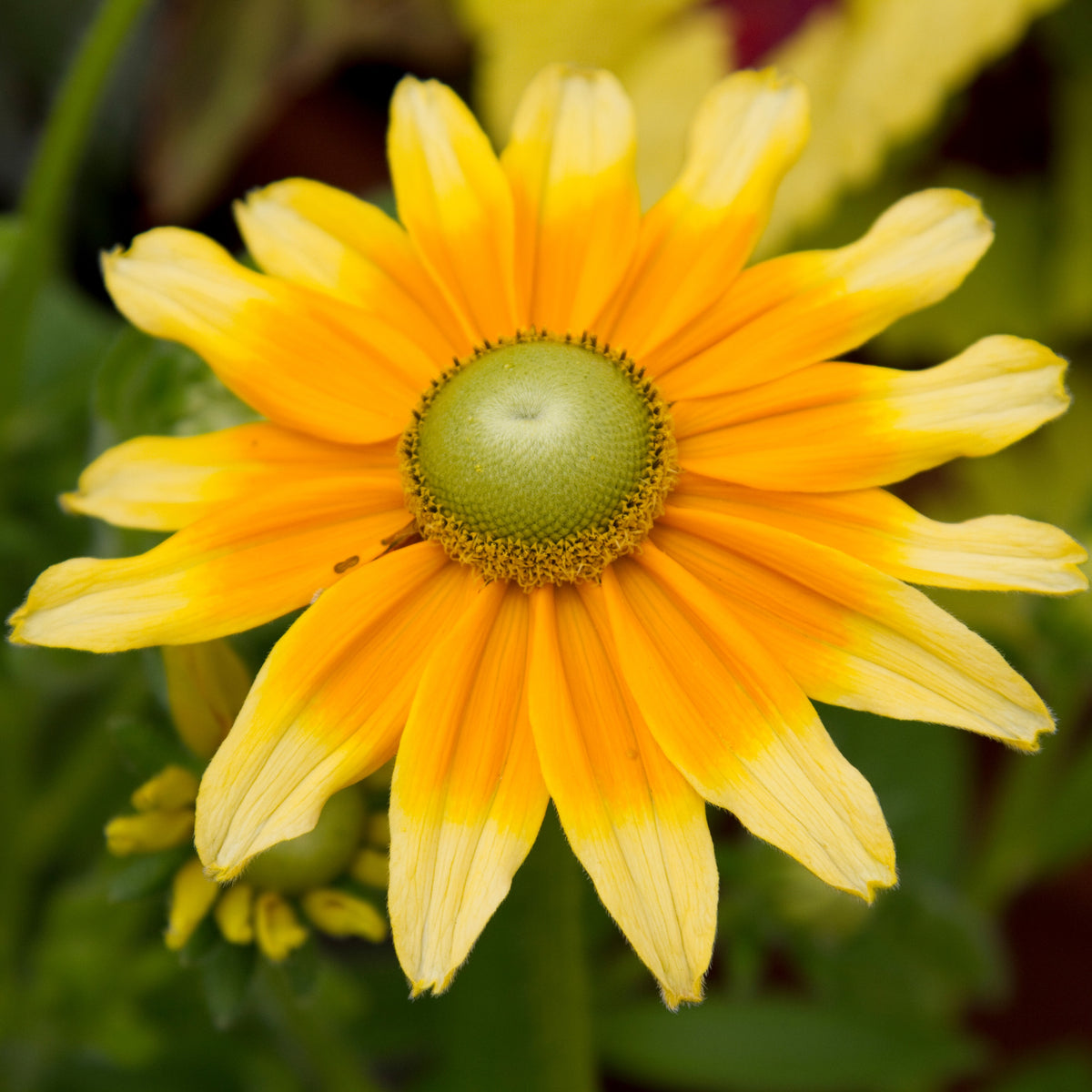
Prairie Sun black-eyed Susan, a 2003 All-America Selections winner, produces large golden-yellow flowers with paler tips around a green centre. Upright plants reach approximately 75 cm tall and 30 to 45 cm wide, suiting bouquets, borders, and pollinator beds. The packet contains approximately 50 pelleted seeds. Sow indoors six weeks before outdoor planting, using two or three seeds per cell at 22–24°C. Fully moisten each pellet; germination takes 8 to 14 days and maturity 14 to 16 weeks. Transplant after frost in full sun and dry to moderately moist, well-drained soil. Water during establishment, then increase the interval. Moderate fertility and regular deadheading extend flowering from July through October, while several healthy seed heads may remain for birds.
- Quantity
- Approximately 50 pelleted seeds
- Exposure
- Full sun
- Life cycle
- Annual
Discover the plant
Common namePrairie Sun black-eyed Susan
FamilyAsteraceae
GenusRudbeckia
Specieshirta
CultivarPrairie Sun
TypePelleted seeds
Botanical nameRudbeckia hirta
Prairie Sun black-eyed Susan (Rudbeckia hirta) is a 2003 All-America Selections winner recognized for large, luminous flowers. Golden-yellow petals fade toward paler tips and surround a distinctive green centre. Upright plants reach approximately 75 cm tall and 30 to 45 cm wide. Their habit suits borders, garden beds, cut-flower gardens, and pollinator plantings. Flowering extends from July through October, and open flower heads welcome bees, butterflies, and other visiting insects. The bright colour remains highly visible in sunny summer displays and creates a fresh focal point among darker companion plants.
The W.H. Perron packet, product code 61-7172-010, contains approximately 50 pelleted seeds. Sow indoors about six weeks before outdoor planting, using two or three seeds per cell. Fully moisten each pellet, press it onto porous, well-drained seed-starting mix, and cover very lightly. Maintain 22 to 24°C and even moisture without saturating the medium. Germination takes 8 to 14 days and maturity 14 to 16 weeks. After emergence, retain the strongest seedling, provide abundant light, and maintain steady air movement around young foliage. Turn trays regularly so seedlings receive balanced light.
Harden plants gradually, then transplant 7 to 10 days after the last ground frost in full sun. Allow 30 to 45 cm between plants in dry to moderately moist, well-drained soil. Water every two or three days until establishment, then increase the interval; established plants tolerate dry periods. Avoid overly rich soil and excessive nitrogen, which promote foliage. Remove faded flowers to extend bloom, while leaving several healthy heads in fall for birds. Inspect foliage regularly and water at soil level to reduce foliar disease pressure outdoors effectively through summer.

Sowing guide
It all startswith a seed.
Sowing depth
Fully moisten the pellet, press onto the mix, and cover very lightly
Spacing / density
30 to 45 cm between plants
Germination temperature
22 to 24°C
Germination time
8 to 14 days
Sowing period
Indoors approximately 6 weeks before outdoor planting; transplant 7 to 10 days after the last ground frost
Propagation
Seed
Growing method
Sow Prairie Sun black-eyed Susan indoors approximately six weeks before outdoor planting. Fill cells with porous, well-drained seed-starting mix. Place two or three pelleted seeds in each cell, fully moisten every pellet, press it gently against the surface, and cover very lightly. Maintain 22 to 24°C and even moisture without saturating the medium. Germination takes 8 to 14 days. After emergence, retain the strongest seedling in each cell, provide abundant light, and maintain good air movement. Harden young plants gradually for about one week. Transplant 7 to 10 days after the last ground frost in full sun without burying the crown. Allow 30 to 45 cm between plants. Choose dry to moderately moist, loosened, well-drained soil. Water every two or three days until establishment, then increase the interval. Feed moderately because overly rich soil encourages foliage at the expense of flowers. Remove faded heads to extend bloom and monitor slugs, aphids, powdery mildew, and grey mould. Water at soil level, promptly remove diseased tissue, and clean cutting tools between plants and inspect young foliage weekly. Check containers more frequently during hot weather because their mix dries faster than garden soil.
Soil and care
The right care,at the right time.
Soil pH
Tolerates a broad pH range in dry, well-drained soil
Minimum temperature
Frost tender during annual production
Care level
Easy
Watering
Keep the seed-starting mix evenly moist during germination without saturating it. After transplanting, W.H. Perron recommends regular watering every two or three days until roots are established. Then allow the surface to begin drying before watering deeply at soil level. Plants tolerate drought once rooted, but extended dryness may reduce flowering and encourage powdery mildew. Reduce irrigation after substantial rain and avoid repeatedly wetting the foliage.
Soil type
Prairie Sun black-eyed Susan prefers dry to moderately moist, loosened, very well-drained soil. Moderate fertility supports more flowers than heavily enriched ground, which may produce excessive foliage. Incorporate only a measured amount of mature compost where soil is poor. Avoid low spots where water collects and preserve approximately 30 to 45 cm between plants so air can move around foliage. Full sun supports sturdy growth and abundant colour.
Fertilization
Add a small amount of mature compost before planting where soil is poor. After establishment, use a balanced fertilizer at a moderate label rate only when needed. W.H. Perron notes that overly rich soil produces more leaves than flowers, so avoid abundant nitrogen. In containers, feed more lightly and occasionally water thoroughly with clear water to limit salt accumulation. Stop feeding when growth slows near the end of the season.
Moisture
Even during establishment, then moderate; drought tolerant
Seasonal care
In spring, sow the pelleted seed approximately six weeks before outdoor planting. Keep the medium moist without saturation at 22–24°C until germination, then provide abundant light. Thin to one vigorous seedling per cell and increase air movement. Harden plants, then move them into full sun 7 to 10 days after the last ground frost. During establishment, water every two or three days while adjusting frequency to rainfall. In summer, allow the surface to dry slightly between applications. Avoid excessive nitrogen, which produces abundant leaves and fewer flowers. Regularly cut faded heads just above a healthy branch to stimulate new buds. Harvest flowers for bouquets when colour is strong and petals remain firm. Inspect leaf undersides and young shoots for aphids, slugs, or snails. During humid weather, increase watering intervals, keep foliage dry, and remove tissue affected by powdery mildew or leaf spots. In fall, leave several healthy heads to mature for birds and winter interest. Remove diseased plants and contaminated debris, however. Plants may self-sow, but their descendants will not necessarily reproduce the full Prairie Sun palette. Mark the location before cleanup so volunteer seedlings can be recognized the following spring and thinned to suitable spacing. Clean cutting tools before storing them, note any disease observed, and avoid carrying infected debris into the next growing season in the garden.
Container growing
A garden,within reach.
Recommended pot size
Container at least 30 cm wide with drainage
Prairie Sun black-eyed Susan suits a container at least 30 to 35 cm wide with drainage holes. Use potting mix containing organic matter while remaining light and well drained. Sow in cells first, then transplant one hardened seedling into the centre after all frost risk. Place the container in full sun. Water deeply until excess drains, empty the saucer, and wait until the surface begins to dry before watering again. Containers dry faster than garden beds, so inspect moisture more often during hot or windy periods. Use a balanced fertilizer at a moderate label rate. Excess nitrogen produces abundant foliage and reduces bloom. Remove faded heads regularly to maintain buds into fall. Rotate the pot weekly for balanced growth and stake long stems where a balcony is windy. Monitor powdery mildew, aphids, and slugs. Space the container away from other plants to preserve air movement around foliage. At season's end, retain several healthy seed heads for birds or remove them before they self-sow. Discard the mix if serious disease developed and clean the pot before reusing it. Keep drainage holes open throughout summer and avoid unnecessarily splashing soil onto leaves during watering.

Bloom and dimensions
Its place,in your garden.
Mature height
75 cm (29.5 in)
Width / spread
30 to 45 cm (11.8 to 17.7 in.)
Flower color
Golden yellow with pale tips and a green centre
Foliage color
Green
Foliage type
Green foliage
Growth rate
Moderate
Growth habit
Upright and branched
Fragrance
No particular fragrance confirmed
Bloom period
Prairie Sun black-eyed Susan generally flowers from July through October. Large flowers combine golden-yellow petals with paler tips and a distinctive green centre. Maturity takes approximately 14 to 16 weeks. Remove faded heads regularly just above a healthy branch to stimulate new buds. For bouquets, cut stems when flowers show strong colour and remain firm, then place them promptly in clean water.
Days to maturity
14 to 16 weeks
Garden associations
In goodcompany.
Companion plants
Combine Prairie Sun black-eyed Susan with ornamental grasses, blue or purple asters, salvias, and purple foliage plants that share its sun and drainage needs. Their darker colours emphasize the golden-yellow flowers with green centres. Allow 30 to 45 cm between plants to preserve air circulation and cutting access. Avoid very vigorous neighbours that could shade young plants or compete heavily with their roots. Companion plants should also tolerate moderate fertility so excessive nitrogen is unnecessary in shared garden beds outdoors.
Frequently asked questions
Your questions,answered.
What is in a Prairie Sun rudbeckia packet?
The W.H. Perron packet, product code 61-7172-010, contains approximately 50 pelleted Prairie Sun rudbeckia seeds. The coating makes small seeds easier to handle, but it must be fully moistened at sowing so water can reach the seed. The product is not presented as organic or as an F1 hybrid. Store the packet closed, labelled, cool, and dry. Sow two or three seeds per cell, press them onto the mix, and cover very lightly. Keep the product label with seedlings until flowering so the cultivar name, product code, and sowing date remain available throughout production. Keep unused pellets dry and return them to a closed packet promptly.
How should pelleted Prairie Sun seed be sown?
Sow indoors approximately six weeks before outdoor planting. Place two or three pelleted seeds per cell on porous, well-drained seed-starting mix. Press gently for contact, then cover very lightly because light supports germination. Maintain 22 to 24°C and even moisture, but never leave the medium saturated. Emergence is expected in 8 to 14 days. After seedlings emerge, retain the strongest plant in each cell, provide abundant light, and increase air movement. Harden plants gradually, then transplant them 7 to 10 days after the last ground frost without burying the crown. Water thoroughly after planting to settle soil around the roots, then maintain even moisture during establishment.
What appearance and dimensions should be expected?
Prairie Sun black-eyed Susan carries large golden-yellow flowers whose petals become paler toward their tips around a green centre. W.H. Perron lists an approximate height of 75 cm and a spread of 30 to 45 cm. Maturity takes 14 to 16 weeks, and flowering runs from July through October. This 2003 All-America Selections winner suits flower beds, pollinator plantings, and bouquets. For firm stems, grow it in full sun, avoid excessive nitrogen, and water at soil level. Cut well-coloured flowers while petals and centres remain firm, then place the stems promptly in clean water for fresh seasonal bouquets indoors.
Can Prairie Sun be grown in a container?
Prairie Sun black-eyed Susan can be grown in a stable container at least 35 cm wide with open drainage holes. Use one plant per pot to accommodate its 30-to-45-cm spread and approximate 75 cm height. Fill the container with an airy mix, place it in full sun, and water when the surface begins to dry without leaving water in the saucer. Feed lightly because excessive nitrogen produces more foliage than flowers. Remove faded heads to extend bloom, rotate the pot for balanced light, and monitor powdery mildew and slugs. A discreet stake can support stems in a very exposed location. Check moisture more frequently during hot weather because containers dry faster than garden soil.
Is Prairie Sun edible or safe for animals?
W.H. Perron sells Prairie Sun black-eyed Susan as an ornamental and cut flower; no food use is listed. Poison Control states that Rudbeckia hirta is not known to poison humans, but it should not be eaten. Hairy leaves and stems may cause an allergic skin reaction or aggravate asthma in sensitive people, and substantial consumption may harm grazing animals. Prevent ingestion, wear gloves if the foliage irritates skin, and do not allow animals to graze the plant. Following substantial ingestion, a persistent skin reaction, or breathing difficulty, contact a poison centre, physician, veterinarian, or emergency service and provide the botanical name and product information.
Wildlife and pets
Life,around your plants.
Supporting wildlife
Open Rudbeckia hirta flower heads provide nectar and pollen for bees, butterflies, and other visiting insects. At the end of the season, mature seed may feed birds. Activity varies with weather and local habitat. Retain only healthy heads and avoid applying treatments to open flowers whenever practical.
For a great start to your seeds
The right extras.Right here.
Seed Starting Soil
Shop the collectionSeed starting supplies
Shop the collection