


Sale
Sold out

Untreated
Solanaceae
Sweet Pepper Mad Hatter F1
Capsicum baccatum
Product code : NOR-GR07
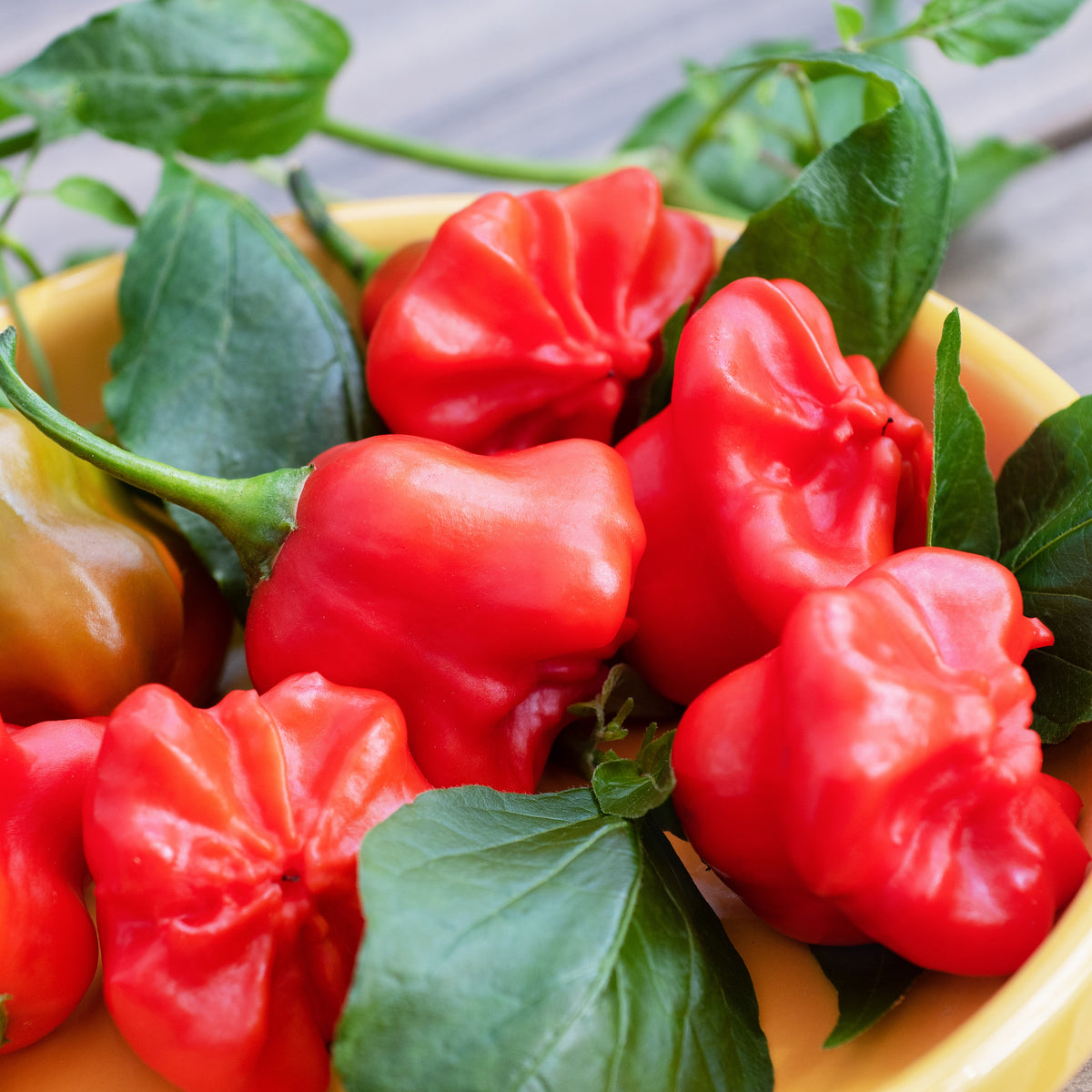
The Mad Hatter F1 pepper is an intriguing and unique variety, appealing as much for its unusual shape as for its exceptional flavor. This small, round, flattened pepper, adorned with elongated lobes, is both crisp and sweet. Its delicate flavor is perfect for salads, stir-fries, or even as a snack. The fruits can be eaten at the green stage or when fully ripe and bright red. This vigorous, indeterminate plant produces an abundant harvest and will require a stake or trellis for better support. Maturity for this variety is 85 days after transplanting.
- Quantity
- 20 seeds
- Exposure
- Sun
- Life cycle
- Annual in cultivation in Quebec
Discover the plant
Common nameRed pepper
FamilySolanaceae
GenusBell pepper
Speciesbaccatum
CultivarMad Hatter
TypeUntreated
Botanical nameCapsicum baccatum
'Mad Hatter' F1 Red Pepper (Capsicum baccatum). The Mad Hatter F1 pepper is an intriguing and unique variety, as attractive for its unusual shape as it is for its exceptional flavor. This small, round, flattened pepper, adorned with elongated lobes, is both crisp and sweet. Its delicate flavor is perfect for salads, stir-fries, or even as a snack. The fruits can be eaten at the green stage or when fully ripe and bright red. This vigorous, indeterminate plant produces an abundant harvest and will require a stake or trellis for better support.
For 'Mad Hatter' F1 Red Pepper, after sowing this variety, generally allow 7 to 14 days for germination. For 'Mad Hatter' F1 Red Pepper, the sowing schedule for this variety is as follows: indoors, 8 to 10 weeks before the last frost. For 'Mad Hatter' F1 Red Pepper, young peppers and chili peppers appreciate stable heat and abundant light after germination. For 'Mad Hatter' F1 Red Pepper, repot before the roots become crowded at the bottom of the cells, handling the root ball without pulling on the stem.
Space the plants 40 to 50 cm apart and use stakes or a trellis to support the branches loaded with fruit. Fertilize every two weeks to optimize yields. The Mad Hatter F1 pepper is a perfect choice for gardeners looking for an original and versatile variety. With its crisp, sweet, and aesthetically unique fruits, it is ideal for adding a creative touch to your recipes or your garden. In addition to being easy to grow, it offers a generous harvest throughout the season, whether in the ground or in a pot.

Sowing guide
It all startswith a seed.
Spacing / density
30 cm between plants
Germination time
7 to 14 days
Sowing period
Indoors, 8 to 10 weeks before the last frost
Propagation
Sowing
Growing method
Maintain a constant temperature between 22 and 25°C for rapid germination, which generally occurs between 7 and 14 days. Prick out the seedlings into individual pots once they have 2 to 3 true leaves. Transplant the plants outdoors after the last frost, in a location in full sun. After sowing this variety, expect 7 to 14 days for emergence. The sowing calendar for this variety is as follows: indoors, 8 to 10 weeks before the last frost. To plant this variety, first choose a location matching its sun exposure requirements. This variety benefits from soil that retains moisture during its growth; regular checks below the surface help to intervene before wilting while avoiding saturation of the root ball. When planting this variety, use a spacing of 30 cm between plants. Space plants 30 cm apart in rows 60 cm apart. The indeterminate growth of this variety requires regular guidance of new stems onto their support; secure the ties without tightening them against the stem. Water regularly during the flowering period.
Soil and care
The right care,at the right time.
Watering
Use a light, well-draining potting soil and plant the seeds at a depth of 0.5 cm. This pepper prefers rich, well-draining soil, with regular watering to promote healthy growth and abundant production. This variety benefits from soil that stays cool while growing; checking regularly below the surface helps to intervene before wilting occurs, while avoiding saturating the root ball.
Soil type
Use a light, well-drained potting mix and plant the seeds at a depth of 0.5 cm. This pepper prefers rich, well-drained soil, with regular watering to promote healthy growth and abundant production. To establish this variety, first choose a location that matches its sun exposure requirements. This variety benefits from soil that stays moist during its growth; checking regularly beneath the surface helps you intervene before wilting occurs, while avoiding saturating the root ball.
Fertilization
Fertilize every two weeks to optimize yields. For this variety, prepare fertile soil before planting, then adjust applications during flowering and fruit swelling; a very leafy plant does not automatically justify more fertilizer. To plant this variety, first choose a location corresponding to its exposure: sun. The indeterminate growth of this variety requires regular guidance of new stems onto their support; fasten the ties without tightening them against the stem.
Moisture
Cool to moist soil, with good drainage
Seasonal care
This vigorous, indeterminate plant produces an abundant harvest and will require a stake or trellis for better support. Space plants 40 to 50 cm apart and use stakes or a trellis to support branches laden with fruit. This pepper prefers rich, well-drained soil, with regular watering to promote healthy growth and abundant production. The indeterminate growth of this variety requires regular guiding of new stems onto their support; fasten ties without tightening them against the stem. Water regularly during the flowering period. Fertilize once a month with a potassium-rich fertilizer. After sowing this variety, generally allow 7 to 14 days for germination. The sowing calendar for this variety is as follows: indoors, 8 to 10 weeks before the last frost. This variety benefits from soil that remains cool during its growth; regular checks beneath the surface help to intervene before wilting occurs, while avoiding saturating the root ball. For this variety, prepare fertile soil before planting, then adjust applications for flowering and fruit development; a very leafy plant does not automatically justify more fertilizer. Begin monitoring the harvest of this variety as it approaches 85 days after transplanting; check for the desired color, firmness, and size for picking.
Container growing
A garden,within reach.
Recommended pot size
19 L (5 US gal) minimum per plant
In addition to being easy to grow, it offers a generous harvest throughout the season, whether in the ground or in a pot. Place the container for this variety in the following exposure: sun, while checking the light received throughout the day. For this variety, provide a tall cage or a securely anchored stake at the time of repotting, as the plant continues to grow longer during production. After sowing this variety, generally allow 7 to 14 days for germination. The sowing calendar for this variety is prepared as follows: indoors, 8 to 10 weeks before the last frost. To plant this variety, first choose a location that matches its exposure: sun. This variety benefits from soil that stays cool during its growth; regular checks below the surface help you intervene before wilting occurs, while avoiding saturating the root ball. The indeterminate growth of this variety requires regular guidance of the new stems onto their support; fasten the ties without tightening them against the stem. Water regularly during the flowering period. Fertilize once a month with a fertilizer rich in potassium.

Bloom and dimensions
Its place,in your garden.
Fruiting
Mad Hatter F1 Pepper (Capsicum baccatum), offered by seed company WH Perron. The Mad Hatter F1 pepper is an intriguing and unique variety that attracts attention as much for its unusual shape as for its exceptional flavor. Its delicate flavor is perfect for salads, stir-fries, or even as a snack. The fruits can be eaten at the green stage or when fully ripe and bright red.
Days to maturity
85 days post-transplant
Harvest
Cut the stem with a clean tool to harvest without tearing the branches. Observe the desired color and size for the variety. For hot peppers, protect your hands during preparation and avoid touching your eyes.
Garden associations
In goodcompany.
Companion plants
When planting this variety, the recommended spacing is 30 cm between plants. Space plants 30 cm apart in rows 60 cm apart. To plant this variety, first choose a location that matches its sun exposure requirements. This vigorous, indeterminate plant produces an abundant harvest and will require a stake or trellis for better support. Space plants 40 to 50 cm apart and use stakes or a trellis to support the fruit-laden branches.
Recipe idea
From the gardento your plate.
Edible parts
Fruits
Recipe idea for your 'Mad Hatter' F1 red pepper harvest: make a pepper stir-fry to accompany a late-summer meal. Remove the stems and seeds, then cut the flesh into strips of similar thickness. Sauté an onion in a large pan with a drizzle of oil. Add the peppers in a fairly thin layer so they can brown instead of boiling in their own juices. Stir occasionally, then lower the heat to finish cooking to your desired texture. Add a touch of garlic at the end of cooking and a splash of cider vinegar before serving. Cooked chickpeas turn this side dish into a plant-based main. The color stage and the thickness of the flesh change the culinary result. Thin flesh cooks quickly, while a fleshy pepper holds its shape better. Cut the pieces evenly to avoid bites that are still firm alongside overcooked parts.
Frequently asked questions
Your questions,answered.
When should I start sowing 'Mad Hatter' F1 red pepper seeds?
After sowing this variety, generally allow 7 to 14 days for germination. The sowing schedule for this variety is as follows: indoors, 8 to 10 weeks before the last frost. Young peppers and chili peppers appreciate stable heat and abundant light after germination. Repot before the roots become crowded at the bottom of the cells, handling the root ball without pulling on the stem. Gradually acclimate the plants to the sun and wind. A drop in temperature slows their recovery: wait for favorable outdoor conditions rather than planting them in soil that is still cold.
What type of support should be provided for 'Mad Hatter' F1 red pepper?
When planting this variety, space the plants 30 cm apart. Space the plants 30 cm apart in rows spaced 60 cm apart. The indeterminate growth of this variety requires regular training of the new stems onto their support; fasten the ties without tightening them against the stem. Water regularly during the flowering period. Fertilize once a month with a potassium-rich fertilizer. Place the container for this variety in this exposure: sun, while checking the light received throughout the day. For this variety, provide a tall cage or a stake securely anchored at the time of repotting, as the plant continues to elongate during production.
When to harvest 'Mad Hatter' F1 red peppers?
Start observing the harvest of this variety as you approach 85 days after transplanting; check for the color, firmness, and size desired for picking. This variety presents this characteristic at harvest: fruit shape — round-flattened. This variety presents this characteristic at harvest: fruit size — 5-8 x 5-6 cm. The clusters of this variety form gradually on the indeterminate plant: visit the plantation several times to pick the fruits as they ripen. Peppers are tastier and more nutritious when harvested at maturity. It is therefore necessary, throughout the season and specifically towards the end of summer, to protect the plants from the cold and ensure they get maximum heat.
What is the best location for 'Mad Hatter' F1 red pepper?
To plant this variety, first choose a location that matches its sun exposure requirements. When planting this variety, keep a spacing of 30 cm between plants. Space the plants 30 cm apart in rows 60 cm apart. Place the container for this variety in a sunny spot, checking the light it receives throughout the day. For this variety, provide a tall cage or a securely anchored stake at the time of repotting, as the plant will continue to grow during production. Place this warm-season crop in a sheltered part of the garden. For 'Mad Hatter' F1 red pepper, the instructions on the seed packet take priority whenever they specify a date, depth, or quantity.
How should I water 'Mad Hatter' F1 red pepper during its growth?
This variety benefits from soil that retains moisture during its growth; regular checks below the surface help to intervene before wilting occurs, while avoiding saturating the root ball. The indeterminate growth of this variety requires regular guiding of the new stems onto their support; fasten the ties without tightening them against the stem. Water regularly during the flowering period. Fertilize once a month with a potassium-rich fertilizer. To plant this variety, first choose a location that matches its exposure: sun. The weight of the fruit may cause the pepper or chili branches to spread apart.
For a great start to your seeds
The right extras.Right here.
Seed Starting Soil
Shop the collectionSeed starting supplies
Shop the collection





