Sale
Sold out

Untreated
Nightshade family
'Darkstar' hybrid tomato
Tomato
Product code : NOR-GR04
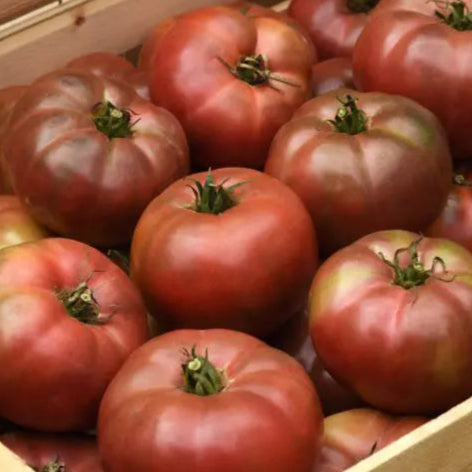
The 'Darkstar' F1 tomato combines purple fruit with the vigor of a large indeterminate plant. The round tomatoes weigh approximately 225 to 280 g (7.9 to 9.9 oz) and offer a flavor reminiscent of heirloom varieties. This hybrid selection reaches maturity around 65 days after transplanting. Its growth requires a sturdy stake or cage and sufficient space in the vegetable garden. It shows high resistance to late-season blight, though the foliage should still be monitored. Harvest ripe fruit gradually for slicing or incorporating into seasonal dishes. This variety matures 65 days after transplanting.
- Quantity
- 20 seeds
- Exposure
- Sun
- Life cycle
- Annual in cultivation in Quebec
Discover the plant
Common nameHybrid tomato
FamilyNightshade family
GenusNightshade
Speciestomato
CultivarDarkstar
TypeUntreated
Botanical nameTomato
'Darkstar' hybrid tomato (Solanum lycopersicum). The 'Darkstar' F1 tomato combines purple fruits with the vigor of a large indeterminate plant. The round tomatoes weigh approximately 225 to 280 g (7.9 to 9.9 oz) and offer a flavor reminiscent of heirloom varieties. This hybrid selection reaches maturity around 65 days after transplanting. Its development requires a sturdy stake or cage and sufficient space in the vegetable garden. It shows high resistance to late-season blight, although the foliage should still be monitored.
For 'Darkstar' hybrid tomato, germination generally takes 7 to 10 days in potting soil kept at 21 to 24 °C. The sowing schedule for this variety is as follows: indoors, 6 to 8 weeks before the last frost. For 'Darkstar' hybrid tomato, transplant the young tomatoes when their true leaves have developed and the roots hold the root ball sufficiently. For 'Darkstar' hybrid tomato, provide bright light to limit stem elongation. For 'Darkstar' hybrid tomato, a short, vigorous plant recovers more easily than an etiolated specimen.
For 'Darkstar' hybrid tomato, start observing the harvest of this variety as it approaches 65 days after transplanting; then check for the desired color, firmness, and size for picking. For 'Darkstar' hybrid tomato, this variety presents this characteristic at harvest: weight — 225-280 g. For 'Darkstar' hybrid tomato, the clusters of this variety form gradually on the indeterminate plant: visit the planting several times to pick the fruits at their maturity. For 'Darkstar' hybrid tomato, harvest the fruits as they ripen.

Sowing guide
It all startswith a seed.
Spacing / density
45 – 60 cm between plants
Germination temperature
21 to 24°C
Germination time
7 to 10 days
Sowing period
Indoors, 6 to 8 weeks before the last frost
Propagation
Sowing
Growing method
Germination generally takes 7 to 10 days in potting soil maintained at 21 to 24 °C. The sowing schedule for this variety is as follows: indoors, 6 to 8 weeks before the last frost. To establish this variety, first choose a location that matches its sun exposure requirements. You must prepare your soil well by incorporating plenty of well-rotted manure or compost to a depth of at least 30 cm. In addition, add an all-purpose fertilizer to the soil at planting. When planting this variety, use a spacing of 45–60 cm between plants. Transplant tomato plants 45–60 cm apart, with 90 cm between rows. Plant indeterminate types on stakes, leaving 38 to 45 cm between plants in single rows, spaced 45 cm apart. The indeterminate growth of this variety requires regular guiding of new stems onto their supports; fasten ties without tightening them against the stem. The blight tolerance of this variety is an asset; maintain access to the foliage to observe for spots and space out the planting so that the leaves dry after rain.
Soil and care
The right care,at the right time.
Watering
To plant this variety, first choose a location that matches its sun exposure requirements. Prepare your soil well by incorporating plenty of well-rotted manure or compost to a depth of at least 30 cm. Additionally, add an all-purpose fertilizer to the soil at the time of planting. The indeterminate growth of this variety requires regular training of the new stems onto their support; secure the ties without tightening them against the stem.
Soil type
To plant this variety, first choose a location that matches its sun exposure requirements. You must prepare your soil well by incorporating plenty of well-rotted manure or compost to a depth of at least 30 cm. In addition, add an all-purpose fertilizer to the soil at planting. For this variety, prepare fertile soil before planting, then adjust applications during flowering and fruit development; a very leafy plant does not automatically justify more fertilizer.
Fertilization
For this variety, prepare fertile soil before planting, then adjust applications for flowering and fruit development; a very leafy plant does not automatically justify more fertilizer. To establish this variety, first choose a location that matches its exposure: sun. You must prepare your soil well by incorporating plenty of well-rotted manure or compost to a depth of at least 30 cm.
Seasonal care
The indeterminate growth of this variety requires regular guidance of the new stems onto their support; fasten the ties without tightening them against the stem. The mildew tolerance of this variety is an asset; maintain access to the foliage to observe for spots and space out the plants so the leaves can dry after rain. Tomatoes tolerate a wide range of fertile, well-drained soils. They require constant moisture, but care must be taken not to overwater, which would diminish the fruit's flavor. Grow them in a warm, sunny location. Germination generally takes 7 to 10 days in soil kept at 21 to 24 °C. The sowing calendar for this variety is as follows: indoors, 6 to 8 weeks before the last frost. For this variety, prepare fertile soil before planting, then adjust applications during flowering and fruit enlargement; a very leafy plant does not automatically justify more fertilizer. Begin monitoring the harvest of this variety as it approaches 65 days after transplanting; check for the desired color, firmness, and size for picking. This variety presents this characteristic at harvest: weight — 225-280 g. The clusters of this variety form gradually on the indeterminate plant: visit the planting multiple times to harvest the fruits as they reach maturity.
Container growing
A garden,within reach.
Recommended pot size
5 US gallons (19 L) minimum per plant; more for a large specimen
Place the container for this variety in a sunny location, monitoring the light received throughout the day. For this variety, provide a tall cage or a stake securely anchored at the time of repotting, as the plant continues to elongate during production. Germination generally takes 7 to 10 days in soil kept at 21 to 24°C. The sowing schedule for this variety is as follows: indoors, 6 to 8 weeks before the last frost. To plant this variety, first choose a location that matches its exposure: sun. You must prepare your soil well by incorporating plenty of well-rotted manure or compost at least 30 cm deep. In addition, add an all-purpose fertilizer to the soil at planting. The indeterminate growth of this variety requires regular guiding of the new stems onto their support; fasten the ties without tightening them against the stem. The mildew tolerance of this variety is one of its assets; maintain access to the foliage to observe for spots and space out the planting so that the leaves dry after rain. For 'Darkstar' hybrid tomato, keep the labeled packet to track cultivar-specific data throughout the season.

Bloom and dimensions
Its place,in your garden.
Growth habit
Undetermined
Fruiting
Begin observing the harvest of this variety as it approaches 65 days after transplanting; check for the color, firmness, and size desired for picking. This variety presents this characteristic at harvest: weight — 225-280 g. The clusters of this variety form gradually on the indeterminate plant: visit the plantation several times to pick the fruits as they ripen.
Days to maturity
65 days post-transplant
Harvest
Harvest the tomatoes as they reach their mature color. Lift the fruit gently while supporting the cluster so as not to break the stem.
Garden associations
In goodcompany.
Companion plants
When planting this variety, the spacing should be 45 – 60 cm between plants. Transplant tomato seedlings 45 – 60 cm apart with 90 cm between rows. Plant indeterminate types on stakes, leaving 38 cm to 45 cm between plants in single rows spaced 45 cm apart. To plant this variety, first choose a location that matches its exposure requirements: sun. You must prepare your soil well by incorporating plenty of well-rotted manure or compost to a depth of at least 30 cm.
Recipe idea
From the gardento your plate.
Edible parts
Ripe fruits
Recipe idea for your 'Darkstar' hybrid tomato harvest. For a salad where the tomatoes take center stage, cut the ripe fruit into quarters or thick slices and arrange them in a shallow dish. Thinly slice a small shallot, then add it along with a few hand-torn basil leaves. Whisk olive oil with a little apple cider vinegar and drizzle this vinaigrette over just before serving. Add salt gradually to keep the flavor of the fruit in the foreground. If desired, add pieces of fresh cheese and toasted bread. Collect the juices at the bottom of the dish to drizzle over the final bites. The size of the fruit dictates how to cut it: keep small fruits bite-sized and divide large tomatoes into easy-to-eat pieces. Very juicy flesh is best added at the last moment to a fresh preparation. For cooking, use a wide enough surface so the juice can evaporate.
Frequently asked questions
Your questions,answered.
When should I start sowing 'Darkstar' hybrid tomato seeds?
Germination generally takes 7 to 10 days in potting soil maintained at 21 to 24 °C. The sowing schedule for this variety is as follows: indoors, 6 to 8 weeks before the last frost. Transplant young tomatoes when their true leaves have developed and the roots hold the root ball firmly. Give them bright light to limit stem elongation. A short, vigorous plant recovers more easily than an etiolated one. During acclimatization, gradually increase the time spent outdoors and bring the plants inside if the nights become cold again. Soil temperature matters as much as the calendar date when it comes time to plant.
What kind of support is needed for the 'Darkstar' hybrid tomato?
When planting this variety, the spacing should be 45 – 60 cm between plants. Transplant tomato plants 45 – 60 cm apart with 90 cm between rows. Plant indeterminate types on stakes, leaving 38 cm to 45 cm between plants in single rows, spaced 45 cm apart. The indeterminate growth of this variety requires regular guidance of new stems onto their support; fasten ties without tightening them against the stem. The blight tolerance of this variety is an asset; maintain access to the foliage to check for spots and space the planting so that the leaves dry after rain.
What advantage does the tolerance of the 'Darkstar' hybrid tomato offer?
The indeterminate growth of this variety requires regular guidance of new stems onto their support; attach ties loosely, without pressing them against the stem. The downy mildew tolerance of this variety is an asset; maintain access to the foliage to observe for spots and space out plants so leaves dry after rain. Tomatoes tolerate a wide range of fertile, well-drained soils. They require consistent moisture, but be careful not to overwater, which would diminish the flavor of the fruit. Grow them in a warm, sunny location.
When to harvest 'Darkstar' hybrid tomatoes?
Start monitoring the harvest of this variety as it approaches 65 days after transplanting; check for the desired color, firmness, and size for picking. This variety has the following characteristic at harvest: weight — 225-280 g. The clusters of this variety form progressively on the indeterminate plant: visit the plantation several times to pick the fruits as they ripen. Harvest the fruits as they mature. Before frost, pull the plants from the ground by holding them by the roots. Hang them indoors to allow the remaining fruits to ripen. For the 'Darkstar' hybrid tomato, the instructions on the sold packet take priority whenever they specify a date, depth, or quantity.
What location is suitable for 'Darkstar' hybrid tomato?
To plant this variety, first choose a location that matches its sun exposure requirements. Prepare your soil well by incorporating plenty of well-rotted manure or compost to a depth of at least 30 cm. Additionally, add an all-purpose fertilizer to the soil at planting time. When planting this variety, allow for 45 – 60 cm of spacing between plants. Transplant tomato seedlings 45 – 60 cm apart with rows spaced 90 cm apart. Plant indeterminate types on stakes, leaving 38 – 45 cm between plants in single rows spaced 45 cm apart.
Wildlife and pets
Life,around your plants.
Reported toxicity
Yes
For a great start to your seeds
The right extras.Right here.
Seed Starting Soil
Shop the collectionSeed starting supplies
Shop the collection