Sale
Sold out

Untreated
Nightshades
Tomato Heirloom Marriage Cherokee Carbon F1
Product code : NOR-GR06
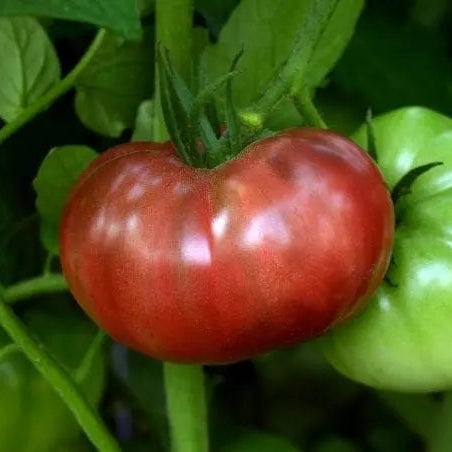
An exceptional purple tomato resulting from the cross of two renowned heirloom varieties, Cherokee Purple and Carbon. The Marriage Cherokee Carbon F1 tomato offers Beefsteak-type fruits with a rich, sweet, and intense flavor. Robust and flavorful, this variety is ideal for passionate gardeners and lovers of modernized heirloom tomatoes. This variety matures 75 days after transplanting. The packet contains 20 seeds to start your planting. Install tomatoes in a location where clusters remain accessible from an aisle. Orient the supports so as not to shade lower crops.
- Quantity
- 20 seeds
- Exposure
- Sun
- Life cycle
- Annual in cultivation in Quebec
Discover the plant
Common nameTomato Marriage Cherokee Carbon F1
FamilyNightshades
GenusNightshade
Speciestomato
CultivarCherokee Carbon Marriage
TypeUntreated
Botanical nameTomato
Cherokee Carbon F1 Marriage Tomato (Solanum lycopersicum). An exceptional purple tomato resulting from the cross of two renowned heirloom varieties, Cherokee Purple and Carbon. The Cherokee Carbon F1 Marriage tomato offers beefsteak-type fruits with a rich, sweet, and intense flavor. Robust and flavorful, this variety is ideal for passionate gardeners and fans of modernized heirloom tomatoes. For Cherokee Carbon F1 Marriage Tomato, the maturity of this variety is 75 days after transplanting. For Cherokee Carbon F1 Marriage Tomato, the packet contains 20 seeds to start your planting.
For Cherokee Carbon F1 Marriage Tomato, germination generally takes 7 to 10 days in potting soil kept at 21 to 24 °C. The sowing schedule for this variety is as follows: indoors, 6 to 8 weeks before the last frost. For Cherokee Carbon F1 Marriage Tomato, transplant the young tomatoes when their true leaves have developed and the roots hold the root ball sufficiently. For Cherokee Carbon F1 Marriage Tomato, provide them with direct light to limit stem elongation. For Cherokee Carbon F1 Marriage Tomato, a short and vigorous plant recovers more easily than an etiolated specimen.
Space the plants 60 cm apart and install stakes to support their growth. With its intense purple fruits, sweet taste, and juicy flesh, the Cherokee Carbon F1 Marriage tomato is perfect for salads, cooked dishes, or simply eaten fresh. Add this robust and flavorful variety to your vegetable garden for maximum enjoyment and flavor! For Cherokee Carbon F1 Marriage Tomato, start monitoring the harvest of this variety as it approaches 75 days after transplanting; then check for the desired color, firmness, and size for picking.

Sowing guide
It all startswith a seed.
Spacing / density
45 – 60 cm between plants
Germination temperature
21 to 24°C
Germination time
7 to 10 days
Sowing period
Indoors, 6 to 8 weeks before the last frost
Propagation
Sowing
Growing method
Maintain a temperature of 22 to 26°C for rapid and optimal germination. Transplant the seedlings outdoors after the last frost, in fertile soil and in full sun. Emergence generally takes 7 to 10 days in potting soil kept at 21 to 24°C. The sowing schedule for this variety is as follows: indoors, 6 to 8 weeks before the last frost. To plant this variety, first choose a location that matches its exposure: sun. You must prepare your soil well by incorporating plenty of well-rotted manure or compost to a depth of at least 30 cm. In addition, add an all-purpose fertilizer to the soil at planting time. When planting this variety, the spacing to use is 45 – 60 cm between plants. Transplant the tomato plants 45 – 60 cm apart with 90 cm between rows. Plant indeterminate types on stakes, leaving 38 to 45 cm between plants in single rows, spaced 45 cm apart. The indeterminate growth of this variety requires regularly guiding the new stems onto their support; fasten the ties without tightening them against the stem.
Soil and care
The right care,at the right time.
Watering
To plant this variety, first choose a location that matches its sun exposure requirements. Prepare your soil well by incorporating plenty of well-rotted manure or compost to a depth of at least 30 cm. Additionally, add an all-purpose fertilizer to the soil at the time of planting. The indeterminate growth of this variety requires regular training of the new stems onto their support; secure the ties without tightening them against the stem.
Soil type
Transplant the seedlings outdoors after the last frost, in fertile soil and in full sun. To establish this variety, first choose a location that matches its exposure: sun. You must prepare your soil well by incorporating plenty of well-rotted manure or compost to a depth of at least 30 cm. Additionally, add an all-purpose fertilizer to the soil at planting time.
Fertilization
For this variety, prepare fertile soil before planting, then adjust applications for flowering and fruit development; a very leafy plant does not automatically justify more fertilizer. To establish this variety, first choose a location that matches its exposure: sun. You must prepare your soil well by incorporating plenty of well-rotted manure or compost to a depth of at least 30 cm.
Seasonal care
Space the plants 60 cm apart and install stakes to support their growth. The indeterminate growth of this variety requires regular guidance of the new stems onto their support; fasten the ties without tightening them against the stem. Tomatoes tolerate a wide range of fertile, well-drained soils. They require constant moisture, but care must be taken not to overwater, which would diminish the flavor of the fruit. Grow them in a warm, sunny location. Germination generally takes 7 to 10 days in soil kept at 21 to 24 °C. The sowing schedule for this variety is as follows: indoors, 6 to 8 weeks before the last frost. For this variety, prepare fertile soil before planting, then adjust applications during flowering and fruit development; a very leafy plant does not automatically justify more fertilizer. Begin monitoring the harvest of this variety as it approaches 75 days after transplanting; check for the desired color, firmness, and size for picking. This variety has the following characteristic at harvest: weight — 280-350 g. The clusters of this variety form gradually on the indeterminate plant: visit the planting several times to harvest the fruits as they ripen.
Container growing
A garden,within reach.
Recommended pot size
19 L (5 US gal) minimum per plant; more for a large specimen
Place the container for this variety in this exposure: sun, while checking the light received throughout the day. For this variety, provide a tall cage or a stake anchored securely at the time of repotting, as the plant continues to elongate during production. Germination generally takes 7 to 10 days in potting soil maintained at 21 to 24 °C. The sowing schedule for this variety is as follows: indoors, 6 to 8 weeks before the last frost. To install this variety, first choose a location corresponding to its exposure: sun. You must prepare your soil well by incorporating plenty of well-rotted manure or compost to a depth of at least 30 cm. In addition, add an all-purpose fertilizer to the soil at planting time. The indeterminate growth of this variety requires regular guidance of new stems onto their support; secure the ties without tightening them against the stem. Tomatoes tolerate a wide range of fertile, well-drained soils. They require constant moisture, but care must be taken not to overwater, which would have the effect of diminishing the flavor of the fruits.

Bloom and dimensions
Its place,in your garden.
Growth habit
Undetermined
Fruiting
The Marriage Cherokee Carbon F1 tomato offers Beefsteak-type fruits with a rich, sweet, and intense flavor. With its deep purple fruits, sweet taste, and juicy flesh, the Marriage Cherokee Carbon F1 tomato is perfect for salads, cooked dishes, or simply enjoyed fresh. Add this robust and flavorful variety to your garden for maximum enjoyment and taste!
Days to maturity
75 days after transplantation
Harvest
Harvest the tomatoes as they reach their mature color. Lift the fruit gently while supporting the cluster so as not to break the stem.
Garden associations
In goodcompany.
Companion plants
When planting this variety, the spacing should be 45 – 60 cm between plants. Transplant tomato seedlings 45 – 60 cm apart with 90 cm between rows. Plant indeterminate types on stakes, leaving 38 cm to 45 cm between plants in single rows spaced 45 cm apart. To plant this variety, first choose a location that matches its exposure: sun. You must prepare your soil well by incorporating plenty of well-rotted manure or compost to a depth of at least 30 cm.
Recipe idea
From the gardento your plate.
Edible parts
Ripe fruit
Recipe idea using your Cherokee Carbon F1 tomato harvest. Assemble an open-faced sandwich with large slices of ripe tomato. Toast a thick slice of country-style bread sturdy enough to hold the juices without falling apart. Lightly rub the warm crumb with a garlic clove, then spread with fresh cheese or ricotta. Slice the tomato crosswise to reveal the flesh and the seed cavities. Arrange the slices on the bread, add a drizzle of olive oil, and a few basil leaves. Season with salt at the last moment. For a more substantial meal, serve the tartine with a salad of white beans and crisp greens. The size of the fruit dictates how you cut it: keep smaller fruits in bite-sized pieces and divide larger tomatoes into easy-to-eat portions. Very juicy flesh is best added at the last minute to fresh preparations. For cooking, use a wide surface area to allow the juices to evaporate.
Frequently asked questions
Your questions,answered.
When to start 'Marriage Cherokee Carbon F1' tomato seeds?
Germination generally takes 7 to 10 days in potting soil maintained at 21 to 24 °C. The sowing schedule for this variety is as follows: indoors, 6 to 8 weeks before the last frost. Transplant young tomatoes when their true leaves have developed and the roots hold the root ball firmly. Give them bright light to limit stem elongation. A short, vigorous plant recovers more easily than an etiolated one. During acclimatization, gradually increase the time spent outdoors and bring the plants inside if the nights become cold again. Soil temperature matters as much as the calendar date when it comes time to plant.
What support should I plan for Tomato Marriage Cherokee Carbon F1?
When planting this variety, the spacing should be 45 – 60 cm between plants. Transplant tomato seedlings 45 – 60 cm apart with 90 cm between rows. Plant indeterminate types on stakes, leaving 38 cm to 45 cm between plants in single rows, spaced 45 cm apart. The indeterminate growth of this variety requires regular guiding of the new stems onto their support; fasten the ties without tightening them against the stem. Tomatoes tolerate a wide range of fertile, well-drained soils. They require constant moisture, but care must be taken not to overwater, which would have the effect of diminishing the flavor of the fruit.
When to harvest Cherokee Carbon F1 Marriage Tomato?
Start observing the harvest of this variety as it approaches 75 days after transplanting; check for the color, firmness, and size desired for picking. This variety has the following harvest characteristic: weight — 280-350 g. The clusters of this variety form progressively on the indeterminate plant: visit the plantation several times to pick the fruits as they ripen. Harvest the fruits as they mature. Before frost, pull the plants from the soil by holding them by the roots. Hang them indoors to allow the remaining fruits to ripen. For Cherokee Carbon F1 Marriage Tomato, the instructions on the sold packet remain the priority when they specify a date, depth, or quantity.
What location is suitable for Cherokee Carbon F1 Tomato?
To plant this variety, first choose a location that matches its sun exposure requirements. Prepare your soil well by incorporating plenty of well-rotted manure or compost to a depth of at least 30 cm. Additionally, add an all-purpose fertilizer to the soil at planting time. When planting this variety, allow for 45 – 60 cm of spacing between plants. Transplant tomato seedlings 45 – 60 cm apart with rows spaced 90 cm apart. Plant indeterminate types on stakes, leaving 38 – 45 cm between plants in single rows spaced 45 cm apart.
How to water Tomato Cherokee Carbon F1 during its growth?
The indeterminate growth of this variety requires regular guiding of new stems along their support; fasten the ties without tightening them against the stem. Tomatoes tolerate a wide range of fertile, well-drained soils. They require constant moisture, but care must be taken not to overwater, which would reduce the flavor of the fruit. Grow them in a warm, sunny spot. To plant this variety, first choose a location that matches its exposure: sun. You must prepare your soil well by incorporating plenty of well-rotted manure or compost to a depth of at least 30 cm.
Wildlife and pets
Life,around your plants.
Reported toxicity
Yes
For a great start to your seeds
The right extras.Right here.
Seed Starting Soil
Shop the collectionSeed starting supplies
Shop the collection