


Sale
Sold out

Organic seeds, Treated seeds, coated seeds
Brassicaceae
Root vegetables seeds
Organic Early Scarlet Globe radish
Raphanus sativus
Product code : 65-8005-01B
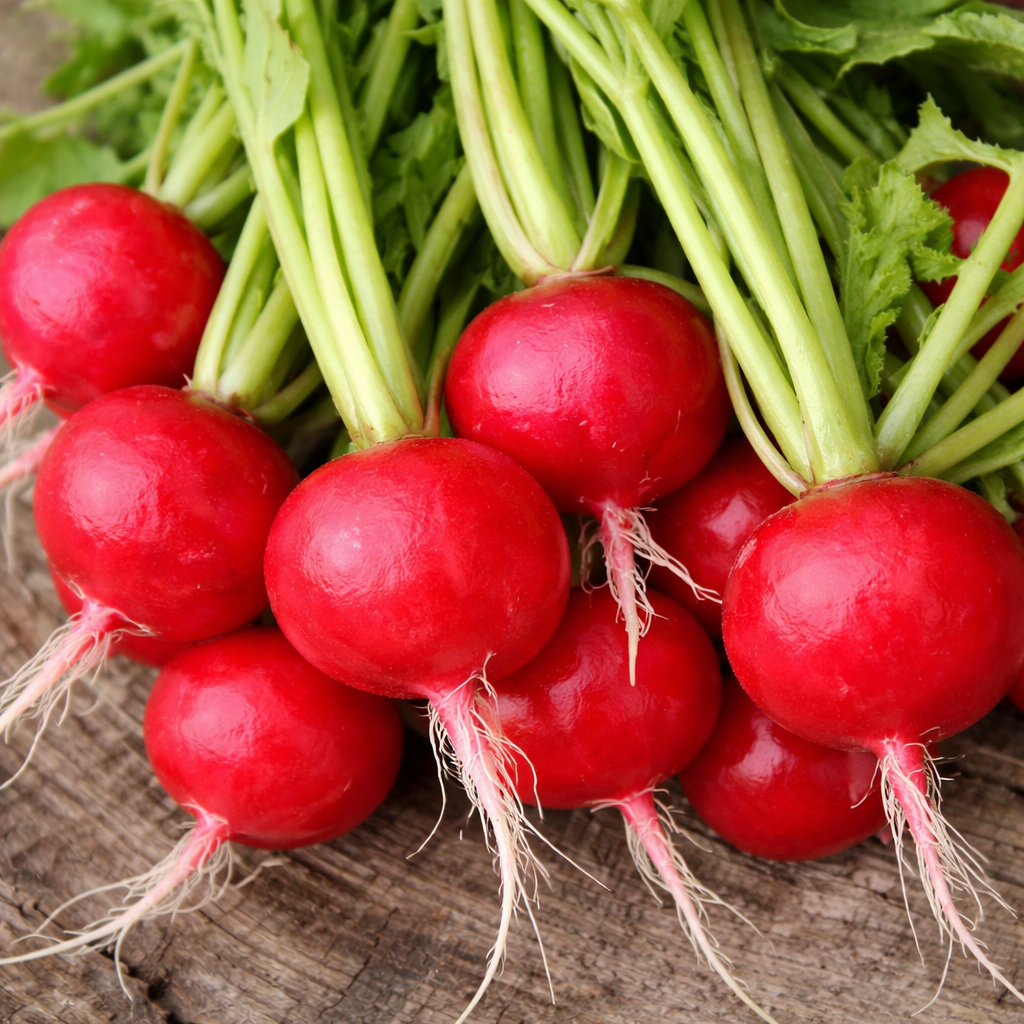
Early Scarlet Globe is a very early organic radish that quickly forms round roots with bright-red skin and crisp white flesh. Short foliage and maturity in approximately 21 days suit close rows, small gardens, and succession sowing. Direct sow in spring in loose, fertile, cool soil, then thin to 2.5 to 5 cm. Consistent moisture preserves tenderness and flavour. The official packet contains approximately 300 organic seeds, enough to repeat sowings weekly and begin another series in late summer for a fresh autumn harvest. Regular observation allows watering, thinning, and harvest to be adjusted to actual garden conditions. Rapid growth remains the best guarantee of tender, crisp roots with a pleasantly sharp flavour.
- Quantity
- Approximately 300 seeds per packet
- Exposure
- Sun to light partial shade
- Life cycle
- Annual
Discover the plant
Common nameOrganic Early Scarlet Globe radish
FamilyBrassicaceae
GenusRaphanus
Speciessativus
CultivarEarly Scarlet Globe
TypeOrganic seeds, Treated seeds, coated seeds
Botanical nameRaphanus sativus
Organic Early Scarlet Globe radish (Raphanus sativus) is a very early cultivar intended for fresh spring harvests. Its round root develops bright-red skin and crisp, juicy white flesh with a pleasantly sharp flavour. Short foliage supports close row culture and easy bunching. Under suitable cool conditions, roots reach harvest stage approximately 21 days after sowing. The official W.H. Perron packet contains approximately 300 organic seeds, a practical quantity for succession sowings that extend the harvest over several weeks while temperatures remain favourable. Clear labels help keep each succession organized and prevent accidental overplanting.
Direct sow as soon as soil can be worked in spring, then repeat weekly or every ten days. Place seed 0.6 to 1.3 cm deep in loose, fertile, uncompacted, well-drained soil. Thin promptly to retain 2.5 to 5 cm between roots; adequate spacing prevents distortion. Growth is best at 10 to 18°C in sun or light partial shade. Maintain even moisture because drought slows growth, intensifies pungency, and makes roots tough or fibrous. Keep the soil surface soft during emergence and remove small weeds without disturbing the shallow roots. Check moisture beneath the surface rather than judging only by colour.
Harvest Early Scarlet Globe as soon as roots are round and usable, without allowing them to grow oversized. A forgotten root may become hollow, fibrous, or excessively hot, especially as weather warms. Pull gently, remove leaves to reduce moisture loss, then wash and refrigerate the roots. Eat them bare as a snack, slice them into salads, quick-pickle them, or roast them. For an autumn crop, begin sowing again in late summer as temperatures decline and days shorten. Use crop covers early if flea beetles regularly damage young brassica leaves. Remove the cover during harvest and replace it securely afterward.

Sowing guide
It all startswith a seed.
Sowing depth
0.6 to 1.3 cm (1/4 to 1/2 in)
Spacing / density
Thin to 2.5 to 5 cm; rows 45 to 50 cm apart
Germination temperature
13 to 24°C
Germination time
5 to 10 days
Sowing period
Early spring; succession sowings; repeat in late summer
Propagation
Seed
Growing method
Loosen soil at least 15 cm deep and remove stones or clods that could distort roots. Direct sow Early Scarlet Globe as soon as soil is workable, 0.6 to 1.3 cm deep. Keep the surface moist until emergence, usually in five to ten days. Thin early to 2.5 to 5 cm, eating removed young roots once large enough. Repeat small sowings weekly or every ten days while weather remains cool. Water deeply and consistently; interrupted growth makes roots hot and fibrous. Weed shallowly to avoid root injury. Use lightweight row cover against flea beetles where they are common. Harvest around 21 days and check actual size rather than relying on the calendar alone. Pause during strong summer heat, then resume in late summer for an autumn crop. Rotate away from other brassicas to reduce shared pest and disease pressure. Regular observation allows watering, thinning, and harvest to be adjusted to actual garden conditions. Rapid growth remains the best guarantee of tender, crisp roots with a pleasantly sharp flavour. Record each sowing date to compare the expected calendar with actual root development. Soil should remain loose and cool without becoming saturated, compacted, or crusted after rain.
Soil and care
The right care,at the right time.
Soil pH
6.0 to 7.0
Minimum temperature
Tolerates light frost
Care level
Easy
Watering
Maintain even moisture with deep, regular watering. Avoid cycles of drought and excess water, which promote split, tough, or overly hot roots. Moisten the surface gently during germination to prevent soil crusting. Very light mulch between rows preserves coolness without smothering young plants. Regular observation allows watering, thinning, and harvest to be adjusted to actual garden conditions. Rapid growth remains the best guarantee of tender, crisp roots with a pleasantly sharp flavour.
Soil type
Grow this radish in loose, fertile, cool, well-drained soil without stones or compact clods that distort roots. Light soil amended with mature compost supports rapid growth. Avoid fresh manure and excess nitrogen, which favour foliage. Maintain a pH near 6.0 to 7.0. Loosen the upper 15 to 20 cm, level the bed, and keep the surface evenly moist until emergence. In containers, choose fine-textured vegetable potting mix and ensure drainage remains unobstructed after every watering.
Fertilization
Incorporate mature compost before sowing according to soil-test needs. Avoid fresh manure and excessive nitrogen, which stimulate foliage or root branching. In already fertile soil, no additional feeding is generally needed during the very short cycle. Never use fertilizer combined with herbicide in the vegetable garden. Regular observation allows watering, thinning, and harvest to be adjusted to actual garden conditions.
Moisture
Cool, evenly moist soil
Seasonal care
Seasonal care for Organic Early Scarlet Globe radish relies on regular observation, measured intervention, and respect for its growth cycle. Organic Early Scarlet Globe radish is a root vegetables variety offered as seed for gardeners who want clear, practical product information. Confirmed details include height: Approximately 10 to 20 cm (4 to 8 in), spread: Approximately 10 to 15 cm (4 to 6 in), colour: red brillant. The packet contains approximately 300 seeds, and the formulation is organic seeds, treated seeds, coated seeds. For best results, follow the sowing, light, and spacing information associated with this variety. You can adjust care to your soil, weather, and observed growth without exceeding the plant’s actual needs. Early Scarlet Globe 21 Bright red Early variety with excellent taste. It is best to adapt care to your garden’s microclimate instead of following a fixed watering schedule in every situation. A suitable mulch can help stabilize moisture, reduce soil splash, and limit competition from weeds around established plants. Growth is worth checking after major changes in temperature, light exposure, rainfall, or watering frequency. You can keep the labelled packet until harvest or flowering so the variety details remain easy to consult. Measured care based on the plant’s condition generally supports better balance than unnecessary routine treatments. For containers, drainage and soil volume directly influence moisture stability around the roots and the frequency of watering.
Container growing
A garden,within reach.
Recommended pot size
Planter at least 15 to 20 cm deep
Choose a planter at least 15 to 20 cm deep with several drainage holes. Fill it with light vegetable potting mix free of stones and large clods, then moisten before sowing. Make shallow furrows and space seed to reduce thinning. Place the container in spring sun or light partial shade as days warm. Keep mix evenly moist; a small container dries quickly and may produce tough or split roots. Thin to 2.5 to 5 cm and harvest as soon as roots are round. Sow only a short section at a time, then repeat one or two weeks later. Move the pot to a cooler location if heat accelerates bolting. After harvest, remove debris, renew part of the mix, and avoid immediately sowing another diseased brassica in the same container. Elevate the planter slightly so drainage holes remain open. Regular observation allows watering, thinning, and harvest to be adjusted to actual garden conditions. Rapid growth remains the best guarantee of tender, crisp roots with a pleasantly sharp flavour. Record each sowing date to compare the expected calendar with actual root development. Soil should remain loose and cool without becoming saturated, compacted, or crusted after rain.

Bloom and dimensions
Its place,in your garden.
Mature height
Approximately 10 to 20 cm (4 to 8 in)
Width / spread
Approximately 10 to 15 cm (4 to 6 in)
Flower color
White to pinkish
Foliage color
Green
Foliage type
Annual deciduous, green toothed, slightly hairy leaves
Growth rate
Very fast
Growth habit
Compact rosette with short foliage
Fragrance
Crisp root with an excellent fresh, gently peppery flavour when harvested young
Bloom period
Flowering is not desired for root harvest. Heat, long days, or prolonged stress may cause the plant to elongate a stalk carrying small white to pinkish flowers. This bolting process toughens the root and reduces quality. Harvest before that stage and pause sowing during very hot periods. Regular observation allows watering, thinning, and harvest to be adjusted to actual garden conditions. Rapid growth remains the best guarantee of tender, crisp roots with a pleasantly sharp flavour.
Fruiting
The harvested product is a swollen round root, not a botanical fruit. Early Scarlet Globe forms a smooth root with bright-red skin and crisp white flesh. It generally reaches usable size approximately 21 days after sowing. Cool, rapid, unstressed growth limits hollowness, excessive pungency, and fibrous texture. Harvest before roots become oversized. Regular observation allows watering, thinning, and harvest to be adjusted to actual garden conditions.
Days to maturity
Approximately 21 days after sowing
Harvest
Harvest approximately 21 days after sowing once roots are round and crisp
Garden associations
In goodcompany.
Companion plants
Beans, beets, carrots, lettuce, peas, onions, cucumbers, and parsley can share a bed with radishes when each crop retains enough space and water. Radishes often mark rows of slower vegetables. Treat these combinations as practical organization, not guaranteed pest protection. Harvest promptly to prevent competition. Regular observation allows watering, thinning, and harvest to be adjusted to actual garden conditions. Rapid growth remains the best guarantee of tender, crisp roots with a pleasantly sharp flavour. Record each sowing date to compare the expected calendar with actual root development.
Recipe idea
From the gardento your plate.
Edible parts
Roots and young leaves
After harvesting Organic Early Scarlet Globe radish, use only the specified edible parts, washed carefully and gathered at the proper stage. Organic Early Scarlet Globe radish is a root vegetables variety offered as seed for gardeners who want clear, practical product information. Confirmed details include height: Approximately 10 to 20 cm (4 to 8 in), spread: Approximately 10 to 15 cm (4 to 6 in), colour: red brillant. The packet contains approximately 300 seeds, and the formulation is organic seeds, treated seeds, coated seeds. For best results, follow the sowing, light, and spacing information associated with this variety. You can adjust care to your soil, weather, and observed growth without exceeding the plant’s actual needs. Early Scarlet Globe 21 Bright red Early variety with excellent taste. It is best to adapt care to your garden’s microclimate instead of following a fixed watering schedule in every situation. A suitable mulch can help stabilize moisture, reduce soil splash, and limit competition from weeds around established plants.
Frequently asked questions
Your questions,answered.
When should Early Scarlet Globe be sown in Canada?
Direct sow as soon as soil can be worked in spring, often several weeks before the last light frost. Repeat small sowings weekly or every ten days while temperatures remain cool. Pause during summer heat, then begin again in late August or early September according to region. Keep soil moist until emergence and protect young leaves from flea beetles if needed. Regular observation allows watering, thinning, and harvest to be adjusted to actual garden conditions. Rapid growth remains the best guarantee of tender, crisp roots with a pleasantly sharp flavour. Check roots and moisture several times weekly so care and harvest timing can be adjusted promptly. Record the sowing date and harvest before roots become fibrous or excessively pungent.
How much seed is in the organic packet?
The official W.H. Perron format for Early Scarlet Globe contains approximately 300 seeds per packet and is organic. This amount supports several succession sowings. Date each row, sow only the length needed for roughly one week of use, and keep the remaining packet closed, cool, dry, and protected from light. The count is approximate, as stated by the supplier. Regular observation allows watering, thinning, and harvest to be adjusted to actual garden conditions. Rapid growth remains the best guarantee of tender, crisp roots with a pleasantly sharp flavour. Check roots and moisture several times weekly so care and harvest timing can be adjusted promptly. Record the sowing date and harvest before roots become fibrous or excessively pungent.
Why thin radishes to 2.5 or 5 cm?
Crowded plants compete for light, water, and nutrients, and their round roots lack space to enlarge evenly. Thin as soon as seedlings can be handled, retaining approximately 2.5 to 5 cm between them. Cut extras at soil level if pulling might disturb neighbours. Correct density improves shape, texture, and harvest speed while making watering and weeding easier. Regular observation allows watering, thinning, and harvest to be adjusted to actual garden conditions. Rapid growth remains the best guarantee of tender, crisp roots with a pleasantly sharp flavour. Check roots and moisture several times weekly so care and harvest timing can be adjusted promptly. Record the sowing date and harvest before roots become fibrous or excessively pungent.
How can tough or overly hot radishes be avoided?
Grow roots quickly in cool weather and loose, evenly moist soil. Drought, heat, crowding, and late harvest slow growth and intensify pungency or fibrous texture. Water deeply, thin early, and check root size around 21 days. Harvest without waiting for giant roots. Resume sowing in autumn instead of fighting strong summer heat, and refrigerate harvested roots promptly after removing foliage. Regular observation allows watering, thinning, and harvest to be adjusted to actual garden conditions. Rapid growth remains the best guarantee of tender, crisp roots with a pleasantly sharp flavour. Check roots and moisture several times weekly so care and harvest timing can be adjusted promptly. Record the sowing date and harvest before roots become fibrous or excessively pungent.
Can Early Scarlet Globe be grown in a planter?
Yes. Use a planter at least 15 to 20 cm deep with excellent drainage and light, stone-free potting mix. Sow shallowly, thin to 2.5 to 5 cm, and keep the mix evenly moist. The container can remain in spring sun, then move to light partial shade as days warm. Sow small successive sections and harvest as soon as roots become round and crisp. Regular observation allows watering, thinning, and harvest to be adjusted to actual garden conditions. Rapid growth remains the best guarantee of tender, crisp roots with a pleasantly sharp flavour. Check roots and moisture several times weekly so care and harvest timing can be adjusted promptly. Record the sowing date and harvest before roots become fibrous or excessively pungent.
Wildlife and pets
Life,around your plants.
Supporting wildlife
Radishes harvested before bolting attract little beneficial wildlife through flowers. If some plants bloom, small insects may visit the white to pinkish flowers, but root quality declines. Focus on protecting young leaves from flea beetles and roots from cabbage maggots through rotation, row cover, and good soil sanitation.
For a great start to your seeds
The right extras.Right here.
Seed Starting Soil
Shop the collectionSeed starting supplies
Shop the collection





