Zamioculcas ‘Chameleon’ (Zamioculcas zamiifolia)

Zamioculcas ‘Chameleon’ (Zamioculcas zamiifolia)
PÉPINIÈRE.CA

Zamioculcas ‘Chameleon’ (Zamioculcas zamiifolia)

BACK-IN-STOCK ALERT

Don’t miss its return.

Leave your email and receive an alert when this product is available again.

An alert for this product only. No newsletter signup. Privacy

Serre

*Zamioculcas zamiifolia*

Sold as Tropical indoor plant

Sold out

Delivery and pickup: view conditions

Product information
Advice adapted to Canada
Secure payment
Share
Common nameChameleon ZZ plant
FamilyAraceae
GenusZamioculcas
Specieszamiifolia
CultivarChameleon
Plant typeTropical indoor plant
Botanical name*Zamioculcas zamiifolia*

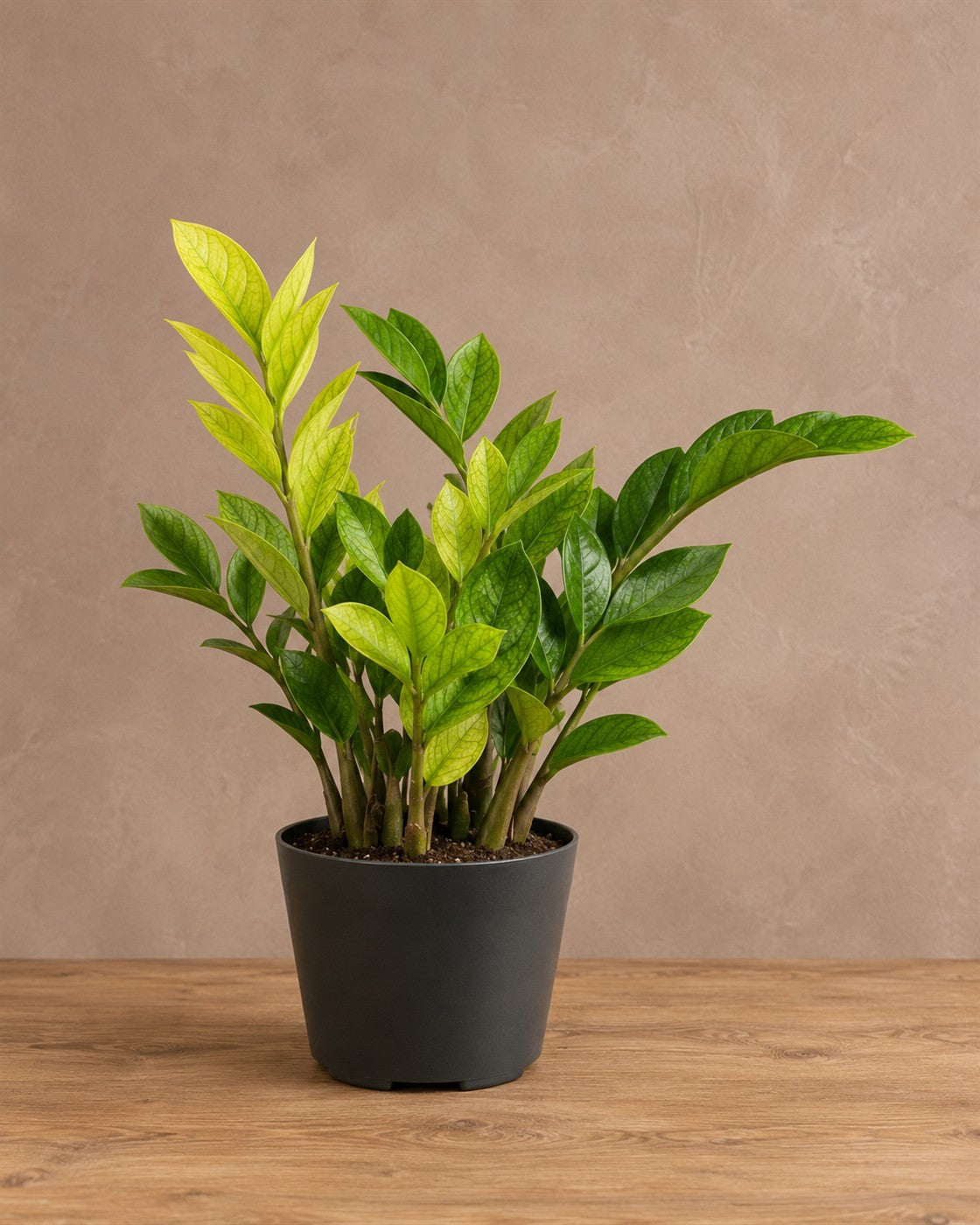
Zamioculcas ‘Chameleon’ (Zamioculcas zamiifolia). Young golden-yellow leaves that gradually turn dark green with age. In the Chameleon, the yellow of the new growth is part of its normal development; it must be distinguished from the yellowing of an older leaf. This houseplant is chosen as much for the silhouette of its foliage as for its placement in the room. Young shoots and mature leaves do not always look the same. Observe the structure of the stems, the veins, and the color distribution to appreciate its characteristics. The size of the specimen and its growing conditions influence its appearance; a single leaf therefore does not represent the entire plant.

Opt for bright, indirect light, with protection against the scorching sun coming through the glass in summer. Allow the substrate to dry out between waterings. The storage tissues of this plant make excess water more concerning than a slight, occasional delay. A highly draining substrate limits the time the roots remain wet. Avoid heavy mixes that dry very slowly indoors. The container should accommodate the root ball without adding a large reserve of moist potting soil around the roots. Keep the surface accessible for watering. Fertilize during active growth by following the label of the chosen product. Do not add extra fertilizer to compensate for insufficient light or roots kept too moist.

The Chameleon ZZ plant (Zamioculcas zamiifolia ‘Chameleon’) finds its place in a collection of potted plants. A low piece of furniture allows you to appreciate the silhouette of the clump and the arrangement of its leaves. Place it away from objects that could mark the leaf blades. Let the leaves spread out around the base without crowding the petioles. A clump needs space for its foliage, even if its pot seems small. The nuances of the foliage are perceived differently depending on the ambient light. Observe the new shoots and mature leaves before concluding that there is an abnormal change. For a grouping with several plants, keep them in separate pots. Maintain access to the soil and the undersides of the leaves.

In the garden

Exposure
Partial shade

Soil and care

Soil & care

Moisture

Weak

Drought tolerance

Yes

Watering

Chameleon ZZ Plant (Zamioculcas zamiifolia 'Chameleon') watering should be adjusted based on the moisture of the root ball. Allow the substrate to dry out between waterings. This plant's storage tissues make overwatering more concerning than occasional slight delays. Empty the saucer after drainage and ensure the pot's drainage holes remain clear. A closed cachepot is for display, not for holding a permanent water reserve. Compare the colors of shoots of the same age. Normal maturation is distinct from yellowing accompanied by a loss of firmness or dried-out tissues.

Soil type

For Chameleon ZZ Plant (Zamioculcas zamiifolia ‘Chameleon’), choose the substrate according to the rooting and observed drying. A heavily draining substrate limits the duration for which the roots remain wet. Avoid heavy mixtures that dry very slowly indoors. The container should accommodate the root ball without adding a large reserve of moist potting mix around the roots. Maintain visible access to the surface for watering. Empty the saucer after drainage and ensure that the pot's holes remain unobstructed. A closed decorative pot is for presentation, not for maintaining a permanent water reserve.

Fertilization

To feed your Chameleon ZZ Plant (Zamioculcas zamiifolia ‘Chameleon’), first observe for new growth. Fertilize during active growth, following the instructions on your chosen product. Do not add more fertilizer to compensate for insufficient light or overly wet roots. Provide bright, indirect light, protecting it from harsh direct sunlight through a window in summer. A salt buildup on the substrate surface indicates a need to reassess previous fertilization and water quality. Follow the manufacturer's recommended dosages rather than trying to accelerate growth.

Seasonal care

Seasonal care for the Chameleon ZZ Plant (Zamioculcas zamiifolia ‘Chameleon’) follows its actual growth in the home. The plant produces young golden-yellow leaves that gradually turn dark green as they mature. In spring, the resumption of shoot growth allows for an assessment of available space and root establishment. Take advantage of this observation to clean the container and prepare only necessary interventions. Monitor the development of new shoots at the base and the condition of older leaves. Remove dead tissue without pulling on those that remain firmly attached. In summer, a warm room can accelerate the drying of the root ball. Check the conditions before increasing watering and protect leaves from suddenly more intense exposure. Prefer bright, indirect light, with protection from burning sun through the window in summer. Allow the substrate to dry between waterings. The plant's storage tissues make overwatering more concerning than a temporary slight delay. In autumn, gradually adapt care to the slowing growth. If the plant has spent the summer outdoors, carefully inspect its foliage before bringing it closer to other potted plants. In winter in Quebec, monitor light reduction and the actual drying of the soil. Keep foliage away from cold windows, exterior doors, and direct heating drafts. Fertilize during active growth according to the chosen product's label. Do not add more fertilizer to compensate for insufficient light or overly moist roots. With Chameleon, new golden-yellow leaves turn green as they mature. This normal change is not to be confused with the yellowing of old foliage. Compare the colors of shoots of the same age. Normal maturation is distinct from yellowing accompanied by a loss of firmness or dried tissue. After relocating, observe the response of new shoots before changing exposure again.

Container growing

Container growing

Growing Chameleon ZZ Plant (Zamioculcas zamiifolia ‘Chameleon’) in a pot begins with choosing the right location and container. The plant produces young golden-yellow leaves that gradually turn dark green as they mature. The container should accommodate the root ball without adding a large reserve of moist potting mix around the roots. Ensure the surface remains visible for watering. A well-draining substrate limits how long the roots stay wet. Avoid heavy mixes that dry very slowly indoors. Repot when the roots are truly cramped or the mix has degraded. At that time, choose a container only slightly larger than the root ball. Let the substrate dry out between waterings. This plant's storage tissues make overwatering more concerning than occasional slight delays. Empty the saucer after drainage and ensure the pot's holes remain unobstructed. A closed cachepot is for display, not for maintaining a permanent water reserve. Favor bright, indirect light, with protection from scorching summer sun through the windowpane. Allow the leaves to spread around the base without compressing the petioles. A clump needs foliage space, even if its pot appears small. Fertilize during active growth according to the product label. Do not add more fertilizer to compensate for insufficient light or overly moist roots. In winter in Quebec, monitor for decreased light and actual drying of the potting mix.
Zamioculcas ‘Chameleon’ (Zamioculcas zamiifolia)

Size, flowering & harvest

Growth rate

Slow
Zamioculcas Chameleon en pot, vue d’ensemble avec jeunes pousses jaune doré et feuillage vert.

Garden associations

Companion plants & uses

Garden use

Chameleon ZZ plant (Zamioculcas zamiifolia ‘Chameleon’) is grown as a houseplant in containers. The plant produces golden yellow young leaves that gradually turn dark green as they mature. A low piece of furniture allows you to appreciate the silhouette of the clump and the arrangement of its leaves. Place it away from objects that could mark the leaf blades. Let the leaves spread around the base without crowding the petioles. A clump needs space for its foliage, even if its pot seems small. A plain wall highlights the foliage's nuances. Keep accessories around the pot spaced out enough to appreciate the colors and texture. Keep access to the soil and the undersides of the leaves.

Frequently asked questions

Frequently asked questions

Why are the new leaves on my Zamioculcas Chameleon yellow?
Young golden-yellow leaves that gradually turn dark green as they age. With Chameleon, the yellow of new growth is part of its normal development; it should be distinguished from the yellowing of an old leaf. Light, maturity, and season can alter the appearance of the foliage. Compare the new leaves with each other before concluding there is a problem. A change in color accompanied by softening, progressing spots, or consistently moist soil warrants a separate examination. In such cases, check the roots and room conditions; adding fertilizer randomly will not correct the cause. The botanical description helps understand the plant, but does not promise that all its leaves will be identical.
How to water ZZ Chameleon plant?
To water your Chameleon ZZ Plant (Zamioculcas zamiifolia ‘Chameleon’), start by examining the root ball. The plant produces young, golden-yellow leaves that gradually turn dark green as they mature. Allow the substrate to dry out between waterings. This plant's storage tissues make overwatering more concerning than a slight, occasional delay. Empty the saucer after drainage and ensure the pot's holes remain clear. A closed decorative pot is for presentation, not for maintaining a permanent water reservoir. The container should accommodate the root ball without adding a large reserve of moist potting mix around the roots. Keep the surface visible for watering. Compare the colors of shoots of the same age. Normal maturation is distinct from yellowing accompanied by loss of firmness or dried tissues. In winter in Quebec, monitor the decrease in light and the actual drying of the potting mix.
What soil for chameleon ZZ plant?
The potting soil for Chameleon ZZ Plant (Zamioculcas zamiifolia 'Chameleon') must maintain a structure suited to its roots. The plant produces young golden-yellow leaves that gradually turn dark green as they mature. A highly draining substrate limits the time the roots remain wet. Avoid heavy mixtures that dry out very slowly indoors. The container should accommodate the root ball without adding a large reserve of damp potting soil around the roots. Keep the surface visible for watering. Repot when the roots are truly cramped or the mixture has degraded. At that time, choose a container only slightly larger than the root ball. Empty the saucer after drainage and ensure the pot's drainage holes remain clear. A closed cachepot is for presentation, not for maintaining a permanent water reserve. Allow the substrate to dry between waterings.
When to repot ZZ Chameleon plant?
Repot your Chameleon ZZ Plant (Zamioculcas zamiifolia ‘Chameleon’) according to its root development and how it's progressing in its container. The plant produces young golden-yellow leaves that gradually turn dark green as they mature. Its appearance changes with new foliage. Avoid cutting back a healthy clump just to force it into the proportions of a young plant. The container should accommodate the root ball without adding a large reserve of moist potting mix around the roots. Maintain visible access to the surface for watering. Repot when the roots genuinely lack space or the potting mix has deteriorated. At that point, choose a container only slightly larger than the root ball. A well-draining substrate limits the duration for which the roots remain wet. Avoid heavy mixes that dry very slowly indoors. Empty the saucer after drainage and ensure the pot's drainage holes remain clear.
How to care for a ZZ Chameleon plant in winter?
In winter, place your Chameleon ZZ plant (Zamioculcas zamiifolia 'Chameleon') in the best available light conditions. The plant produces young, golden-yellow leaves that gradually turn dark green as they mature. In winter in Quebec, monitor for decreasing light and ensure the potting mix dries out thoroughly. Keep the foliage away from cold windows, exterior doors, and direct heater drafts. Provide bright, indirect light, with protection from the scorching summer sun through the window. Allow the substrate to dry out between waterings. The plant's storage tissues make overwatering more problematic than occasional slight delays. Fertilize during active growth according to the chosen product's label. Do not add more fertilizer to compensate for insufficient light or overly wet roots. Compare the colors of shoots of the same age. In Chameleon, new golden-yellow leaves turn green as they mature.

Complete your purchase

Click a product to build your selection.

Your selection

Total