

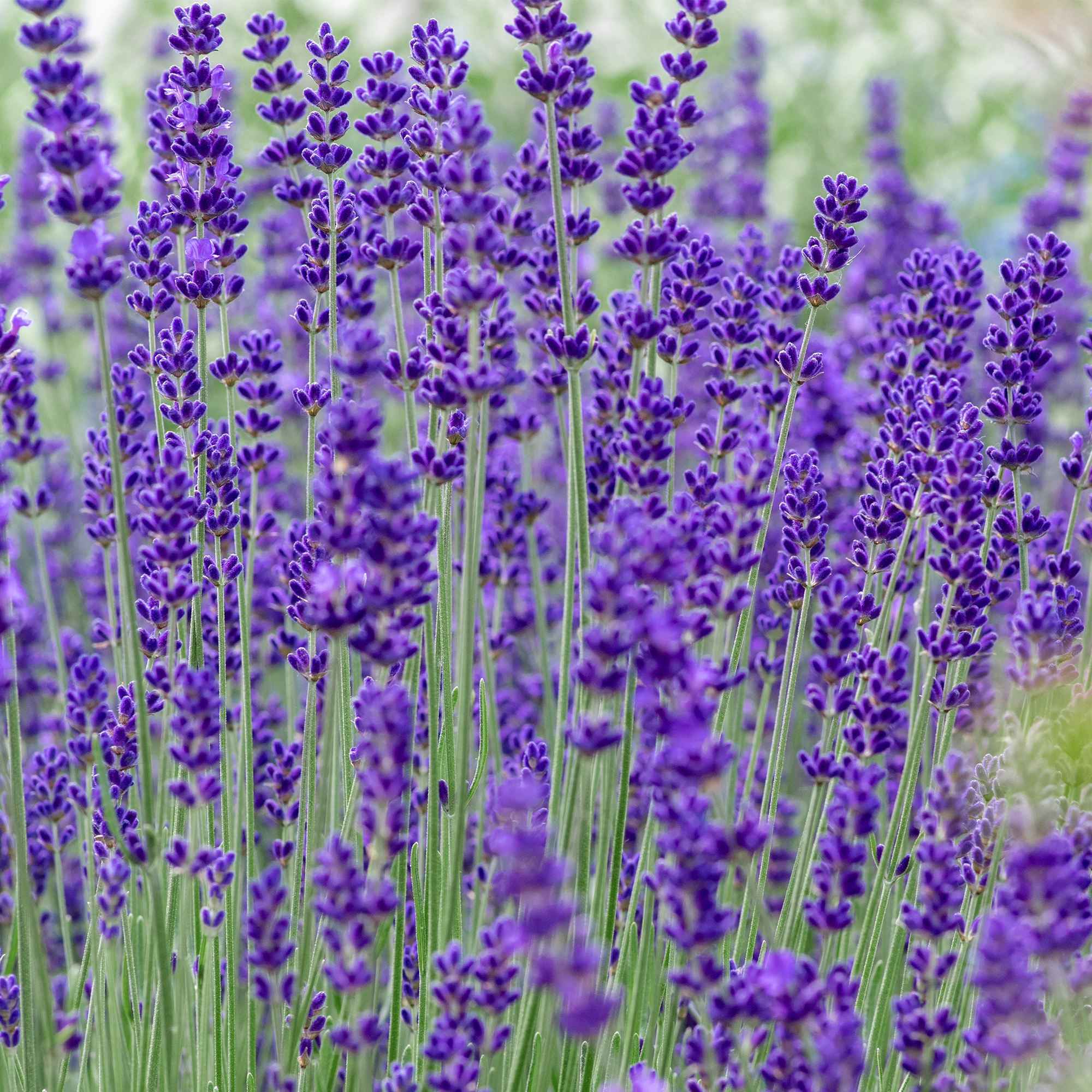
Lavender
Lavender is a perennial aromatic plant highly valued for its fragrant grey-green foliage, compact habit, and mauve to bluish-violet blossoms with Mediterranean charm. It adds an elegant and soothing touch to sunny borders, edgings, rock gardens, patio pots, and herb gardens. Its fragrant flowers attract pollinators and can be used fresh or dried for bouquets, scented sachets, decorative creations, and some aromatic preparations.
Easy to cultivate when drainage is excellent, lavender prefers a full-sun, warm, and well-ventilated location, in light, poor to moderately fertile, and very well-drained soil. It tolerates dry soils better than excess water, especially in winter or heavy soils. Whether in pots or in the ground, it is important to avoid stagnant moisture around the roots. Light pruning after flowering helps to keep the plant dense, well-shaped, and longer-lasting over the seasons.
Both decorative, fragrant, and very useful for biodiversity, lavender is ideal for creating a dry garden, an aromatic border, or a natural-style landscape. It pairs very well with grasses, salvias, coneflowers, yarrows, santolinas, and other sun-loving plants. It is an essential plant for gardeners looking for a resistant, melliferous, elegant, and easy-to-integrate perennial into a sunny outdoor setting.
Care guide
Choosing this plant
Light, soil, water and hardiness
Blooming, foliage and shape
Size and growth
Companion planting, spacing and harvest

Pets

Pollinators

Butterflies

Repellent

Deer
The availability of our plants varies depending on arrivals, seasons, nursery production and supplier availability. Some varieties may be offered for a limited time only, depending on their natural cycle or current stock. These plant profiles are designed to guide and inspire you when choosing plants for the garden, landscaping projects, containers or long-lasting outdoor arrangements.


