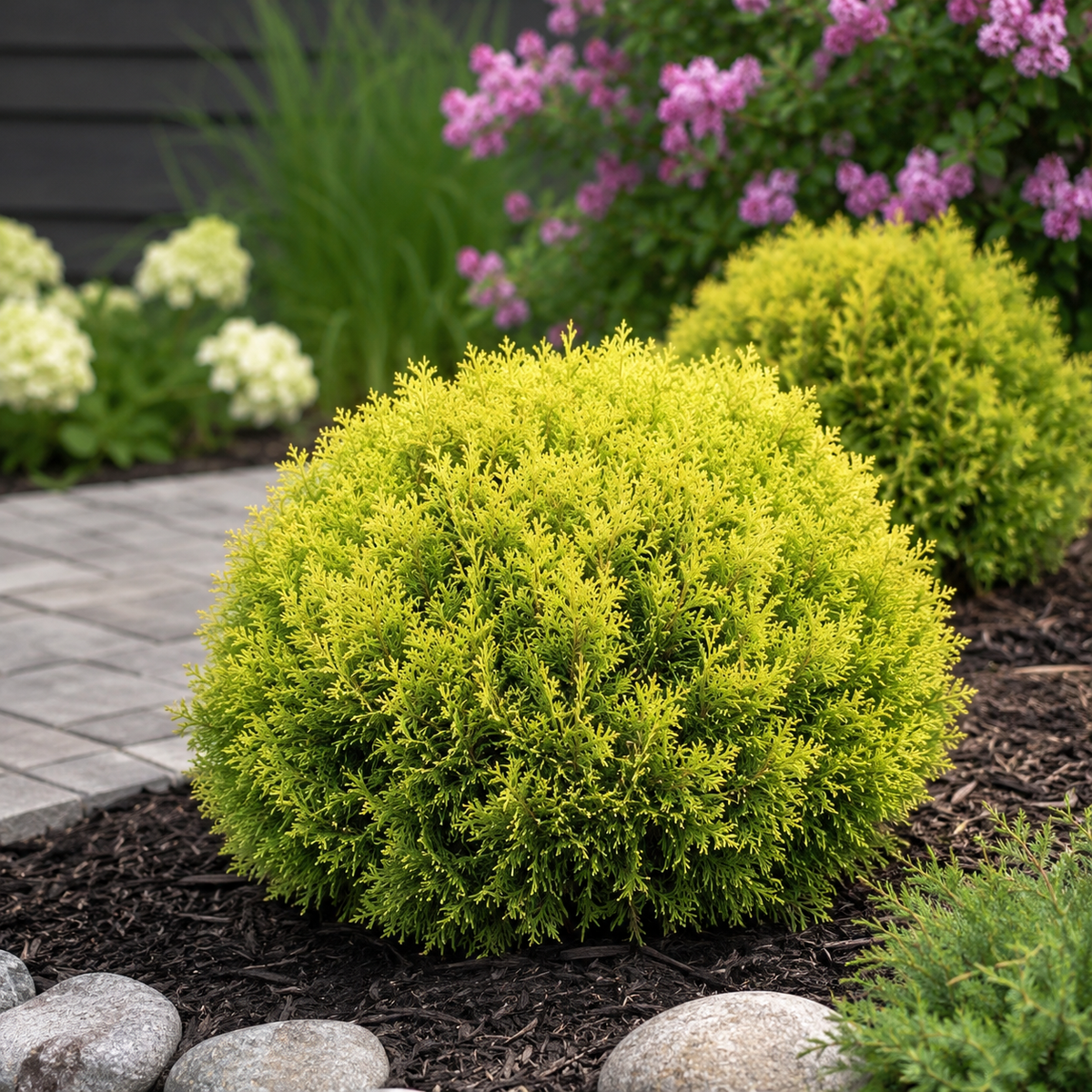
Dwarf globe arborvitae with golden-yellow foliage

Anna’s Magic Ball® arborvitae

Thuja occidentalis

Anna’s Magic Ball® ‘Anna van Vloten’ is a dwarf eastern arborvitae with a naturally rounded habit. Fragrant golden-yellow, fan-like evergreen foliage forms a dense globe without regular pruning. At maturity, the plant reaches about 60 to 90 cm (2 to 3 ft) high and 90 to 120 cm (3 to 4 ft) wide. It suits borders, mass plantings, small gardens, formal designs, and containers. Grow it in full sun or partial shade in moist, well-drained soil. Hardy to Zone 3, it mainly needs consistent watering during establishment and protection for exposed pots from drying winter winds. Its structure remains neat, balanced, and easy to combine with seasonal plants.

Title

Share
Exposure
Full sun to partial shade
Hardiness
Zone 3

Discover the plant

Common nameAnna’s Magic Ball® arborvitae
FamilyCupressaceae
GenusThuja
Speciesoccidentalis
CultivarAnna van Vloten
TypeDwarf evergreen coniferous shrub
Botanical nameThuja occidentalis

Anna’s Magic Ball® arborvitae (Thuja occidentalis ‘Anna van Vloten’) is a dwarf evergreen with a naturally rounded habit. Fragrant golden-yellow, fan-like foliage forms a dense globe that keeps its structure year-round without regular pruning. At maturity, it reaches about 60 to 90 cm (2 to 3 ft) high and 90 to 120 cm (3 to 4 ft) wide. This Proven Winners® selection suits borders, mass plantings, small gardens, formal landscapes, and containers. Its low silhouette provides permanent structure without blocking windows or overwhelming neighbouring perennials, making it a useful evergreen anchor in compact Canadian landscapes.

Plant Anna’s Magic Ball® in full sun or partial shade in average, moist, well-drained soil. A 5 to 8 cm (2 to 3 in) mulch layer helps retain moisture, but keep the crown clear. Water deeply during establishment and dry periods, especially in containers. Space plants about 90 to 120 cm (3 to 4 ft) apart to accommodate mature width and preserve air circulation. This cultivar tolerates more shade than many conifers, although adequate light encourages dense, even growth. Avoid continuously waterlogged ground, heavily compacted soil, and sites where winter salt spray repeatedly reaches the foliage.

Anna’s Magic Ball® needs little maintenance. Its rounded shape develops naturally; if correction is needed, prune lightly in spring as new growth begins. Do not cut into thick old wood without foliage because it may not refill. Monitor for winter desiccation, spider mites, leaf miners, and deer browsing. Water thoroughly before freeze-up when fall is dry and protect exposed containers from wind. Arborvitae is not intended for consumption and may be harmful when eaten, so keep clippings away from children and pets. Consistent moisture and an undisturbed root zone help the foliage remain dense and green throughout the year.

Thuya occidental Anna’s Magic Ball® ‘Anna van Vloten’ (Thuja occidentalis)

Planting guide

From planting to establishment.

Spacing / density About 90 to 120 cm (3 to 4 ft) on centre
Best planting time Spring or early fall, in moist workable soil
Propagation Cuttings; commercial propagation by licence only
Growing method
Choose a full-sun or partial-shade site where excess water drains away. Dig a hole two to three times wider than the root ball but no deeper. Set the top of the root ball level with the surrounding ground, then backfill with loosened soil without burying the crown. Water slowly to eliminate air pockets. Spread 5 to 8 cm (2 to 3 in) of mulch over the root zone while keeping space around the trunk. Space plants 90 to 120 cm (3 to 4 ft) apart according to the intended effect and mature width. During the first season, check moisture several times weekly and water deeply when the upper layer begins to dry. Gradually reduce frequency without allowing prolonged drought. Do not shear routinely; the plant naturally becomes rounded. If correction is needed, trim lightly in spring on new growth and avoid bare old wood. During a dry fall, water before freeze-up. Shelter container plants from wind, keep drainage openings clear, and never leave the root ball standing in water. Inspect foliage after storms, remove material lodged between branches, and replace displaced mulch. Keep lawn equipment away from the trunk. Check young plants after frost heaving and gently reset exposed root balls when soil conditions permit. Record dry periods so watering can be adjusted accurately.

Soil and care

The right care,at the right time.

Soil pH

Acid, neutral, or alkaline

Minimum temperature

-40 °C (-40 °F)

Care level

Low

Watering

Water deeply after planting and maintain even moisture through the first season. Check soil below the mulch rather than judging the surface. Once established, arborvitae tolerates short drier periods, but prolonged drought can brown the foliage. Containers need more frequent checks. During a dry fall, water before freeze-up to reduce winter desiccation. Avoid standing water and repeated shallow sprinkling that leaves deeper roots dry.

Soil type

Anna’s Magic Ball® prefers average, moist, well-drained soil. Loam is suitable, while clay or sandy ground can be improved with mature organic matter without creating a sharply different planting pocket. Arborvitae tolerates a fairly broad pH range and some alkaline soils. Avoid standing water, compaction, and salt accumulation. Mulch protects shallow roots when the crown remains uncovered and air can reach the soil surface.

Fertilization

In spring, top-dress with mature compost or apply balanced slow-release fertilizer according to its label when growth or colour indicates a need. Properly prepared soils often require little feeding. Avoid high nitrogen rates that produce tender vulnerable growth. Never apply fertilizer to a dry root ball or against the trunk. Water after application and stop feeding early enough for new growth to harden before winter.

Moisture

Average; moist soil without saturation

Seasonal care

In spring, inspect foliage and remove only dead, broken, or severely browned shoots. The globe shape is natural and needs no routine trimming. If correction becomes necessary, shorten new growth lightly after it begins, without cutting into thick bare old wood. Renew mulch while keeping the crown and trunk clear. Water deeply when spring is dry. During summer, check moisture below mulch, especially for young plants and containers. Monitor for spider mites, leaf miners, and localized browning, identifying the cause before treatment. Keep mowers and string trimmers away from the trunk. In fall, stop nitrogen feeding, remove debris caught in foliage, and water before freeze-up when rainfall has been low. In winter, brush off heavy snow gently without striking frozen branches. Shelter exposed pots from wind and temperature swings. Check periodically for deer browsing and use suitable physical protection where pressure is high. Keep de-icing salts away from roots and foliage. After storms, remove fallen branches resting on the plant and check whether snow or ice has opened the globe. Do not bind foliage tightly. Note where browning appears and compare exposure to sun, wind, salt, and drainage before choosing a correction. During warm winter thaws, inspect container moisture without watering frozen soil. In spring, confirm that frost heaving has not lifted the root ball. Reset mulch, clean nearby debris, and review mature spacing before surrounding perennials begin vigorous growth. Keep irrigation emitters visible and test them before hot weather.

Container growing

A garden,within reach.

Recommended pot size

At least 50 to 60 cm (20 to 24 in) across
Anna’s Magic Ball® grows well in a container because of its compact habit. Choose a frost-resistant, wide, stable pot at least 50 to 60 cm (20 to 24 in) across with several drainage holes. Use a structured, free-draining loam-based mix and keep the root ball at the same level it occupied in its nursery pot. Water until excess drains and empty any saucer. Check moisture often in summer because evergreen foliage continues losing water whenever active. Apply a thin mulch without covering the trunk. Rotate the container periodically for balanced light. Prune only damaged shoots or a small extension that disrupts the outline. Every two or three years, repot or renew part of the mix. Before winter, water deeply, raise the pot to preserve drainage, and insulate its sides. Shelter it from prevailing winds without moving it into a heated room. Avoid rapid freeze-thaw cycles and exposure to de-icing salt. Inspect the pot walls and drainage holes each spring. Replace damaged feet, remove debris from openings, and confirm that the container remains level. Keep the trunk centred and uncovered. During summer heat, move the pot only when necessary and avoid abrupt changes from deep shade to intense sun. Check moisture before every application instead of following a fixed schedule.
Thuya occidental Anna’s Magic Ball® ‘Anna van Vloten’ (Thuja occidentalis)

Bloom and dimensions

Its place,in your garden.

Mature height

0.8 m (2.6 ft)

Width / spread

0.8 m (2.6 ft)

Flower color

Inconspicuous, yellow-green to brownish

Foliage color

Green

Foliage type

Evergreen

Growth rate

Slow

Growth habit

Rounded, dwarf, and dense

Fragrance

Aromatic foliage when crushed

Bloom period

Arborvitae is grown for foliage rather than flowers. Reproductive structures are small and inconspicuous in spring, with little ornamental flower value. Golden-yellow evergreen foliage, fragrant when crushed and arranged in flattened fans, supplies the main year-round interest. Its density and natural globe shape create a structured presence through every season, including winter when surrounding perennials are dormant. Flowers are not a purchasing feature.

Fruiting

Small brownish cones may appear after spring reproductive structures. They remain inconspicuous among the foliage and are not the cultivar’s main ornamental feature. Their abundance varies with maturity, light, and growing conditions. Cones are not intended for consumption. Leave them in place or remove only dry shoots; routine pruning to eliminate cones is unnecessary and may interfere with the naturally rounded shape.
Thuya occidental Anna’s Magic Ball® ‘Anna van Vloten’ (Thuja occidentalis)

Garden associations

In goodcompany.

Companion plants

Pair Anna’s Magic Ball® with perennials suited to the same moist well-drained soil, such as coral bells, hostas, hardy geraniums, or small grasses according to available light. Purple, gold, or silver foliage highlights its golden evergreen colour. In a formal composition, repeat spring bulbs between the globes. Avoid aggressive plants that compete with shallow roots. Keep the crown clear and select companions whose mature size will not completely cover the conifer or restrict air circulation. Check companion mature width before planting and leave room for inspection, watering, and balanced light on every side.

Plants to avoid

Deer may browse arborvitae, especially in winter when other food is scarce. Spider mites, arborvitae leaf miners, scale insects, and bagworms can also damage foliage. Localized browning may result from drought, salt, standing water, injured roots, or winter burn. Inspect before treating. Maintain even moisture, avoid unnecessary evening wetting of foliage, and remove only dead shoots. Physical protection is useful where deer pressure is high, while good spacing improves inspection and air movement. Keep mulch away from the trunk and avoid repeated injury from mowers or string trimmers.

Frequently asked questions

Your questions,answered.

How large does Anna’s Magic Ball® arborvitae grow?
Anna’s Magic Ball® generally reaches about 60 to 90 cm (2 to 3 ft) high and 90 to 120 cm (3 to 4 ft) wide at maturity. Its naturally rounded shape can become wider than tall. Growth remains slow, but mature space should be allowed from planting time to avoid repeated trimming or later relocation. Space plants about 90 to 120 cm (3 to 4 ft) on centre according to the intended effect. Actual size varies with light, soil, moisture, and years in the garden. Below a window or at the front of a border, this low height preserves views while providing evergreen structure.
Must Anna’s Magic Ball® be pruned to stay round?
No. Anna’s Magic Ball® naturally develops a dense globe shape and needs little or no pruning. In spring, remove dead, broken, or severely browned shoots. If one extension protrudes noticeably, shorten only its young portion after growth begins. Avoid routinely shearing the entire surface, which can create a dense outer shell and bare wood inside. Do not cut into old thick stems without foliage because they refill poorly. Adequate spacing, balanced light, and regular watering encourage an even globe without substantial intervention. Rotate container plants periodically when light reaches only one side. This approach preserves a soft natural outline, keeps interior foliage healthier, and reduces unnecessary maintenance over time.
Does Anna’s Magic Ball® grow in sun or partial shade?
Anna’s Magic Ball® grows in full sun or partial shade and tolerates shade better than many other conifers. At least about four hours of direct light or bright filtered light still helps maintain dense foliage and an even shape. In hot sun, keep soil moist with deep watering and correctly placed mulch. In overly deep shade, growth can become more open. Also consider reflected heat, wind, and competition from tree roots. In a container, rotate the pot periodically so every side receives comparable light. Monitor moisture more closely where walls or pavement increase heat around the root zone. The plant will remain more balanced and evenly coloured when light reaches the complete outer surface.
How should container-grown Anna’s Magic Ball® be protected in winter?
Begin with a large frost-resistant container that drains perfectly. In fall, water deeply before the root ball freezes, then position the pot away from prevailing winds. Raise it slightly to keep drainage openings clear and insulate the sides with suitable material. Do not move the dormant plant into a heated room. Also avoid rapid freeze-thaw cycles, water held in a saucer, and exposure to de-icing salt. During a thaw, confirm that the mix has not become completely dry. Light snow can insulate the root ball, but gently remove heavy accumulations from foliage without striking frozen branches. Check the pot after storms and reposition it if water collects around the crown or beneath the base.
Is Anna’s Magic Ball® arborvitae safe for pets?
Anna’s Magic Ball® is not considered edible, and arborvitae contains compounds that may be harmful when consumed in quantity. Prevent dogs, cats, horses, and young children from chewing foliage, shoots, or cones. Collect clippings after pruning and do not use them in homemade preparations. Aromatic foliage may also irritate some sensitive people, so wear gloves when needed and wash hands after handling. If ingestion or a reaction occurs, promptly contact a veterinarian, poison control service, or healthcare professional and provide the exact botanical name. Keep fallen or pruned material out of feeding areas and dispose of it safely. Store pruning tools and clippings safely until cleanup is complete.

Wildlife and pets

Life,around your plants.

Native plant

Yes

Reported toxicity

Yes

Supporting wildlife

Dense golden-yellow evergreen foliage can provide shelter for small birds, particularly when planted in groups or within a diverse border. Small cones may contribute modestly to habitat. To support wildlife more fully, combine this arborvitae with several native shrubs that supply flowers, fruit, and seeds across different seasons. Avoid pesticides unless monitoring confirms a need.