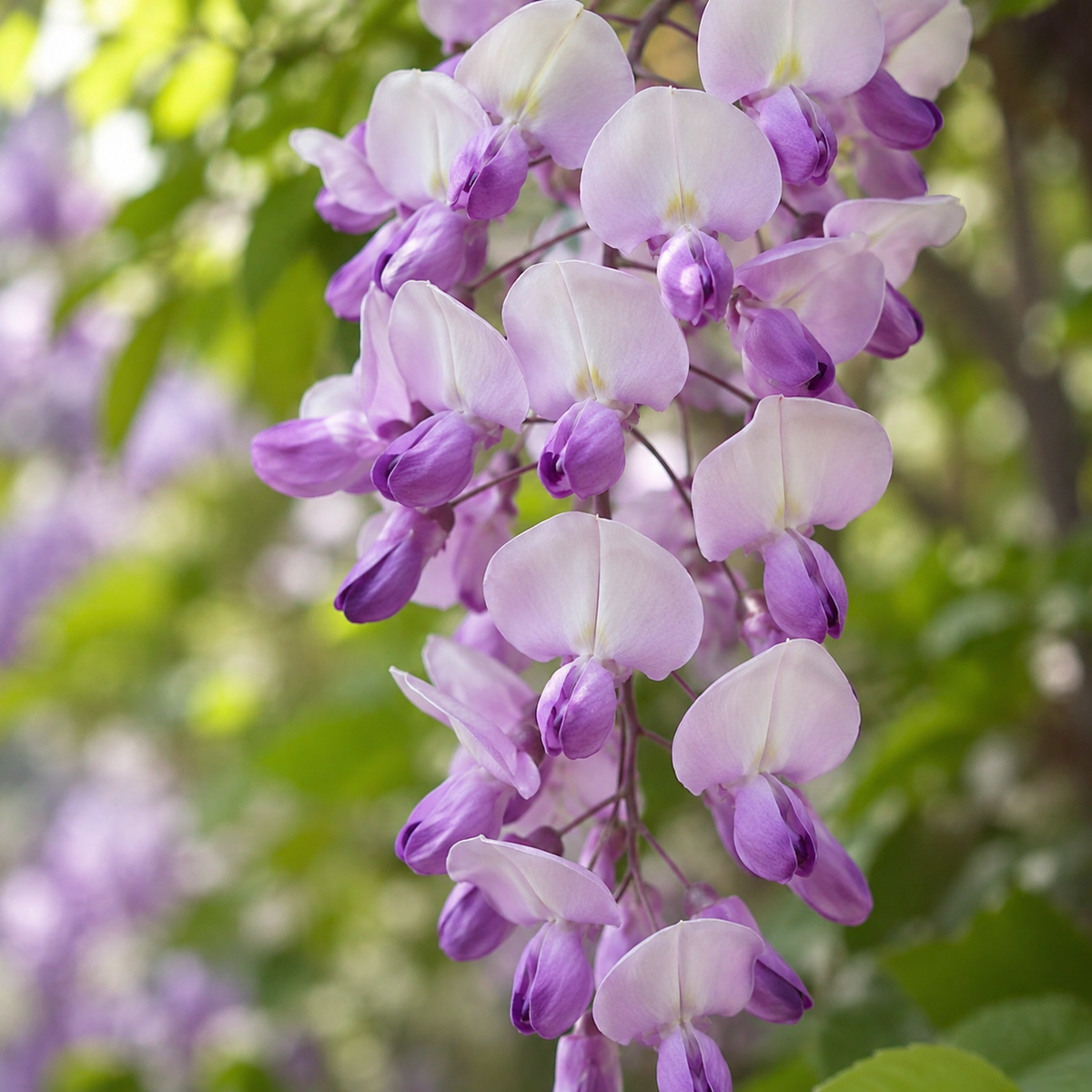
Lavender-and-white hybrid wisteria

Grande Diva® Barbara wisteria

Wisteria × venusta

Grande Diva® Barbara is a French hybrid wisteria with fragrant, pollinator-friendly lavender-and-white flowers. The MinwiKB25 cultivar blooms generously from a young age and forms a spring cascade over a pergola, arbour, or rigid trellis. Deciduous green foliage then creates a summer screen. In full sun, this fast-growing vine reaches about 6 m (20 ft) high and 3 m (10 ft) wide after ten years. Pruning in fall and again in late winter keeps the woody framework orderly. Seeds and pods are toxic when eaten, so collect accessible debris around children and pets. It suits gardens where regular seasonal maintenance remains practical.
Each store has its own inventory.

Products and available quantities may vary between Brossard and Laval. To check a store’s inventory, please contact us directly.

Even better: visit us in store to discover the full selection available!

Share
Exposure
Full sun; light partial shade is tolerated, but may reduce flowering
Hardiness
Zone 5

Discover the plant

Common nameGrande Diva® Barbara wisteria
FamilyFabaceae
GenusWisteria
Species× venusta
CultivarMinwiKB25
TypeOrnamental woody vine
Botanical nameWisteria × venusta

Grande Diva® Barbara wisteria (Wisteria × venusta ‘MinwiKB25’) produces fragrant, pollinator-friendly spring flowers in lavender and white. Bred in France by Hortival Diffusion and named in honour of opera singer Barbara Hendrix, this vine flowers generously from a young age. Hanging racemes create a luminous cascade over a pergola, arbour, or large trellis. Deciduous green foliage then takes over to form a leafy summer screen. The official breeder lists a height of about 6 m (20 ft) and a width of 3 m (10 ft) after ten years, along with a fast growth rate.

Plant Barbara in full sun and deep garden soil that remains evenly moist to occasionally dry while draining freely. Install a rigid independent support before planting because the woody stems thicken with age. Water regularly during establishment, then adjust irrigation to rainfall, heat, and drainage. Organic mulch helps stabilize moisture when it is kept away from the crown. Avoid high-nitrogen fertilizer, which mainly encourages leaves and long shoots. This wisteria can also grow in a large stable container when drainage is excellent and the root zone is protected from repeated freeze-thaw cycles during a Canadian winter.

In fall, shorten long shoots to about 20 cm (8 in) to keep the vine within its allotted space. In late winter, prune more closely while retaining four or five flower buds on each branch; these buds are usually larger and rounder than leaf buds. Remove dead, weak, or crossing wood and inspect every tie and anchor. Wisterias produce pods and seeds that are toxic when eaten. Collect them in areas used by children or pets. Regular pruning, an accessible support, and an open planting site let gardeners enjoy this spectacular fragrant display while keeping the mature woody framework orderly and safe.

Glycine Grande Diva® Barbara ‘MinwiKB25’ (Wisteria × venusta)

Planting guide

From planting to establishment.

Spacing / density About 3 m (10 ft), according to support width
Best planting time Spring or early fall, in workable well-drained soil
Growing method
Choose full sun and install a rigid pergola, arbour, or trellis before planting. Keep the vine away from gutters, cables, young trees, and vulnerable siding. Dig a hole twice as wide as the root ball but no deeper. Loosen circling roots gently, position the top of the root ball level with the surrounding soil, and backfill without burying the crown. Water slowly, then apply organic mulch while leaving several centimetres open around the stems. Guide one or two main shoots with flexible ties and inspect them through summer. Maintain steady moisture during the first two seasons without saturating the soil. Avoid high-nitrogen fertilizer. In fall, shorten the current season’s shoots to about 20 cm (8 in). In late winter, retain four or five flower buds on each branch; these are larger and rounder than leaf buds. Remove dead, weak, or crossing wood, replace tight ties, and refine the framework. Remove stems touching the ground before they root. Collect accessible pods and keep both sides of the support clear for inspection and pruning. This planned routine preserves abundant young flowering while containing vigorous growth and protecting nearby structures. Inspect the support after storms.

Soil and care

The right care,at the right time.

Minimum temperature

-30 °C (-22 °F)

Care level

High

Watering

Water deeply and regularly during establishment so the entire root ball and neighbouring soil become moist. Gradually extend the interval between applications once active growth resumes. Check moisture below the mulch before watering again and avoid prolonged saturation. An established plant tolerates occasionally dry soil, but persistent spring drought can reduce vigour and flowering. Adjust irrigation to rainfall, temperature, container size, and drainage rather than following a fixed calendar.

Soil type

This wisteria prefers deep garden soil that is moderately fertile and well drained. The ground may remain evenly moist or become occasionally dry after establishment, but water must not stand around the roots. Loam is an excellent choice. Improve compact clay or poor sand across the full prepared area, then mulch the surface without covering the crown. Good drainage and an open soil structure support both root health and dependable flowering.

Fertilization

For best results, base fertilization on a soil test. Mature compost applied at the surface can support soil structure and biological activity in spring. Avoid high-nitrogen fertilizer, which mainly stimulates foliage and long shoots at the expense of flowers. Correct only confirmed deficiencies, follow the labelled rate, and water the root zone after application. Vigorous leafy growth without flowers usually calls for less nitrogen and more light, not additional fertilizer.

Moisture

Average; evenly moist to occasionally dry soil without saturation

Seasonal care

In early spring, inspect the support, anchors, and ties before active growth begins. Replace ties that mark the wood and remove winter-damaged stems. During flowering, observe where racemes form so the most useful branches can remain in the permanent framework. After bloom, guide valuable new shoots and remove those heading toward gutters, roofing, cables, or neighbouring trees. Water during dry periods, especially in the first two years, without keeping the soil saturated. Remove stems touching the ground before they root. Collect accessible pods in areas used by children or pets. In fall, shorten the current season’s shoots to about 20 cm (8 in), following the breeder’s recommendation. Renew a thin mulch layer without covering the crown. In late winter, prune more closely while retaining four or five flower buds on each branch. Flower buds are usually larger and rounder than leaf buds. Remove dead, weak, or crossing wood, refine the framework, and verify the stability of the complete structure. This routine keeps Grande Diva® Barbara within its allotted space, supports a visible flower display, and makes annual maintenance more predictable. Record the branches that bloom most heavily so future pruning preserves a balanced pattern across the pergola or trellis. Record pruning dates and the branches that flower most heavily, then use those notes to preserve a balanced display across the complete support in future seasons.

Container growing

A garden,within reach.

Recommended pot size

Very large stable container, ideally at least 115 L (30 US gal), with excellent drainage
Container growing is possible, but it requires a very large stable pot, an independent support, and regular pruning. Choose at least 115 L (30 US gal) with several drainage holes. Use a structured loam-based mix amended with mature compost without creating excessive nitrogen. Install the support before planting and secure main shoots with flexible ties. Place the container in full sun and check moisture often because abundant foliage speeds drying during hot weather. Water until excess drains and empty any saucer. After flowering, shorten long shoots; in late winter, reduce secondary growth to two or three buds. Every two or three years, repot or replace part of the mix and prune roots carefully if needed. In cold Canadian regions, container roots are more exposed than roots in the ground. Insulate the pot, shelter it from wind, and reduce freeze-thaw cycles without moving the dormant vine into a heated location. Check the stability of both pot and trellis regularly, collect pods, and keep the drainage openings clear through winter. Use a heavy rolling base only if it is rated for the filled container. Rotate the pot occasionally so light reaches the framework evenly, and inspect roots near drainage holes before winter protection is installed.
Glycine Grande Diva® Barbara ‘MinwiKB25’ (Wisteria × venusta)

Bloom and dimensions

Its place,in your garden.

Mature height

8 m (26.2 ft)

Width / spread

6 m (19.7 ft)

Flower color

Lavender and white

Foliage color

Green

Foliage type

Deciduous

Growth rate

Fast; about 90 cm (3 ft) per year according to Iseli

Growth habit

Vigorous climbing twining woody vine

Fragrance

Floral fragrance with complex notes

Bloom period

In spring, Grande Diva® Barbara produces a generous cascade of fragrant, pollinator-friendly lavender-and-white flowers. The cultivar blooms from a young age. Full sun and a well-lit framework support the strongest display. Avoid excess nitrogen and retain shoots carrying flower buds. Inspect the support when racemes are wet after rain because moisture adds weight. The two-tone flowers remain especially visible against the emerging green foliage.

Fruiting

After flowering, wisteria may develop hanging pods that mature later in the season. Seeds and pods are toxic when eaten and must not be consumed. In areas visited by children or pets, remove accessible pods before they open and collect fallen seeds promptly while wearing gloves if your skin is sensitive. Place collected material beyond their reach and wash your hands after handling pods or seeds.
Glycine Grande Diva® Barbara ‘MinwiKB25’ (Wisteria × venusta)

Garden associations

In goodcompany.

Companion plants

Around the base of the structure, pair Barbara with low perennials such as hardy geraniums, heucheras, or manageable groundcovers. Their foliage finishes the lower level without competing for vertical space. Spring bulbs can extend the display before the wisteria canopy fills. Keep an open circle around the crown so moisture, shoots, and stems touching the ground remain easy to monitor. Repeating a small amount of lavender in nearby flowers creates visual continuity without competing with the hanging racemes. Choose companions that remain below the lowest trained branches and do not conceal ties, anchors, or drainage around the crown.

Plants to avoid

Do not plant this wisteria directly against young trees, delicate shrubs, or conifers it could cover. Other vigorous climbers also complicate pruning and support inspection. Keep stems away from gutters, siding, shingles, and cables. Plants requiring continuously waterlogged soil are poor neighbours because Barbara prefers steady moisture combined with effective drainage. Also avoid invasive groundcovers that hide rooted shoots and make stem control difficult. Leave enough open space for ladders, pruning tools, and safe movement around both sides of the support throughout the growing season.

Frequently asked questions

Your questions,answered.

What is the botanical identity of Grande Diva® Barbara?
Grande Diva® Barbara carries the cultivar name MinwiKB25. Official Minier sources identify it as Wisteria × venusta, not simply as Wisteria floribunda. It is a French horticultural selection from 2007, introduced by Hortival Diffusion and named in honour of opera singer Barbara Hendrix. Fragrant, pollinator-friendly flowers combine lavender and white and appear generously from a young age. Use the complete name on labels or in garden records to distinguish this selection from classic Japanese wisterias and other cultivars in the Grande Diva® series. The corrected identity also helps gardeners compare its mature dimensions and pruning needs with the right source information.
What support is suitable for Barbara wisteria?
Choose an independent pergola, arbour, or trellis engineered to carry a mature woody vine. Stems thicken with age and can distort a small decorative frame, gutter, or lightweight trellis attached to siding. Install the support before planting and preserve access on both sides for pruning. Guide one or two main shoots with flexible ties, then check regularly that ties are not marking the wood. Keep growth away from cables, shingles, and young trees. A generously sized structure at planting time simplifies maintenance and avoids a difficult replacement after the vine has matured. Check anchors after major wind events and replace any component that begins to flex, rust, or pull away from its footing.
How should Grande Diva® Barbara wisteria be pruned?
In fall, shorten the current season’s shoots to about 20 cm (8 in) to contain growth and reveal the supporting structure. In late winter, prune more closely while retaining four or five flower buds on each branch. Flower buds are usually larger and rounder than leaf buds. Also remove dead, weak, or crossing wood and replace ties that have become tight. Keep the main branches evenly distributed. Avoid removing every useful shoot before flowering. A consistent light routine is safer and more effective than attempting to reclaim a neglected vine with one severe cut. Collect accessible pods and inspect anchors whenever pruning provides a clear view of the framework.
Can Grande Diva® Barbara grow in a container in Canada?
Yes, but choose a container of at least 115 L (30 US gal) with excellent stability and several drainage holes. Add an independent trellis capable of carrying mature wood and place the entire arrangement in full sun. A loam-based mix holds moisture while allowing excess water to drain. Check irrigation frequently during hot weather and prune after flowering and again in late winter. In cold Canadian regions, insulate the container and shelter it from prevailing winds to protect the roots. Reduce freeze-thaw cycles without moving the dormant vine into a heated space. Check the stability of both pot and support after storms.
Is Grande Diva® Barbara wisteria toxic?
Yes. Wisterias contain toxic compounds, especially in seeds and pods, and ingestion can cause digestive illness in people, dogs, cats, and horses. Do not eat any part of the plant. Remove accessible pods before they open and collect fallen seeds promptly, especially near play areas. If a person or animal eats any part, contact poison control, a health professional, or a veterinarian immediately as appropriate rather than waiting for symptoms. Wear gloves if your skin is sensitive, wash your hands after pruning, and keep collected pods away from compost areas that pets can reach. Store cut material beyond their reach.

Wildlife and pets

Life,around your plants.

Reported toxicity

Yes

Supporting wildlife

Fragrant spring flowers attract pollinating insects while they are open. The vine mainly provides a floral resource and leafy cover; its seeds and pods are not for consumption. Collect debris in areas visited by children or pets and keep the support accessible for seasonal inspection.