Sale
Sold out

Organic dwarf open-pollinated snow pea
Fabaceae
Organic snow pea seeds
Organic 'Oregon Sugar Pod II' snow pea
Pisum sativum
Product code : BIOVO-0105
Oregon Sugar Pod II is a compact productive organic open-pollinated snow pea with flat light-green tender crisp sweet pods ready near 62 days. For best results with this compact snow pea, keep soil cool rather than saturated and inspect foliage regularly. A low trellis improves this compact snow pea by keeping stems airy and making young pods easy to see. Always adjust this compact snow pea to actual weather, soil drainage, and the stage of plant development. Picking every one or two days supports this compact snow pea and preserves the tender texture of young pods. Avoid excess nitrogen during this compact snow pea, because it favours foliage at the expense of pod production.
- Quantity
- Approximately 100 organic seeds per packet
- Exposure
- Sun to light partial shade
- Life cycle
- Cool-season annual
Discover the plant
Common nameOregon Sugar Pod II snow pea
FamilyFabaceae
GenusPisum
Speciessativum
CultivarOregon Sugar Pod II
TypeOrganic dwarf open-pollinated snow pea
Botanical namePisum sativum
Reproducible seedsYes
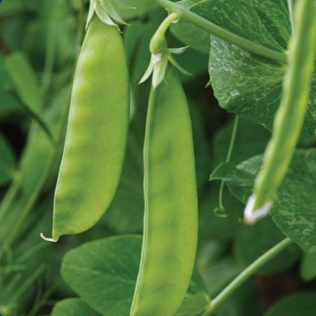
Organic 'Oregon Sugar Pod II' snow pea (Pisum sativum) is a modern dwarf bush variety developed through Oregon State University's breeding program. It produces generous crops of flat light-green pods approaching 10 cm that are crisp, tender, sweet, and entirely edible when picked young. The selection contains approximately 100 organic open-pollinated seeds. Its compact habit suits small vegetable gardens and containers fitted with low support, while its fast growth makes it possible to enjoy a spring harvest before intense summer heat arrives. White flowers then signal the first developing pods and make crop progress easy to follow.
Direct sow April through June as soon as soil can be worked, 2.5–4 cm deep and approximately 5–10 cm apart. Soil temperature of 10–18°C supports even emergence in 7–14 days. Choose sun or light partial shade in loose, cool, well-drained soil. Maintain consistent moisture, especially during flowering and pod formation, without waterlogging roots. A short trellis makes picking easier, supports loaded stems, and improves air movement around the foliage. Add a light mulch after emergence to steady soil moisture and limit shallow weed growth. Check containers daily during warm or windy weather.
Harvest generally begins approximately 60–68 days after sowing, often near 62 days. Pick while pods remain flat, supple, and glossy before peas swell strongly. Harvesting every one or two days encourages new pods and preserves tenderness. Eat them raw, in salads, lightly steamed, or stir-fried. This selection has documented resistance to leaf roll, powdery mildew, and pea enation virus, supporting a reliable crop without replacing sound rotation and attentive garden care. Remove severely affected tissue, avoid handling wet foliage, and keep reusable supports clean between seasons. Healthy plants continue setting pods when harvesting stays regular.

Sowing guide
It all startswith a seed.
Sowing depth
Approximately 2.5 to 4 cm (1 to 1½ in)
Spacing / density
Approximately 5 to 10 cm between plants; rows spaced for airflow and harvest
Germination temperature
10 to 18 °C (50 to 64 °F)
Germination time
Approximately 7 to 14 days
Sowing period
April through June by direct sowing Adjust these dates to your local frost dates and soil conditions; Canadian growing seasons vary by region.
Propagation
Direct sowing
Growing method
How to grow pea seeds: 'Oregon Sugar Pod II' pea. Direct sow as soon as soil can be worked, 2.5–4 cm deep and 5–10 cm apart. Avoid routine high-nitrogen fertilizer, which can produce leaves instead of timely pods. Choose a position for 'Oregon Sugar Pod II' with sun to light partial shade without sacrificing airflow or watering access. Thin crowded seedlings while the row is still easy to enter. 'Oregon Sugar Pod II' has a habit described as dwarf, bushy, and lightly climbing; use this to guide positioning or selective thinning without forcing a cramped plant. Place seed in an evenly moist, freely drained bed rather than cold saturated ground. This legume crop produces the expected harvest form: flat light-green broad tender crisp pods. Protect the developing crop from soil splash and rough handling. Inspect blossoms and young pods before adding fertilizer to a slow crop. Keep approximately 5 to 10 cm between plants; rows spaced for airflow and harvest around the crop, especially where neighbouring foliage could shade or trap moisture. Install support only if the growth habit calls for it; the planting is described as dwarf, bushy, and lightly climbing. Pick while pods are dry, hold the vine with the other hand, and remove overmature pods promptly. Pick the row at the intended pod stage using two hands so stems are not torn. For succession planting, make another small sowing only while enough cool growing time remains before hard freezing. Harvest repeatedly, cool pods promptly, remove diseased residue, and keep notes on sowing and first-pick dates before rotating the bed.
Soil and care
The right care,at the right time.
Soil pH
Approximately 6.0 to 7.0
Care level
Easy to moderate
Watering
Keep soil evenly moist from sowing through the end of harvest. Water gently after sowing to avoid displacing seed, then deeply once the top two or three centimetres begin to dry. Flowering and pod filling are most sensitive: drought reduces tenderness and yield while saturated soil promotes oxygen stress and root disease. Water at soil level in the morning, mulch lightly after emergence, and avoid unnecessarily wetting foliage. In containers check moisture daily during windy or warm weather.
Soil type
Choose loose, cool, well-drained soil enriched with mature compost without excess. Peas generally prefer slightly acidic to neutral pH around 6.0–7.0. Work the bed only once soil no longer sticks to tools to preserve its structure. Avoid waterlogged ground that deprives roots of air and recent applications of rich manure. In containers use stable mix that retains moisture while draining surplus rapidly. A three- to four-year rotation away from other legumes helps reduce accumulation of root diseases.
Fertilization
Before sowing, incorporate a small amount of mature compost only if soil is poor. Avoid nitrogen-rich fertilizer, which favours foliage over flowers and pods. A compatible inoculant may support nodulation where peas have never grown. If growth remains pale despite correct moisture, test the soil before adding a product. In containers, use gentle balanced fertilizer according to its label without multiplying applications.
Moisture
Cool consistently moist soil without saturation; well-aerated foliage
Seasonal care
Seasonal care for 'Oregon Sugar Pod II' pea. 'Oregon Sugar Pod II' snow pea begins with season-aware timing—direct-sow as soon as soil can be worked in cool spring conditions—so compare that guidance with the actual spring or autumn at your site. Sow approximately 2.5 to 4 cm deep. Expect germination in 7 to 14 days at 10 to 18 °C (50 to 64 °F); keep the medium evenly moist but aerated throughout that interval. Direct-sow into loose soil that has warmed or cooled to the crop's stated range, avoiding a saturated furrow that can rot seed. Install a low trellis or appropriate support before shoots begin twining. Water at soil level, with special attention during flowering and pod fill, then let the surface start drying between irrigations. 'Oregon Sugar Pod II' snow pea container guidance: 15 to 20 L (4 to 5 gal) with a low trellis. Set the pot where runoff can escape and light is adequate. Weed shallowly so cultivating tools do not cut the developing root system, and mulch only after the soil reaches a suitable temperature. Inspect flowers, leaf undersides, and young pods for chewing or sap-feeding insects before damage spreads. Use the supplied harvest guidance—approximately 60 to 68 days after sowing, often around 62 days—but pick by pod size, colour, and tenderness rather than waiting for every plant to match. Harvest repeatedly with two hands so stems are not uprooted; regular picking extends the usable pod period. When production finishes, remove diseased residue and note the bed for future crop rotation.
Container growing
A garden,within reach.
Recommended pot size
15 to 20 L (4 to 5 gal) with a low trellis
Growing 'Oregon Sugar Pod II' pea in containers. For 'Oregon Sugar Pod II', choose a container matching this guide: 15 to 20 L (4 to 5 gal) with a low trellis. Keep several drainage holes unobstructed. Water deeply as the surface dries. Good access around 'Oregon Sugar Pod II' makes inspection and harvest easier, given its habit: dwarf, bushy, and lightly climbing. Place the container where it receives the light the crop needs. At final planting, space the row approximately 5 to 10 cm between plants; rows spaced for airflow and harvest; crowding extra plants reduces access. Direct-sow the planting and keep the seed zone evenly moist. Give the crop sun to light partial shade, and keep water from collecting around the crown or container base. Install support only when the dwarf, bushy, and lightly climbing requires it. As this legume crop matures, use the expected harvest form—flat light-green broad tender crisp pods—to guide support, inspection, and careful picking. Pick pods with two hands, keep the support stable, and clear spent roots after the final crop. Guide the row stems gently and harvest the developing pods with two hands so the plant is not uprooted. After the final the planting harvest, remove residue, clean the container, and rotate to an unrelated crop.
Bloom and dimensions
Its place,in your garden.
Mature height
Approximately 40 to 75 cm (16 to 30 in)
Width / spread
Approximately 5 to 10 cm (2 to 4 in) between plants
Flower color
White
Foliage color
Green
Foliage type
Annual deciduous herbaceous foliage
Growth rate
Fast in cool weather
Growth habit
Dwarf, bushy, and lightly climbing
Bloom period
White flowers followed quickly by pod formation For best results with flowering, keep soil cool rather than saturated and inspect foliage regularly. A low trellis improves flowering by keeping stems airy and making young pods easy to see. Always adjust flowering to actual weather, soil drainage, and the stage of plant development. Picking every one or two days supports flowering and preserves the tender texture of young pods.
Fruiting
Numerous flat light-green pods, often borne in easy-to-pick clusters For best results with pod formation, keep soil cool rather than saturated and inspect foliage regularly. A low trellis improves pod formation by keeping stems airy and making young pods easy to see. Always adjust pod formation to actual weather, soil drainage, and the stage of plant development. Picking every one or two days supports pod formation and preserves the tender texture of young pods.
Days to maturity
Approximately 60 to 68 days after sowing, often around 62 days
Harvest
Begin harvest approximately 60–68 days after sowing, often near 62 days. Pick pods while long, flat, supple, and glossy before seed becomes strongly visible. Hold the stem with one hand and gently detach the pod with the other to avoid uprooting plants. Pick every one or two days because frequent harvest encourages further flowering. Cool sound pods promptly and discard any that are yellowed, mouldy, or slimy.
Garden associations
In goodcompany.
Companion plants
For best results with garden pairings, keep soil cool rather than saturated and inspect foliage regularly. A low trellis improves garden pairings by keeping stems airy and making young pods easy to see. Always adjust garden pairings to actual weather, soil drainage, and the stage of plant development. Picking every one or two days supports garden pairings and preserves the tender texture of young pods. Avoid excess nitrogen during garden pairings, because it favours foliage at the expense of pod production. After garden pairings, remove severely affected tissue and clean tools before moving to another row.
Recipe idea
From the gardento your plate.
Edible parts
Young pods and peas
'Oregon Sugar Pod II' pea in the kitchen. Quick Oregon Sugar Pod II stir-fry — Rinse and trim young pods. Heat a little oil in a pan, add snow peas, and stir-fry for two to four minutes until bright green while still crisp. Add a little ginger, garlic, and soy sauce, then serve immediately. Do not extend cooking unnecessarily. Refrigerate leftovers within two hours and use promptly. For best results with this pod preparation, keep soil cool rather than saturated and inspect foliage regularly. A low trellis improves this pod preparation by keeping stems airy and making young pods easy to see. Always adjust this pod preparation to actual weather, soil drainage, and the stage of plant development. Picking every one or two days supports this pod preparation and preserves the tender texture of young pods. Avoid excess nitrogen during this pod preparation, because it favours foliage at the expense of pod production. After this pod preparation, remove severely affected tissue and clean tools before moving to another row.
Frequently asked questions
Your questions,answered.
What are the main qualities of Oregon Sugar Pod II snow pea?
Oregon Sugar Pod II combines a compact bush habit, an early harvest, and large flat pods that are entirely edible. Pods remain tender, crisp, and sweet when picked young, often near 62 days after sowing. The variety suits small spaces with a low trellis and has documented resistance to several common pea diseases. For best results with this variety choice, keep soil cool rather than saturated and inspect foliage regularly. A low trellis improves this variety choice by keeping stems airy and making young pods easy to see. Always adjust this variety choice to actual weather, soil drainage, and the stage of plant development. Picking every one or two days supports this variety choice and preserves the tender texture of young pods.
When should Oregon Sugar Pod II be sown in your region?
Direct sow April through June as soon as soil can be worked without sticking to tools. Place seed 2.5–4 cm deep and approximately 5–10 cm apart. Temperature of 10–18°C with even moisture generally produces emergence in 7–14 days. Peas tolerate cool weather and light frost, but sustained heat reduces flowering and toughens pods. For best results with this sowing schedule, keep soil cool rather than saturated and inspect foliage regularly. A low trellis improves this sowing schedule by keeping stems airy and making young pods easy to see. Always adjust this sowing schedule to actual weather, soil drainage, and the stage of plant development. Picking every one or two days supports this sowing schedule and preserves the tender texture of young pods.
Does Oregon Sugar Pod II need a trellis?
Support is not always essential because the variety remains relatively short and bushy, but a low trellis is recommended. It keeps stems and pods off the soil, improves airflow, eases harvest, and reduces breakage under a heavy crop. Install it before tendrils tangle. Branches or 60–90 cm mesh are generally sufficient. For best results with this low support, keep soil cool rather than saturated and inspect foliage regularly. A low trellis improves this low support by keeping stems airy and making young pods easy to see. Always adjust this low support to actual weather, soil drainage, and the stage of plant development. Picking every one or two days supports this low support and preserves the tender texture of young pods.
When should the pods be harvested?
Begin near 62 days after sowing and pick when pods are long, flat, light green, supple, and glossy. Interior peas should be barely visible. If seed swells strongly the pod becomes more fibrous. Pick every one or two days, hold the stem to avoid uprooting plants, and cool the harvest promptly. Timing varies with temperature and sowing date. For best results with this harvest stage, keep soil cool rather than saturated and inspect foliage regularly. A low trellis improves this harvest stage by keeping stems airy and making young pods easy to see. Always adjust this harvest stage to actual weather, soil drainage, and the stage of plant development.
Is Oregon Sugar Pod II disease resistant?
Oregon State University describes Oregon Sugar Pod II as resistant to leaf roll, powdery mildew, and pea enation virus. Resistance reduces risk without guaranteeing that symptoms never appear. Space plants for airflow, water at soil level, rotate away from legumes, and remove severely affected tissue. Avoid handling wet foliage and clean reused supports. Continue scouting 'Oregon Sugar Pod II' even where resistance is documented: inspect lower and inner foliage, preserve airflow, water at soil level, and remove severely affected material. Record any symptoms and their timing so the next rotation and support sanitation respond to what actually occurred rather than treating resistance as immunity.
Wildlife and pets
Life,around your plants.
Supporting wildlife
For best results with the presence of beneficial insects, keep soil cool rather than saturated and inspect foliage regularly. A low trellis improves the presence of beneficial insects by keeping stems airy and making young pods easy to see. Always adjust the presence of beneficial insects to actual weather, soil drainage, and the stage of plant development.
For a great start to your seeds
The right extras.Right here.
Seed Starting Soil
Shop the collectionSeed starting supplies
Shop the collection