


Sale
Sold out

Root vegetable
Brassicaceae
Organic root vegetable seeds
Organic 'Purple Top White Globe' turnip
Brassica rapa subsp. rapa
Product code : BIOVO-0057
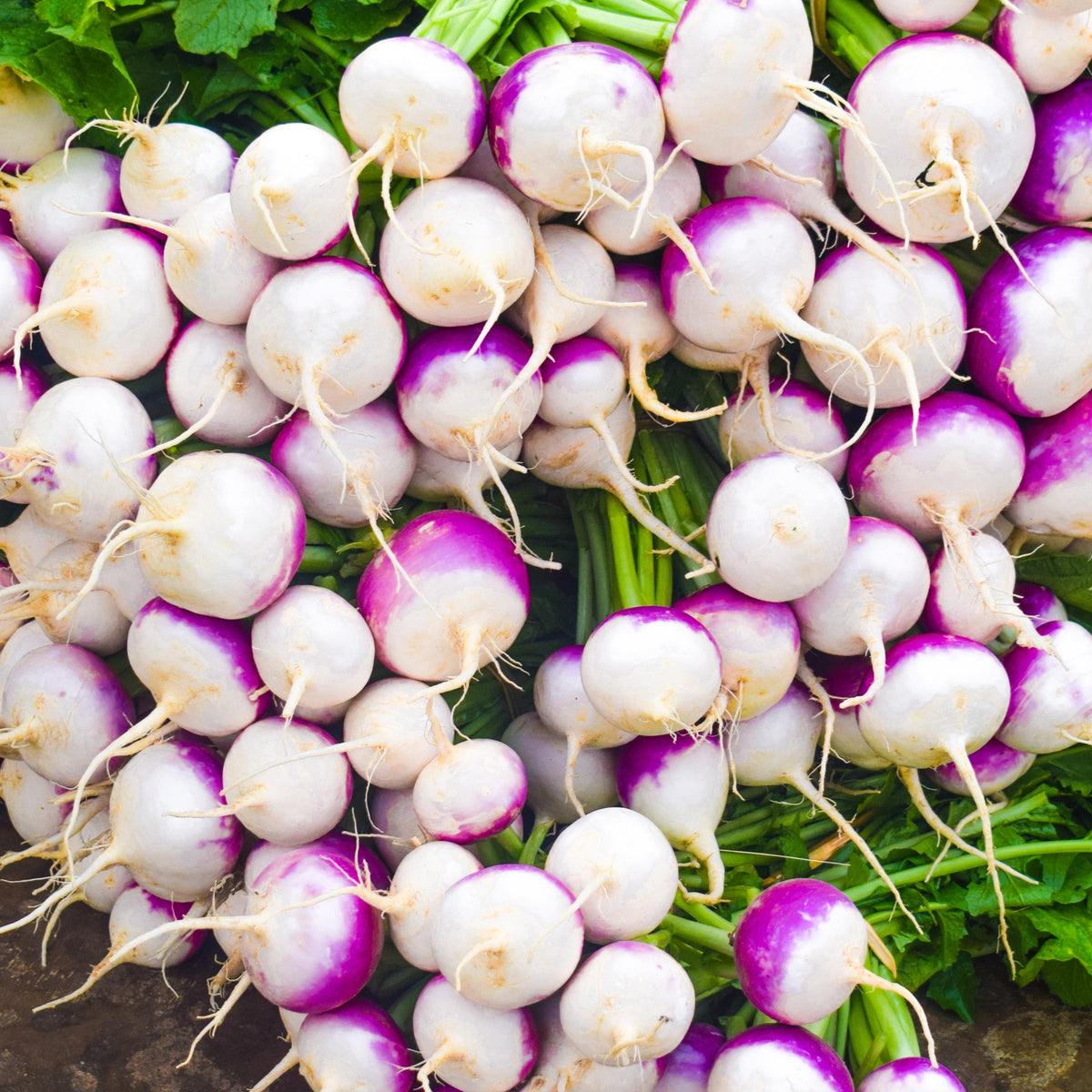
'Purple Top White Globe' is an organic open-pollinated heirloom turnip forming a round root that is white below ground and purple at the shoulder. Its flesh remains tender, mild, and lightly pungent when harvested young, while lobed greens may also be cooked. Direct-sow in spring or late summer in loose, well-drained soil. Even moisture, thinning to 8 or 15 cm, and harvesting before roots become oversized support quality. Maturity commonly occurs around 50 days, with variation according to weather. Roots and young greens therefore provide two useful kitchen harvests for salads, soups, mashes, and roasted dishes. Cool growing conditions help maintain the best texture and flavour.
- Exposure
- Sun
- Life cycle
- Biennial grown as an annual crop
Discover the plant
Common name'Purple Top White Globe' turnip
FamilyBrassicaceae
GenusBrassica
Speciesrapa subsp. rapa
CultivarPurple Top White Globe
TypeRoot vegetable
Botanical nameBrassica rapa subsp. rapa
Reproducible seedsYes
Heirloom varietyYes
Organic 'Purple Top White Globe' turnip (Brassica rapa subsp. rapa) is an open-pollinated heirloom known for a round root that is white below ground and purple at the shoulder. White flesh has a mild, lightly pungent flavour when harvested young. Lobed greens are edible as well and may be cooked like other leafy vegetables. Roots commonly reach a useful size in approximately 50 days, depending on temperature, moisture, and fertility. These organic turnip seeds are particularly suitable for spring and autumn harvests, when cool weather promotes tender texture and balanced flavour. Both root and greens provide useful kitchen harvests from a compact garden row.
Direct-sow as soon as soil can be worked in spring, then sow again in late summer for an autumn harvest. Place seed approximately 6 to 12 mm (1/4 to 1/2 in) deep in loose, fertile, well-drained soil. After emergence, thin plants to approximately 8 to 15 cm (3 to 6 in), according to the desired root size. Maintain even moisture because drought can make roots strong, bitter, or woody. Insect netting installed at sowing helps limit flea beetles and cabbage root maggots. Weed carefully so developing roots are not injured, and avoid excessive nitrogen that can encourage leafy growth or forked roots.
Harvest roots when they reach approximately 5 to 8 cm (2 to 3 in), or the size you prefer, before they become oversized and woody. Shoulders visible above the soil make sizing easier. Young greens removed during thinning cook quickly, while roots may be eaten raw, roasted, braised, mashed, or added to soups. Separate greens from roots after harvest and refrigerate them independently. To reduce persistent crop problems, avoid growing another brassica in the same location for several years and remove clearly diseased debris after the final harvest. Wash produce carefully, trim damaged tissue, and cool roots promptly to preserve quality.

Sowing guide
It all startswith a seed.
Sowing depth
6 to 12 mm (1/4 to 1/2 in)
Spacing / density
Thin to approximately 8 to 15 cm (3 to 6 in)
Germination temperature
Approximately 10 to 24 °C (50 to 75 °F)
Germination time
Approximately 5 to 10 days depending on temperature
Sowing period
Spring as soon as soil can be worked and late summer for an autumn harvest
Propagation
Direct sowing
Growing method
Growing 'Purple Top White Globe' turnip from seed. Direct-sow in spring as soon as soil can be worked, then sow a second crop in late summer for an autumn harvest. Prepare loose soil at least 20 cm (8 in) deep, remove stones, and incorporate a moderate amount of mature compost. Make furrows 6 to 12 mm (1/4 to 1/2 in) deep, distribute seed without crowding, and firm lightly. Keep the surface moist until emergence. Once true leaves appear, thin gradually to 8 or 15 cm (3 to 6 in), according to the desired size, and cook the removed young greens. Install insect netting immediately and seal every edge. Water deeply to provide approximately 2.5 cm (1 in) weekly, including rainfall. Weed with a shallow tool. Watch visible shoulders and harvest around 5 to 8 cm (2 to 3 in), before roots become woody. Remove tops, cool greens and roots separately, and discard diseased debris. Wait several years before growing another brassica in the same location. Label every row and record emergence, first thinning, and the diameter of initial roots. After heavy rain, check that soil has not crusted or exposed fine roots. Remove any plant showing severe distortion, inspect it away from the bed, and avoid moving contaminated soil to another growing area.
Soil and care
The right care,at the right time.
Soil pH
Approximately 6.0 to 7.5
Minimum temperature
Approximately -5°C (23°F) for established plants; protect young seedlings from a hard freeze
Care level
Easy
Watering
Keep soil evenly moist from emergence through harvest. Provide approximately 2.5 cm (1 in) of water each week, including rainfall, and adjust for heat, wind, and drainage. Water deeply at soil level when the upper layer begins to dry, without saturating the bed. Alternating drought and excess moisture can split roots or intensify bitterness. A very thin mulch helps conserve moisture after thinning, but keep it away from plant centres and check the soil beneath it before watering.
Soil type
This turnip prefers loose, deep, stone-free soil so its round root can develop without forking. Fertile loam amended with a moderate amount of mature compost performs well when excess water drains readily. Aim for slightly acidic to neutral soil, around pH 6.0 to 7.0. Avoid fresh manure, compaction, surface crusting, and waterlogged ground, which interfere with root shape and texture. Raised beds are useful where native soil remains heavy or wet.
Fertilization
Before sowing, incorporate a moderate amount of mature compost into already loose soil. A balanced fertilizer may be added only when a soil test or weak growth indicates a genuine need. Avoid excessive nitrogen and fresh manure, which encourage abundant foliage instead of uniform roots. After emergence, a light feeding is generally sufficient. Stop concentrated applications once roots begin swelling and focus instead on even moisture. Pale leaves may reflect moisture, root, or pest problems, so examine growing conditions before adding fertilizer.
Moisture
Evenly moist soil without standing water
Seasonal care
Seasonal care for 'Purple Top White Globe' turnip. In spring, loosen the bed, remove stones, and incorporate mature compost without excess. Sow early, keep the surface moist, and install insect netting immediately. After emergence, thin as soon as true leaves appear so roots can enlarge evenly. During growth, provide approximately 2.5 cm (1 in) of water weekly, including rainfall, and weed shallowly. Harvest before intense heat when roots have reached the desired size. In summer, remove the first crop and prepare a small area for late-season sowing. Keep this sowing moist during hot days, then take advantage of cooler nights. In autumn, harvest progressively; light frost is tolerated, but do not allow roots to experience a deep freeze. Remove tops, cool the parts separately, and inspect roots before storage. Discard diseased tissue, clean tools, and record dates. Then maintain a rotation of several years without brassicas to reduce clubroot and persistent pests. Check stored roots regularly and use any damaged specimen promptly. In containers, check moisture daily during windy periods and empty saucers after every rain. Repair netting as soon as an opening appears. At harvest, compare size, tenderness, and damage between the two seasons. Keep observations with the garden plan so the next crop can be moved away from former brassicas. During storage, inspect roots regularly and remove any specimen that softens or deteriorates. Wash reusable crates, allow them to dry completely, and never return spoiled material to the active vegetable bed.
Container growing
A garden,within reach.
Recommended pot size
25 to 30 cm (10 to 12 in)
Growing 'Purple Top White Globe' turnip in containers. Choose a planter at least 25 to 30 cm (10 to 12 in) deep, wide enough to space plants 8 to 15 cm (3 to 6 in) apart, and fitted with many drainage holes. Fill it with light vegetable potting mix amended with a modest amount of mature compost. Sow 6 to 12 mm (1/4 to 1/2 in) deep, keep the surface moist until emergence, then thin promptly. Place the container in sun during cool weather; light afternoon shade may reduce stress as temperatures rise. Check moisture daily because even brief drought can make roots strong or woody. Water slowly until excess drains, then empty the saucer. Protect young leaves with fine netting supported on small hoops. Rotate the pot for balanced light and use only light fertilizer. Harvest as soon as shoulders reach the desired size. After the final harvest, clean the container and avoid immediately sowing another brassica if disease symptoms appeared. Label the planter with its sowing date and observe how quickly it dries after each watering. Add potting mix around an overly exposed shoulder without burying the leaf centre. Inspect drainage holes after storms, loosen only the surface, and harvest one test root before deciding whether the remaining plants need more time.

Bloom and dimensions
Its place,in your garden.
Mature height
Approximately 30 to 45 cm (12 to 18 in), depending on growing conditions
Width / spread
Approximately 20 to 30 cm (8 to 12 in)
Flower color
Yellow
Foliage color
Medium green
Foliage type
Deciduous
Growth rate
Fast
Growth habit
Upright leafy rosette above a round root
Fragrance
Subtle fragrance
Bloom period
This variety is grown for roots and young greens, so flowering is not normally desired during the harvest season. Prolonged heat, water stress, or an overmature planting may trigger bolting and make roots more fibrous. Harvest before the flower stalk elongates. For seed saving, selected plants must overwinter and bloom in their second year, isolated from compatible turnips to limit crossing. Yellow brassica flowers attract insects, but allowing them to develop means sacrificing the eating quality of those roots.
Fruiting
After flowering and pollination, Organic 'Purple Top White Globe' turnip gradually directs energy toward fruit or seed formation. This stage is not always wanted when leaves, roots, or stems are the primary harvest. For culinary quality, harvest at the recommended stage; allow only several healthy plants to complete the cycle when observing maturation or collecting permitted seed. During maturation, inspect Organic 'Purple Top White Globe' turnip regularly and adjust care to its actual stage of growth.
Days to maturity
Approximately 50 days from direct sowing
Harvest
Approximately 50 days after sowing, ideally when roots measure 5 to 8 cm (2 to 3 in)
Garden associations
In goodcompany.
Companion plants
Use quick low crops near 'Purple Top White Globe', removing them before the main rosette closes the bed. Rotate 'Purple Top White Globe' turnip away from closely related crops when soil pests or disease have appeared. Water the upright leafy rosette above a round root according to its own shallow root zone. Around 'Purple Top White Globe', preserve access to the round white root with a purple shoulder and remove neighbours that obscure inspection. Use companion planting to organize succession and diversity, not as a substitute for sound crop care. When arranging neighbours for 'Purple Top White Globe' turnip, a companion does not guarantee control of insects or disease, so inspect every crop separately. Reassess the arrangement around 'Purple Top White Globe' as both crops approach mature size.
Recipe idea
From the gardento your plate.
Edible parts
Roots and young greens
'Purple Top White Globe' turnip in the kitchen. Thyme-roasted turnips — Preheat the oven to 210°C (425°F). Wash 500 g small roots, remove greens, and trim every damaged portion. Peel only when skins are thick, then cut into even wedges. Toss with 15 mL (1 tbsp) oil, 5 mL (1 tsp) thyme, a small pinch of salt, and pepper. Spread in one layer on a baking sheet. Roast for 25 to 35 minutes, turning halfway, until wedges are browned and tender when pierced with a knife. Add 5 mL (1 tsp) lemon juice when serving. Meanwhile, wilt washed young greens in a pan with a small amount of water and serve them alongside. Adjust timing to the actual size of pieces. Refrigerate leftovers within two hours and use them promptly. Use a clean cutting board and keep soil-covered produce separate from ready-to-eat foods. Taste before adding more salt. If greens are mature, remove thick stems and extend cooking only until tender. Cool every component separately before combining leftovers, and label the storage container with the preparation date.
Frequently asked questions
Your questions,answered.
When should 'Purple Top White Globe' turnip be sown?
Direct-sow in spring as soon as soil can be worked, then sow again in late summer for an autumn harvest. Turnips develop their best texture in cool weather; prolonged heat may accelerate bolting and strengthen flavour. Place seed 6 to 12 mm (1/4 to 1/2 in) deep, keep the surface moist, and thin to 8 or 15 cm (3 to 6 in) after true leaves appear. Make several small sowings instead of one large row to spread harvest. Install insect netting immediately and record dates because the ideal window varies by region and yearly weather. Avoid transplanting crowded seedlings; direct sowing protects the developing root and reduces distortion.
How can woody or bitter roots be avoided?
Maintain steady growth and harvest before roots become oversized. Provide approximately 2.5 cm (1 in) of water weekly, including rainfall, watering deeply when the surface dries. Avoid alternating drought and saturation, as well as excess nitrogen that promotes foliage instead of an even root. Thin early enough to leave 8 to 15 cm (3 to 6 in) between plants. Watch visible shoulders and begin harvesting around 5 to 8 cm (2 to 3 in). Cool spring and autumn weather generally supports milder flavour than prolonged growth during intense heat. Remove weeds shallowly so roots are not injured, and harvest a test root whenever texture is uncertain.
Can the greens of this turnip be eaten?
Yes. Young greens are edible and may be harvested during thinning before the main roots enlarge. Choose healthy leaves, wash them carefully to remove soil, and inspect their undersides for insects. Wilt them briefly in a pan, add them to soup, or cook them like other leafy greens. Avoid removing many leaves from plants retained for root production because foliage supports their growth. At final harvest, separate tops from roots promptly and refrigerate them in different containers. Use greens first because they keep for less time than cooled roots. Discard yellowed, slimy, or heavily damaged leaves, and use clean water, hands, and utensils during preparation.
How can turnips be protected from insects?
Install fine insect netting immediately after sowing, before flea beetles or cabbage root maggots can reach the bed. Support it on hoops, secure every edge to the soil, and check that no infested brassica is trapped underneath. Inspect both leaf surfaces regularly and repair openings after wind or every intervention. Water at soil level, remove clearly diseased debris, and control weeds in the brassica family. After harvest, move turnips to another plot for several years. If damage continues, identify the pest before taking additional action and use only a method authorized for root vegetables in your region. Wash harvested greens carefully even when netting has been used.
When and how should 'Purple Top White Globe' be harvested?
Begin around 50 days after sowing, but rely mainly on size and texture instead of one fixed date. Purple shoulders normally rise above the soil and make diameter easy to estimate. Harvest one root first when it measures approximately 5 to 8 cm (2 to 3 in), then cut it to check tenderness before continuing along the row. Loosen soil with a fork when necessary and pull without injuring neighbouring roots. Remove tops promptly, then wash and cool greens and roots separately. Do not wait until every root becomes very large because flavour may strengthen and texture may become fibrous or woody. Harvest before a deep freeze and use damaged roots first.
Wildlife and pets
Life,around your plants.
Supporting wildlife
Purple Top White Globe is normally harvested before its biennial flower stalk develops. A root left through winter may open yellow crucifer flowers the next season, offering pollen and nectar to bees and hoverflies. By then the root is no longer a tender crop. Retain flowering turnips only for planned seed production or a short-lived insect resource.
For a great start to your seeds
The right extras.Right here.
Seed Starting Soil
Shop the collectionSeed starting supplies
Shop the collection





