


Sale
Sold out

Untreated
Pea family
'Garoy' Peanut
Arachis hypogaea
Product code : NOR-GR03
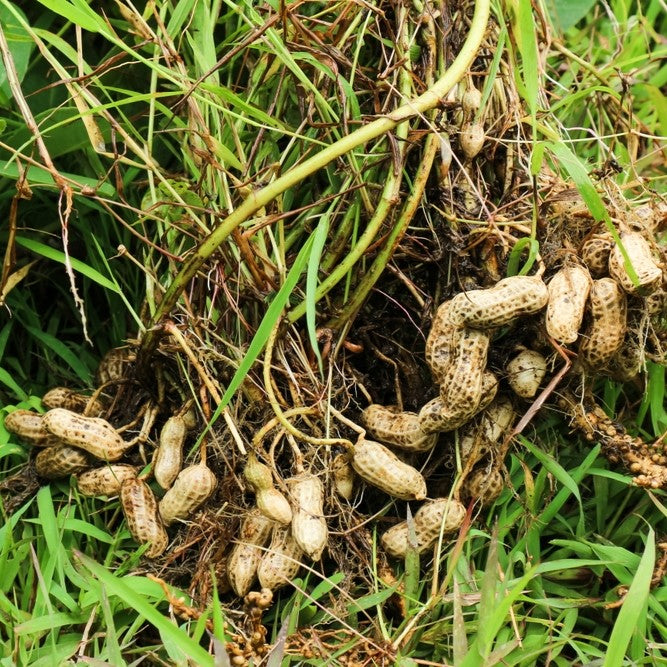
The 'Garoy' peanut is a hardy variety that produces peanuts smaller than those sold in grocery stores, but of exceptional quality. This fascinating plant develops its fruits underground after the flowers are fertilized, offering a unique experience for gardening enthusiasts. Ideal for warm climates and well-drained soils, it promotes a flavorful and original harvest. This variety reaches unspecified. The maturity of this variety is 100 days after transplanting. The packet contains 50 seeds to start your planting. Organize legumes according to their growth habit. Dwarf varieties are easily harvested in rows accessible from both sides; climbing varieties need a support anchored before the foliage gets heavy.
- Quantity
- 50 seeds
- Exposure
- Sun
- Life cycle
- Annual crop for vegetable harvest
Discover the plant
Common namePeanut
FamilyPea family
GenusPeanut
Speciesunderground
CultivarGaroy
TypeUntreated
Botanical nameArachis hypogaea
Peanut 'Garoy' (Arachis hypogaea). 'Garoy' peanut is a hardy variety that produces smaller peanuts than those sold in grocery stores, but of exceptional quality. This fascinating plant develops its fruits underground after the flowers are fertilized, offering a unique experience for gardening enthusiasts. Ideal for hot climates and well-drained soils, it promotes a tasty and original harvest. This variety reaches an unspecified size. This variety matures 100 days after transplanting. The packet contains 50 seeds to start your planting.
The sowing calendar for this variety is as follows: sow indoors between February and April. Direct sowing of peas, fava beans, and beans preserves their root system. Prepare the locations and supports for climbing varieties before emergence. Do not let seeds stay in waterlogged soil. Identify each row to distinguish between types harvested in pods and those intended for seeds. Thin only when emergence shows real competition between young plants. To install this variety, first choose a location corresponding to its exposure: full sun.
Harvest peanuts at the first frost by pulling up the plants. Let them dry in their shells before consuming them. To fully appreciate their taste, bake them in the oven at 150 °C (300 °F). Add 'Garoy' peanuts to your garden to discover a fascinating crop and harvest fresh, tasty peanuts, perfect for your homemade snacks. Begin observing the harvest of this variety around 100 days after transplanting; then check for the desired color, firmness, and size for picking. August - September, when the foliage yellows, pull up the plant, shake and let dry, then collect the peanuts.

Sowing guide
It all startswith a seed.
Spacing / density
When preparing your vegetable garden, make mounds 60 cm by 60 cm, 10 cm high, and leave 30 cm between your mounds.
Sowing period
Sow indoors between February and April.
Propagation
Sowing
Cold stratification
Yes
Growing method
The sowing schedule for this variety is as follows: sow indoors between February and April. To plant this variety, first choose a location corresponding to its exposure: full sun. Well-draining with a good percentage of sand. Plan for this variety's space in the bed, considering its unspecified height. When designing your planting, reserve unspecified spread for each plant of this variety. When planting this variety, the spacing to maintain is: when preparing your vegetable garden, make small mounds 60 cm by 60 cm, 10 cm thick, and leave 30 cm between your mounds. When preparing your vegetable garden, make small mounds 60 cm by 60 cm, 10 cm thick, and leave 30 cm between your mounds. It's possible that some seedlings may rot, so it's better to plant a few extra. This fascinating plant develops its fruits underground after the flowers are fertilized, offering a unique experience for gardening enthusiasts. Direct sowing of peas, fava beans, and common beans preserves their root system. Prepare the locations and supports for climbing varieties before they emerge.
Soil and care
The right care,at the right time.
Watering
To install this variety, first choose a location corresponding to its exposure: full sun. Draining and a good percentage of sand It is possible that some seedlings rot, so it's best to plant a few extra. This fascinating plant develops its fruits underground after the flowers are fertilized, offering a unique experience for gardening enthusiasts.
Soil type
This fascinating plant develops its fruits underground after the flowers are fertilized, offering a unique experience for gardening enthusiasts. To plant this variety, first choose a sunny location. It needs well-drained soil with a good percentage of sand. Organize the legumes according to their growth habit. Dwarf varieties are easily harvested in rows accessible from both sides; climbing varieties need a support anchored before the foliage becomes heavy.
Fertilization
To plant this variety, first choose a location with the right exposure: full sun. Draining soil with a good percentage of sand is ideal. It's possible that some seedlings may rot, so it's best to sow a few extra. This fascinating plant develops its fruits underground after the flowers are fertilized, offering a unique experience for gardening enthusiasts.
Seasonal care
Some seedlings may rot, so it's best to sow a few extra. The sowing schedule for this variety is as follows: sow indoors between February and April. Begin to observe the harvest of this variety as it approaches 100 days after transplanting; then check for the desired color, firmness, and size for picking. August - September, when the foliage yellows, pull up the plant, shake and let dry, then harvest the peanuts. To enjoy, they must be cooked at 150C for 1 hour with their shells. Plan the placement of this variety in the bed, considering its height of unspecified. When designing the planting, reserve unspecified spread for each plant of this variety. When planting this variety, the spacing to maintain is: when preparing your garden, make small mounds 60 cm by 60 cm, 10 cm thick, and leave 30 cm between your mounds. When preparing your garden, make small mounds 60 cm by 60 cm, 10 cm thick, and leave 30 cm between your mounds. 'Garoy' Peanut Seeds (Arachis hypogaea) – offered by WH Perron The 'Garoy' peanut is a hardy variety that produces smaller peanuts than those sold in grocery stores, but of exceptional quality.
Container growing
A garden,within reach.
Recommended pot size
Drained container allowing the plant to spread to Not specified.
The foliage of this variety occupies approximately Not specified; leave this width available around the container instead of crowding several plants against its edge. Place the container of this variety in this exposure: sun, checking the light received throughout the day. The sowing schedule for this variety is prepared as follows: sow indoors between February and April. To install this variety, first choose a location corresponding to its exposure: sun. Well-draining with a good percentage of sand. It is possible that some seedlings may rot, so it's better to plant a few extra. The packet contains 50 seeds to start your planting. This fascinating plant develops its fruits underground after the fertilization of its flowers, offering a unique experience for gardening enthusiasts. Pot cultivation of peas or beans is planned according to the variety's growth habit. Dwarf forms primarily require a well-distributed surface, while climbing varieties need a securely fastened support. The roots need well-drained potting soil that maintains consistent moisture during flowering. Harvest the pods by holding the stems to avoid unbalancing the plant in the container.
Bloom and dimensions
Its place,in your garden.
Mature height
Not specified
Width / spread
Not specified
Fruiting
'Garoy' Peanut Seeds (Arachis hypogaea) – offered by WH Perron The 'Garoy' peanut is a hardy variety that produces peanuts smaller than those sold in grocery stores, but of exceptional quality. This fascinating plant develops its fruits underground after the flowers are fertilized, offering a unique experience for gardening enthusiasts. Begin observing the harvest of this variety around 100 days after transplanting; at that time, check for the desired color, firmness, and size for picking.
Days to maturity
100 days post-transplant
Harvest
Harvest at the stage indicated for the variety, either as tender pods, fresh seeds, or dry seeds. Support the stem with one hand while picking.
Garden associations
In goodcompany.
Companion plants
Anticipate this variety's place in the flowerbed considering its unspecified height. When designing the planting, allow an unspecified spread for each plant of this variety. When planting this variety, the spacing to maintain is: when preparing your vegetable garden, make small mounds 60 cm by 60 cm, 10 cm thick, and leave 30 cm between your mounds. When preparing your vegetable garden, make small mounds 60 cm by 60 cm, 10 cm thick, and leave 30 cm between your mounds.
Recipe idea
From the gardento your plate.
Edible parts
Pods or seeds, depending on the harvest stage
Recipe idea for your ‘Garoy’ peanut harvest. Prepare a side dish of cooked beans or peas. For edible-podded harvests, trim the ends and cook the pods until tender. For shelling or dry seed varieties, use seeds that have already been fully cooked according to their usual preparation. Drain, then mix with a little oil and chopped parsley. Add pieces of ripe tomato or some diced sweet onion for varying textures. Serve the vegetables hot or warm. Taste before adjusting the seasoning and adapt the quantities to the number of people at the table. Serve the preparation with bread, rice, or another simple side dish that highlights the harvested vegetable. Prepare small portions to enjoy the freshness of the harvest. Use a clean cutting board, remove damaged parts, and rinse the harvested produce before starting.
Frequently asked questions
Your questions,answered.
When to start peanut 'Garoy' seeds?
The sowing calendar for this variety is as follows: sow indoors between February and April. Direct sowing of peas, broad beans, and beans preserves their root system. Prepare the locations and supports for climbing varieties before emergence. Do not let the seeds stay in waterlogged soil. Identify each row to distinguish between types harvested as pods and those intended for seeds. Thin out only when emergence shows real competition between young plants. Pick the pods by supporting the stem with one hand to avoid tearing off the branches. Young harvests require frequent passes, whereas seeds intended for drying remain on the plant longer.
When to harvest 'Garoy' peanuts?
Begin observing the harvest of this variety when it approaches 100 days after transplanting; then check for the desired color, firmness, and size for picking. August - September, when the foliage yellows, pull up the plant, shake and let dry, then collect the peanuts. To enjoy, bake them at 150C for 1 hour with their shells. This variety reaches unspecified. The maturity of this variety is 100 days after transplanting. Some seedlings may rot, so it's better to plant a few extra. Pick the pods while supporting the stem with one hand to avoid tearing off the branches.
What location is suitable for ‘Garoy’ peanut?
To plant this variety, first choose a location with suitable sun exposure: full sun. The soil should be well-draining and have a good percentage of sand. Allow space for this variety in the flowerbed, considering its unspecified height. When designing the planting, allow for an unspecified spread for each plant of this variety. When planting this variety, the recommended spacing is to create small mounds 60 cm by 60 cm, 10 cm thick, and leave 30 cm between your mounds when preparing your vegetable garden. When preparing your vegetable garden, create small mounds 60 cm by 60 cm, 10 cm thick, and leave 30 cm between your mounds.
How to water Peanut 'Garoy' during growth?
It is possible for some seedlings to rot, so it's best to plant a few extra. To establish this variety, first choose a location that matches its sun exposure: full sun. Well-draining with a good percentage of sand. Harvest the pods by supporting the stem with one hand to avoid tearing off the ramifications. Young harvests require frequent passes, while seeds intended for drying remain on the plant longer. Avoid handling the foliage when it is wet. For climbing varieties, guide the first shoots and ensure that the stems do not entwine themselves around neighboring crops.
What care should Arachide 'Garoy' receive throughout the season?
Some seedlings may rot, so it's best to plant a few extra. The sowing schedule for this variety is as follows: sow indoors between February and April. Start observing this variety's harvest around 100 days after transplanting; check for the desired color, firmness, and size for picking. In August - September, when the foliage yellows, pull up the plant, shake and let dry, then collect the peanuts. To enjoy them, bake them at 150°C for 1 hour with their shells. Pick the pods while supporting the stem with one hand to avoid tearing off the ramifications.
For a great start to your seeds
The right extras.Right here.
Seed Starting Soil
Shop the collectionSeed starting supplies
Shop the collection





