


Fine Herbs
Borage
Products and available quantities may vary between Brossard and Laval. To check a store’s inventory, please contact us directly.
Even better: visit us in store to discover the full selection available!
- Exposure
- Sun to partial shade
- Hardiness
- Not hardy
Discover the plant
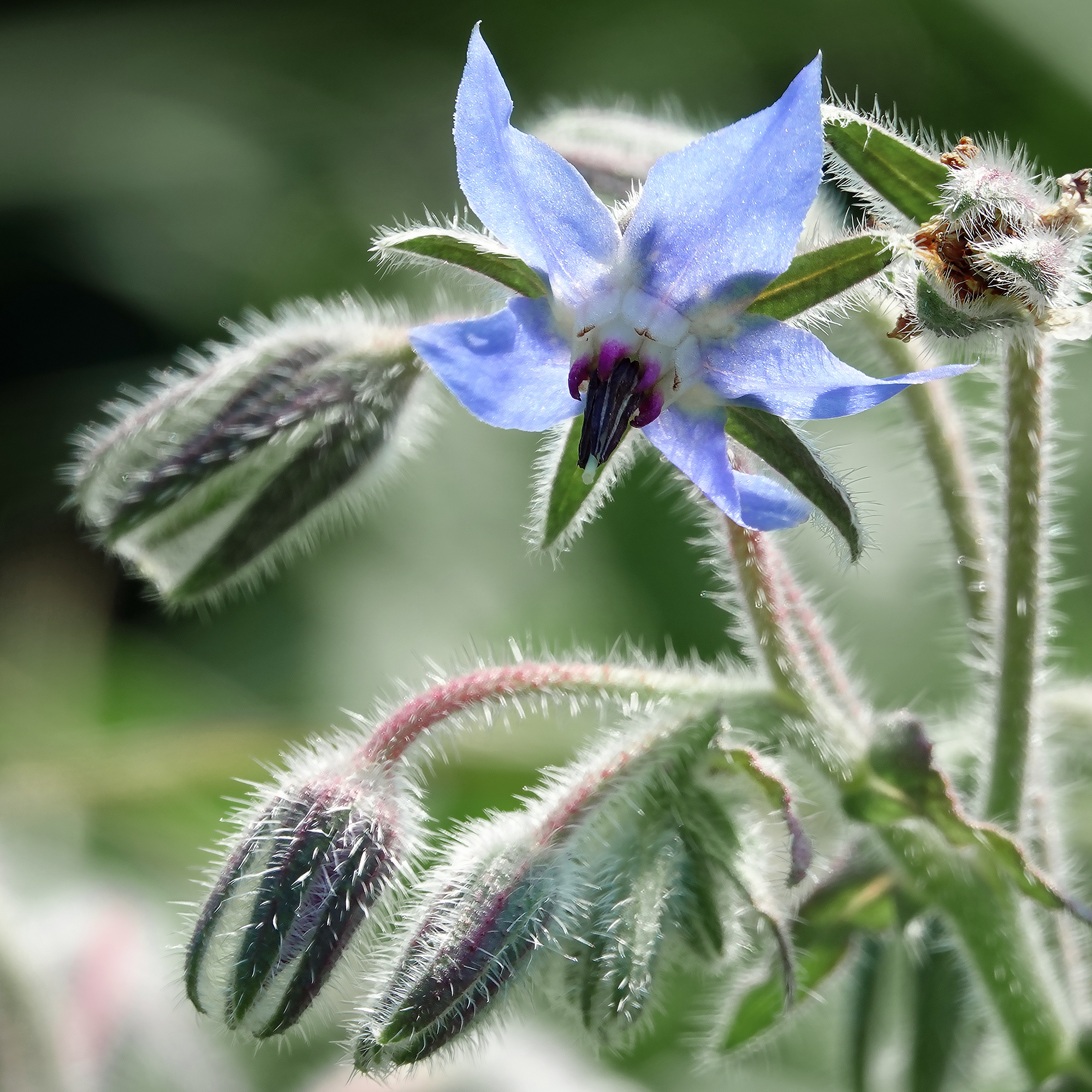
Borage is an aromatic and edible annual plant much loved for its beautiful star-shaped blue flowers and slightly fuzzy green foliage. It adds a natural, rustic, and luminous touch to vegetable gardens, edible flower beds, herb gardens, and pollinator-friendly landscapes. Its edible flowers are often used to decorate salads, desserts, cool drinks, and summer plates, while young leaves can be consumed in moderation for their fresh taste, slightly reminiscent of cucumber.
Easy to grow, borage prefers a sunny to lightly semi-shaded location, in light, well-drained, and moderately fertile soil. It grows quickly, requires little maintenance, and often self-seeds naturally when it thrives in the garden. Its free and somewhat wild habit is very suitable for natural vegetable gardens, medicinal gardens, flowered borders, and spaces where one wishes to create a lively, spontaneous, and biodiverse effect.
Very melliferous, borage attracts bees, bumblebees, and several beneficial insects, making it an excellent ally for the vegetable garden and surrounding crops. Its generous bloom adds color throughout the season, while promoting pollinator activity around vegetables, herbs, and edible flowers. It is an ideal plant for gardeners looking for an easy, useful, decorative annual perfectly suited for gourmet and natural gardens.

Planting guide
From planting to establishment.
Soil and care
The right care,at the right time.
Soil pH
Minimum temperature
Care level
Watering
Soil type
Fertilization
Moisture
Seasonal care
Container growing
A garden,within reach.
Bloom and dimensions
Its place,in your garden.
Mature height
Width / spread
Flower color
Foliage color
Foliage type
Growth rate
Bloom period
Fruiting
Harvest

Garden associations
In goodcompany.
Companion plants
Wildlife and pets