Sale
Sold out

Rhizome for planting
Tricyrtis 'Hirta' (2 rhizomes)
Toad Lily
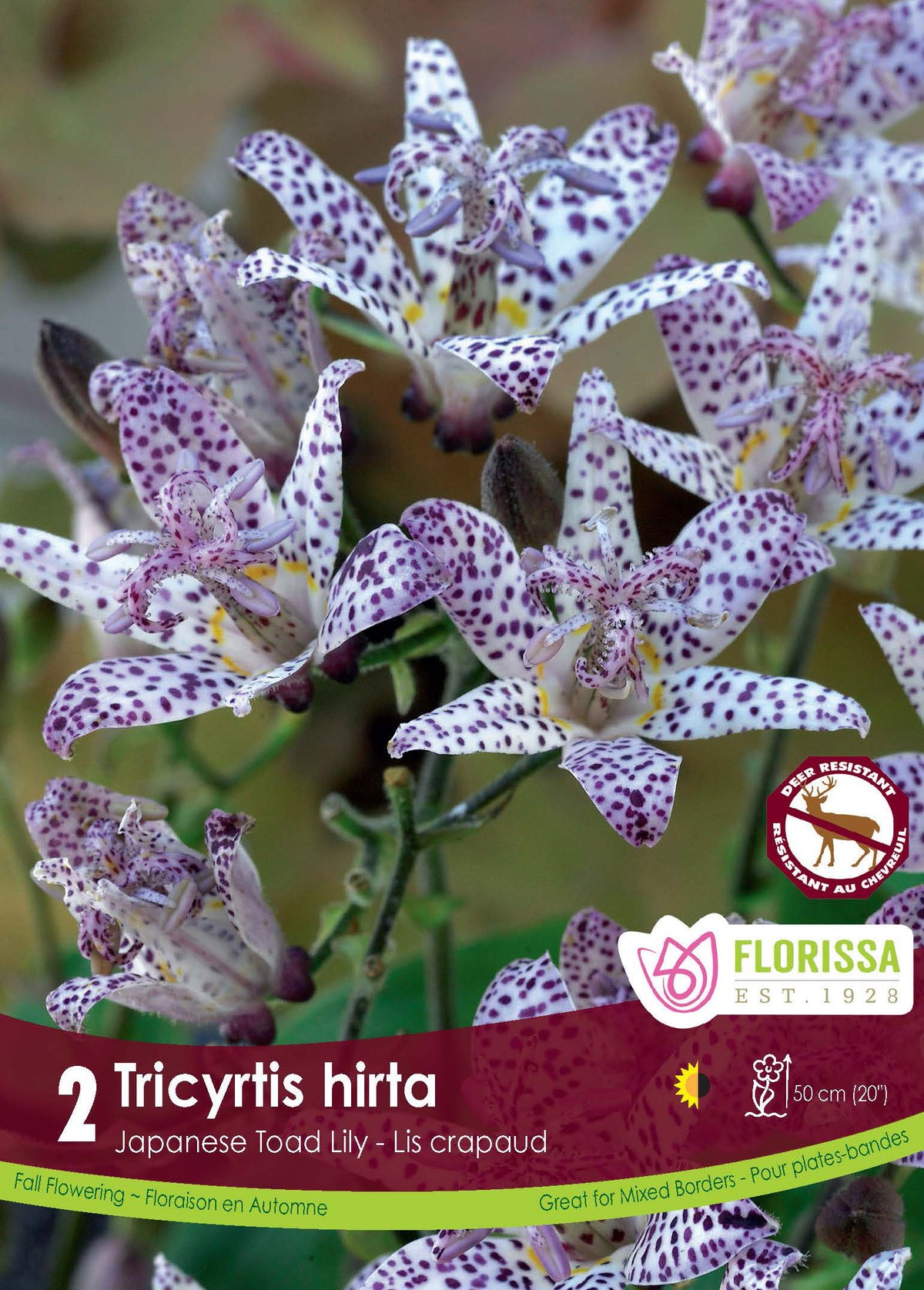
Tricyrtis hirta, more commonly known as toad lily, is a fascinating perennial that brings an exotic touch to shaded gardens. Native to Japan, it is distinguished by its star-shaped white flowers with purple spots, reminiscent of the delicacy of orchids. Its lush, slightly hairy green foliage enhances its unique charm. Ideal for shaded areas of the garden, Tricyrtis hirta blooms from late summer to autumn, bringing beautiful color at a time when few other plants are still in flower. Deer-resistant and low-maintenance, it is perfect for woodlands, shaded borders, and container plantings. Water needs: Moderate to high (cool, well-drained soil).
- Quantity
- 2 rhizomes
- Exposure
- Partial shade
Discover the plant
Common nameToad Lily
GenusToad Lily
TypeRhizome for planting
Botanical nameToad Lily
Tricyrtis 'Hirta' (2 rhizomes) – A shade gem with exotic flowers ???
Tricyrtis hirta , better known as the toad lily , is a fascinating perennial plant that brings a touch of exoticism to shady gardens. Native to Japan, it is distinguished by its white star-shaped flowers with purple spots , reminiscent of the delicacy of orchids. Its lush green and slightly hairy foliage reinforces its unique charm.
Ideal for shady areas of the garden, Tricyrtis hirta flowers from late summer through to autumn , providing beautiful colour at a time when few plants are still in flower. Deer resistant and low maintenance, it is perfect for undergrowth, shady borders and container plantings.
Characteristics of Tricyrtis hirta
?? Height : 50 cm (20")
?? Exposure : Partial shade to partial sun
?? Water requirements : Medium to high (moist, well-drained soil)
?? Hardiness : Zone 4
?? Deer Resistance : High
?? Type : Herbaceous perennial
?? Ideal soil : Humiferous, well drained, rich in organic matter
?? Planting and growing Tricyrtis hirta rhizomes
?? Where to plant it?
?? Undergrowth and shaded edges : Brings a touch of color and texture to shaded spaces.
?? Asian-style garden : Its delicate shape and exotic flowers fit in perfectly.
?? Pot culture : Perfect for balconies or terraces in the shade.
?? How to plant?
1?? Plant the rhizomes in spring (March to May) , at a depth of 10 cm and spacing them 40 cm apart.
2?? Choose fresh, moist and well-drained soil , enriched with compost or forest compost.
3?? Water regularly , especially during dry periods, but without soaking the soil.
4?? Add organic mulch to retain moisture and protect roots in winter.
?? Maintenance
?? Regular watering to keep the soil moist.
?? Remove faded flowers to prolong flowering.
?? Cut back dry foliage in winter and leave the mulch in place to protect the rhizomes.
?? An ecological and ornamental asset
?? Original flowers : Resembling orchids, they add a refined touch to the garden.
?? Attracts pollinators : Bees and butterflies love its nectar.
?? Perfect for shady areas : Few plants offer such spectacular flowering under trees.
?? Toxic to cats : Like many plants in the Liliaceae family, it should be planted with caution in a home with animals.
Why choose Tricyrtis hirta?
? Blooms in autumn , a time when few plants are still colorful.
? Ideal for shady corners , where other flowers struggle to grow.
? Low maintenance , perfect for beginner gardeners.
? Deer resistant , but loved by pollinators.

Planting guide
Plant well.Grow beautifully.
Growing method
Choose a location with partial shade and rich, moist soil that retains freshness while draining excess water. Loosen the soil before planting the root and remove any weeds that could compete with the first shoots. Plant in spring in well-drained soil, lightly covering the crown rather than burying it deeply. Water after planting to ensure good soil-to-root contact. Organic mulch helps limit drying out, but avoid accumulating it against the plant's heart. During dry periods, check the moisture level below the surface before the foliage shows signs of water stress. During growth, keep neighboring plants at a sufficient distance to allow the foliage to develop. Monitor young shoots, which slugs can damage, and intervene based on observed damage. Remove dry parts at the end of the season, after their natural dieback. A discreet label helps locate the crown in spring and prevents disturbing it when working in the bed. For container plants, check moisture levels more frequently than for in-ground plants and plan for winter protection adapted to the local climate. The roots of a potted plant are more exposed to cold than those of a clump planted in the ground.
Soil and care
The right care,at the right time.
Watering
Keep the soil consistently moist during growth, without waterlogging it. Check moisture levels beneath the surface and water at the base before the root zone dries out completely. Pay particular attention to new plantings and during hot or windy periods. An organic mulch helps limit evaporation, but do not pile it against the base of the stems. After a rain, wait until the soil needs water before watering again. For potted plants, always allow excess water to drain away.
Soil type
The ideal soil is humus-rich, well-drained, and high in organic matter. Check drainage after rain: water should be able to exit the root zone. Work the soil when it's dry to avoid compaction. Adapt amendments to its actual texture. In containers, use appropriate potting soil and a pot with drainage holes. Keep these openings clear and avoid any water accumulation in the saucer.
Fertilization
Before adding fertilizer, consider the richness of your soil and any previous applications. A soil analysis can help you choose the most beneficial amendments. If you use a fertilizing product, follow the dosage, frequency, and application method indicated on the packaging. Avoid concentrated applications directly on the roots. Do not overdo it with products: an excessive amount of fertilizer does not guarantee better growth or more abundant flowering.
Seasonal care
Choose a location with partial shade and humus-rich soil that retains moisture while draining excess water. Loosen the soil before planting the root and remove any weeds that could compete with the first shoots. Plant in spring in well-drained soil, lightly covering the crown rather than burying it deeply. Water after planting to bring the soil into contact with the roots. An organic mulch helps limit drying out, but avoid accumulating it against the plant's crown. During dry periods, check the moisture level below the surface before the foliage shows signs of water deficiency. During growth, keep neighboring plants at a sufficient distance to allow the foliage to develop. Monitor young shoots, which slugs can damage, and intervene based on the damage actually observed. Remove dry parts at the end of the season, after their natural dieback. A discreet label helps locate the crown in spring and prevents disturbing it when working in the bed. For container plants, check moisture levels more often than for plants in the ground and provide winter protection adapted to the local climate. The roots of a potted plant are more exposed to cold than those of a clump established in the soil. Throughout the seasons, observe new shoots, soil moisture, and the condition of the stems. A durable label helps locate the planting during its dormant period. Clean tools after cutting diseased parts and remove debris that degrades around the base of the plant.
Container growing
A garden,within reach.
Container gardening requires anticipating the volume needed for the roots and the plant's final height. Choose a stable pot with drainage holes and a substrate suitable for planting. Leave enough space to respect the recommended depth and spacing, rather than crowding plants to fill the pot immediately. Place the container in the indicated exposure and regularly check moisture levels, especially in hot or windy weather. A pot is more exposed to temperature variations than a plant in the ground. Therefore, plan for a wintering location that is compatible with the plant's needs and your region's climate from the outset. Choose partial shade and humus-rich soil that retains moisture while draining excess water. Loosen the soil before planting the root and remove weeds that could compete with the first shoots. Plant in spring in well-drained soil, lightly covering the base rather than burying it deeply. Water after planting to bring the soil into contact with the roots. An organic mulch helps limit desiccation, without accumulating against the heart of the plant. In dry periods, check the moisture level below the surface before the foliage shows signs of water stress. In winter, protect the container according to the plant's needs: its roots are more exposed to cold than when planted in the ground.

Bloom and dimensions
Its place,in your garden.
Mature height
20" (50 cm)
Bloom period
The toad lily, *Tricyrtis hirta*, blooms from late summer to autumn. Its starry white flowers, dotted with purple, stand out near shaded pathways where their details can be observed up close. Weather conditions and the stage of development at the time of planting can alter the course of flowering. Observe the buds opening to enjoy the flowers at their best. After flowering, keep the leaves green to allow the plant to complete its cycle.
Garden associations
In goodcompany.
Companion plants
To accompany Tricyrtis 'Hirta', you can consider ferns, hostas, or heucheras. Choose neighboring varieties based on their height, flowering period, and the colors you wish to combine. Above all, ensure that their exposure and water needs are suitable for the same location. Maintain sufficient distance so that the leaves do not obscure young shoots and to allow easy access to each plant during maintenance. These associations are for aesthetic garden design; they do not guarantee protection against pests or diseases. Adjust the layout after observing one growing season.
Frequently asked questions
Your questions,answered.
How to successfully plant Tricyrtis 'Hirta'?
Choose partial shade and a humiferous soil that retains moisture while draining excess water. Loosen the soil before planting the root and remove any weeds that could compete with the first shoots. Plant in spring in well-drained soil, lightly covering the stump rather than burying it deeply. Water after planting to bring the soil into contact with the roots. An organic mulch helps limit drying out, without being accumulated against the heart of the plant. In dry periods, check the moisture below the surface before the foliage shows signs of water stress.
What lighting should I provide for Tricyrtis 'Hirta'?
The recommended exposure is semi-shade. Observe the light at the chosen location in the morning and afternoon, as the shade from trees or buildings changes throughout the day. Also consider neighboring plants: their foliage can obscure a young planting as it develops. If in a container, place the pot where you can move it if conditions become too hot or too shady. Suitable exposure must go hand in hand with appropriate soil and watering. If you are moving a plant started indoors to outdoors, gradually acclimate it to garden conditions to avoid too abrupt a transition for young leaves.
How do I adjust the watering?
Water according to the actual soil moisture, taking into account rain, heat, and wind. Check below the surface before deciding to water again: soil that is dry on the surface may still be moist at the root level. Direct the water to the base and allow it to penetrate, without keeping the plant in saturated soil. Containers generally require more frequent checks because they dry out faster. Make sure their drainage holes remain clear and empty any saucers that collect water. Also, adapt care to the plant's cycle: active growth and a dormant period do not require the same amount of water.
What should I plan for container gardening?
Container gardening requires anticipating the necessary volume for the roots and the plant's final height. Choose a stable pot with drainage holes and a suitable growing medium. Leave enough space to respect the recommended planting depth and spacing, rather than overcrowding plants to immediately fill the pot. Place the container in the indicated exposure and regularly check for moisture, especially in hot or windy weather. A pot is more exposed to temperature variations than planting in the ground. Therefore, from the outset, plan a wintering location compatible with the plant's needs and your region's climate.
What care is needed after the growing season?
During growth, keep neighboring plants at a sufficient distance to allow the foliage to develop. Monitor young shoots, which slugs can damage, and intervene based on the damage observed. Remove dry parts at the end of the season, after their natural dieback. A discreet label helps locate the stump in spring and avoid disturbing it when working the flowerbed. In containers, check the moisture more often than in the ground and plan for winter protection adapted to the local climate. The roots of a potted plant are more exposed to cold than those of a clump planted in the ground.
For planting your bulbs
The right extras.Right here.
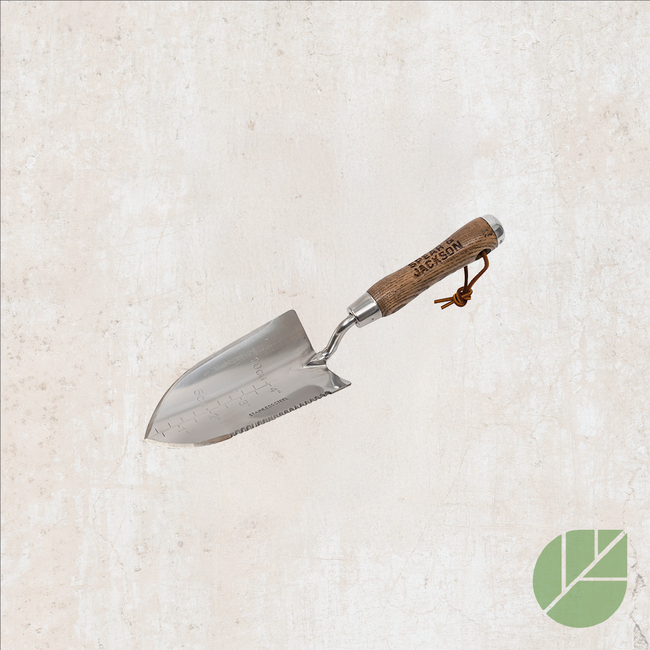
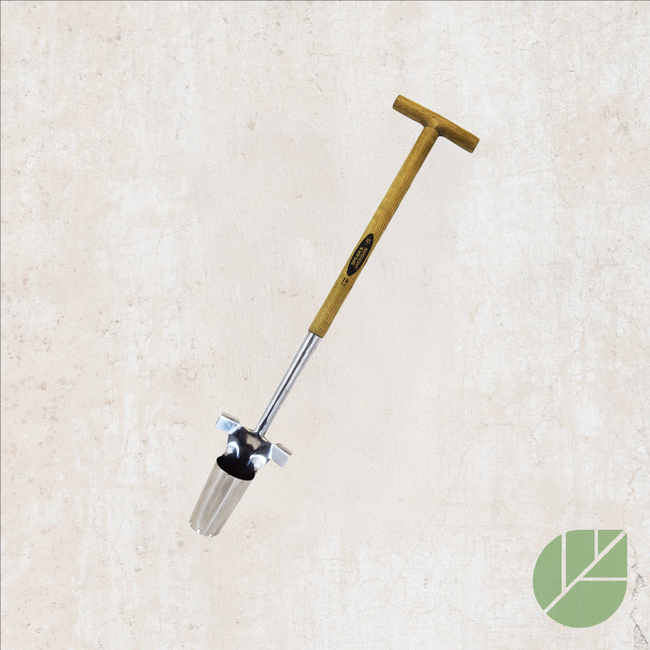
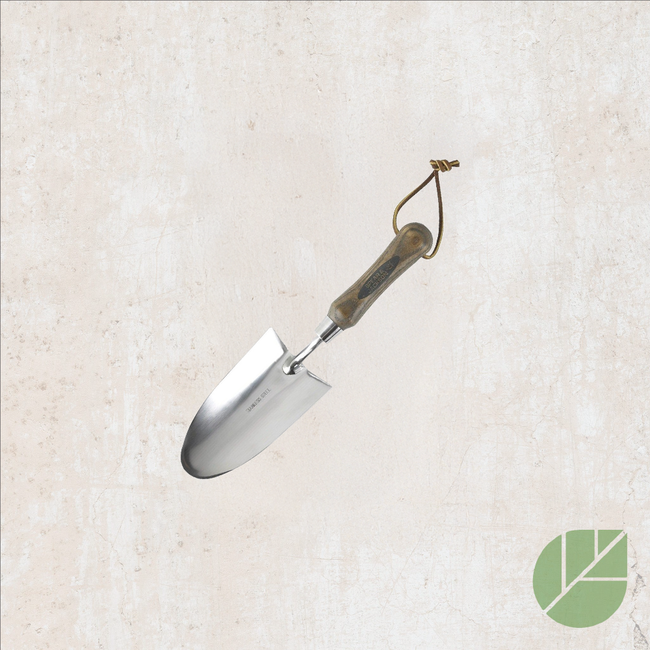
Bulb planters and planting tools
Shop the collection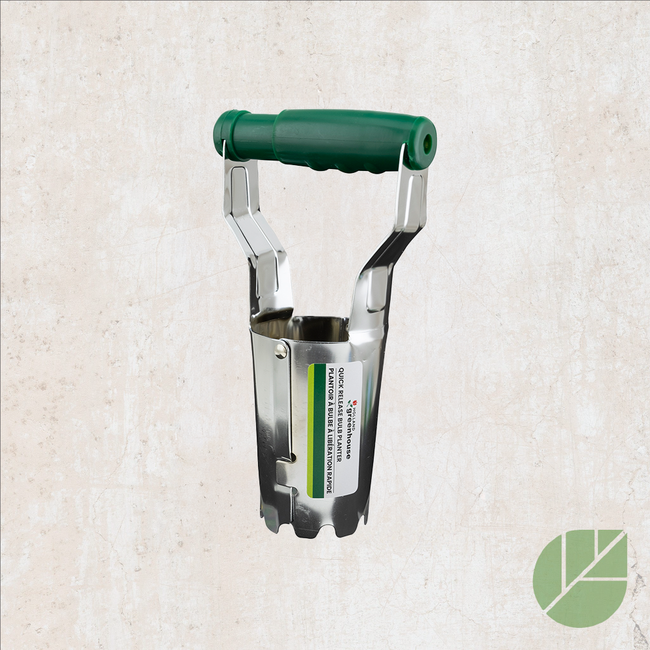
Soils and amendments for bulbs
Shop the collection