

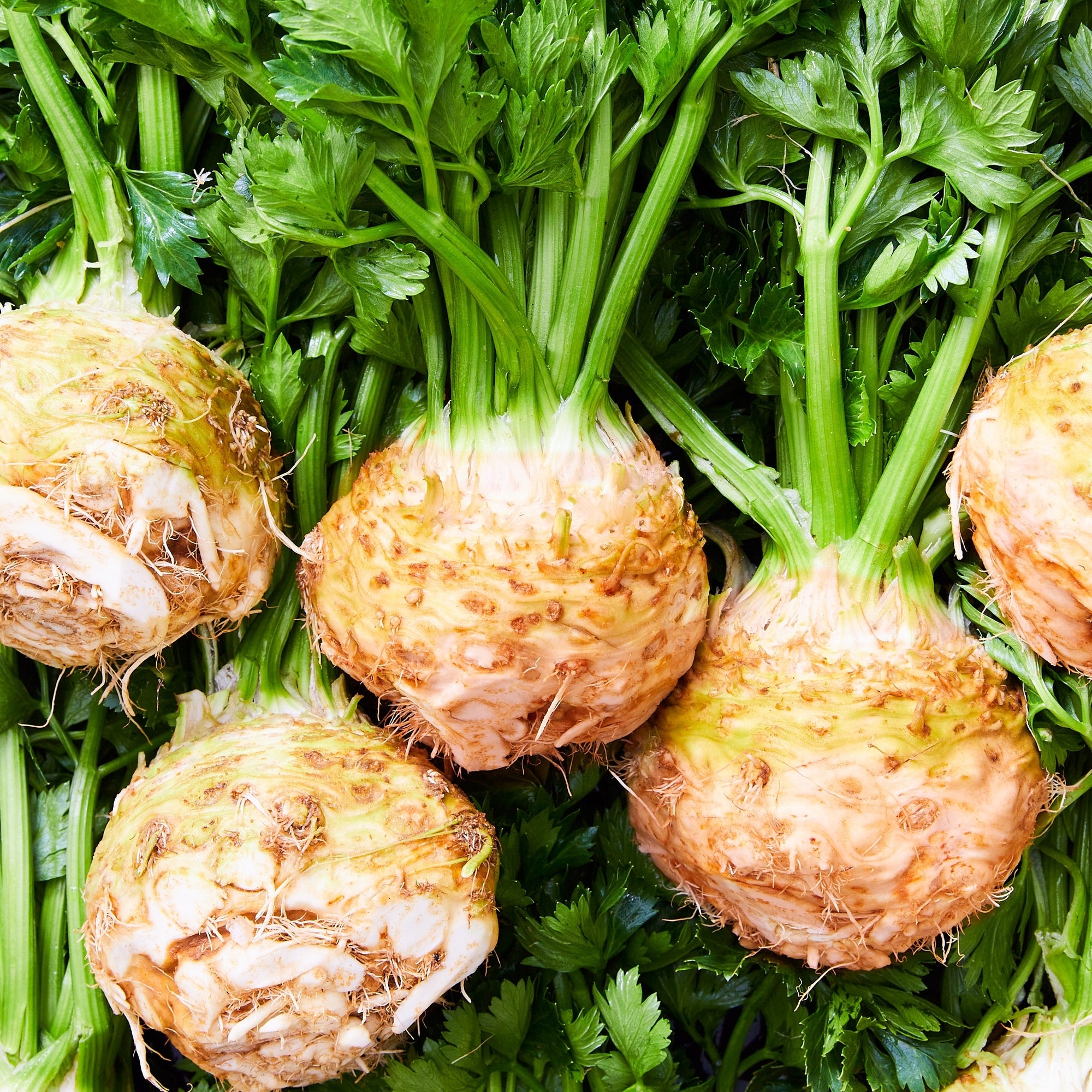
Celeriac
Celeriac is a flavorful and versatile root vegetable, prized for its large, round root with white, firm, and fragrant flesh. Its taste is reminiscent of celery, with a sweeter, slightly nutty, and very aromatic flavor. It is excellent mashed, in soup, au gratin, roasted, grated in a remoulade, added to stews, or used to add depth to broths and autumn dishes.
Easy to incorporate into the vegetable garden, celeriac prefers a sunny to slightly semi-shaded location, in rich, deep, cool, and well-drained soil. It appreciates regular watering, as constant moisture promotes good root development and helps achieve a tenderer texture. Its growth is slower than many leafy vegetables, but it rewards patience with a generous, durable, and very useful harvest in the kitchen.
Highly valued for its preservation and great culinary value, celeriac is an excellent choice for gourmet and productive vegetable gardens. Its cut green foliage also adds texture to the garden, while its root is harvested when it is well-formed. It is an original, nutritious, and flavorful vegetable, perfect for gardeners who wish to cultivate different, versatile crops ideal for home cooking.
Care guide
Choosing this plant
Light, soil, water and hardiness
Blooming, foliage and shape
Size and growth
Companion planting, spacing and harvest

Pets
The availability of our plants varies depending on arrivals, seasons, nursery production and supplier availability. Some varieties may be offered for a limited time only, depending on their natural cycle or current stock. These plant profiles are designed to guide and inspire you when choosing plants for the garden, landscaping projects, containers or long-lasting outdoor arrangements.


