

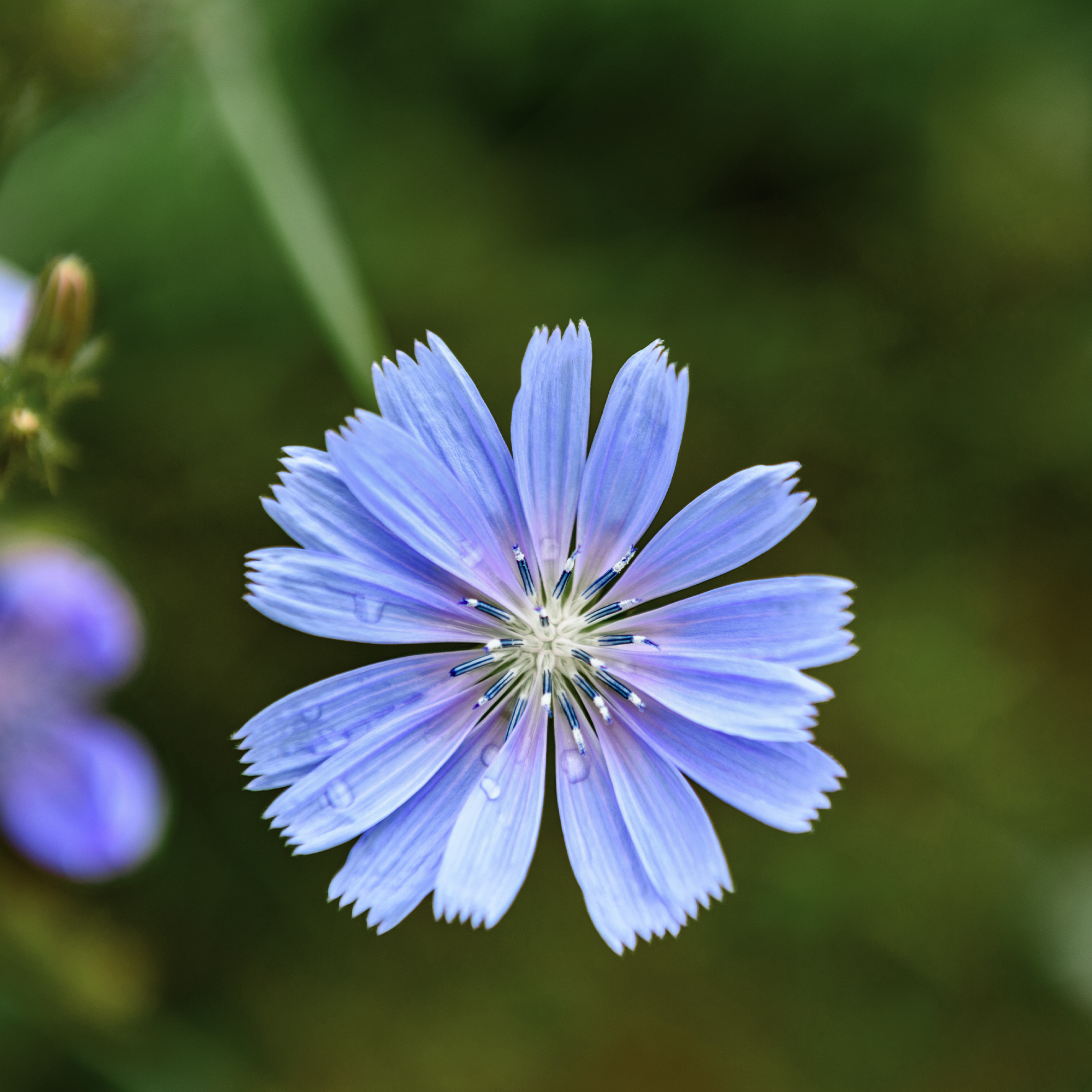
Chicory
Chicory is a garden and medicinal plant appreciated for its edible foliage, its slightly bitter taste, and its beautiful soft blue flowers when it goes to seed. It integrates very well into vegetable gardens, edible flower beds, herb gardens, and naturalized landscapes. Depending on the variety, its leaves can be used fresh in salads, cooked as a leafy green, or incorporated into more rustic recipes to add a bitter and aromatic touch.
Easy to grow, chicory prefers a sunny to slightly semi-shaded location, in fertile, cool, deep, and well-drained soil. It appreciates regular watering, especially during hot periods, to keep the foliage more tender and less bitter. Harvesting young leaves provides a more pleasant texture, while more mature plants develop a more pronounced flavor. It can be grown in the ground, in rows in the vegetable garden, or in deep containers.
Both useful, decorative, and interesting for biodiversity, chicory attracts pollinators with its delicate flowers and adds a natural touch to gourmet gardens. It has also long been recognized as a medicinal plant, particularly for its roots, sometimes roasted and used as a coffee substitute. It is a versatile, robust, and characterful plant, ideal for gardeners who want to grow original leafy greens, useful plants, and varieties with rustic charm.
Care guide
Choosing this plant
Light, soil, water and hardiness
Blooming, foliage and shape
Size and growth
Companion planting, spacing and harvest

Pets

Butterflies
The availability of our plants varies depending on arrivals, seasons, nursery production and supplier availability. Some varieties may be offered for a limited time only, depending on their natural cycle or current stock. These plant profiles are designed to guide and inspire you when choosing plants for the garden, landscaping projects, containers or long-lasting outdoor arrangements.


