


Trees
Norway spruce
Products and available quantities may vary between Brossard and Laval. To check a store’s inventory, please contact us directly.
Even better: visit us in store to discover the full selection available!
- Exposure
- Sun to partial shade
- Hardiness
- Zone 2 to 7
Discover the plant
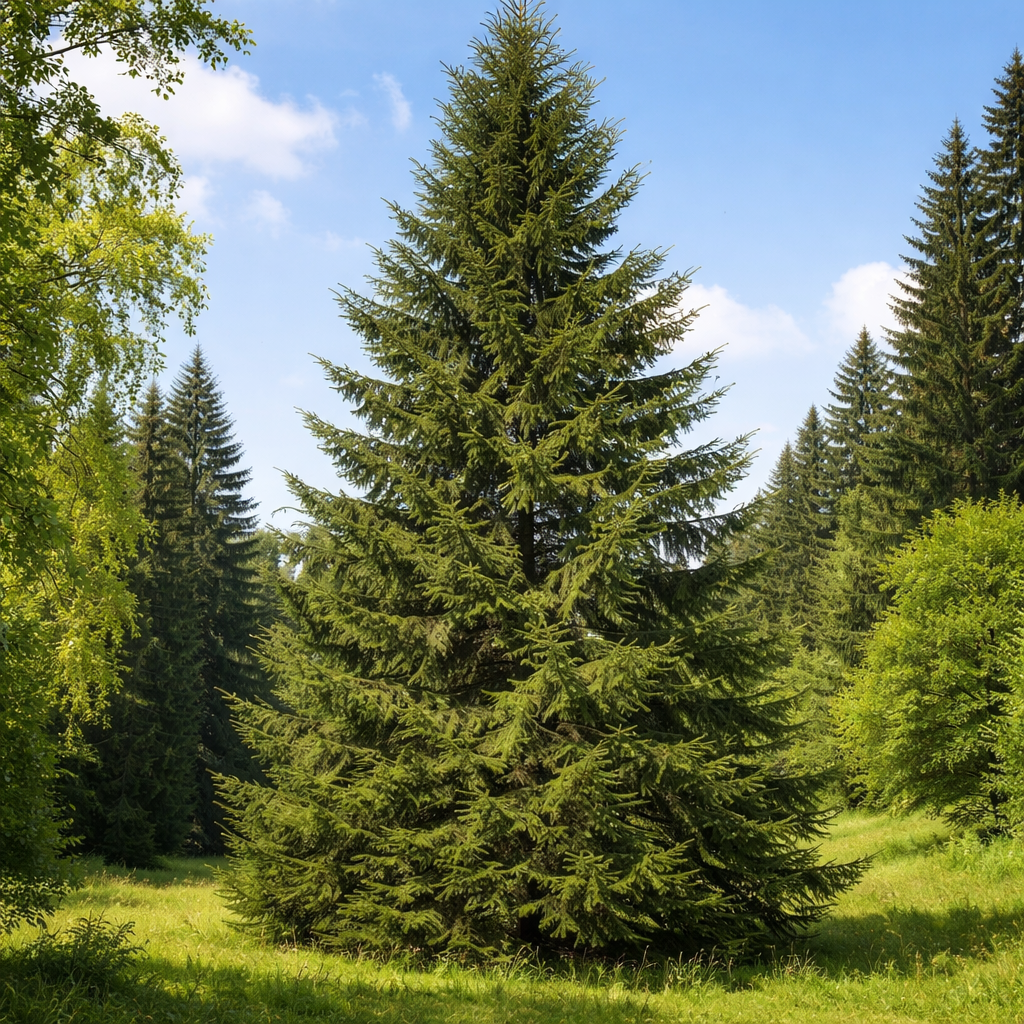
Picea abies, better known as Norway spruce, is a classic ornamental conifer valued for its regular pyramidal shape and persistent dark green foliage. Its dense, flexible branches create a natural texture that remains decorative all year round, even in winter. With its slender and structured habit, it brings height, depth, and a strong vegetative presence to large landscape designs. Its timeless appeal makes it a versatile choice for both residential gardens and larger spaces.
Thanks to its vigorous growth and well-defined conical shape, the Norway spruce can be used as an accent tree, a specimen plant, a visual screen, a windbreak, or a structural element in a conifer planting. It is particularly suitable for large gardens, open areas, and landscapes where a lasting green mass is desired. Its evergreen foliage forms an ideal backdrop for showcasing flowering shrubs, perennials, or other conifers with contrasting colors. Planted alone, it becomes a strong visual landmark; in groups, it creates a natural and enveloping effect.
Very hardy and well adapted to cold climates, Picea abies prefers a sunny to semi-shady exposure and well-drained, fresh, and fertile soil. However, it tolerates a variety of conditions, making it a robust conifer that is relatively easy to integrate into different landscape projects. Regular watering during the first few years promotes good root establishment, especially during hot or dry periods. Once well established, it requires little maintenance and naturally retains its elegant shape, offering a durable, green, and majestic structure to the garden.

Planting guide
From planting to establishment.
Soil and care
The right care,at the right time.
Soil pH
Minimum temperature
Care level
Watering
Soil type
Fertilization
Moisture
Seasonal care
Container growing
A garden,within reach.

Bloom and dimensions
Its place,in your garden.
Mature height
Width / spread
Flower color
Foliage color
Foliage type
Growth rate
Bloom period
Fruiting
Garden associations
In goodcompany.
Companion plants
Plants to avoid
Wildlife and pets