Sale
Sold out

Native herbaceous perennial
Fabaceae
Native perennials for pollinators and prairies
Wild Senna – Seeds
Senna hebecarpa
Product code : AKENE-0010
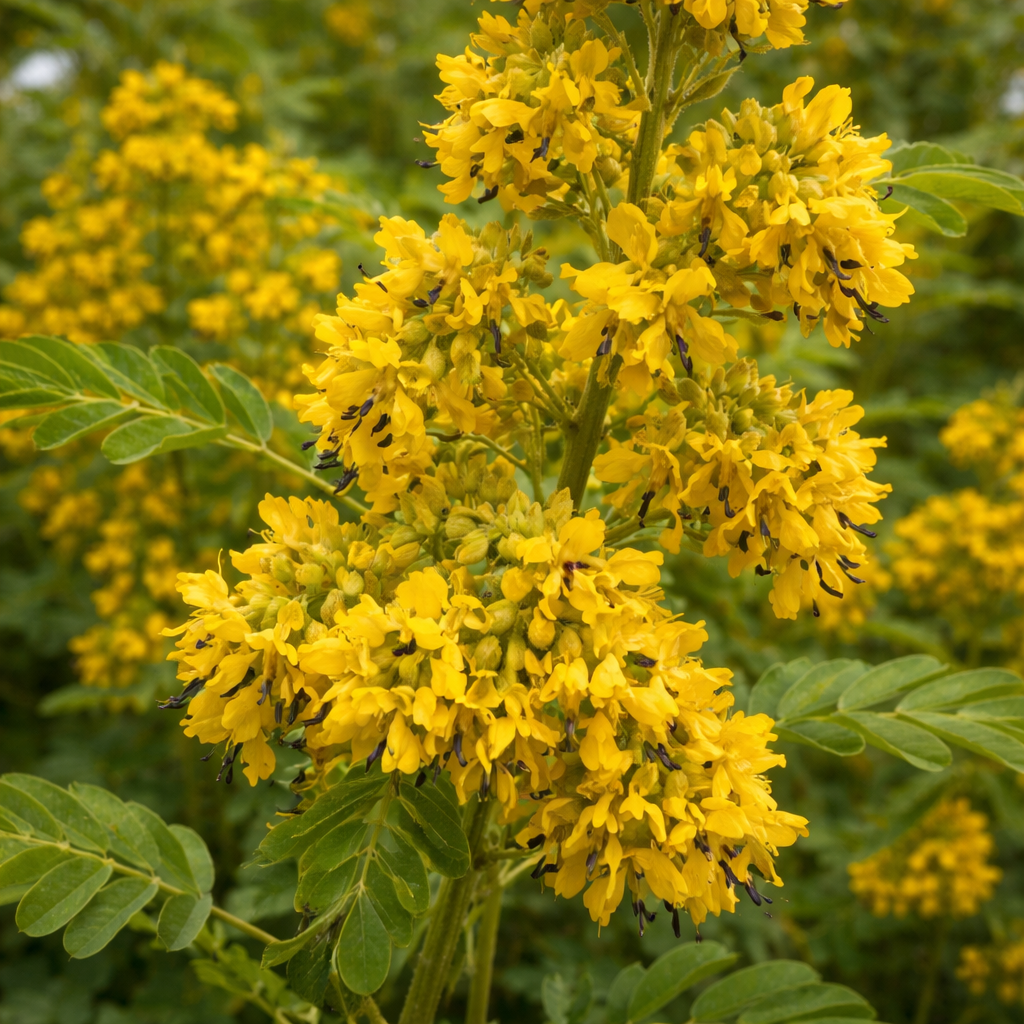
This tall native perennial produces abundant yellow flowers visited by bumblebees. Its foliage also serves as a host plant for certain butterflies, while its structured form suits meadows, naturalized borders, and ecological restoration projects.
- Quantity
- About 25 seeds
- Exposure
- Full sun to light partial shade
- Life cycle
- Perennial
- Hardiness
- USDA Zones 3 to 8
Discover the plant
Common nameWild Senna
FamilyFabaceae
GenusSenna
Specieshebecarpa
Cultivar
TypeNative herbaceous perennial
Botanical nameSenna hebecarpa
Reproducible seedsYes
Wild Senna (Senna hebecarpa) is a tall native perennial in the legume family, valued for bright yellow summer flower clusters and handsome compound green foliage. Its upright form creates a strong, structured clump that generally reaches 1 to 1.5 m tall. After flowering, elongated hairy pods gradually turn brown and extend ornamental interest into autumn. Hardy in Zones 3 to 8, this plant returns reliably after severe Quebec winters. Its natural silhouette adds height, movement, and vivid colour to wildflower meadows, native borders, pollinator gardens, and ecological plantings designed to support biodiversity throughout the growing season.
Wild Senna performs best in full sun or light partial shade and in fertile, well-drained loamy to clay soil. It tolerates moderate moisture and brief dry periods once established, although young plants benefit from regular watering. The seeds have a hard coat that should be scarified before sowing, and a short period of moist cold stratification may also encourage more even emergence. Sow them approximately 5 mm deep in a medium kept lightly moist. A moderate spring application of mature compost is generally sufficient. Avoid high-nitrogen fertilizers, which may promote excessive leafy growth at the expense of sturdy stems, abundant flowers, and mature seed pods.
In the garden, Wild Senna is well suited to native meadows, pollinator gardens, sunny woodland edges, and ecological restoration projects. Its pollen-rich flowers are especially attractive to bumblebees and other bees capable of vibrating the anthers to release pollen. The foliage also serves as a host plant for certain butterflies associated with senna species. Pair it with Wild Bergamot, coneflowers, Black-Eyed Susans, and goldenrods to create a diverse summer planting. Mature pods may be left standing for autumn texture and limited natural reseeding. Its substantial form makes Senna hebecarpa particularly effective as a background plant in spacious, naturalistic landscapes.

Sowing guide
It all startswith a seed.
Sowing depth
Approximately 5 mm
Spacing / density
60 to 90 cm (24 to 36 in)
Germination temperature
20 to 22°C after scarification
Germination time
7 to 21 days after scarification
Sowing period
Autumn or spring after scarification
Propagation
Scarified seed and occasional natural reseeding
Seed scarification
Yes
Growing method
Sow Wild Senna seeds after light scarification followed by cold stratification to break seed dormancy. Sow the seeds about 5 mm deep in a well-drained growing medium kept evenly moist until germination. This native legume thrives in full sun and gradually develops into a vigorous perennial. Like many members of the Fabaceae, Senna hebecarpa naturally enriches the soil through nitrogen fixation. Once established, it requires very little maintenance and returns reliably each year with brilliant yellow flowers that attract countless pollinators.
Soil and care
The right care,at the right time.
Soil pH
Acidic to neutral, about 5.5 to 7.0
Minimum temperature
Approximately -35°C
Care level
Low to moderate
Drought tolerance
Yes
Watering
Moderate during establishment; occasional afterward
Soil type
Loamy to clay, fertile, and well drained
Fertilization
Light spring compost; avoid excess nitrogen
Moisture
Low to medium; moist to well-drained soil
Seasonal care
In spring, cut back the previous year’s dry stems once temperatures begin to warm. Apply a thin layer of compost around the plant without using high-nitrogen fertilizer. During the first season, water regularly to encourage deep rooting. Established plants mainly require supplemental moisture during prolonged drought. Staking may be helpful in very windy or overly shaded locations. In autumn, allow several pods to mature for ornamental interest and natural reseeding, or remove them before they open when tighter control of seed dispersal is preferred. Divide crowded clumps only when necessary.
Container growing
A garden,within reach.
Recommended pot size
30 to 45 cm (12 to 18 in)
Wild Senna can be grown in a large, deep container during its early years. Use a rich, well-drained growing medium and place the container in full sun for best flowering. Water regularly without allowing the soil to become waterlogged, and ensure excellent drainage. Transplanting into the ground is recommended once the plant reaches maturity for optimal long-term performance.

Bloom and dimensions
Its place,in your garden.
Mature height
Approximately 1.5 m
Width / spread
Approximately 90 cm
Flower color
Bright yellow
Foliage color
Green
Foliage type
Deciduous
Growth rate
Moderate
Growth habit
Upright, robust, and clump-forming
Fragrance
Bloom period
July to September
Fruiting
Long hairy pods turning brown at maturity
Days to maturity
May flower from the second year
Harvest
September to October
Garden associations
In goodcompany.
Companion plants
Wild Bergamot, coneflowers, Black-Eyed Susans, and goldenrods
Plants to avoid
Northern Blue Flag Iris, Marsh Marigold, and waterlogged-soil plants
Frequently asked questions
Your questions,answered.
When should Wild Senna seeds be sown?
Wild Senna seeds can be sown in autumn or spring after scarification and cold stratification. This preparation significantly improves germination and encourages more uniform seedling emergence.
Does Wild Senna attract pollinators?
Yes. Its abundant yellow flowers attract native bees, bumblebees, butterflies, and many other beneficial pollinating insects throughout summer.
Is Wild Senna a host plant?
Yes. Wild Senna is especially well suited to pollinator gardens, wildflower meadows, and ecological restoration projects where native species are desired.
Is Wild Senna easy to maintain?
Once established, Wild Senna requires very little maintenance. It tolerates typical garden conditions well and is fully hardy in Canadian climates.
Is Wild Senna edible or medicinal?
Its elegant foliage, brilliant yellow flowers, and exceptional ecological value make Wild Senna one of the finest native perennials for supporting biodiversity and creating sustainable landscapes.
Wildlife and pets
Life,around your plants.
Attracts birds
Yes
Native plant
Yes
Supporting wildlife
Bees and pollinators
For a great start to your seeds
The right extras.Right here.
Seed Starting Soil
Shop the collectionSeed starting supplies
Shop the collection