


Sale
Sold out

Native plant
Asteraceae
Easy native pollinator flowers
Black-eyed Susan
Rudbeckia hirta
Product code : AKENE-0048
Highly floriferous native plant with bright yellow flowers for pollinator gardens.
- Quantity
- Around 300 seeds
- Exposure
- Full sun to partial shade
- Life cycle
- Perennial
- Hardiness
- 3 to 8
Discover the plant
Common nameBlack-eyed Susan
FamilyAsteraceae
GenusRudbeckia
Specieshirta
TypeNative plant
Botanical nameRudbeckia hirta
Reproducible seedsYes
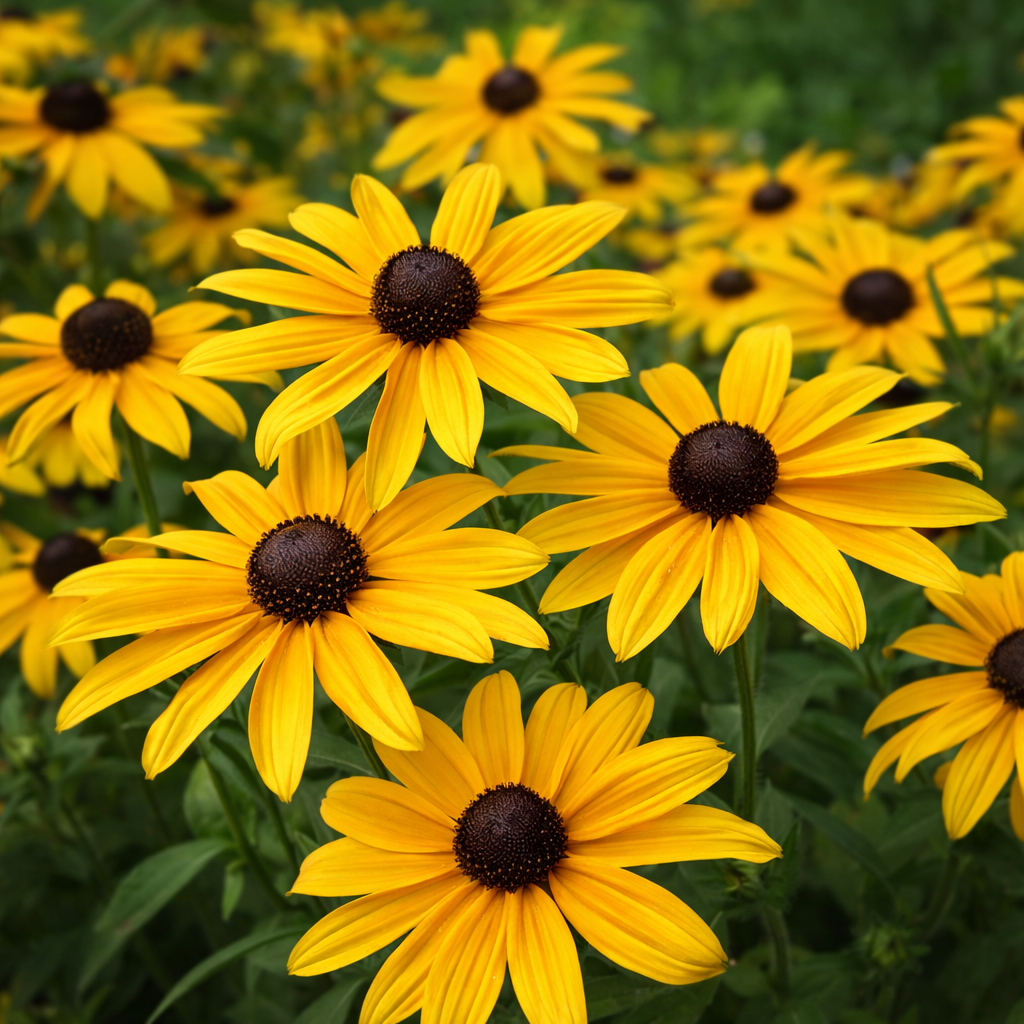
Black-eyed Susan (Rudbeckia hirta) is a highly floriferous native plant known for its large golden-yellow flowers with dark brown centres and its long summer blooming season. Its green foliage and compact habit bring bright colour to wildflower meadows, garden borders, and pollinator gardens. From summer into early autumn, its abundant flowers create a vibrant display while attracting a wide variety of bees, butterflies, and beneficial insects. Extremely hardy, it adapts beautifully to natural landscapes throughout Quebec and Canada.
Black-eyed Susan (Rudbeckia hirta) prefers sunny to partially shaded locations and well-drained soils, including relatively poor or dry conditions. Across Quebec and Canada, it is ideal for wildflower meadows, natural borders, and ecological plantings. Moderate watering during establishment encourages healthy growth, but once rooted it tolerates dry periods well. Low maintenance requirements include only light care such as removing dry stems or spent flowers depending on the gardener’s goals.
Black-eyed Susan (Rudbeckia hirta) plays an important role in biodiversity-friendly gardens through its extended production of nectar and pollen. After flowering, its seed heads provide food for several seed-eating birds. It combines naturally with wild bergamot, goldenrod, blazing star, and native grasses to create landscapes inspired by North American prairies. Its generous blooms, easy cultivation, and ecological value make it an essential choice for sustainable gardens.

Sowing guide
It all startswith a seed.
Sowing depth
3 to 5 mm (0.1 to 0.2 in)
Spacing / density
30 to 45 cm (12 to 18 in)
Germination temperature
18 to 22°C
Germination time
7 to 15 days
Sowing period
Fall or spring after stratification
Propagation
Seeds and natural reseeding.
Cold stratification
Yes
Growing method
Sow Black-eyed Susan seeds in autumn or spring after a period of cold stratification to improve germination. Cover the seeds lightly with 3 to 5 mm (0.1 to 0.2 in) of growing medium and maintain temperatures between 18 and 22°C (64 to 72°F). Consistent moisture promotes rapid germination, usually within 7 to 15 days. Transplant seedlings once they have developed several true leaves and gradually acclimate them to outdoor conditions. This native wildflower thrives in sunny, well-drained locations and readily self-seeds, creating beautiful naturalized meadows over time.
Soil and care
The right care,at the right time.
Soil pH
Acidic to neutral
Minimum temperature
-40 °C (-40 °F)
Care level
Low
Drought tolerance
Yes
Watering
Moderate during establishment
Soil type
Poor loamy to clay soil, well drained
Fertilization
Light compost in spring
Moisture
Low to medium; well-drained soil
Seasonal care
Remove dry stems in spring and leave some flowers to produce seeds for birds.
Container growing
A garden,within reach.
Recommended pot size
20 to 30 L (5 to 8 gal)
Black-eyed Susan grows exceptionally well in containers thanks to its compact habit and adaptability. Use a pot of at least 20 to 30 L (5 to 8 gal) filled with a light, well-drained growing medium. Place the container in full sun to encourage abundant flowering. This makes it easy to enjoy its brilliant blooms while attracting pollinators to patios and balconies.

Bloom and dimensions
Its place,in your garden.
Mature height
90 cm
Width / spread
45 cm
Flower color
Yellow with dark brown centre
Foliage color
Green
Foliage type
Deciduous
Growth rate
Moderate
Growth habit
Upright and branching
Fragrance
Bloom period
Summer to early autumn
Fruiting
Seeds in dry seed heads in late summer
Harvest
August to October
Garden associations
In goodcompany.
Companion plants
Wild bergamot, blazing star, switchgrass, goldenrod
Plants to avoid
Blue flag iris, marsh marigold, ligularia, horsetail
Frequently asked questions
Your questions,answered.
When should Black-eyed Susan be sown?
Black-eyed Susan seeds can be sown in autumn or spring after a period of cold stratification. This treatment generally improves germination and produces stronger seedlings.
Why does this plant attract pollinators?
Its large flowers produce abundant nectar and pollen, attracting a wide diversity of bees, butterflies, and other beneficial insects throughout its long bloom period.
Can it be grown in containers?
Yes. This species adapts very well to container growing thanks to its moderate size and abundant flowering. A sunny location produces the best results.
Is it easy to maintain?
Yes. Black-eyed Susan is exceptionally hardy and low maintenance. Once established, it requires little watering and returns reliably year after year.
What should be done with flowers after blooming?
Spent flowers can be removed to extend blooming or left in place to provide seeds for birds and create attractive winter interest in the garden.
Wildlife and pets
Life,around your plants.
Attracts birds
Yes
Native plant
Yes
Reported toxicity
Yes
Supporting wildlife
Bees and butterflies
For a great start to your seeds
The right extras.Right here.
Seed Starting Soil
Shop the collectionSeed starting supplies
Shop the collection





