


Sale
Sold out

Native wetland shrub
Aquifoliaceae
Native wetland shrubs for birds
Mountain Holly – Seeds
Ilex mucronata
Product code : AKENE-0058
Hardy native wetland shrub with delicate foliage and bright red fruit valued by birds. Mountain Holly suits rain gardens, riparian plantings, moist woodland edges, and ecological restoration.
- Quantity
- Approximately 15 seeds
- Exposure
- Full sun to partial shade
- Life cycle
- Perennial
- Hardiness
- Zones 2 to 6
Discover the plant
Common nameMountain Holly
FamilyAquifoliaceae
GenusIlex
Speciesmucronata
TypeNative wetland shrub
Botanical nameIlex mucronata
Reproducible seedsYes
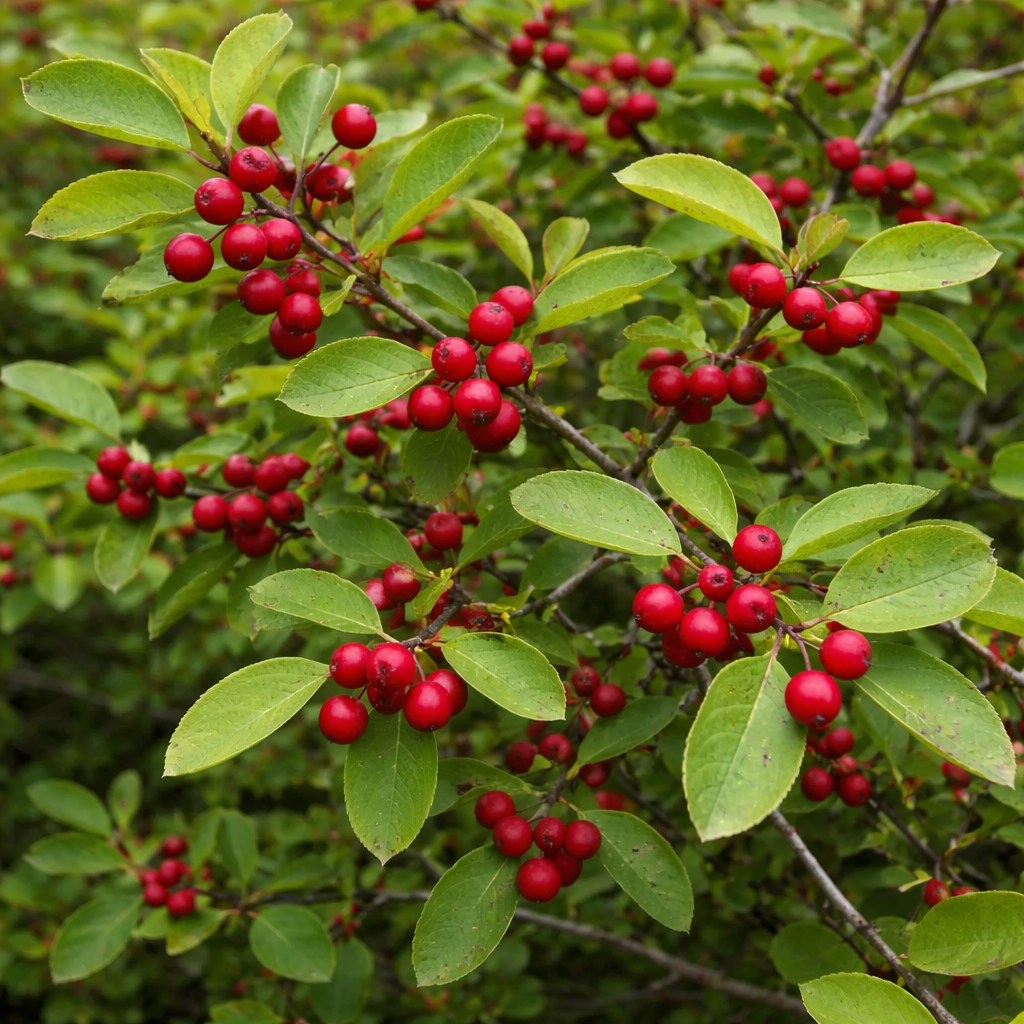
Mountain Holly (Ilex mucronata) is a native deciduous shrub with a graceful, open habit, valued for delicate green foliage and bright red fruit produced in late summer by pollinated female plants. Small greenish white flowers appear in spring and remain visually subtle, yet they contribute to the shrub’s ecological importance. Generally reaching 2 to 3 m in height, it develops a natural silhouette well suited to rain gardens, riparian plantings, and moist woodland edges. Exceptionally hardy, Mountain Holly survives Quebec winters reliably and provides lasting seasonal interest in landscapes inspired by wetlands, peatlands, and cool northern forest communities.
Mountain Holly prefers acidic to neutral soil that is rich in organic matter, moist to wet, and able to retain consistent moisture. It grows in full sun or partial shade and tolerates temporary saturation, making it useful in shallow depressions, rain gardens, and riparian zones. Organic mulch helps conserve soil moisture and protect the relatively shallow root system. Water regularly during establishment, especially through warm or dry periods. Pruning is usually limited to dead, damaged, or poorly placed branches. In Quebec, avoid dry, alkaline, or heavily compacted soils, which can reduce vigour, fruit production, and long-term plant health.
Mountain Holly suits rain gardens, designed peatland plantings, moist woodland edges, and ecological restoration projects. Spring flowers attract beneficial insects, while red fruits provide important food for birds in fall. Because the species is dioecious, both male and female plants are needed for reliable fruit production. It pairs naturally with red-osier dogwood, steeplebush, blue flag iris, and summersweet. The fruit is not intended for human consumption, and the shrub’s primary value is ecological, ornamental, and wildlife-related. Its tolerance of wet soils makes Ilex mucronata especially valuable where many conventional landscape shrubs struggle.

Sowing guide
It all startswith a seed.
Sowing depth
1 to 2 cm
Spacing / density
1.5 to 2 m (5 to 6.5 ft)
Germination temperature
18 to 20°C after stratification
Germination time
Variable; often several months after warm and cold stratification
Sowing period
Fall or spring after warm and cold stratification
Propagation
Seed after double stratification or semi-hardwood cuttings
Cold stratification
Yes
Growing method
Sow Mountain Holly seeds in autumn or spring after a period of cold stratification to break natural dormancy. Plant the seeds 2 to 2.5 cm (0.8 to 1 in) deep in a rich growing medium kept consistently cool and moist. Temperatures between 18 and 20°C (64 to 68°F) generally produce germination within 30 to 60 days. Young plants thrive in full sun to partial shade and organically rich soil. Native to wetlands and riparian habitats, this shrub develops into a hardy, low-maintenance plant once established.
Soil and care
The right care,at the right time.
Soil pH
Acidic to neutral
Minimum temperature
Approximately -45°C (-49°F)
Care level
Low to moderate
Watering
Regular; keep soil moist to wet
Soil type
Organic, acidic to neutral, moist to wet soil
Fertilization
Mature compost in spring; avoid alkalizing fertilizers
Moisture
High; moist to wet soil
Seasonal care
In spring, remove dead, broken, or poorly positioned branches without excessively altering the natural habit. Apply mature compost or decomposed leaves over the root zone, then renew organic mulch without piling it against the stems. During summer, maintain consistent moisture, especially around young plants and specimens growing in sun. Avoid severe pruning, which may reduce flowering and fruit production. In fall, leave the fruit on female plants to feed birds. Monitor soil moisture during unusually dry autumn weather before freeze-up so established roots enter winter without severe drought stress.
Container growing
A garden,within reach.
Recommended pot size
40 to 60 L (10 to 16 gal)
Container growing is suitable during the shrub's early years in a large container of at least 40 to 60 L (10 to 16 gal). Use an organic-rich growing medium that retains moisture while providing excellent drainage. Because Mountain Holly naturally prefers cool to moist soil, monitor watering carefully during hot weather. Growing in containers makes it possible to enjoy this native shrub on patios or in urban gardens while supporting local biodiversity.

Bloom and dimensions
Its place,in your garden.
Mature height
3 m (10 ft)
Width / spread
2.5 m (8 ft)
Flower color
Greenish white
Foliage color
Green
Foliage type
Deciduous
Growth rate
Slow to moderate
Growth habit
Shrubby, upright, and open
Fragrance
Bloom period
May to June; small greenish white flowers
Fruiting
Bright red fruit from late summer into fall on pollinated female plants
Harvest
The bright red berries ripen from September to October and often remain attractive for several weeks, providing outstanding ornamental value.
Garden associations
In goodcompany.
Companion plants
Red-osier dogwood, steeplebush, blue flag iris, and summersweet
Plants to avoid
Plants requiring dry, alkaline, or rapidly drained soil
Frequently asked questions
Your questions,answered.
Why are several Mountain Holly plants needed for fruit?
Mountain Holly seeds can be sown in autumn or in spring after a period of cold stratification. This treatment improves germination by mimicking natural winter conditions.
How are Mountain Holly seeds germinated?
Yes. Female plants produce striking red berries in autumn when a nearby male plant provides pollination. These fruits are highly ornamental and attract many bird species.
Does Mountain Holly tolerate saturated soil?
Absolutely. Mountain Holly is exceptionally well suited to rain gardens and wet areas because it thrives in cool to moist soils and tolerates temporary waterlogging.
Are Mountain Holly fruits edible?
Mountain Holly is perfectly adapted to Canadian climates and provides valuable habitat and food for native wildlife while thriving in challenging wet sites.
Can Mountain Holly be grown in a container?
Yes. Once established, Mountain Holly requires very little maintenance. Organic mulch and occasional watering during prolonged drought are generally all that is needed to keep it healthy.
Wildlife and pets
Life,around your plants.
Attracts birds
Yes
Native plant
Yes
Reported toxicity
Yes
Supporting wildlife
Beneficial wildlife
For a great start to your seeds
The right extras.Right here.
Seed Starting Soil
Shop the collectionSeed starting supplies
Shop the collection





