Sale
Sold out

Native shrub
Diervillaceae
Native shrubs for pollinators
Bush Honeysuckle – Seeds
Diervilla lonicera
Product code : AKENE-0017
Hardy native shrub with nectar-rich yellow flowers and colourful fall foliage. Bush honeysuckle tolerates drought, partial shade, and poor soils while spreading gradually to stabilize slopes and cover difficult sites.
- Quantity
- Around 200 seeds
- Exposure
- Full sun, partial shade, or light shade
- Life cycle
- Perennial
- Hardiness
- Zones 3 to 7
Discover the plant
Common nameBush Honeysuckle
FamilyDiervillaceae
GenusDiervilla
Specieslonicera
Cultivar
TypeNative shrub
Botanical nameDiervilla lonicera
Reproducible seedsYes
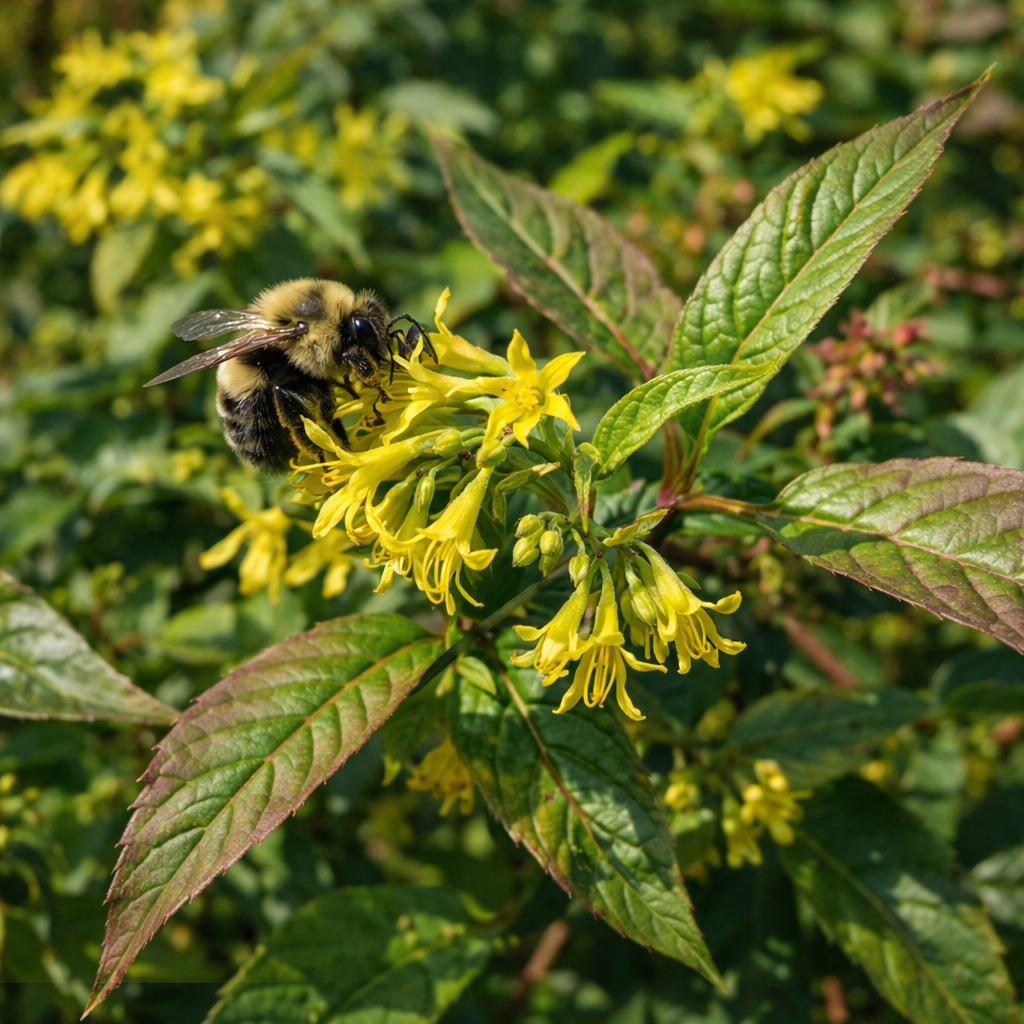
Bush Honeysuckle (Diervilla lonicera) is a compact, exceptionally hardy native shrub valued for its toughness and naturally rounded habit. Its deciduous foliage often emerges with bronze tones, turns green during summer, and develops yellow, orange, red, or purple shades in fall. From June into August, small tubular yellow flowers appear in clusters near the tips of the stems, sometimes developing orange or reddish tones as they age. Inconspicuous seed capsules follow the flowers. Adapted to rocky forests and dry habitats across eastern Canada, northern bush honeysuckle maintains an attractive appearance even where heat, shade, poor soil, and irregular moisture challenge less adaptable ornamental shrubs.
Bush honeysuckle grows in full sun, partial shade, or light woodland shade, although brighter exposure usually encourages heavier flowering and stronger fall colour. It tolerates poor, rocky, or sandy soils as long as drainage is adequate and generally performs best in acidic to neutral conditions. Regular watering is helpful during the first growing season, but established plants withstand periodic drought remarkably well. A light application of compost in spring is normally sufficient, and heavy feeding is unnecessary. In Quebec, its excellent cold hardiness and ability to grow on lean sites make Diervilla lonicera a dependable choice for locations where many conventional landscape shrubs fail to thrive.
Bush honeysuckle suits slopes, rock gardens, woodland edges, natural hedgerows, and ecological restoration projects. Its spreading underground stems gradually form dense colonies that cover exposed soil and help reduce erosion. Nectar-rich flowers attract bees, butterflies, hummingbirds, and other beneficial insects throughout summer. It pairs naturally with downy serviceberry, native goldenrods, asters, and red-osier dogwood. Unlike several exotic shrubs also called bush honeysuckle, this native species belongs naturally in Canadian ecosystems and provides a responsible alternative for wildlife-focused plantings. Its modest size, adaptable growth, colourful foliage, and minimal maintenance requirements make it especially useful for difficult residential, municipal, and naturalized sites.

Sowing guide
It all startswith a seed.
Sowing depth
Surface sow
Spacing / density
60 to 120 cm (24 to 48 in)
Germination temperature
20 to 22°C
Germination time
14 to 30 days after stratification
Sowing period
Fall or spring after cold stratification
Propagation
Seed, cuttings, or division of suckers
Cold stratification
Yes
Growing method
Surface sow Bush Honeysuckle seeds after a period of cold stratification to improve germination. Maintain temperatures between 20 and 22°C (68 to 72°F) while keeping the growing medium lightly moist without becoming waterlogged. Germination usually occurs within 10 to 25 days under favorable conditions. Transplant seedlings into full sun or partial shade in well-drained soil. This adaptable native shrub thrives in a wide range of growing conditions and requires very little maintenance once established. Its spreading root system contributes to soil stabilization while supporting biodiversity.
Soil and care
The right care,at the right time.
Soil pH
Acidic to neutral
Minimum temperature
Approximately -40°C
Care level
Low
Drought tolerance
Yes
Watering
Moderate; drought tolerant once established
Soil type
Poor to average, rocky or sandy, well-drained soil
Fertilization
Light compost in spring; avoid overfeeding
Moisture
Low to medium; dry to moist, well-drained soil
Seasonal care
In early spring, remove dead, broken, or weak branches and lightly shorten excessively long stems to maintain dense growth. Older shrubs can be rejuvenated gradually by removing a few mature stems near ground level. Apply a thin layer of compost without heavy fertilization, which may encourage excessive foliage at the expense of flowers. During the first summer, water whenever the soil becomes dry to support root establishment. Established plants normally need supplemental water only during prolonged drought. Monitor the suckering stems and remove unwanted shoots whenever the colony must remain within a defined area in a smaller garden or formal planting.
Container growing
A garden,within reach.
Recommended pot size
30 to 40 cm (12 to 16 in)
Bush Honeysuckle can be grown in containers at least 30 to 40 cm (12 to 16 in) wide with excellent drainage. Use a light growing medium enriched with compost and place the container in full sun or partial shade. Water regularly during the first growing season and during prolonged drought. Container culture allows this adaptable native shrub to perform well on patios and in small gardens while providing attractive foliage and pollinator-friendly flowers.

Bloom and dimensions
Its place,in your garden.
Mature height
120 cm
Width / spread
120 cm per plant
Flower color
Yellow, sometimes orange or reddish with age
Foliage color
Green; yellow, orange, red, or purple in fall
Foliage type
Deciduous
Growth rate
Moderate
Growth habit
Low, bushy, and suckering
Fragrance
Light
Bloom period
June to August
Fruiting
Small elongated dry capsules
Days to maturity
Usually flowers after 2 to 3 years
Harvest
August to September
Garden associations
In goodcompany.
Companion plants
Downy serviceberry, native goldenrods, asters, red-osier dogwood
Plants to avoid
Blue flag iris, marsh marigold, ligularia, and horsetail
Frequently asked questions
Your questions,answered.
When should bush honeysuckle seeds be sown?
Bush Honeysuckle seeds are best sown in autumn or spring after a period of cold stratification, which encourages more uniform germination.
Does bush honeysuckle attract pollinators?
Yes. Its nectar-rich yellow flowers attract bees, butterflies, and many other beneficial pollinating insects throughout the summer flowering period.
Can bush honeysuckle stabilize a slope?
Yes. Its suckering habit and dense root system make Bush Honeysuckle an excellent shrub for erosion control and slope stabilization.
What soil suits bush honeysuckle?
Bush Honeysuckle tolerates poor to average soils but performs best in well-drained locations. It adapts easily to many growing conditions.
Is bush honeysuckle easy to grow?
Yes. Once established, Bush Honeysuckle requires very little maintenance and is exceptionally hardy throughout Canada.
Wildlife and pets
Life,around your plants.
Attracts birds
Yes
Native plant
Yes
Supporting wildlife
Bees and butterflies
For a great start to your seeds
The right extras.Right here.
Seed Starting Soil
Shop the collectionSeed starting supplies
Shop the collection