


Sale
Sold out

Native carnivorous perennial
Droseraceae
Native carnivorous plants
Round-Leaved Sundew – Seeds
Drosera rotundifolia
Product code : AKENE-0018
This small native carnivorous plant forms rosettes covered with sticky droplets that capture tiny insects. Adapted to acidic, nutrient-poor bogs, it suits specialized containers, constructed bog gardens, and northern botanical collections.
- Quantity
- Around 400 seeds
- Exposure
- Full sun to bright partial shade
- Life cycle
- Perennial
- Hardiness
- USDA Zones 3 to 8
Discover the plant
Common nameRound-Leaved Sundew
FamilyDroseraceae
GenusDrosera
Speciesrotundifolia
Cultivar
TypeNative carnivorous perennial
Botanical nameDrosera rotundifolia
Reproducible seedsYes
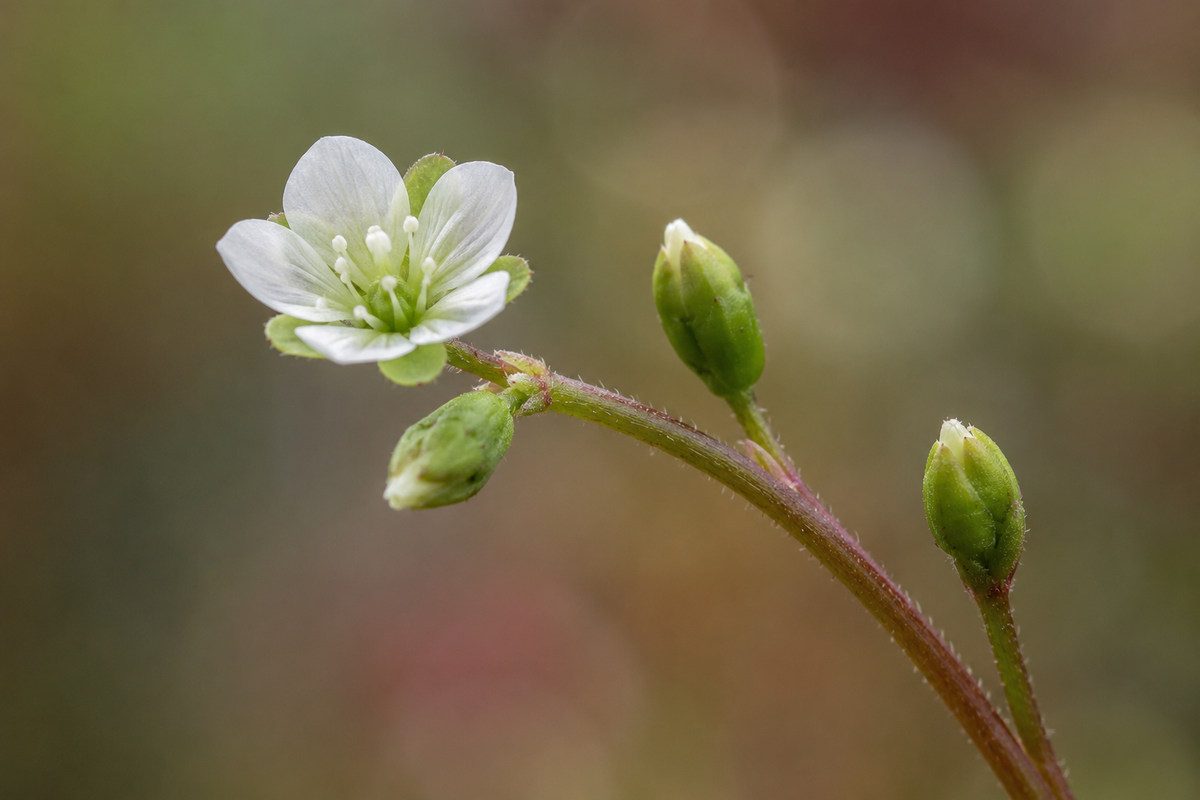
Round-Leaved Sundew (Drosera rotundifolia) is a small native carnivorous perennial of bogs and acidic wetlands, recognized by round leaves arranged in a compact rosette. Their surfaces carry reddish tentacles tipped with glistening mucilage that traps tiny insects. This adaptation allows the plant to obtain nutrients in extremely poor soil. During summer, slender flower stalks rise above the sticky foliage and carry small white to faintly pink flowers. The rosette generally spreads 3 to 8 cm, while the flowering stems may grow taller than 10 cm. Exceptionally cold hardy, this species naturally enters dormancy during Canadian winters and resumes growth in spring.
Round-Leaved Sundew requires a very acidic, nutrient-poor, unfertilized medium that remains constantly moist. A blend of plain sphagnum peat and silica sand is suitable, while ordinary potting soil, compost, and fertilizer must be avoided. Use only rainwater, distilled water, or demineralized water because minerals in hard tap water can damage the roots. Surface sow the seeds without covering them, then provide moist cold stratification. Bright light or full sun encourages stronger red colouring and abundant mucilage production. The medium must never dry out during active growth, and the plant should be allowed to experience a natural cool winter dormancy.
In the garden, Round-Leaved Sundew is ideal for constructed bog gardens, specialized containers, and collections of native carnivorous plants. It combines naturally with Purple Pitcher Plant, cranberry, cotton grass, and Sheep Laurel, which thrive in the same acidic, wet conditions. Its leaves mainly capture small gnats, mosquitoes, ants, and other lightweight invertebrates, although it should not be considered a complete insect-control solution. The plant is primarily valued for botanical, educational, and ecological interest. Never fertilize it or feed it meat, as Drosera rotundifolia obtains what it needs by capturing small prey when its natural habitat is reproduced accurately.

Sowing guide
It all startswith a seed.
Sowing depth
Surface sow without covering
Spacing / density
15 to 30 cm (6 to 12 in)
Germination temperature
18 to 22°C after stratification
Germination time
14 to 60 days after stratification
Sowing period
Autumn or spring after cold stratification
Propagation
Stratified seed and occasional natural reseeding
Cold stratification
Yes
Growing method
Surface sow Round-Leaved Sundew seeds on a highly acidic peat-based growing medium without covering them. Cold stratification improves germination, which generally occurs within 14 to 60 days. Maintain constant moisture using only rainwater or demineralized water, and never apply fertilizer. Place seedlings in full sun to bright partial shade to encourage colorful carnivorous leaves and abundant mucilage production. Naturally found in nutrient-poor bogs across Canada, Drosera rotundifolia requires very little maintenance once its moisture and acidity requirements are consistently met.
Soil and care
The right care,at the right time.
Soil pH
Approximately 3.5 to 5.5
Minimum temperature
Approximately -40°C with natural protection
Care level
Moderate because of specialized requirements
Watering
Constant with rainwater, distilled, or demineralized water
Soil type
Peaty, highly acidic, nutrient poor, and constantly wet
Fertilization
No fertilizer
Moisture
Very high; substrate kept constantly moist to wet
Seasonal care
In spring, gently remove debris covering the rosette without disturbing the shallow roots. Refill the saucer with rainwater, distilled water, or demineralized water and check frequently that the medium remains wet. During summer, provide bright light and protect small pots from excessive overheating. Never apply fertilizer or feed the plant meat. In autumn, lower the water level slightly without allowing the medium to dry. During winter, let the dormant bud experience a natural cold period while keeping the substrate moist and protecting the container from repeated drying winds.
Container growing
A garden,within reach.
Recommended pot size
15 to 20 cm (6 to 8 in)
Round-Leaved Sundew grows well in shallow containers filled exclusively with unfertilized sphagnum peat kept constantly wet using rainwater or demineralized water. This native carnivorous plant performs poorly in fertilized growing media. A bright location replicating natural bog conditions encourages colorful foliage and abundant sticky mucilage. Growing in containers makes it easier to maintain the moisture and acidity this species requires.

Bloom and dimensions
Its place,in your garden.
Mature height
Approximately 15 cm in flower
Width / spread
Approximately 8 cm
Flower color
White to pinkish white
Foliage color
Green to reddish
Foliage type
Deciduous with a dormant winter bud
Growth rate
Slow
Growth habit
Very low, forming a small rosette
Fragrance
Bloom period
June to August
Fruiting
Small capsules containing numerous fine seeds
Days to maturity
May flower in the first summer
Harvest
July to September
Garden associations
In goodcompany.
Companion plants
Purple Pitcher Plant, cranberry, cotton grass, and Sheep Laurel
Plants to avoid
Plants requiring rich, alkaline, or dry soil
Frequently asked questions
Your questions,answered.
When should Round-Leaved Sundew seeds be sown?
Round-Leaved Sundew seeds are best sown in autumn or in spring after a period of cold stratification, which greatly improves germination.
Why is Round-Leaved Sundew carnivorous?
Its leaves are covered with sticky glandular tentacles that trap small insects. This adaptation allows the plant to obtain nutrients unavailable in the nutrient-poor soils of bogs.
Can ordinary potting soil be used?
No. Regular potting soil is far too rich for Round-Leaved Sundew. Use only an acidic, nutrient-poor peat-based substrate.
What insects does Drosera rotundifolia capture?
Rainwater or demineralized water is strongly recommended. Hard water can gradually damage or kill the plant.
How should Drosera rotundifolia be maintained in winter?
Yes. Round-Leaved Sundew is perfectly adapted to bog gardens and acidic wetlands, where it grows naturally alongside Purple Pitcher Plants and Cranberries.
Wildlife and pets
Life,around your plants.
Native plant
Yes
Supporting wildlife
Pollinators
For a great start to your seeds
The right extras.Right here.
Seed Starting Soil
Shop the collectionSeed starting supplies
Shop the collection





