


Sale
Sold out

Native wetland perennial
Cyperaceae
Native sedges for wet sites
Fringed Sedge – Seeds
Carex crinita
Product code :
This native perennial forms broad, flexible clumps that stabilize wet soil and protect shorelines. Exceptionally hardy and easy to maintain, Fringed Sedge suits rain gardens, vegetated ditches, and ecological restoration projects.
- Quantity
- About 200 seeds
- Exposure
- Full sun to partial shade
- Life cycle
- Perennial
- Hardiness
- USDA Zones 3 to 8
Discover the plant
Common nameFringed Sedge
FamilyCyperaceae
GenusCarex
Speciescrinita
Cultivar
TypeNative wetland perennial
Botanical nameCarex crinita
Reproducible seedsYes
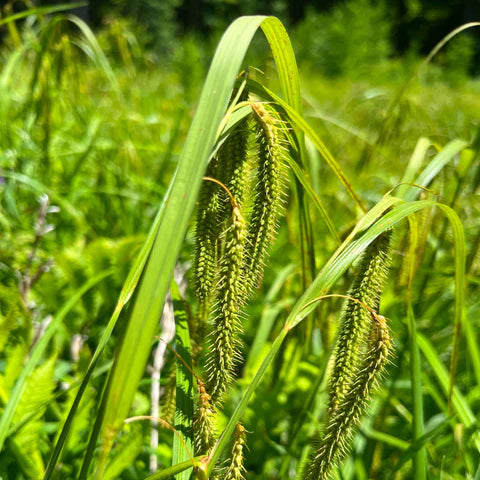
Fringed Sedge (Carex crinita) is a native wetland perennial recognized for glossy green, flexible, dense foliage that forms broad, arching clumps. Its long, drooping greenish to brownish spikes appear in summer and persist into autumn, adding fine texture and a natural character to ecological plantings. Plants generally reach 40 to 90 cm tall, depending on moisture and soil fertility. Exceptionally hardy in Zones 3 to 8, this sedge returns reliably after severe Quebec winters. Its graceful form provides structure in rain gardens, shoreline plantings, pond margins, and naturalized landscapes while maintaining ornamental interest through much of the growing season.
Fringed Sedge prefers full sun or partial shade and loamy to clay soil that is rich in organic matter and consistently moist, saturated, or periodically flooded. It performs especially well where water naturally collects and tolerates temporary inundation. Seeds may be surface sown outdoors in autumn or in spring after moist cold stratification. Because they require light for germination, press them gently against the growing medium without burying them deeply. Maintain constant moisture until seedlings emerge. A thin layer of compost in spring is generally sufficient, while naturally fertile wet soil rarely requires additional feeding. Established clumps may be divided when they become crowded.
In the garden, Fringed Sedge is ideal for shoreline buffers, vegetated ditches, rain gardens, pond edges, and ecological restoration projects. Dense clumps slow runoff, trap soil particles, and help stabilize moist banks. They also create useful cover for small wildlife, insects, and other organisms associated with riparian habitats. Pair this native sedge with Northern Blue Flag Iris, Cardinal Flower, Spotted Joe-Pye Weed, or Water Avens. Its flexible foliage softens the visual transition between open water and taller perennials while strengthening the ecological function and resilience of plantings exposed to changing water levels throughout the season.

Sowing guide
It all startswith a seed.
Sowing depth
Surface sow
Spacing / density
30 to 45 cm (12 to 18 in)
Germination temperature
18 to 22°C after stratification
Germination time
14 to 30 days after stratification
Sowing period
Autumn or spring after cold stratification
Propagation
Stratified seed or clump division
Cold stratification
Yes
Growing method
Surface sow Fringed Sedge seeds after a period of cold stratification. Because the seeds require light to germinate, they should not be buried deeply. Keep the growing medium consistently moist until germination occurs. Carex crinita is particularly well suited to rain gardens, vegetated ditches, pond edges, and riparian buffers. Once established, it forms broad clumps that stabilize soil, reduce erosion, and enhance biodiversity. It is fully hardy throughout Canada.
Soil and care
The right care,at the right time.
Soil pH
Slightly acidic to neutral, about 5.5 to 7.0
Minimum temperature
Approximately -40°C
Care level
Low
Watering
Abundant and regular; keep soil moist
Soil type
Loamy to clay, rich, moist to saturated
Fertilization
Light spring compost; little additional feeding
Moisture
High; wet to saturated soil
Seasonal care
In spring, cut away dry or flattened foliage before new growth emerges, taking care not to damage the crown. Apply a thin layer of compost around the clumps when the soil is poor. Throughout summer, maintain constant moisture and water deeply if shoreline areas begin to dry. Remove competing weeds around young plants. Divide clumps that have become overly broad in spring or early autumn. In fall, leave part of the foliage standing to protect the crown, trap snow, and provide winter shelter for small wildlife and beneficial insects associated with wetland habitats.
Container growing
A garden,within reach.
Recommended pot size
30 to 40 cm (12 to 16 in)
Fringed Sedge grows well in large containers that retain moisture while providing good drainage. Use a growing medium rich in organic matter and keep it consistently moist throughout the growing season. This wetland species performs beautifully on patios or balconies designed with native plants, where its graceful foliage adds texture and natural elegance.

Bloom and dimensions
Its place,in your garden.
Mature height
Approximately 90 cm
Width / spread
Approximately 60 cm
Flower color
Green to greenish brown
Foliage color
Glossy green
Foliage type
Deciduous
Growth rate
Moderate
Growth habit
Upright, dense and forming a large clump
Fragrance
Little to no fragrance
Bloom period
June to October
Fruiting
Achenes held in drooping spikes
Days to maturity
Usually reaches full size and produces seed heads in the second year
Harvest
July to October
Garden associations
In goodcompany.
Companion plants
Northern Blue Flag Iris, Cardinal Flower, Spotted Joe-Pye Weed, and Water Avens
Plants to avoid
Lavender, cotton lavender, Blanket Flower, and other dry-soil plants
Frequently asked questions
Your questions,answered.
When should Fringed Sedge seeds be sown?
Fringed Sedge seeds are best sown in autumn or in spring after a period of cold stratification to improve germination.
How can Fringed Sedge germination be improved?
Surface sow the seeds on moist growing medium exposed to light. Maintain consistent moisture and temperatures between 18 and 22°C (64 to 72°F) until germination.
Can Fringed Sedge grow in a rain garden?
Yes. Fringed Sedge is one of the best native plants for rain gardens and areas that remain consistently moist or experience temporary flooding.
What soil does Fringed Sedge prefer?
It grows best in rich loamy or clay soils that remain consistently moist to waterlogged.
How should mature Fringed Sedge be maintained?
A simple spring cleanup of old foliage is usually sufficient. Keep the soil consistently moist, especially in drier locations.
Wildlife and pets
Life,around your plants.
Attracts birds
Yes
Native plant
Yes
Supporting wildlife
Pollinators and beneficial wildlife
For a great start to your seeds
The right extras.Right here.
Seed Starting Soil
Shop the collectionSeed starting supplies
Shop the collection





