Sale
Sold out

Native wetland seed mix
Mix of multiple botanical families
Native wildflower seed mixes
Wetland Wildflower Mix (Native Species Mix for Wet Habitats)
Native species mix for wet habitats
Product code : AKENE-0031
This native species mix transforms moist ground into a diverse wildlife-friendly meadow. Adapted to rain gardens and shoreline buffers, it produces successive blooms while helping stabilize soil and slow runoff.
- Quantity
- Approximately 17,500 seeds
- Exposure
- Full sun
- Life cycle
- Primarily perennial
- Hardiness
- USDA Zones 3 to 8
Discover the plant
Common nameWetland Wildflower Mix
FamilyMix of multiple botanical families
Genus
Species
Cultivar
TypeNative wetland seed mix
Botanical nameNative species mix for wet habitats
Reproducible seedsYes
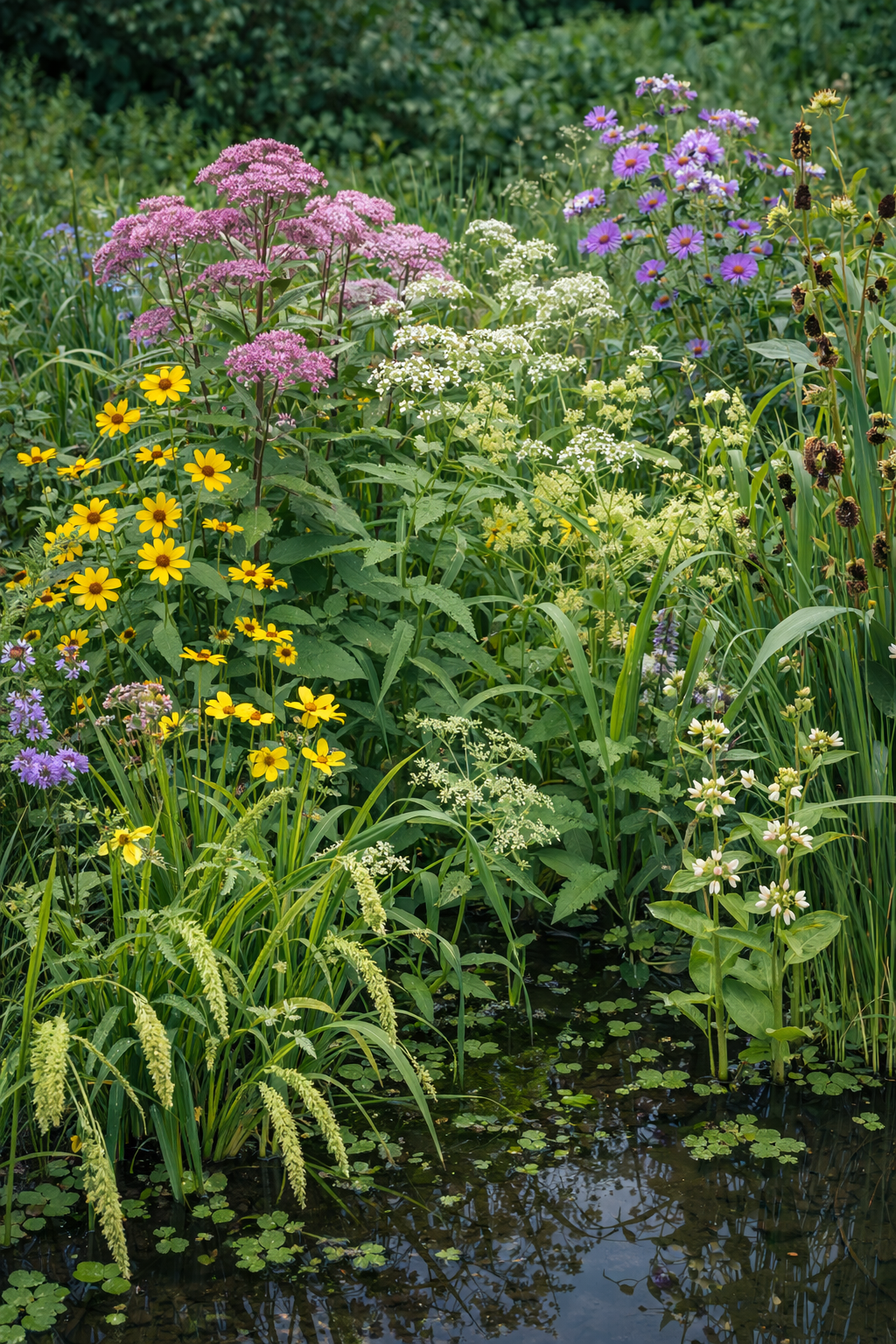
Wetland Wildflower Mix (Native Species Mix for Wet Habitats) combines wildflowers, grasses, and herbaceous plants adapted to moist, wet, or temporarily saturated ground. Its varied composition creates a natural meadow whose height, texture, and colour change throughout the seasons. Multicoloured flowers generally appear in succession from June through October, while green foliage and upright stems structure the site before and after bloom. Many perennial species devote their first season primarily to root development. The planting gradually becomes denser, better balanced, and more visually impressive during its second and third growing seasons, creating a durable wetland-inspired landscape for Canadian conditions.
This mix prefers full sun and moist to saturated soil ranging from acidic to neutral, with dependable water retention through much of the season. Sow directly from late September through late November for natural winter stratification, or in spring after treatment appropriate to the different species. Distribute the seeds evenly over clean, lightly loosened ground with competing vegetation removed. Press them against the surface and cover with no more than 5 mm of fine soil. Maintain constant moisture throughout establishment. A light incorporation of mature compost is sufficient, while rich fertilizer may favour a few aggressive species and reduce the long-term diversity of the planting.
In the garden, this mix suits rain gardens, vegetated ditches, shoreline buffers, pond margins, and ecological restoration projects. Successive blooms provide nectar and pollen for bees, butterflies, hummingbirds, and other visitors, while seeds and standing stems offer food or shelter to various organisms. Complementary root systems help hold wet soil, slow runoff, and improve site resilience. Pair this meadow with Red-Osier Dogwood, Sweet Pepperbush, Blue Flag Iris, and Steeplebush to create layered habitat with strong ornamental value. This mixture is intended for ecological and landscape use and should not be treated as edible or safe for human or animal consumption.

Sowing guide
It all startswith a seed.
Sowing depth
Surface to a maximum of 5 mm
Spacing / density
9.3 m² (100 sq ft)
Germination temperature
15 to 22°C depending on species
Germination time
10 to 30 days depending on species
Sowing period
Autumn or spring after cold stratification
Propagation
Seed and natural reseeding of component species
Cold stratification
Yes
Growing method
Sow the seeds directly onto well-prepared moist soil between late September and late November, or in spring after appropriate cold stratification. Distribute the seeds evenly and cover them with no more than 5 mm (0.2 in) of soil. Keep the growing medium consistently moist until germination, which generally occurs within 10 to 30 days depending on the species. During the first year, many perennial species focus on root development and site establishment. Flowering becomes increasingly abundant and diverse from the second growing season onward. This mix was specifically designed to restore and beautify natural wetland habitats throughout Canada.
Soil and care
The right care,at the right time.
Soil pH
Acidic to neutral
Minimum temperature
Approximately -40°C depending on species
Care level
Low after establishment
Watering
Consistent during establishment and dry periods
Soil type
Rich, moist to saturated, and temporarily flooded
Fertilization
Light compost during site preparation only
Moisture
High; moist to wet soil
Seasonal care
In spring, remove or shred the previous year’s stems before new growth becomes too tall. During the first season, monitor weeds and cut them before they produce seed without pulling the young perennial species in the mix. Keep the soil moist through dry periods. In later years, avoid rich fertilizer and leave some stems standing until late winter to shelter insects. One late annual cut at approximately 15 to 20 cm above the ground helps maintain diversity, recycle plant material, and limit the establishment of unwanted woody growth.
Container growing
A garden,within reach.
Recommended pot size
50 to 100 L (13 to 26 gal)
This wildflower mix can be grown in large watertight or very deep containers that maintain consistently moist growing conditions. Use an organic-rich growing medium capable of retaining moisture while supporting taller species. Place containers in full sun and never allow the growing medium to dry out completely. This approach makes it possible to create a wetland pollinator garden even on a patio or beside an ornamental pond.

Bloom and dimensions
Its place,in your garden.
Mature height
1.8 m (6 ft)
Width / spread
9.3 m² (100 sq ft)
Flower color
Multicoloured
Foliage color
Green
Foliage type
Primarily deciduous
Growth rate
Moderate; full maturity in two to three years
Growth habit
Dense wet meadow with varied heights
Fragrance
Varies by species
Bloom period
June to October, depending on species
Fruiting
Varied seeds supporting natural renewal
Days to maturity
2 to 3 years for full establishment
Harvest
Gradual establishment and flowering begin during the first year, with peak performance typically reached after two to three growing seasons.
Garden associations
In goodcompany.
Companion plants
Red-Osier Dogwood, Sweet Pepperbush, Blue Flag Iris, and Steeplebush
Plants to avoid
Lavender, cotton lavender, sedum, and Blanket Flower
Frequently asked questions
Your questions,answered.
When should the Wetland Wildflower Mix be sown?
The ideal sowing period is autumn, allowing the seeds to naturally experience winter conditions. Spring sowing is also successful after proper cold stratification.
Why choose a wetland wildflower mix?
This mix contains native species adapted to moist and waterlogged soils where many conventional plants struggle. It transforms wet areas into thriving, biodiverse habitats.
When does the meadow reach full maturity?
Some species flower during the first year, but the meadow generally reaches its full beauty after two to three growing seasons as the perennial species become fully established.
Does the mix attract pollinators?
Yes. The succession of blooms attracts a wide diversity of bees, butterflies, hummingbirds, and other beneficial pollinators throughout the growing season.
Does this meadow require much maintenance?
Once established, this meadow requires very little maintenance. Occasional control of invasive weeds and a light spring cleanup are generally all that is needed to maintain a healthy, diverse planting.
Wildlife and pets
Life,around your plants.
Attracts birds
Yes
Native plant
Yes
Supporting wildlife
Hummingbirds, bees, and butterflies
For a great start to your seeds
The right extras.Right here.
Seed Starting Soil
Shop the collectionSeed starting supplies
Shop the collection