Sale
Sold out

Native wildflower mix
Mix of multiple botanical families
Native wildflower seed mixes
Wildflower Mix – Riverside
Native Species Mix for Riparian Areas
Product code : AKENE-0030
Native wildflower mix specially designed for riparian habitats. Perfect for shoreline stabilization, ecological restoration, rain gardens, and pollinator landscapes.
- Quantity
- Approximately 17,500 seeds
- Exposure
- Full sun
- Life cycle
- Perennial
- Hardiness
- USDA Zones 3–8
Discover the plant
Common nameNative Riparian Wildflower Mix
FamilyMix of multiple botanical families
Genus
Species
Cultivar
TypeNative wildflower mix
Botanical nameNative Species Mix for Riparian Areas
Reproducible seedsYes
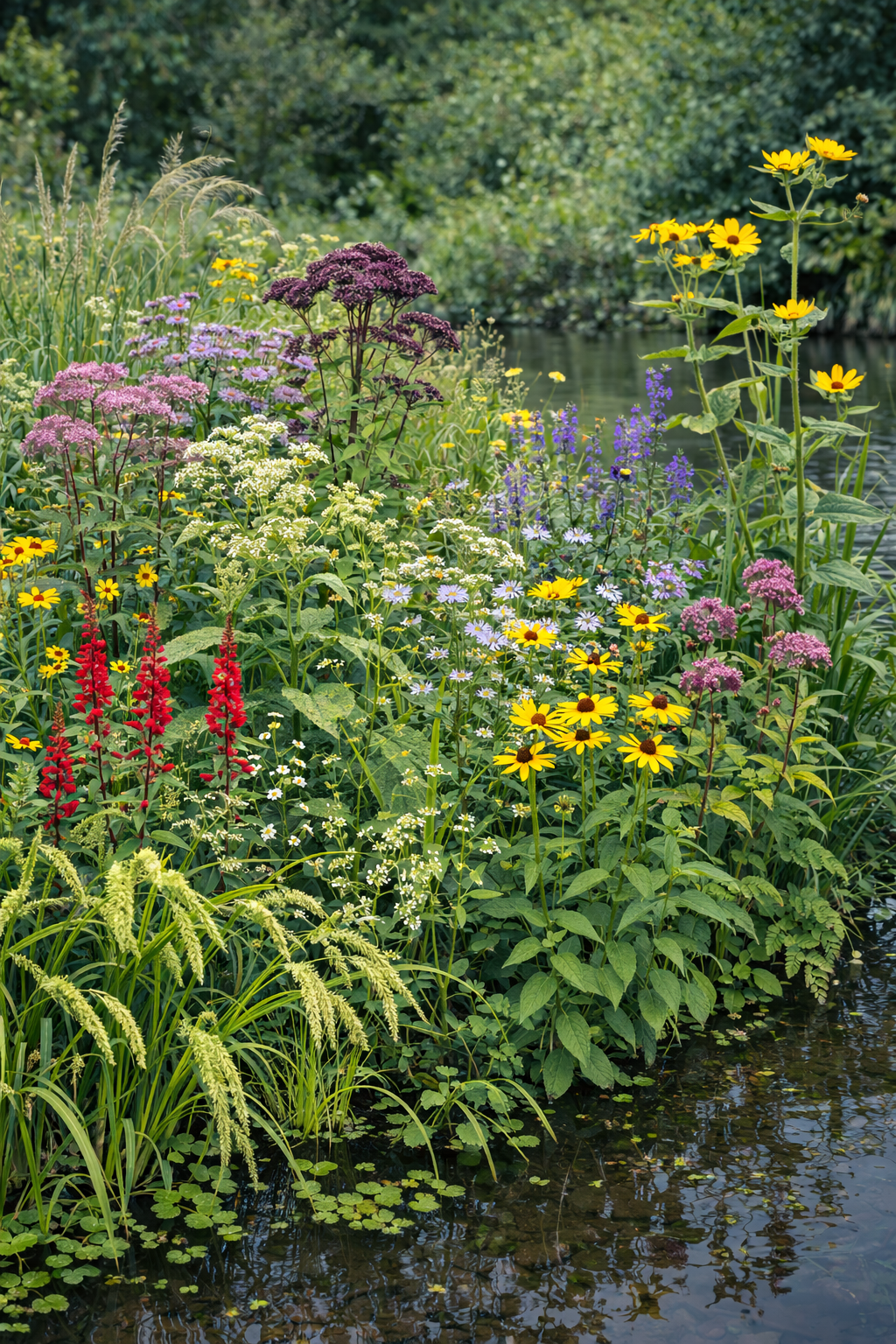
Native Riparian Wildflower Mix is a carefully selected wildflower seed mix featuring native wildflowers, grasses, and moisture-adapted species chosen to restore, beautify, and protect riparian habitats throughout Canada. Adapted to cool, moist soils, this native wildflower mix creates a natural meadow with colourful successive blooms from June through October. A valuable refuge for biodiversity, it attracts native bees, butterflies, hummingbirds, and other beneficial pollinators while adding exceptional ornamental value along streams, vegetated ditches, rain gardens, shorelines, and other moisture-rich landscapes.
This native wildflower seed mix is especially effective for stabilizing soil and controlling erosion in areas exposed to changing moisture levels. The selected species gradually develop dense root systems that help hold soil in place while improving the ecological quality of riparian buffers. Although some plants may bloom during the first year, the meadow generally reaches its full potential after two to three growing seasons, once the perennial species are fully established. Over time, the wildflower mix forms a durable, resilient plant community that requires little maintenance and evolves naturally from season to season.
Beyond its ornamental beauty, this native wildflower seed mix plays an important ecological role by providing nectar, pollen, food, shelter, and breeding habitat for countless insects, birds, and other wildlife. It pairs beautifully with Red Osier Dogwood, Northern Blue Flag Iris, Steeplebush, and Summersweet to recreate landscapes inspired by Canada’s natural wetland and riparian ecosystems. With its extended bloom season, ability to protect shorelines, and strong contribution to biodiversity, this native wildflower mix is a sustainable choice for ecological restoration projects, pollinator gardens, shoreline naturalization, and low-maintenance riparian landscapes.

Sowing guide
It all startswith a seed.
Sowing depth
Surface to 5 mm (0 to 0.2 in)
Spacing / density
9.3 m² (100 sq ft)
Germination temperature
15 to 22°C
Germination time
10 to 30 days depending on species
Sowing period
Late September to late November, or spring after cold stratification
Propagation
Propagation occurs naturally through seed production and self-seeding of the species included in the mix, ensuring long-term sustainability.
Cold stratification
Yes
Growing method
Sow the seeds directly onto prepared soil between late September and late November, or in spring after appropriate cold stratification. Spread the seeds evenly and cover them with no more than 5 mm (0.2 in) of soil. Keep the soil consistently cool to moist throughout germination, which generally occurs within 10 to 30 days depending on the species. Some plants flower during the first year, while many perennial species first devote their energy to root development. The meadow generally reaches its full beauty after two to three growing seasons. This mix was specifically designed to stabilize riparian soils while creating exceptional biodiversity.
Soil and care
The right care,at the right time.
Soil pH
Acidic to neutral
Minimum temperature
-40°C (-40°F)
Care level
Low
Watering
Water regularly during establishment to keep the soil cool to moist. The selected species tolerate the natural fluctuations in moisture typical of riparian habitats.
Soil type
Cool to moist, well-drained soil. The selected species thrive in organically rich soils that remain moist through much of the growing season.
Fertilization
A light application of compost during site preparation is generally sufficient. Heavy fertilization is rarely necessary because the selected native species are adapted to natural riparian conditions.
Moisture
Medium to high; moist to wet soil
Seasonal care
In spring, remove the previous year's plant debris before new growth begins. During the first year, maintain consistently moist soil and monitor competing weeds to help the young meadow establish successfully. Once established, very little maintenance is required. Avoid excessive fertilization, as it reduces floral diversity. Over time, the meadow naturally becomes denser, more stable, and richer in biodiversity.
Container growing
A garden,within reach.
Recommended pot size
50 to 100 L (13 to 26 gal)
This mix can be grown in large, deep containers that retain consistent moisture without becoming permanently waterlogged. Use an organic-rich growing medium that remains cool throughout the growing season and place the containers in full sun. Frequent watering is necessary to reproduce the natural conditions of riparian habitats. This method makes it possible to create a native flowering meadow even in smaller spaces while attracting abundant pollinators.

Bloom and dimensions
Its place,in your garden.
Mature height
1.8 m (6 ft)
Width / spread
9.3 m² (100 sq ft)
Flower color
Multicolored
Foliage color
Green
Foliage type
Deciduous
Growth rate
Moderate
Growth habit
Dense riparian meadow with varied heights
Fragrance
Varies by species
Bloom period
June to October
Fruiting
The different species gradually produce seeds that naturally renew the meadow and continually increase plant diversity.
Days to maturity
2 to 3 years for full establishment
Harvest
Gradual flowering and establishment begin during the first year, with full maturity generally reached after two to three growing seasons.
Garden associations
In goodcompany.
Companion plants
Red Osier Dogwood, Northern Blue Flag Iris, Steeplebush, Summersweet
Plants to avoid
English Lavender, Cotton Lavender, Sedum, Blanket Flower
Frequently asked questions
Your questions,answered.
When should I sow the Native Riparian Wildflower Mix?
Autumn sowing is generally preferred because it naturally provides the winter stratification many native species require. Spring sowing is also successful after appropriate seed preparation.
Why choose a riparian wildflower mix?
This mix is specifically designed to stabilize erosion-prone soils while restoring natural riparian habitats. It also improves the ecological quality of streambanks, shorelines, and wetland edges.
When will the meadow reach its full potential?
The meadow begins flowering gradually during the first year, but it generally reaches its full potential after two to three growing seasons as the perennial species become fully established.
Does this wildflower mix attract pollinators?
Yes. Successive blooms provide nectar and pollen for a wide diversity of bees, butterflies, hummingbirds, and many other beneficial insects throughout the growing season.
Does this riparian meadow require much maintenance?
Once established, very little maintenance is required. Occasional weed control and a light spring cleanup are generally sufficient to maintain a healthy, diverse riparian meadow.
Wildlife and pets
Life,around your plants.
Attracts birds
Yes
Native plant
Yes
Supporting wildlife
Hummingbirds, bees, and butterflies
For a great start to your seeds
The right extras.Right here.
Seed Starting Soil
Shop the collectionSeed starting supplies
Shop the collection