


Sale
Sold out

Shrub
Rosaceae
Native fruit-bearing shrubs
Flowering Raspberry
Rubus odoratus
Product code : AKENE-0043
Native shrub with large fragrant pink flowers, decorative foliage, and ecological value for Canadian gardens.
- Quantity
- About 125 seeds
- Exposure
- Full sun to partial shade
- Life cycle
- Perennial
- Hardiness
- 3 to 8
Discover the plant
Common nameFlowering Raspberry
FamilyRosaceae
GenusRubus
Speciesodoratus
Cultivar
TypeShrub
Botanical nameRubus odoratus
Reproducible seedsYes
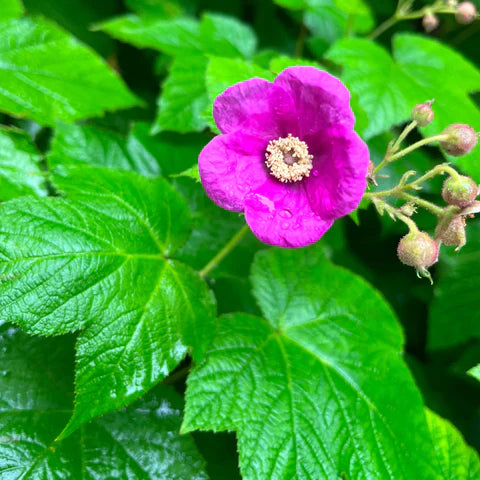
Flowering Raspberry (Rubus odoratus) is a remarkable native shrub known for its large fragrant pink-purple flowers, lush green foliage, and long blooming period from June to September. Its deeply lobed leaves provide ornamental texture similar to maple foliage, while its flowers create outstanding seasonal interest. This woody perennial gradually forms attractive colonies suited to natural gardens. Extremely hardy, it combines ornamental value, ecological benefits, and wild beauty in Canadian landscape settings.
Flowering Raspberry (Rubus odoratus) thrives in full sun to partial shade and prefers rich, moist, well-drained soils. Throughout Quebec and Canada, it is especially suitable for natural hedges, streamside plantings, and pollinator gardens. Regular watering during dry periods supports strong growth, especially while establishing. Organic mulch helps retain moisture and gradually improves soil quality. Maintenance remains moderate because this species naturally develops new shoots through spreading growth.
Flowering Raspberry (Rubus odoratus) fits beautifully into ecological gardens, native plantings, and wildlife-friendly habitats. Its flowers attract bees, bumblebees, butterflies, and many beneficial insects. Its small edible red fruits add food value and can be used for jellies, jams, and syrups. It combines well with red-osier dogwood, serviceberry, wild bergamot, and spotted joe-pye weed to create landscapes rich in biodiversity and seasonal interest.

Sowing guide
It all startswith a seed.
Sowing depth
3 mm
Spacing / density
1.5 to 3 m (5 to 10 ft)
Germination temperature
18 to 22 °C (64 to 72 °F)
Germination time
Irregular germination after pretreatment; may take several months
Sowing period
Spring after scarification and stratification, or fall
Propagation
Seeds, division of shoots, or stem cuttings.
Cold stratification
Yes
Seed scarification
Yes
Growing method
Sow seeds after light scarification followed by a period of cold stratification to improve germination. Use a rich, moist, well-drained growing medium and cover the seeds lightly. Place seedlings in bright conditions out of intense midday sun and maintain consistent moisture. Purple-flowering Raspberry thrives in fertile, slightly cool soils and grows well in full sun to partial shade. Once established, this native shrub requires little maintenance and naturally produces numerous suckers, making it an excellent choice for ecological gardens and naturalized landscapes.
Soil and care
The right care,at the right time.
Soil pH
5.5 to 7.0
Minimum temperature
-40 °C (-40 °F)
Care level
Moderate
Watering
Regular during dry periods
Soil type
Rich loamy to clay soil, well drained
Fertilization
Well-decomposed compost in spring
Moisture
Moderate; moist, humus-rich and well-drained soil
Seasonal care
Remove dead stems, maintain moisture, and control spreading shoots as needed.
Container growing
A garden,within reach.
Recommended pot size
45 to 60 cm (18 to 24 in)
Purple-flowering Raspberry can be grown in a large, deep container with excellent drainage. Use an organic-rich growing medium and maintain consistent moisture without waterlogging. This native shrub quickly develops into a dense specimen that provides seasonal screening on sunny patios or large balconies. Light spring pruning helps maintain an attractive shape while encouraging vigorous new flowering shoots.
Bloom and dimensions
Its place,in your garden.
Mature height
3 m
Width / spread
3 m
Flower color
Pink-purple
Foliage color
Green
Foliage type
Deciduous
Growth rate
Moderate
Growth habit
Upright, spreading and suckering shrub
Fragrance
Lightly fragrant flowers
Bloom period
June to September
Fruiting
July to September
Days to maturity
First flowering and fruiting generally after 2 to 3 years
Harvest
July to September
Garden associations
In goodcompany.
Companion plants
Red-osier dogwood, serviceberry, wild bergamot, spotted joe-pye weed
Plants to avoid
Blue flag iris, marsh marigold, ligularia, horsetail
Recipe idea
From the gardento your plate.
Edible parts
Ripe fruit
The small red fruits of Purple-flowering Raspberry are edible and can be enjoyed fresh when fully ripe or transformed into jellies, jams, syrups, and homemade desserts. Although the crop is lighter than that of cultivated raspberries, the berries offer a delicate flavor and contribute to the harvest of native fruits. The fragrant flowers also attract abundant pollinators, helping improve fruit production throughout the garden.
Frequently asked questions
Your questions,answered.
When should Flowering Raspberry be sown?
Seeds can be sown in spring after cold stratification or in autumn to allow natural winter conditions to break dormancy.
Are Flowering Raspberry fruits edible?
Yes. The fruits are edible and can be eaten fresh or made into jams, jellies, syrups, and other homemade preserves.
Does Flowering Raspberry attract pollinators?
Yes. Its long-lasting pink flowers attract native bees, bumblebees, butterflies, and many other beneficial pollinating insects.
Can it be used in a natural hedge?
Absolutely. Its dense growth and suckering habit make it an excellent shrub for natural hedgerows and wildlife-friendly landscapes.
Is it suitable for Quebec gardens?
Yes. This native shrub is exceptionally hardy and perfectly adapted to Canadian winters and seasonal climate variations.
Wildlife and pets
Life,around your plants.
Attracts birds
Yes
Native plant
Yes
Supporting wildlife
Pollinators and birds
For a great start to your seeds
The right extras.Right here.
Seed Starting Soil
Shop the collectionSeed starting supplies
Shop the collection





