Sale
Sold out

Ground cover
Cornaceae
Edible native woodland groundcovers
Bunchberry (Cornus canadensis)
Product code : AKENE-0041
Native Quebec woodland ground cover with white flowers and decorative red fruits, ideal for shaded forest gardens.
- Quantity
- Around 75 seeds
- Exposure
- Partial shade
- Life cycle
- Perennial
- Hardiness
- 2 to 7
Discover the plant
Common nameBunchberry
FamilyCornaceae
GenusCornus
Speciescanadensis
TypeGround cover
Botanical nameCornus canadensis
Reproducible seedsYes
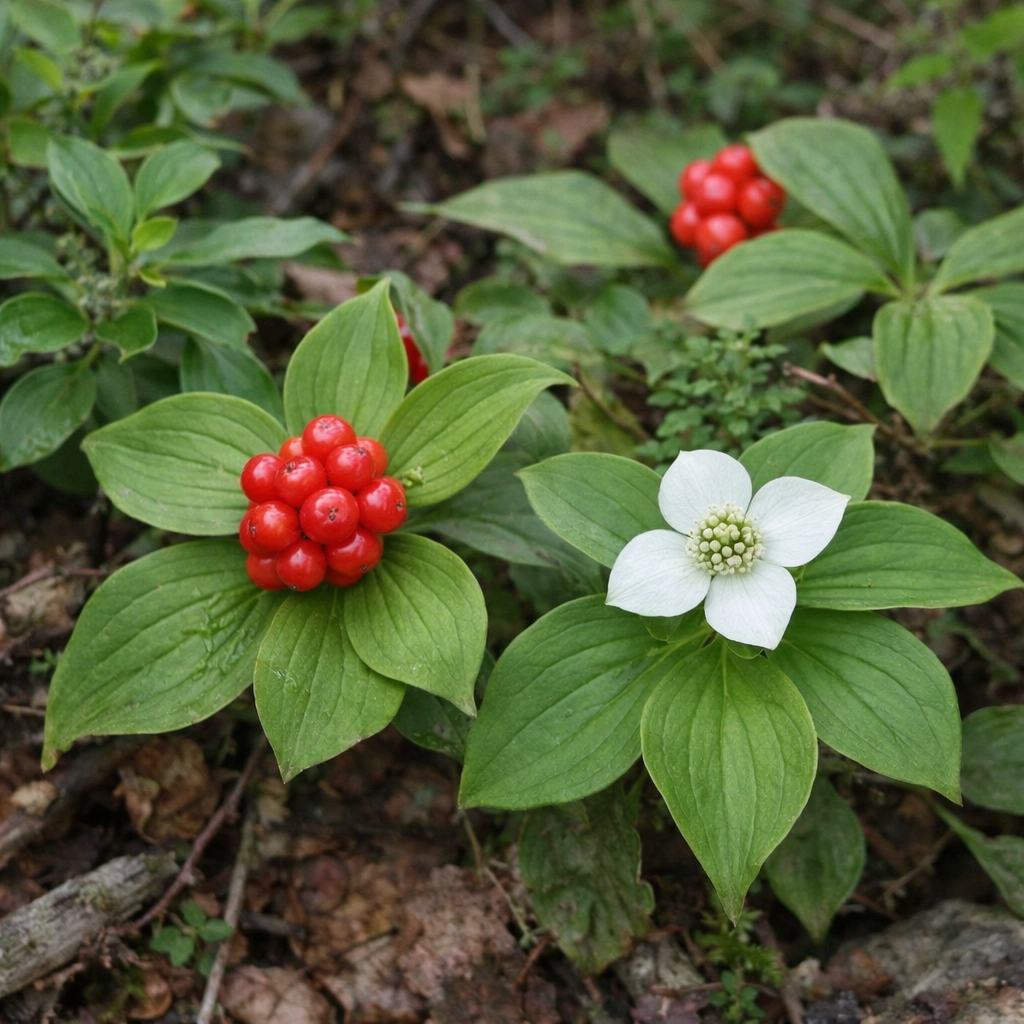
Bunchberry (Cornus canadensis) is an iconic native ground cover of Quebec forests with green deciduous foliage, a low spreading habit, and a striking spring to early summer bloom made of showy white bracts. This woodland perennial later produces bright red fruits that extend its seasonal appeal. Its slow growth creates a natural elegant carpet suited for shaded gardens. Extremely hardy, it provides strong ornamental value in woodland landscapes inspired by northern forest ecosystems.
Bunchberry (Cornus canadensis) thrives in partial shade, acidic humus-rich soils, and consistently cool conditions similar to natural woodland habitats. Across Quebec and Canada, it performs especially well beneath trees, in forest gardens, and protected areas away from intense sunlight. Regular watering during dry periods helps maintain suitable soil moisture. Leaf mulch or organic matter supports establishment. Maintenance remains low once established, allowing this native ground cover to develop into a durable woodland colony.
Bunchberry (Cornus canadensis) is used as an ecological ground cover in native gardens, natural landscaping projects, and forest restoration areas. It combines beautifully with ferns, trilliums, and other woodland plants. Its flowers support pollinating insects while its red fruits provide seasonal food for wildlife, especially birds. The berries can be eaten when fully ripe, although the plant is mainly valued for its beauty, biodiversity benefits, and authentic Canadian woodland character.

Sowing guide
It all startswith a seed.
Sowing depth
Surface to 5 mm (0 to 0.2 in)
Spacing / density
20 to 30 cm (8 to 12 in)
Germination temperature
20 to 25 °C (68 to 77 °F)
Germination time
90 to 365 days after cold stratification
Sowing period
Fall or spring after double stratification
Propagation
Seeds after double stratification or division of established colonies.
Cold stratification
Yes
Growing method
Sow Bunchberry seeds in autumn or spring after a double stratification to reproduce the natural dormancy cycle. Surface sow or cover the seeds with no more than 5 mm (0.2 in) of fine growing medium. Maintain temperatures between 20 and 25°C (68 to 77°F) with consistent moisture throughout germination. Seedlings may emerge slowly and irregularly, often requiring several months of patience. Young plants thrive in humus-rich soils and shaded woodland conditions. Once established, Bunchberry gradually forms an attractive native carpet typical of Canada's boreal forests.
Soil and care
The right care,at the right time.
Soil pH
Acidic to neutral
Minimum temperature
-40 °C (-40 °F)
Care level
Low
Watering
Regular, soil kept consistently moist
Soil type
Acidic humus-rich loamy soil
Fertilization
Forest compost or decomposed leaves
Moisture
Medium to high; moist, acidic, humus-rich soil
Seasonal care
Maintain moist soil, add organic mulch, and avoid aggressive work around shallow roots.
Container growing
A garden,within reach.
Recommended pot size
20 to 30 L (5 to 8 gal)
Bunchberry can be grown successfully in a wide, shallow container that allows it to spread naturally. Use a humus-rich growing medium that remains consistently cool while providing good drainage. Place the container in partial shade or filtered light to recreate natural woodland conditions. This method creates an attractive living carpet for shaded patios and woodland container gardens.
Bloom and dimensions
Its place,in your garden.
Mature height
20 cm
Width / spread
60 cm
Flower color
White
Foliage color
Green
Foliage type
Deciduous
Growth rate
Slow
Growth habit
Creeping and rhizomatous
Fragrance
Bloom period
Spring to early summer
Fruiting
Red fruits in late summer
Harvest
July to August
Garden associations
In goodcompany.
Companion plants
Ferns, white trillium, Canada mayflower, Labrador tea
Plants to avoid
Lavender, rosemary, santolina, sedum
Recipe idea
From the gardento your plate.
Edible parts
Fully ripe red fruit
The bright red berries of Bunchberry are edible when fully ripe. Their mild flavor has long been appreciated in northern culinary traditions and they can be enjoyed fresh or incorporated into jellies and mixed wild berry preserves. The berries also provide an important food source for many birds and small mammals. Today, this native plant is grown primarily for its exceptional ecological value and beautiful woodland groundcover.
Frequently asked questions
Your questions,answered.
When should Bunchberry be sown?
Bunchberry seeds are usually sown in autumn or spring after a double stratification. This process mimics natural seasonal cycles and greatly improves germination.
Are Bunchberry fruits edible?
Yes. The small red berries are edible when fully ripe and may be eaten fresh or used in preserves inspired by traditional wild berry recipes.
Why is this plant ideal for woodland gardens?
Bunchberry is naturally adapted to boreal forests, thriving in humus-rich, acidic soils under partial shade. Its dense groundcover helps protect woodland soils and suppress erosion.
Does it attract pollinators?
Yes. Its flowers attract bees and other pollinating insects, while its berries later provide valuable food for birds and small mammals.
Is it easy to maintain?
Once established, Bunchberry requires very little maintenance. Simply maintain cool, humus-rich soil and recreate natural woodland conditions for the healthiest growth.
Wildlife and pets
Life,around your plants.
Attracts birds
Yes
Native plant
Yes
Supporting wildlife
Bees and pollinators
For a great start to your seeds
The right extras.Right here.
Seed Starting Soil
Shop the collectionSeed starting supplies
Shop the collection